
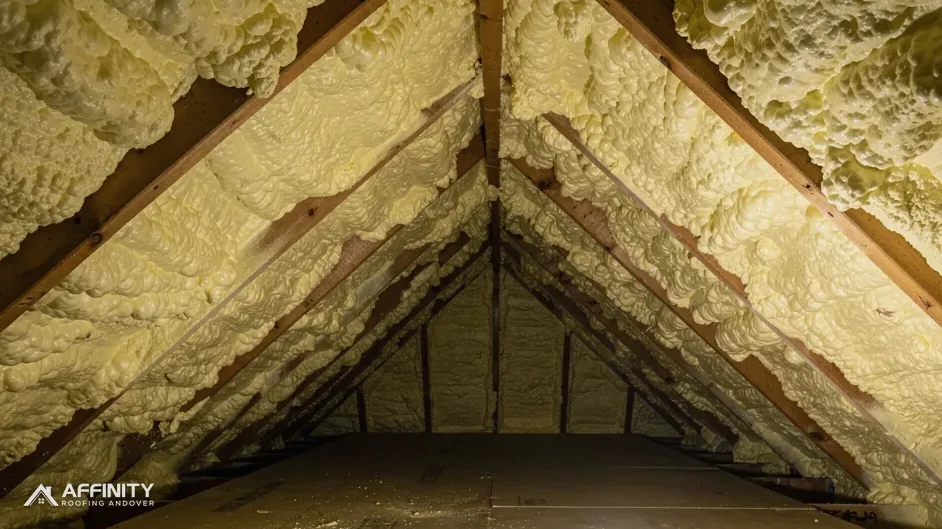
Spray Foam Insulation Removal in Andover
Foam off the rafters, timbers checked, the roof put right.
We survey the loft, photograph the foam and the timbers we can reach, take it out carefully and show you the roof structure underneath.
- Photos of your own roof
- One written price
- Repairs, re-roofs and emergencies
- 10-year workmanship guarantee
- Find us on Google (opens Google Maps)
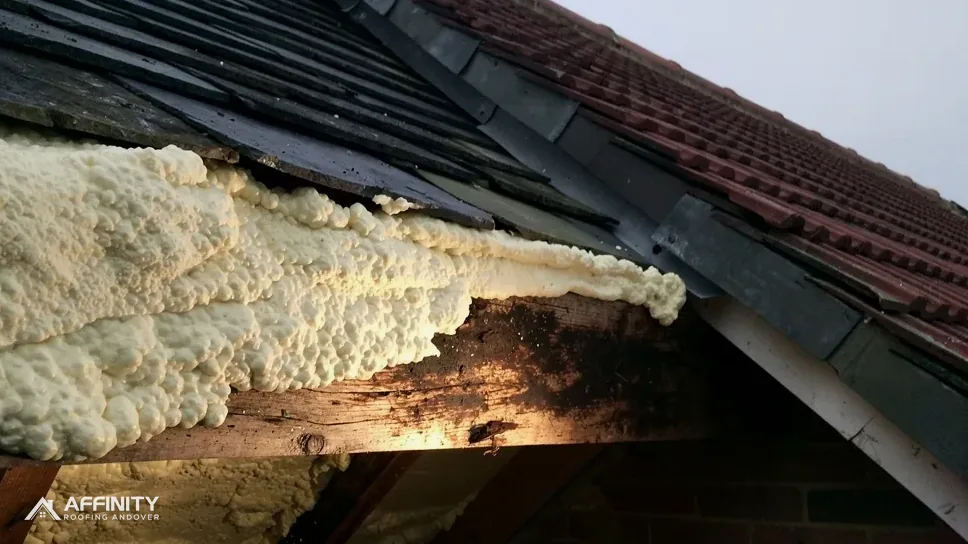
Signs spray foam needs looking at
- A survey or valuation flagged the loft
- Foam sprayed straight onto the tiles
- Damp or dark patches on the foam
- A musty smell in the loft
- Tiles slipping despite the foam
Open-cell, closed-cell and what lies beneath
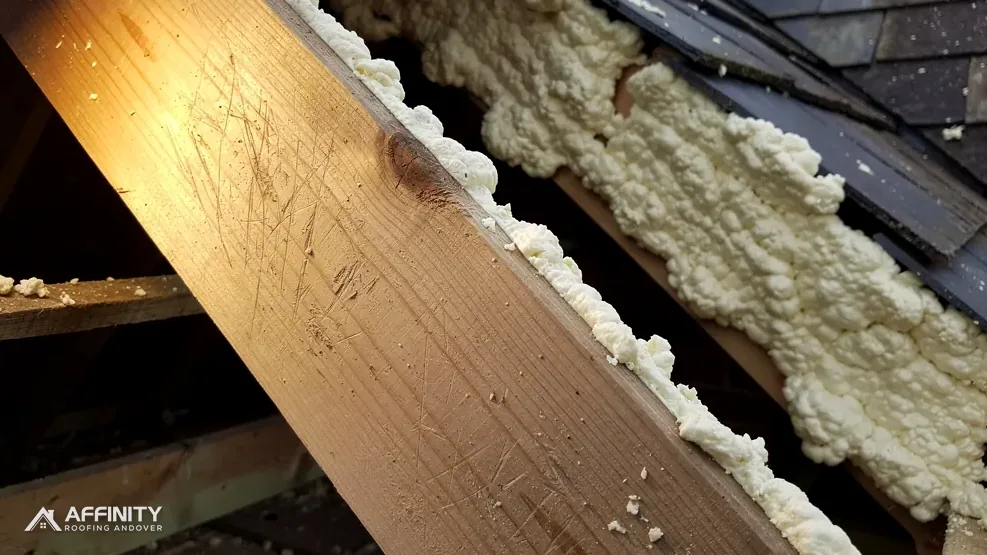
Open-cell foam
Soft and spongy, it pulls away from timber more readily.
Closed-cell foam
Rigid and dense, it bonds hard to rafters and underlay.
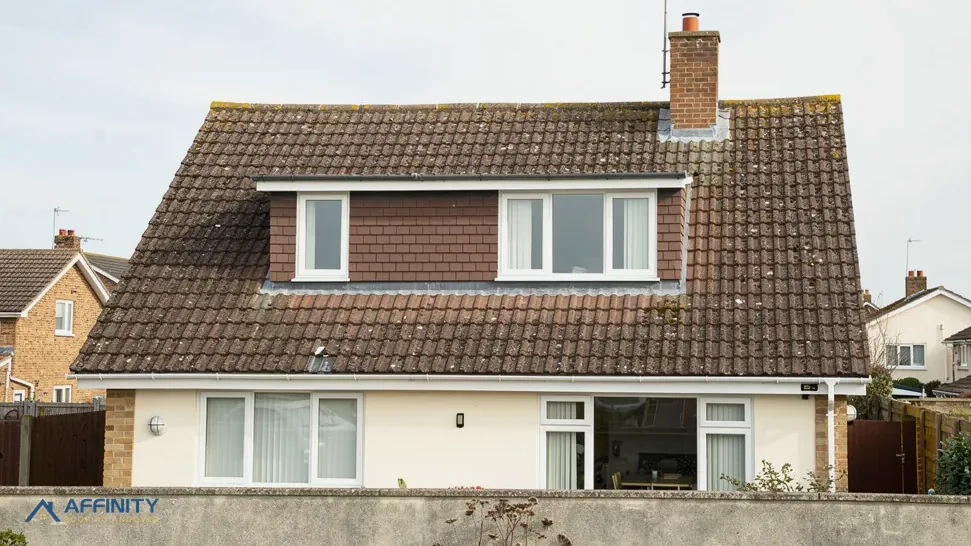
Underlay and battens
The layer the foam usually hides, checked once it is off.
What we remove and check
 Loft survey and photographs
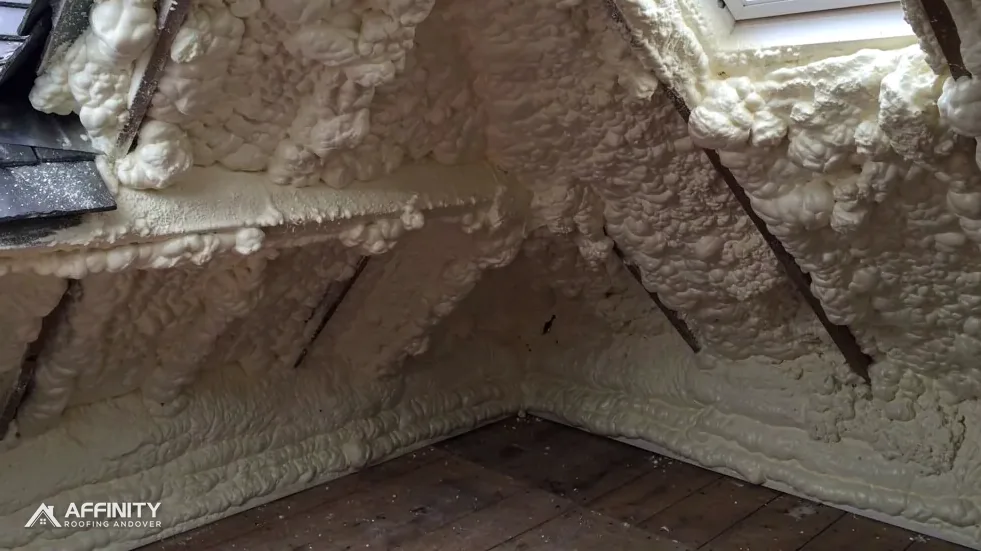 Spray foam removal
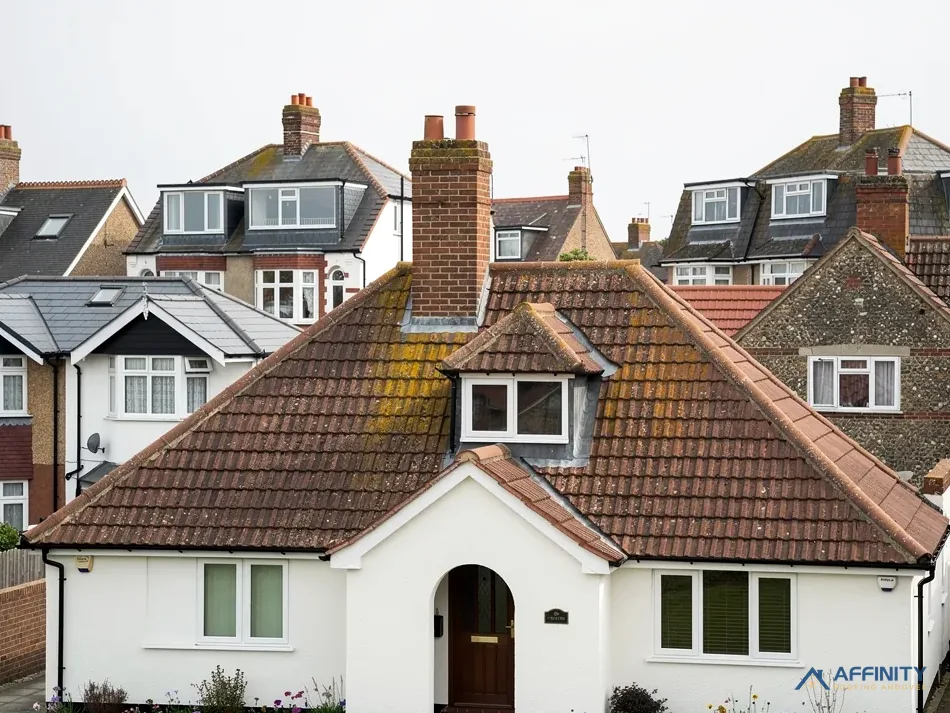 Rafter and batten checks
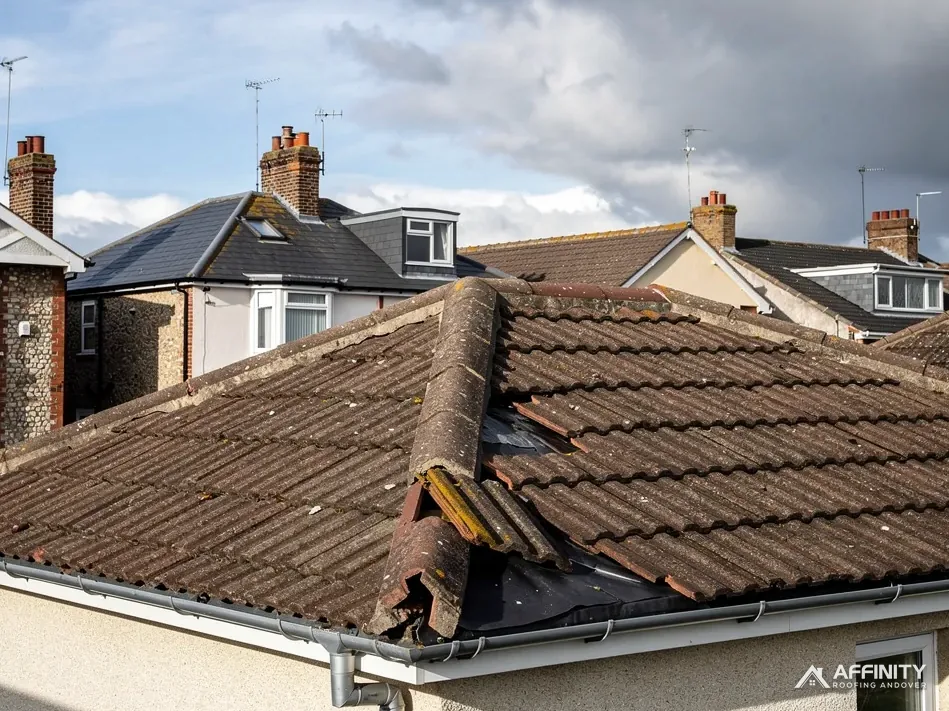 Underlay repairs
 Re-roofing where needed
 Record for your lender
Remove it, re-roof, or leave it?
Remove
The foam is the problem and the roof underneath is still sound.
Remove and re-roof
Timbers or underlay have suffered, or the covering was failing already.
Leave it
No sale or remortgage planned, timbers dry, and your lender is content.
From the surveyor's note to a clear loft
- Share what the surveyor said
- Loft survey and photographs
- Your one written price
- Removal, checks and record
The spray foam report
Issue 12Andover and the Test ValleyFoamed lofts, lenders and the roof underneath
Spray foam in the loft: why lenders started asking and what happens when it comes out
Foam sprayed under a roof hides the timbers and the underlay that a surveyor needs to see. This report explains how the foam behaves, what RICS has said, how removal works and what we check once the roof is bare.
What spray foam is doing in your loft
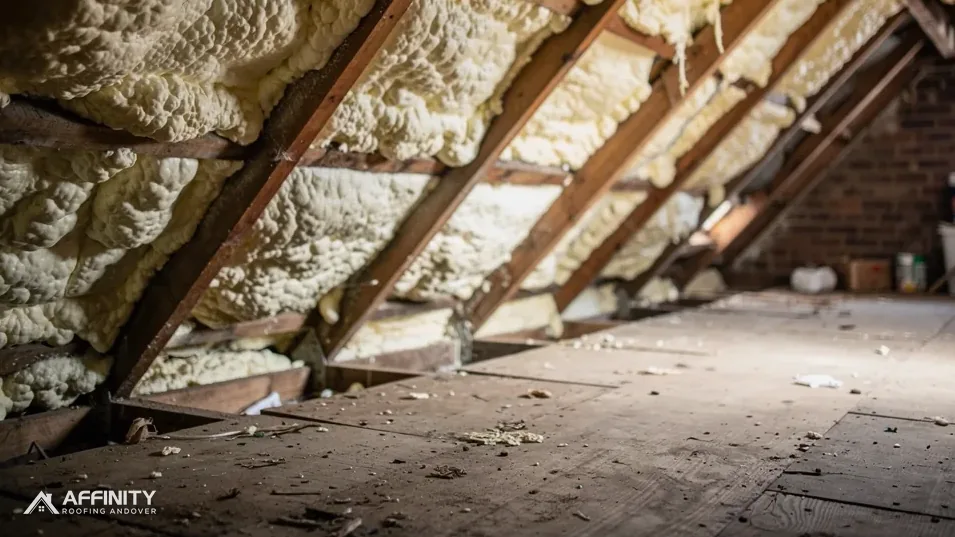
Spray foam insulation is a liquid sprayed onto the underside of the roof that expands and sets between the rafters. It was sold to homeowners as a quick way to insulate a loft, and sometimes as a way to hold slipped or loose tiles in place. In a typical installation it covers the back of the roof covering, the underlay or felt if there is any, the battens that carry the tiles, and the sides of the rafters themselves.
That coverage is the whole difficulty. A roof is a set of parts that need to be seen and checked over the years: rafters can rot, battens can split, nails can rust through and underlay can tear. Once foam has been sprayed across them, none of that can be looked at. The RICS consumer guide puts it simply: if the timber roof structure is covered with spray foam it cannot be fully seen or inspected.
The second difficulty is moisture. A pitched roof copes with small amounts of water because air moves through it and dries the timbers out. The RICS guide says that incorrectly installed insulation can negatively impact ventilation and result in moisture damage. Foam packed tight against the timbers can hold damp against them, and if the roof above was already letting water in, the foam can hide the leak while the damage carries on out of sight.
That is why the Energy Saving Trust, asked about spraying foam onto a leaking roof, says: "We don't recommend doing this." A leak is a roof fault. It needs a roof repair, and foam is not one. If your tiles were slipping before the foam went in, they are probably still slipping now, with nothing visible from inside to show it.
An owner may only learn about the foam when they come to sell or remortgage, because a surveyor or valuer has noted it. Others notice a smell, damp patches on the foam or tiles moving on the outside. Either way, our first step is a loft survey: we look at how much foam there is, what type it is, where it has been applied and what we can see around its edges, and we photograph all of it.
Foam is rarely spread evenly. In some lofts it covers one slope, or a strip where tiles had slipped; in others it runs from eaves to ridge, across the gable walls and around a chimney stack or roof window. Where it reaches down into the eaves it can block the gap that lets air into the roof space, which matters for the ventilation covered later in this report. We note exactly where it sits, because a partial job and a full one are planned differently, and because a surveyor may ask whether any foamed area has been missed. We also look at the outside from the ground and, where safe, from a ladder, since slipped tiles or a sagging slope tell us what the foam may be hiding before a single bay is cut open.
Mortgages, valuations and the RICS guide
Spray foam comes up in house sales because some lenders became wary of it. On 3 March 2023, RICS, the body for chartered surveyors, announced an impartial consumer guide to spray foam insulation. Its press release said there had been concern within specific sectors of the lending market, such as equity release mortgages, which was now having a wider impact on lenders. The guide itself carries a published date of 31 March 2023.
The guide's advice to homeowners is direct: check with your mortgage provider whether their lender policy allows the installation of such products. That advice works in both directions. If you are thinking of having foam installed, ask your lender first. If you already have foam and plan to sell, remortgage or release equity, ask your lender, or your buyer's lender, what they will want to see.
Lenders set their own policies and those policies change, so nobody can promise that removal will secure a particular mortgage. What removal can do is turn an unknown into something a surveyor can inspect. With the foam gone, the rafters, battens and underlay are back in view, and a surveyor can judge their condition in the normal way.
That is where a roofer's part in the job matters. A specialist removal firm takes the foam out; a roofer can also tell you what the roof underneath is like and put right what has suffered. We do both, and the record we keep of the job is written for a surveyor to read. If a valuation report has already flagged the foam, send us the relevant page and we will make sure the survey answers the points it raises.
Timing often matters on a sale. We give you a realistic view on the survey of how long removal and any repairs will take for your loft, and we tell you early if the condition of the timbers or the underlay means the job is bigger than first thought, so you can keep your solicitor and buyer informed. Our guide to equity release and spray foam covers the lending side in more detail.
Gather whatever paperwork came with the installation: the date, the product name, the type of foam and any certificate or installer guarantee. A lender or surveyor may ask for it, and it tells us what we are dealing with before we climb into the loft. If nothing was kept, the survey fills the gap. A buyer can arrange a survey too, with the seller's permission, and a written account of the loft helps both sides agree what happens next and when. If you are part way through a sale, ask your conveyancer for the lender's surveyor's exact wording rather than a summary: it tells us whether the lender wants the foam gone, a report on the timbers, or both.
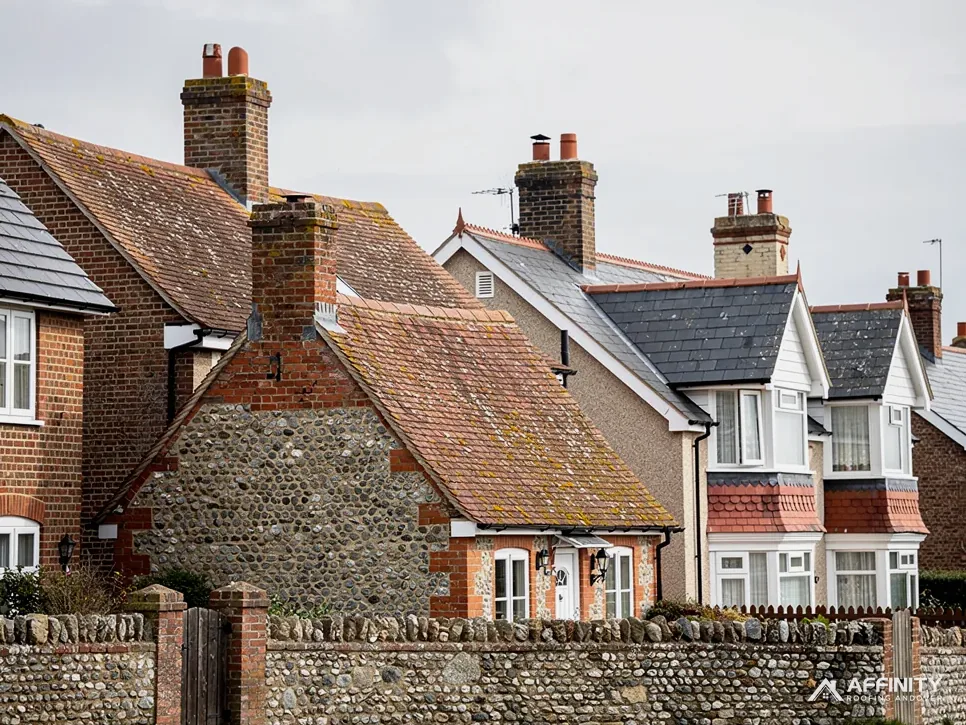
“Once the foam is gone, the roof can be checked like any other roof again.”
Open-cell and closed-cell foam behave differently
Not all spray foam is the same, and the type in your loft changes both the risk to the roof and the effort it takes to remove. There are two broad kinds.
Open-cell foam is soft and spongy. Its cells are open to each other, so it is lighter and lets some moisture through. Like any spray foam, it still hides the timber, which RICS says cannot then be fully inspected. It can usually be cut back from the rafters in blocks with hand tools, and it tends to come away from timber more readily, though it still leaves a film that has to be cleaned off.
Closed-cell foam is rigid and dense. Its cells are sealed, so it acts as a barrier to moisture, and it sets hard against whatever it touches. That is why it was sometimes sold as a way to stiffen a roof or hold tiles. It bonds firmly to rafters, battens and the back of the covering, so removing it is slower and more careful work, and there is more chance that the underlay or old felt behind it comes away with it. Where it was sold to stiffen a roof, the tiles and battens may have been leaning on it, so once it is gone we check that every tile and batten is properly fixed in its own right. Open-cell foam, being lighter, often comes away in larger pieces, which makes bagging quicker and leaves less dust.
You can often tell the two apart by touch. Open-cell foam gives under a finger like a sponge; closed-cell foam feels hard and does not dent. Our guide to open-cell and closed-cell spray foam has more on how to recognise each one, but we confirm the type on the survey either way, because it shapes the whole job.
The type also tells us what to expect underneath. Behind closed-cell foam we look hard for timbers that have stayed damp, since moisture has had little chance to escape. Behind either kind we check whether the foam was sprayed onto a breathable membrane, onto old bitumen felt, or straight onto the back of the tiles or slates with no underlay at all. Each of those leaves a different roof once the foam is gone, and each points to a different repair, so we explain which one you have before we price anything.
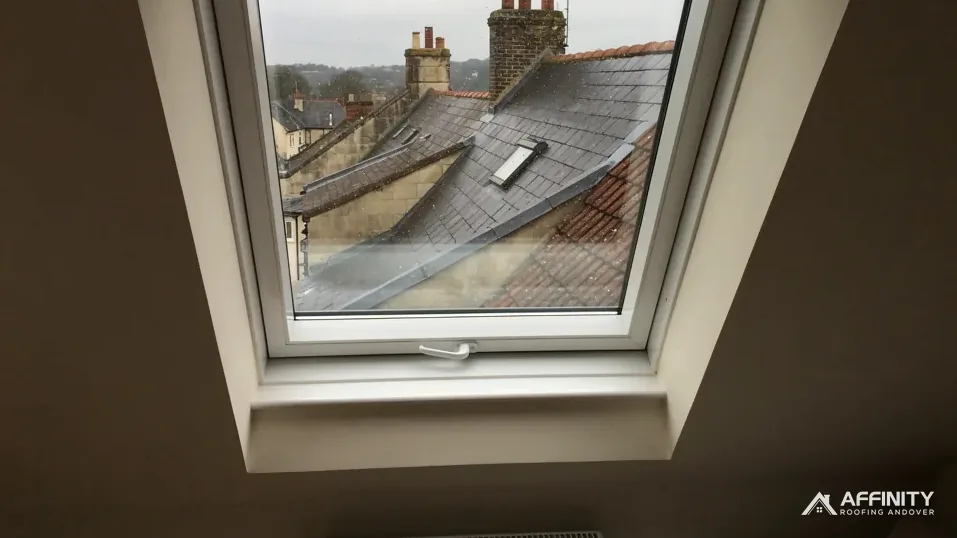
Some lofts hold both kinds, or have been foamed in stages by different installers. We map each slope on the survey with its own photographs. Where a lender has asked for removal, ask whether clearing part of the roof will satisfy them before a partial job is booked; policies differ, and it is better to know first. Where foam has been sprayed around a roof window frame, we take extra care at the frame and its flashing, and check the window still seals properly once the foam is gone.
How we take the foam out, step by step
Removal is careful, physical work in a confined space. Done badly it can crack tiles, tear the underlay and leave a loft full of debris. Done properly it leaves the roof structure clean, visible and ready to be checked. Our guide to the spray foam removal process sets out the stages in full; here is the outline.
We start with the survey and photographs, so there is a clear record of the loft before anything is touched. Then we protect the house. The loft hatch and the landing below are sheeted, a safe working platform is laid across the joists, and we set up lighting so every rafter bay can be seen. If anything stored in the loft is in the way, we ask you to clear it beforehand, or we agree where it will go. We also check that the hatch is big enough for bagged waste to pass through, and agree a route to the van that keeps carpets covered.
The foam is then cut back bay by bay, working away from the hatch. Most of it comes off with hand tools and scrapers. Close to the battens and the back of the tiles we slow right down, because that is where a heavy hand does damage. Each bay is cleaned of the remaining film as far as the timber allows, and the waste is bagged as we go so it never builds up in the loft.
Once the foam is off, we stop and inspect before anything else happens. We look at every rafter, batten and run of underlay that is now visible, and we photograph them. If we find something that changes the job, such as a rafter that has gone soft or underlay that has perished across a whole slope, we show you the photographs and talk it through before going further.
At the end we take the bagged foam away, clean the loft down, take up our protection and leave the house as we found it. You receive the photographs, our notes on the timbers and underlay, and a plain account of what was removed and from where. You can normally carry on living at home while the work goes on, since it is confined to the loft.
Some film can stay in the grain of the timber after cleaning, and that is normal. The aim is to clear enough that a surveyor can judge the condition of every rafter and batten. If a tile cracks or slips while the foam is cut from behind it, we refix or replace it from outside before we leave, so the roof is weathertight at the end of the job. We give you a timetable for your loft on the survey and tell you each day what happens next, so you know when the hatch will be open and when the house is back to normal.
The report on one roof
- 1What spray foam is doing in your loft5 checksThe list starts with foam across the back of the tiles.Source: chapter 1, Found in foamed lofts
- 2Mortgages, valuations and the RICS guideMarch 2023RICS launched its spray foam consumer guide, noting concern in parts of the lending market such as equity release mortgages.Source: RICS press release, 3 March 2023
- 3Open-cell and closed-cell foam behave differentlyQIs one type of foam worse for the roof timbers?Source: chapter 3, Rot risk
- 4How we take the foam out, step by step7 stepsThe job runs from “Survey and photograph the loft” to “Bag, remove and clean down”.Source: chapter 4, A foamed loft, cleared
- 5Rafters, battens and underlay once the roof is bare4 factorsLoft size, foam type, access and what lies beneath set the written price.Source: chapter 5, What sets the price
- 6Insulating again, and the record for your lender5 checksThe list starts with dated photographs before and after.Source: chapter 6, What your record includes
Rafters, battens and underlay once the roof is bare
This is the part of the job a specialist removal firm may not cover, and the part a surveyor and a lender care about most: what condition is the roof in now that it can be seen?
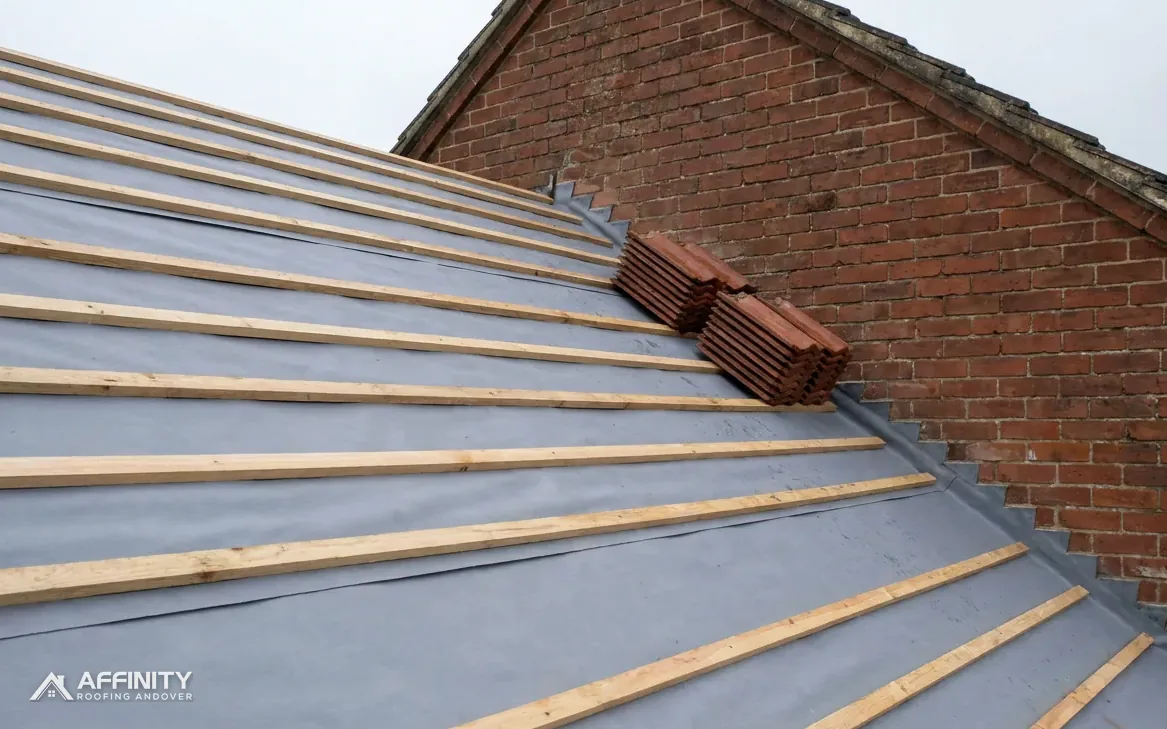
We check each rafter for rot, splits and signs of past damp, pressing into any darker patches. We check the battens that carry the tiles, and the nails that hold them, since both can rust or rot when moisture has sat against them. Our guide to checking roof timbers after spray foam removal lists what we look for. Then we look at the underlay. Some roofs have a modern breathable membrane, some have old bitumen felt, and some older roofs have no underlay at all, with the foam sprayed straight onto the back of the tiles or slates.
Ventilation matters once the foam has gone. BS 5250 deals with condensation and moisture control in homes, and Marley's guidance on it sets out what a cold roof needs. With an HR underlay, which is the non-breathable type, eaves ventilation of 25mm along the length of the eaves is needed for pitches of 15 degrees or less, and 10mm for pitches of more than 15 degrees. With an LR, or breathable, underlay and a well-sealed ceiling, fortuitous ventilation through the normal eaves construction (3mm) may be sufficient, provided the membrane carries third-party certification for that use. We check which you have and whether the eaves vents are clear.
If the roof is sound, small faults are put right in the loft: a split batten replaced, a tear in the membrane patched, a few tiles refixed from outside. If the underlay has perished across the roof, or the battens have rotted, a re-roof may be the better answer, and our roof replacement page covers that work. Our guide to re-roofing after spray foam removal explains when it applies. On the Planning Portal's test, no building control application is normally needed when less than 25 per cent of the building envelope and less than 50 per cent of the roof is affected; larger work can need building control, so check with your building control body.
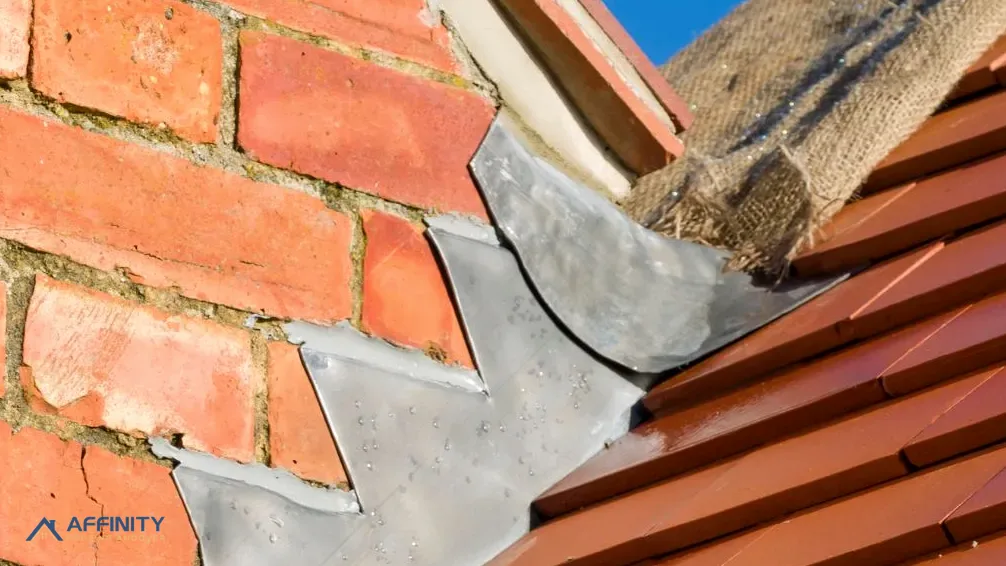
Repairs to timber are matched to what we find. A rafter with a soft section can often be strengthened by fixing a new length of timber alongside it; one that has rotted through needs more. On old slate roofs, nail sickness is common: the nails holding each slate rust through and the slates start to slide. Foam hides it from inside, so we look closely at the fixings once the slates are visible again, and our pitched roofing page covers how slipped slates and tiles are refixed. Where a roof has no underlay at all, adding one means stripping the covering, which is a re-roof. A re-roof that keeps the house looking the same is normally covered by Class C permitted development on a house; flats have no permitted development rights.
Insulating again, and the record for your lender
Taking the foam out leaves a loft that is colder than before, so it needs insulating again in a way that keeps the roof dry. For most homes that means going back to insulation laid between and over the ceiling joists, with the roof above it ventilated. Where the loft is used as a room, the insulation follows the slope instead, with ventilation planned around it.
Building Regulations can apply. Approved Document L defines renovating a thermal element, such as a roof, as providing a new layer or replacing an existing one. For renovation, Table 4.3 of the current edition sets a threshold of 0.35 W/(m²·K) for a roof and an improved value of 0.16, subject to paragraph 4.13, which relaxes the target where it would not pay back within 15 years. A new edition of Approved Document L takes effect on 24 March 2027. Check with your building control body whether your work counts, and our guide to insulation after spray foam removal sets out the options.
The record is what you pass on. We give you dated photographs of the loft before, during and after removal; notes on the rafters, battens and underlay, with any repairs we made; and a description of the ventilation now in place. That gives your surveyor or your buyer's surveyor something definite to look at, and it answers the questions a valuer is likely to ask.
If someone knocks on your door offering spray foam, or offering to remove it, take your time. A contract signed at home is an off-premises contract, and you normally have 14 days to cancel it. For advice, the Citizens Advice consumer helpline is 0808 223 1133. The cancellation period starts from the day after the contract is made, and if the trader never gave you the cancellation information it can run for up to 12 months longer. One exception matters: if you asked a trader to visit specifically for urgent repairs, there is no automatic cooling-off.
Paperwork and building control vary with the address. In Test Valley, check with your building control body. Over the border, Wiltshire Council runs its own Building Control service (0300 456 0113), and West Berkshire homes are served by Building Control Solutions, the West Berkshire and Wokingham partnership (0300 790 0580). Basingstoke and Deane has its own team on 01256 844844. A registered building control approver is the other route. When the new insulation goes in at joist level, it should stop short of the eaves so air can still move over it and through the roof space.
Government money for roofing itself is not on offer nationally, though insulation schemes do exist: ECO4 will run until 31 December 2026, and the Warm Homes: Local Grant funds insulation where household income is usually £36,000 a year or less. Eligibility turns on your own circumstances, so check with the scheme before relying on it. Whatever the outcome, our quote covers the removal and any roof work the loft needs, set out in plain words.
Have your foamed loft surveyed
Send the surveyor's note or a loft photo, so the visit can focus on the foam and the roof behind it.
Costs around spray foam removal
| Job | Typical UK range |
|---|---|
| A roof survey, average (MyJobQuote, Oct 2026) | around £300 |
| Whole new roof, typical three-bed house (Which?, Nov 2025, ex VAT) | £7,000 to £21,000 |
| New roof on a 65 m² three-bed semi in plain concrete tiles, incl. labour, scaffolding and insulation (HomeBuilding, Sep 2025) | £10,000 to £15,000 |
These are typical UK figures published by national cost guides, not Affinity prices. Removal depends on the loft and the foam, so the written price follows a survey.
Source: MyJobQuote roof survey costs (updated October 2026); Which? cost guide to roofers (November 2025, ex VAT); HomeBuilding new roof costs (September 2025)
Spray foam guides and answers
Shorter reads on foam types, the removal process, timbers, re-roofing, lenders and your rights on the doorstep.
 Guide · 9 min readSpray foam removal, step by stepRemoving spray foam is slow, careful work in a cramped space. This guide follows it in order, so you know what happens…
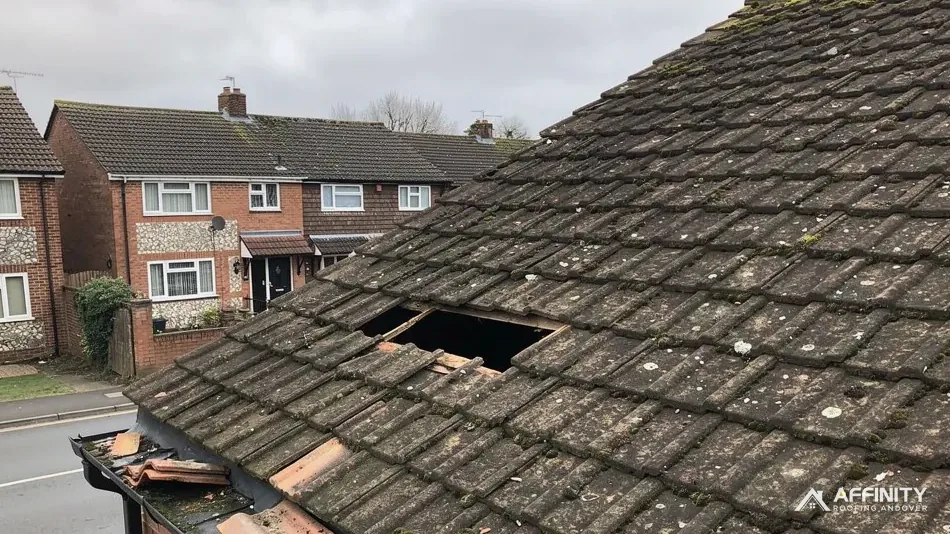 Guide · 9 min readOpen-cell vs closed-cell spray foam: why removal effort differsSpray foam comes in two broad kinds that behave quite differently. One is soft and lets moisture drift through, the other is…
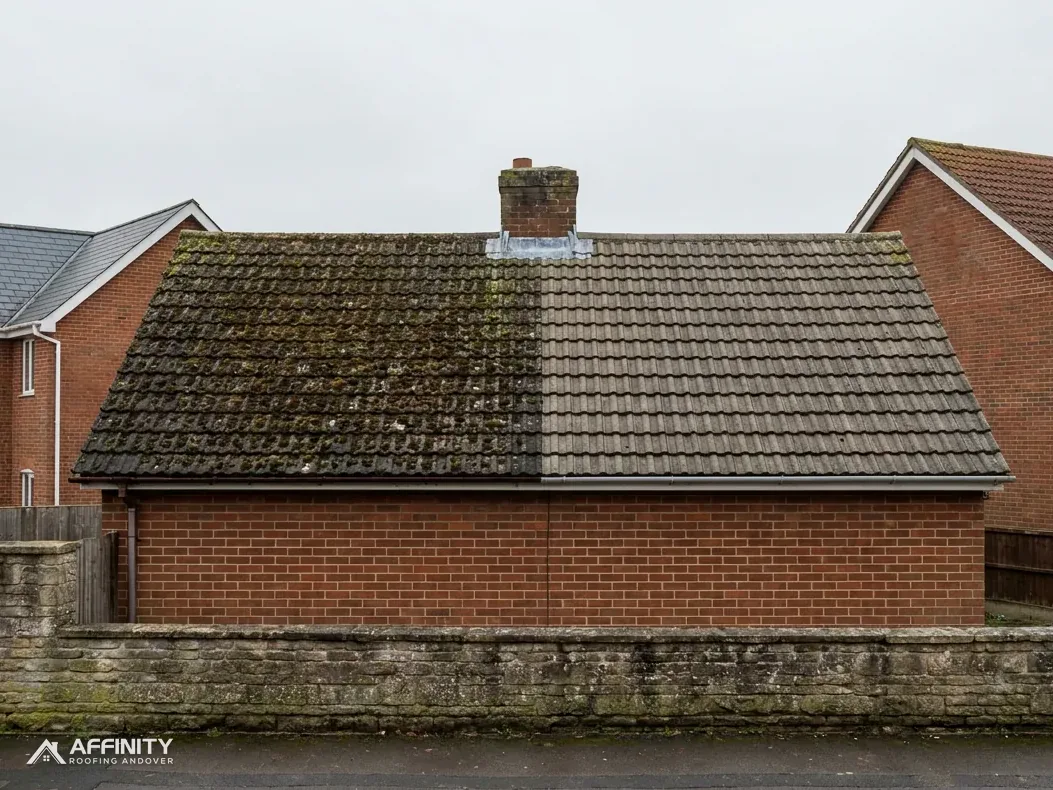 Guide · 9 min readChecking roof timbers after spray foam removalWith the foam gone, rafters, battens and underlay can be examined again. This guide walks through what is checked, how damp is…
- GuideWhat insulation should replace spray foam?
- GuideSelling a home that has spray foam in the loft
- GuideWhat a spray foam survey covers
- GuideDo I need a new roof after spray foam is removed?
- GuideSpraying foam onto a leaking roof: why it is a bad fix
- GuideEquity release and spray foam: what RICS said
- GuideSpray foam and condensation in the roof
- GuideSpray foam doorstep sales: your cooling-off rights
- BlogSpray foam insulation in your loft: why lenders worry and what removal involves
- AnswerCan spray foam be removed completely?
- AnswerHow much does spray foam removal cost?
- AnswerDoes spray foam damage roof timbers?
- AnswerHow many days does spray foam removal take?
- AnswerWill removing spray foam help me get a mortgage?
- AnswerWhat is in the RICS spray foam guidance?
- AnswerCan I stay at home during spray foam removal?
- AnswerIs spray foam on roof felt a problem?
- AnswerWhat if a new-build house has spray foam?
- AnswerWho should take spray foam out of a loft?
- AnswerIs there VAT on spray foam removal?
- AnswerIs there a grant to remove spray foam?
- AnswerCan I do a loft conversion with spray foam in the roof?
- AnswerCan just part of the spray foam be removed?
- AnswerHow should a loft be ventilated after spray foam removal?
- AnswerDoes a spray foam installer's guarantee help?
- AnswerHow do I know if my loft has spray foam?
- AnswerWhat happens to removed spray foam?
- AnswerHow much does a spray foam survey cost?
- AnswerWhy is spray foam on a slate roof a problem?
Roof work that can follow removal
Spray foam removal questions
Can spray foam be taken off without breaking the tiles?
Usually, yes, with care. The foam is cut back by hand, slowing right down near the battens and the back of the covering. Closed-cell foam bonded to old felt or bare tiles carries more risk, and the odd tile may need refixing from outside. We tell you on the survey how your roof is likely to respond.
Will the loft be the only room affected?
For the most part. We sheet the hatch and the landing below, carry bagged foam out through the house and clean as we go, so dust stays in the loft. Expect people on the stairs during the working day. You can normally stay at home throughout, and we agree the daily routine with you before we start.
What if my new-build home was sold with spray foam?
Talk to the builder first. On a new build, NHBC's Buildmark starts with a two-year builder warranty and NHBC guarantee from completion; after that come eight further years in which named parts of the house are insured against defects. Check what your own cover says before arranging removal, and keep any surveyor's comments about the loft with your home's paperwork.
Does removing the foam make the house colder?
Only until the loft is insulated again. Taking the foam out removes its insulation, so the loft needs new insulation, usually laid over the ceiling joists with the roof above ventilated. Planned together, the house ends up warm and the roof can be inspected, which is what a surveyor wants to see on a later visit.
Can I sell my house while spray foam is still in the loft?
You can, but the buyer's lender decides whether to lend on it, and policies vary. RICS said in March 2023 that some lenders, starting with equity release, had concerns. Check with the lender involved early. If removal is needed, a survey now gives you a clear view of the time and work involved.
Is spray foam on an old slate roof a particular worry?
It can be. Older slate roofs often have no underlay, so the foam is sprayed straight onto the slates and their nails. That hides rusting nails and slipping slates. Removal there needs extra care, and we check the fixings closely once the slates can be seen from inside, then refix any that have started to slide.
Book a loft survey
Pass on what the surveyor flagged, so your loft survey starts with their concerns.
10-year workmanship guarantee, in writing.