The short answer
RICS, the Royal Institution of Chartered Surveyors, published its consumer guidance on spray foam in March 2023. It tells owners that roof timber under foam is hard to inspect, that poor installation can harm ventilation, and that they should ask their mortgage provider where they stand. It is advice for owners, not a ban on foam.
When the guide appeared
RICS announced the guide in a press release dated 3 March 2023, and the release page gives the guide a published date of 31 March 2023. On the day, RICS said it had launched an "impartial" guide for consumers on spray foam, and the release mentioned unease among some lenders, equity release mortgages being the example.
The consumer guide page on the RICS website carries the guide's title. If a lender's note or a surveyor's report refers to RICS guidance on foam, this is almost certainly the document meant. It is aimed at people who have foam, who are thinking of having it fitted, or who are buying or selling a house that contains it.
Check the date on anything you read, because guidance changes. The March 2023 guide is one dated publication, and the quotations here come from that edition. Open the current page on the RICS site for the latest wording before you rely on a detail. A lender or surveyor may also hold an internal policy that sits beside the guide, and RICS does not control that.
What the guide says about inspecting timber
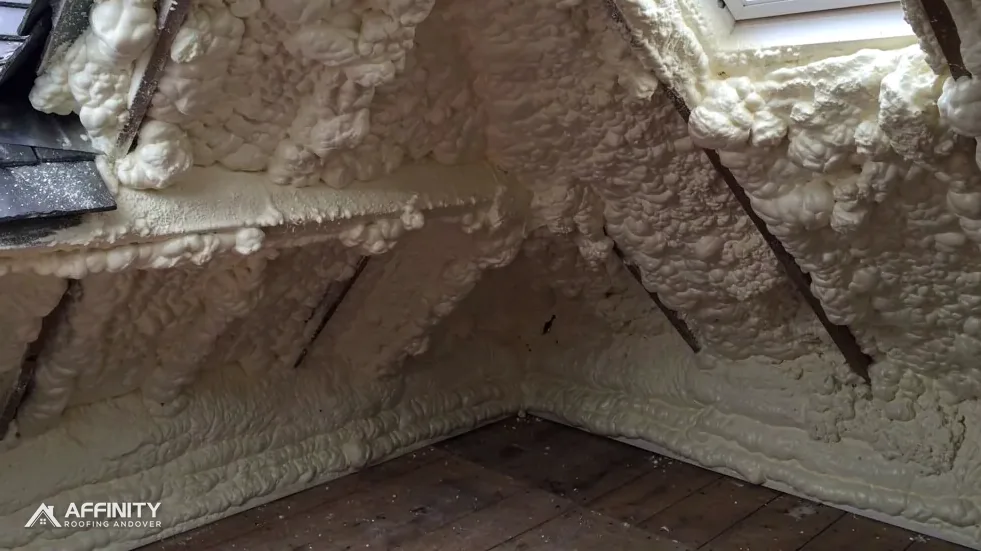
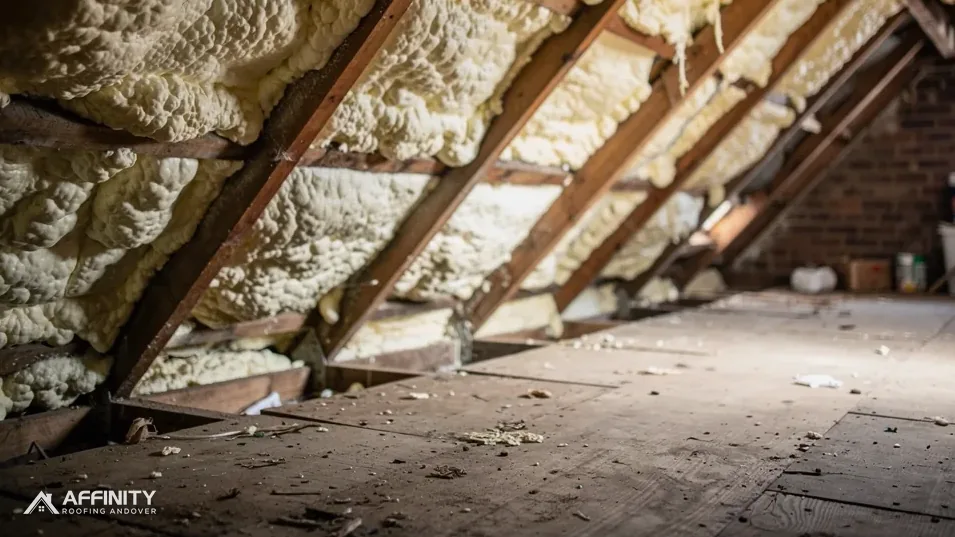
The most repeated point concerns the roof structure. According to the guide, timber that has been sprayed over "cannot be fully seen", and so cannot be fully inspected either. That is a statement about visibility, and it explains why surveyors treat foamed roofs with caution.
The guide goes on to warn that badly fitted insulation "can negatively impact ventilation", with moisture damage as a possible result. Neither passage says foam always causes harm. They say that a hidden roof cannot be checked, and that a poor installation can create the conditions for damp.
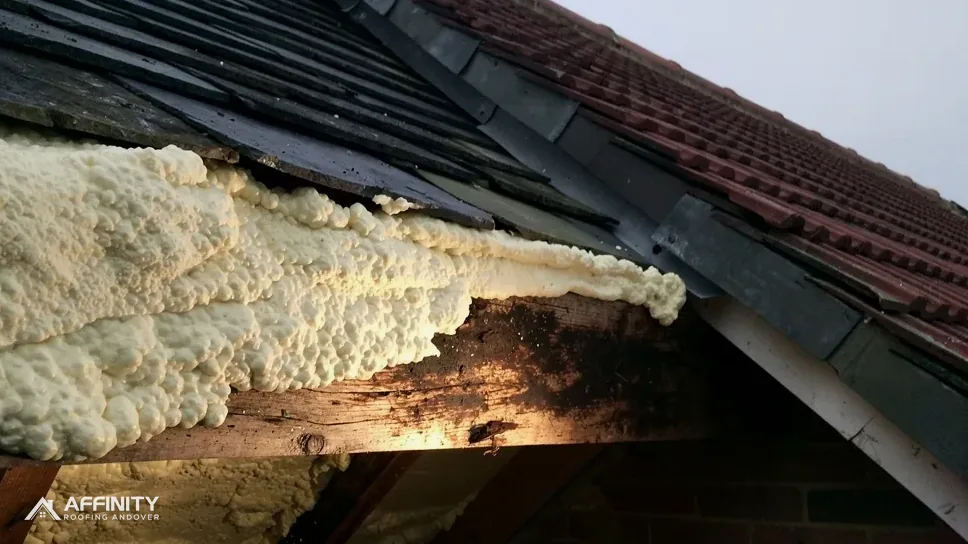
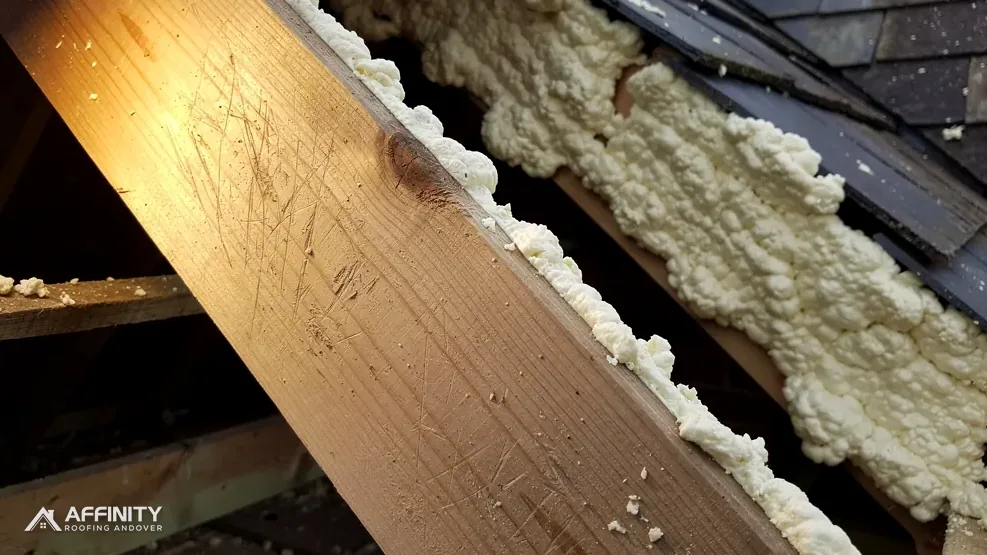
For an owner, the meaning is practical. If a surveyor cannot see the timber, the report may record that as a limitation, and a lender reading it may ask for more. That is where an inspection of the loft, or removal of the foam so the wood is visible, comes in, and the choice between them is yours once you have the findings. Our answer on whether spray foam damages roof timbers looks at the moisture question. Once the foam is cleared, the condition of the rafters is something you can see for yourself in our photographs.
What it says about lenders
The press release spoke of worry among particular lenders, equity release mortgages being the example, and said that worry was by then reaching other lenders. The consumer guide advises owners to "check with your mortgage provider" about their lender's policy on such products, which is the wording the guide uses.
Two cautions apply. The guide does not say that lenders turn away homes with spray foam, and we should not say it either. Nor does it list which lenders hold which policies, so there is no table to check your own provider against. It points owners to their own provider for the answer.
If you are selling, the same logic applies to the buyer's lender. A buyer who needs a mortgage will have a valuation, and the valuer follows whatever their lender's policy says. Raising the subject early, with photographs and records to hand, tends to make a sale smoother than leaving a surveyor to find it. Our page on selling a house with spray foam covers the sale side, and the answer on removing spray foam to get a mortgage covers the lending question.
How to use the guide on your own roof
Treat the RICS guide as a framework for questions. Can the timber be seen? Is the ventilation adequate? Does your lender accept the product? Those three are the ones to put to a surveyor, an installer or us.
The guide does not tell you what to do about a particular roof, and it is not a legal requirement. It does not say foam must be removed. Whether to remove it depends on what an inspection finds, what your lender needs and what you plan to do with the house.
We are roofers, not chartered surveyors, and we do not stand in for one. We inspect the roof from inside the loft, take photographs, and tell you in plain words whether the timber looks sound and what clearing would involve. You can pass the photographs and findings to your own surveyor or lender. The overall process is on our spray foam removal page, and you receive a written total once the loft has been seen.
To read the original, open the consumer guide on the RICS website and check the date at the top of the page.