The short answer
Because slate roofs fail from the inside first, and foam covers the place where you would see it. Slates hang on small nails that corrode out of sight, and foam sprayed up to the underside of the slates hides the nails, the battens and the first signs of slippage. That makes the roof harder to inspect, repair or re-slate.
Where slate roofs show their age
Natural slate itself lasts a very long time. HomeBuilding's table gives Welsh slate 100+ years, Spanish natural slate 75 to 100 years and reclaimed Welsh slate 50 to 80 years. The fixing can fail before the slate. Slates are held by nails through the head into the timber battens, the thin strips running across the rafters, and an old iron nail can rust through while the slate is still in perfect shape. The slate can look unchanged for years while the nail does its slow damage.
When that happens slates begin to slide in a run along the course, which roofers call nail sickness. In an open loft you find it by looking up: daylight at a slipped slate, a damp stain on a batten, rust marks, small pieces of slate on the insulation below.
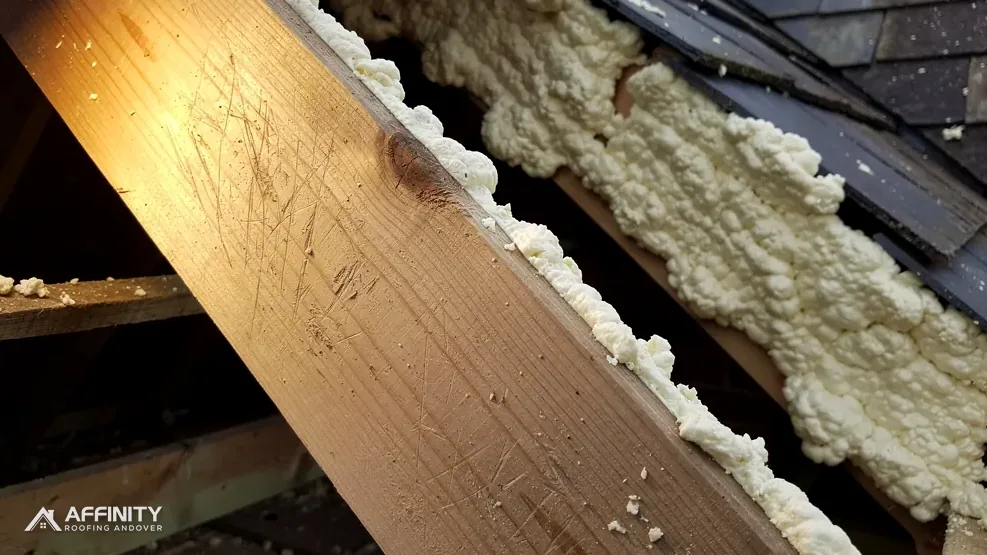
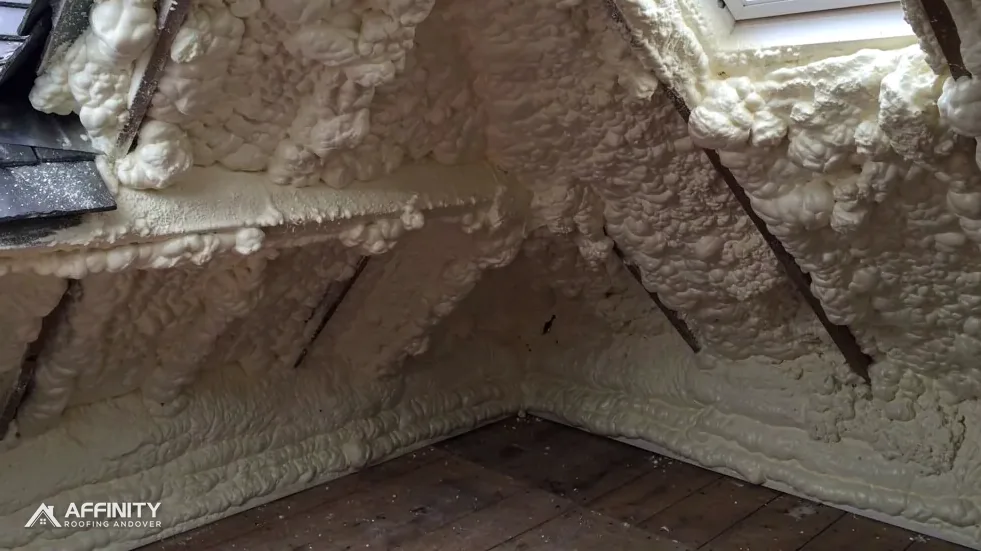
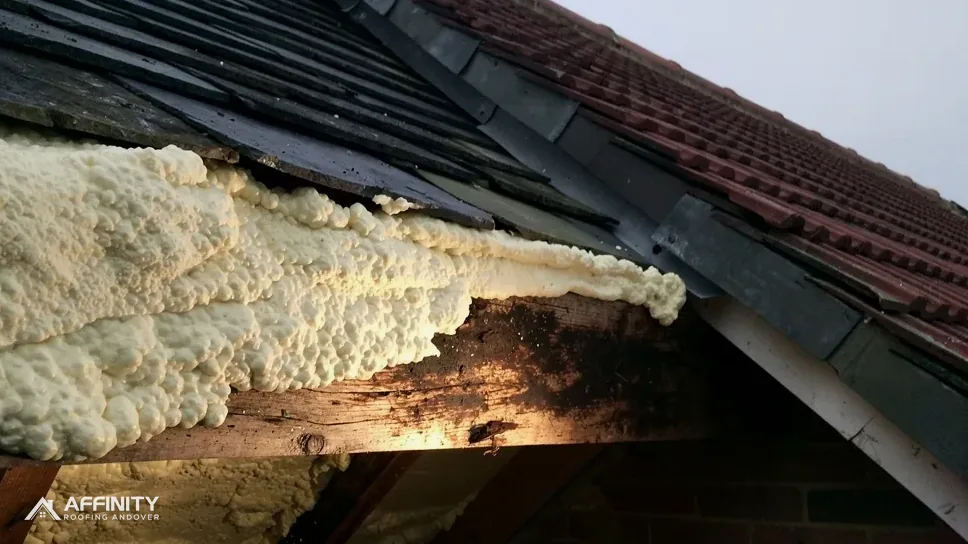
Foam changes all of that. Sprayed onto the underside of the slates, it covers the nails, sits against the battens and fills the gaps where daylight would show. The roof can keep its appearance while the fixings behind the foam deteriorate. Our answer on slipped roof slates covers what you can spot from ground level.
Nail sickness hidden behind the foam
The difficulty is not that foam damages slate. It is that foam removes your early warning. RICS warns in its consumer guide that foam over the roof timbers prevents a full inspection of them. For a slate roof that sentence has a particular edge, because the evidence of a failing nail is exactly the kind of small, low-down detail the foam conceals.
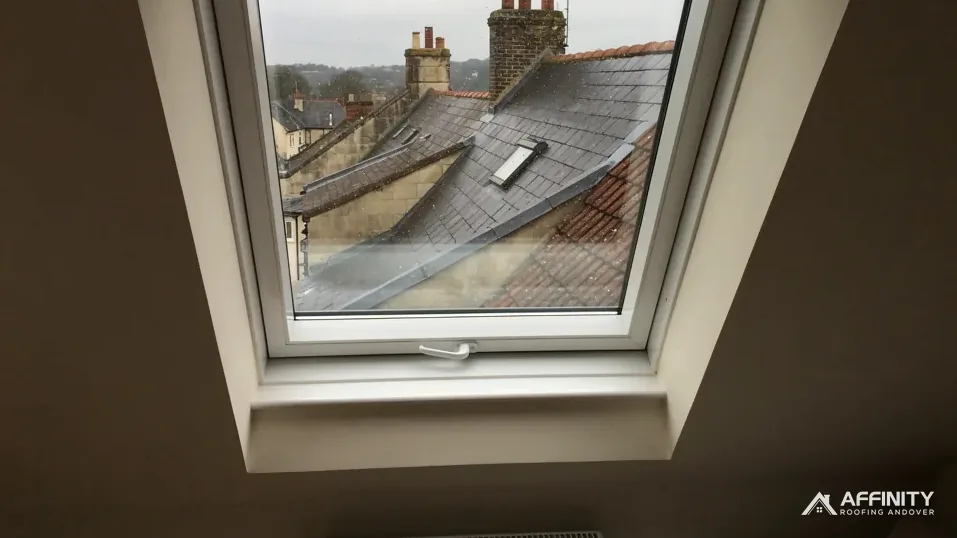
You may see the signs only from outside: a slate that has dropped a few millimetres, a gap that opens when the wind lifts it, slates found in the gutter or on a lower roof. By then the damage behind the foam could be spread over a wide area, and nobody can say how far without looking.
Moisture is the second concern. Slates let in a little wind-blown water at the best of times, and a lower layer that cannot dry or be seen means any dampness has no way to show itself. The Energy Saving Trust, on spraying foam onto a leaking roof, states plainly that it does not recommend doing so. Our guide to spray foam on a leaking roof covers that situation.
What re-slating involves with foam in place
If the slates do need renewing, the foam gets in the way. A proper re-slate strips the slates, checks and replaces battens, renews the underlay if it has failed, then relays the slates with new fixings, reusing the sound ones where they come off whole. Foam stuck to the back of slates and battens turns each of those steps into a cutting and scraping job.
Slates are brittle, so the extra handling raises the chance of breakage, and a damaged slate is one more to replace and match. Foam left on timber also has to come off before new battens or underlay can go on cleanly.
It is better to know this before you commission a quote, because it changes the size of the job. A roofer who looks only at the outside of a foamed slate roof cannot price a re-slate honestly. We would rather survey from the loft and the roof together, show you photographs of what each side looks like, and then set out the choice between a repair and a re-slate. The page on slate roofing covers the larger work, and the re-roofing after spray foam removal guide covers the sequence.
Inspecting a foamed slate roof before you decide
A sensible inspection looks from both sides. From outside, it checks for slipped, cracked or missing slates, loose lead, blocked valleys and any slates that rock when pressed. From the loft, it looks at how far the foam runs, whether it reaches the slates or stops at the rafters, and whether it can be lifted away at an edge to show the timber beneath.
Stay off the roof yourself, because slates snap under a footstep and a fall from height is serious. Pictures taken at ground level, plus a few from the hatch showing the foam, give us a useful start.
If the survey finds sound fixings and dry timbers, the foam may be left alone, and you hold photographic proof for a buyer or surveyor. If it finds corroded nails or damp wood, you will see the photographs and the reasoning. The cost depends on access, the area, how far the foam runs and what lies beneath, and the price follows as one total in writing. Dated pictures also help if the house is sold. Our spray foam removal page explains the steps.