The short answer
Look from the hatch. Spray foam is a continuous layer stuck to the underside of the roof, so you see foam where you would expect to see tiles, felt and bare rafters, with no loose quilt lying between the timbers. It may be hard and dense or soft and spongy. If you are unsure, photograph it and ask a roofer or surveyor to confirm the type.
What foam looks like from the hatch
Put your head through the hatch with a torch and look up at the slope of the roof. In an ordinary loft you see the underside of the tiles or slates, the horizontal battens, a dark sheet of underlay and the rafters running up the slope. Insulation, if there is any, usually lies on the floor between the joists as a rolled quilt.
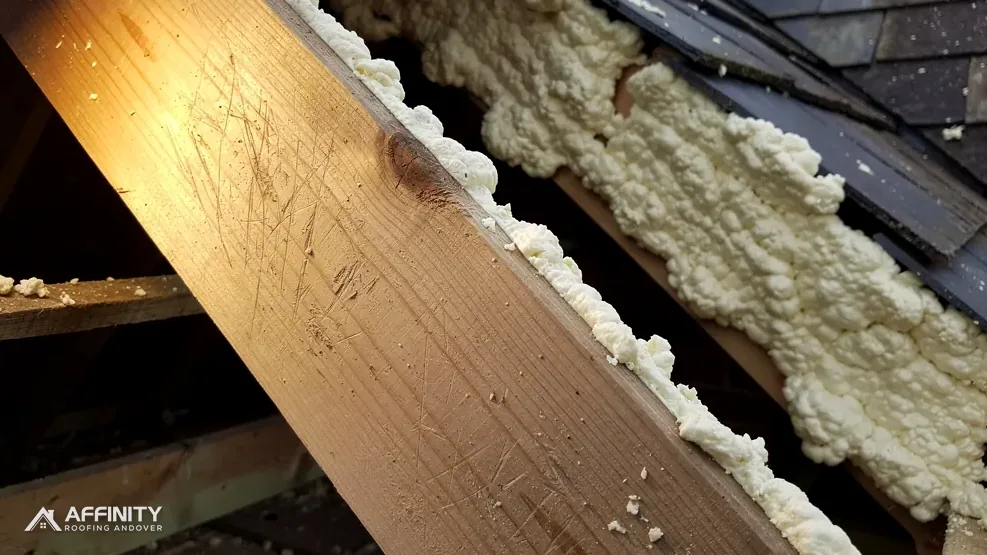
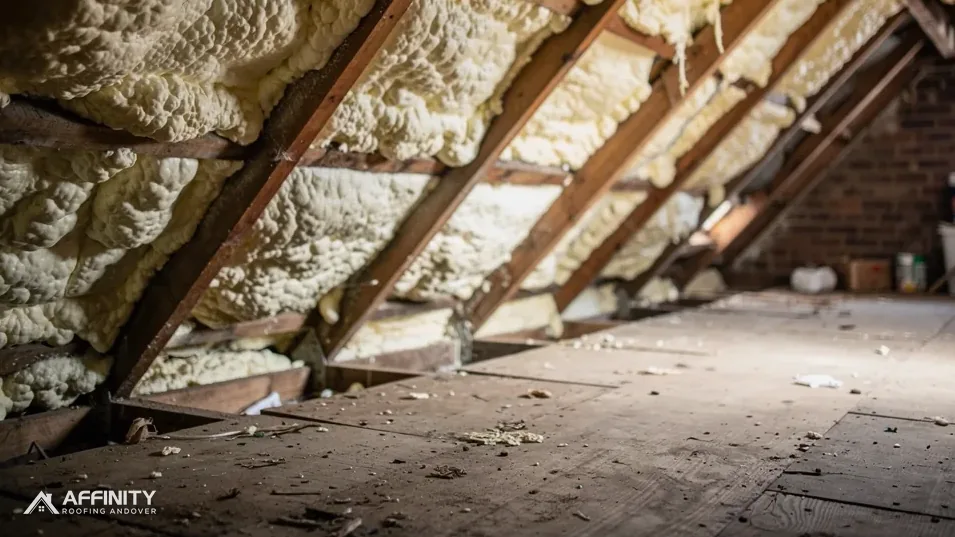
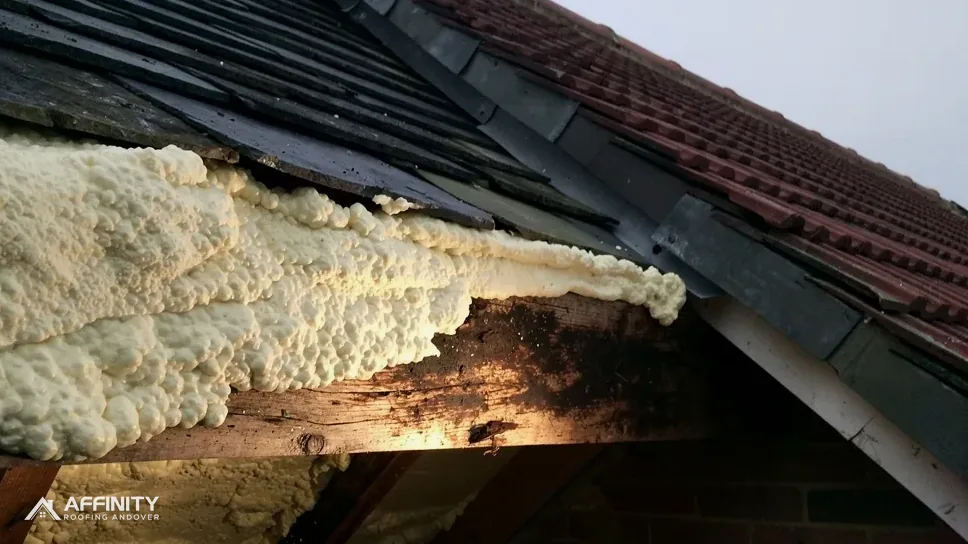
In a foamed loft that picture changes. The underside of the roof is covered by a continuous skin of insulation, often with a rough, pitted or slightly bubbled surface. Its colour varies by product, and the finish can be smooth in places and lumpy in others. The rafters, battens and underlay may be partly or fully hidden beneath it.
Look at the floor too. A loft with foam on the slopes often has little or nothing laid between the joists, because the insulation was moved up to the roof. A bare floor and a coated roof together are a strong sign. Please do not climb into the roof space without boards, and step only on the joists, since the plasterboard ceiling below will not carry a person.
Open-cell or closed-cell
There are two kinds of spray foam, and telling them apart helps whoever looks at the roof next. Closed-cell foam is dense and firm and tends to feel hard when pressed with a fingernail. Open-cell foam is the softer kind and gives slightly under the same pressure. Open-cell foam is lighter and softer and can feel springy, with a surface that gives a little. Our guide to open-cell and closed-cell spray foam sets out the difference in more detail.
The distinction matters because the two foam types hold moisture against the timber in different ways, and because the foam type affects how removal is planned. Do not cut a piece out to test it, and avoid breathing dust if the surface is crumbling. A gentle press with a gloved finger is enough.
The colour and look of foam vary between installers and products, so appearance alone is not proof of type. If you want certainty, the paperwork or a survey is the better route. We record the type in the written findings so you have it for any future sale or remortgage.
Paperwork and other clues
If foam was installed while you owned the house, the invoice, any warranty or the survey will say so, and may name the product. If you bought the house, the seller's information pack, the survey report or the solicitor's enquiries may mention it. Energy performance paperwork, home improvement records and old planning or building control files can also point to insulation work.
Outside the loft, clues are thinner, since foam leaves no mark on the visible tiles. Some roofs show no change from the street at all. Others may have been re-lined or re-tiled at the time the foam went in, so recent roof work on an older house is worth asking about. An installer's sticker or label left in the loft, or a hatch that has been oddly sealed, can also give it away.
If you are buying, tell your surveyor early, because RICS points out that wood buried under foam is out of view and cannot be checked properly. Ask what they will need. Your mortgage provider may also ask whether the house has any, so it helps to find out before you reach that stage.
Booking a survey to be sure
A roofer can often confirm foam within minutes of looking, but a proper survey says much more, and it is the version you can show to a lender or buyer. We go into the loft, photograph the foam where it meets the rafters, the gables and the eaves, identify the type if we can, and look for stains, loose battens and other signs of trouble nearby. You get a written explanation in plain words.
If the foam looks well applied and the roof sound, you are told exactly that. If there are signs that justify taking it out, we explain what removal would involve. Some owners decide to leave sound foam alone, and others need it out for a sale, a remortgage or a loft conversion. The decision is yours, based on what the photos show.
Our guide to the spray foam survey explains the visit step by step, and our spray foam removal page covers the work that can follow. Should removal be wanted, you are given a single written total once the survey is done.