The short answer
It can be. Roof felt, the waterproof underlay beneath the tiles or slates, is the second barrier under the covering, and foam sprayed onto it hides it from view. You cannot check it for tears, ageing or leaks, and taking the foam off later can damage it. Whether it matters depends on the felt's age and condition, which only a survey can tell you.
Why the underlay matters
Under the tiles or slates sits a sheet called the underlay, still widely called felt. Its job is to catch whatever gets past the covering: wind-blown rain, snow that drifts under a loose tile, condensation running down the underside. It is a back-up layer, and on an older roof it may be the only thing between a failed tile and a wet ceiling.
In a loft without foam you can look at it. You can see whether it is torn, whether it has sagged between the rafters, whether it is stained, and whether daylight shows where it should not. Those checks take a few minutes and tell you a great deal about the roof. That is how felt problems get caught before a ceiling stain does the reporting for you.
The type of underlay matters too. A high-resistance (HR) underlay is non-breathable, so it holds moisture-laden air back, while a low-resistance (LR) breather membrane lets vapour through. Foam bonded across either one changes how the roof deals with moisture, and nobody can then say with confidence which layer is doing what. Our guide to loft ventilation after spray foam looks at the airflow side.
An underlay you cannot inspect
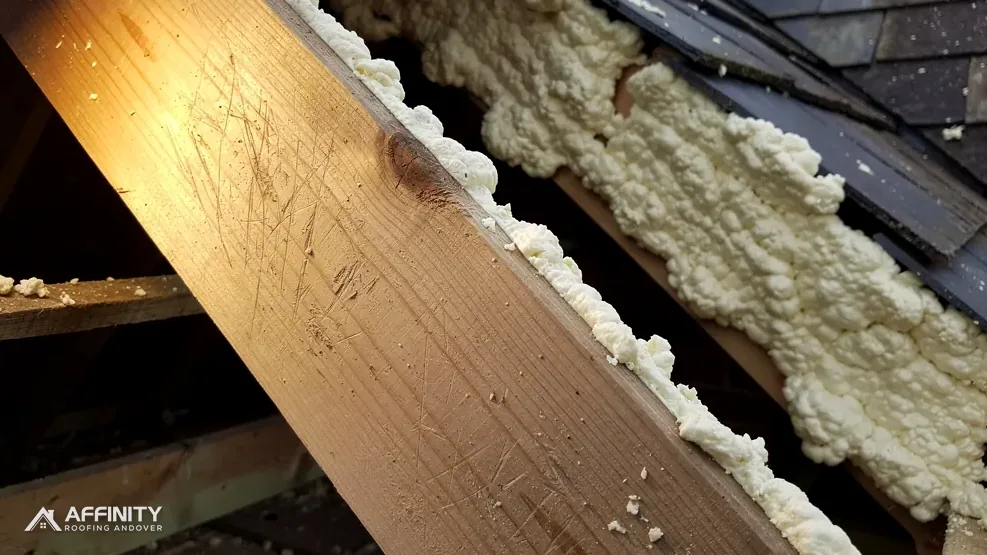
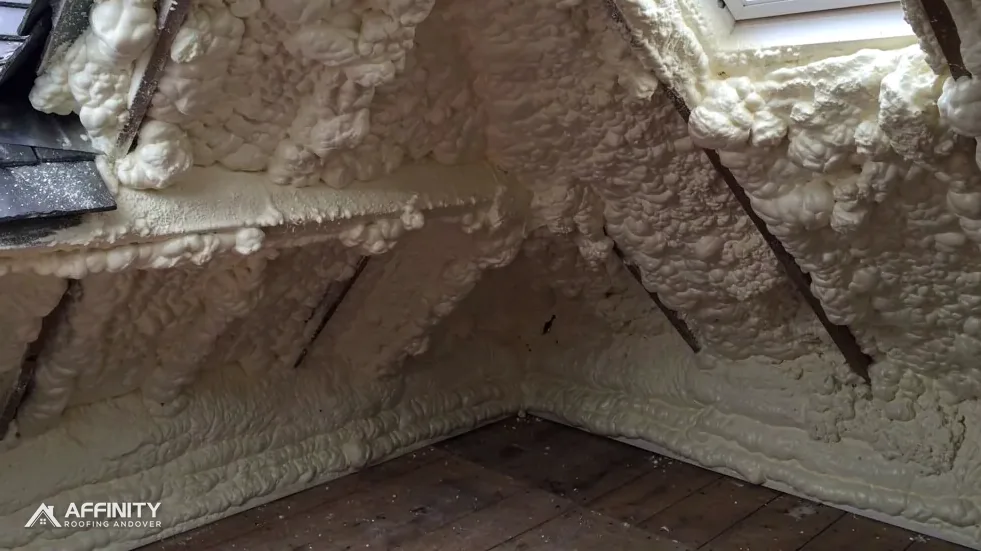
RICS's consumer guide makes the point that sprayed roof timbers cannot be properly examined. The felt lying across those timbers is in the same position. Once foam covers it, a tear or a rotted section may be invisible, and so is the dampness it lets through.
The first you may know of it is a stain on a bedroom ceiling, by which time water has already travelled. Even then, finding the source is awkward. Water can run along the felt and drop a metre or more from the real fault, and with foam in the way there is no surface to trace it along.
This is why a surveyor reading a report on a foamed house will usually note the limitation. They cannot say the felt is sound if they cannot see it.
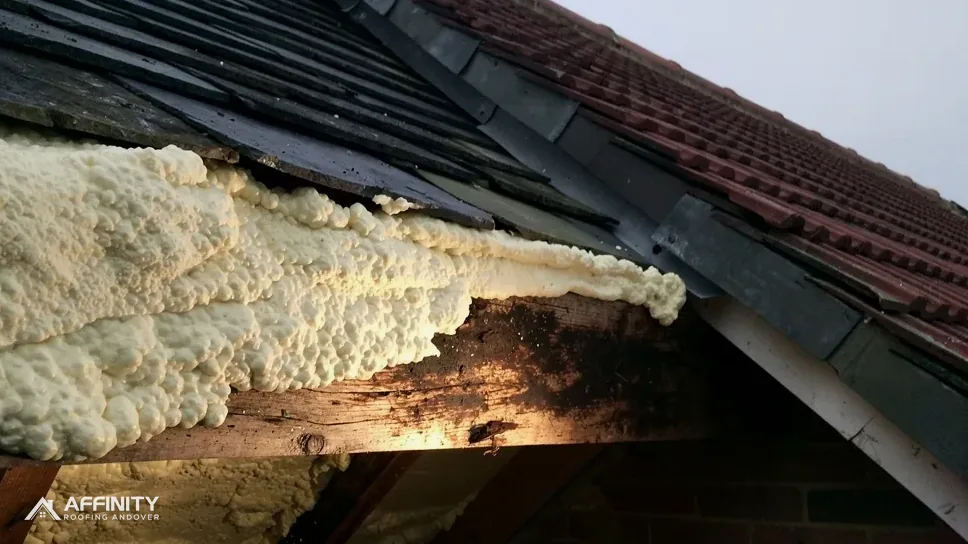
Our job at survey is to look for the places where the foam stops, around the eaves, hatch and any gaps, and see what the felt and timber look like there. That sample often tells us whether to go further. The spray foam survey page explains what we record.
What removal does to the felt
Foam sprayed straight onto felt can grip it. Lifting the foam away may then pull at the felt, tearing it or lifting it from the battens it is tacked to. The pace of the work matters here, because felt is easiest to protect when the foam is lifted slowly. Older felt is brittle and gives up easily, and even newer felt can be marked by scraping tools. We work slowly in these situations, but a tear that was not there before is a possibility, and we tell you before the work starts.
It is better to find that out at survey than part way through. If the felt looks tired already, removal and replacement can be planned as one job instead of two separate surprises. If it looks sound, we can choose a gentler method, taking the foam off in pieces, working with the grain of the batten and checking the felt as it appears.
Please do not try to peel foam off yourself. A torn underlay over an occupied bedroom is a much bigger problem than the foam it replaced. Our spray foam removal page sets out how we go about it.
Replacing the felt afterwards
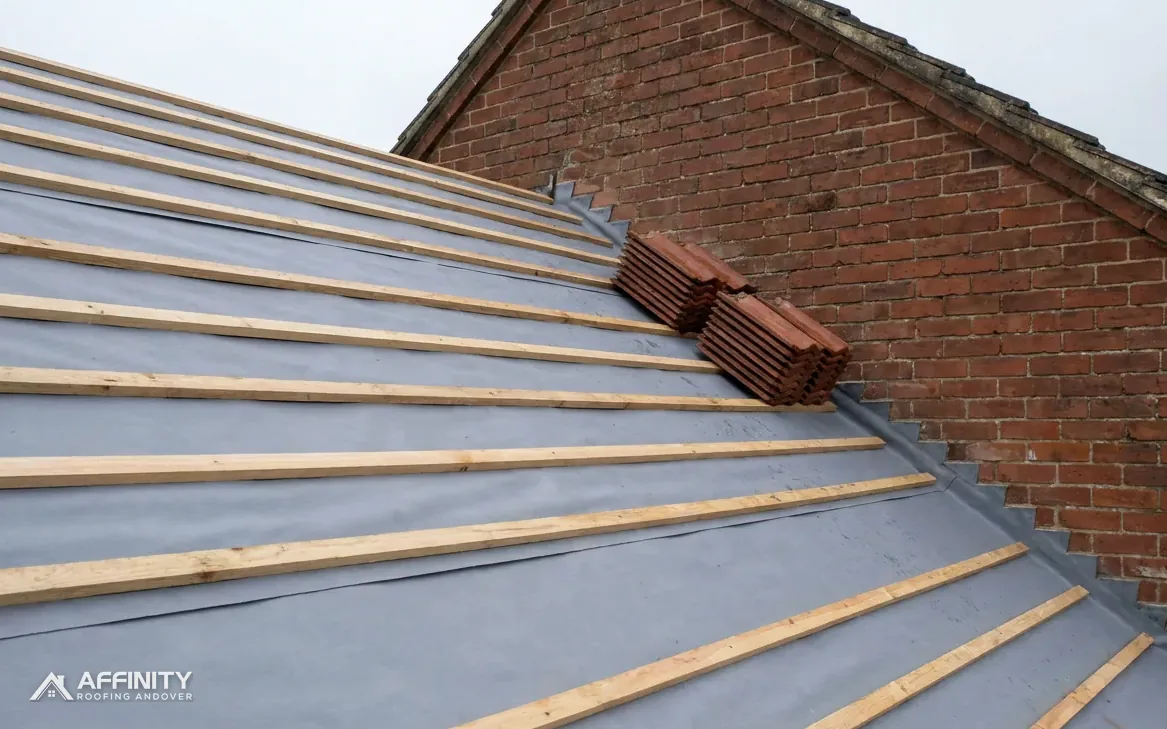
If the felt comes off damaged, or the survey shows it was past its best, it needs replacing. On a pitched roof that is not always a simple loft job. New underlay is normally laid from outside, across the rafters, beneath the battens, so reaching it may mean lifting the tiles or slates in the affected area, fitting the new sheet and relaying the covering.
It is also the point where a repair can turn into a partial or full re-roof, so we explain the choice before any figure is mentioned. The pictures from the removal itself show which case you are in. Where the covering is sound, the work can be limited to one slope or one section, and where it is failing across the roof it may be better value to do it once.
The cost depends on the area, the covering, the way in to the roof and what the survey turns up, and we give a single written total afterwards. Planning the felt, the timbers and the new insulation as one sequence is cheaper than doing them one at a time. The guide to re-roofing after spray foam removal sets out the order of work.