
Roofers in Tidworth
Roof repairs and re-roofs across Tidworth, under one Wiltshire council
Tidworth is a Wiltshire town of 12,007 people with a Grade II* church and an Article 4 area in the council's own data. We survey each roof before pricing it.
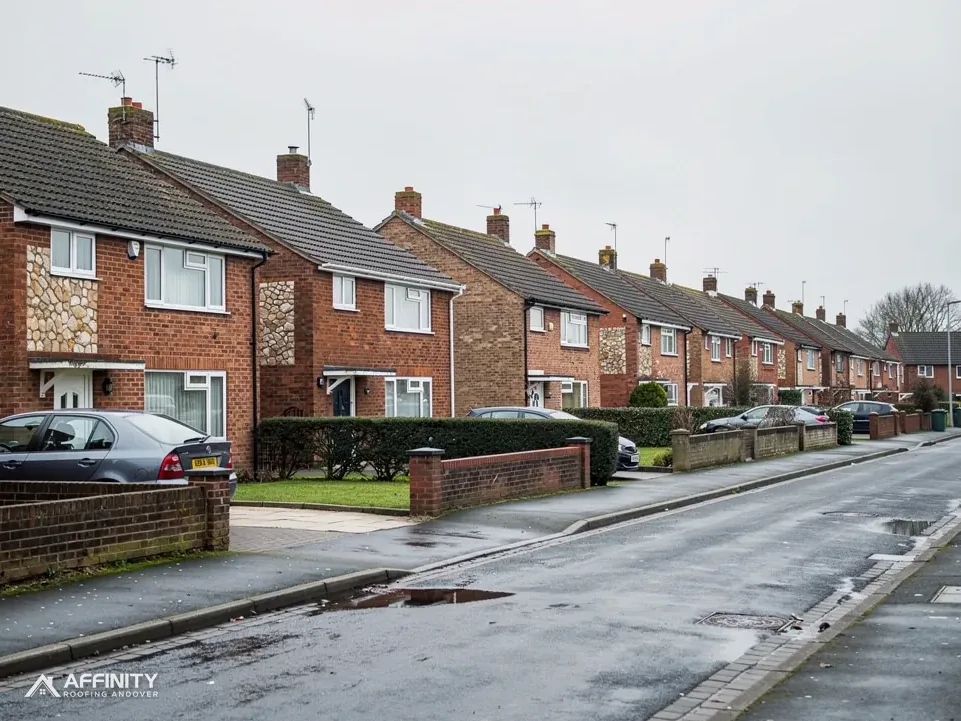
Tidworth roofs, church to Pennings Road

Church of the Holy Trinity
A Grade II* church first listed on 13 June 1988, whose roof works are cleared through a faculty.

Listed houses on Bulford Road
447 Bulford Road and The Lodge, both Grade II and first listed on 24 October 1984.

Pennings Road homes
381 and 382 Pennings Road, a Grade II pair, among 18 listed buildings within about 900 metres of the centre.
Tidworth beside Perham Down and Ludgershall
Perham Down lies east of Tidworth, Ludgershall north-east and Shipton Bellinger south, with Collingbourne Ducis north, Thruxton south-east and Appleshaw east. Our roofers work in every one of them.
- Distance
- 10.9 road miles west of Andover
- Planning
- Wiltshire Council
The Tidworth roof report
Local editionTidworth, WiltshireA large Wiltshire town and its paperwork
Tidworth roofs: a town of 12,007, one Wiltshire council and an Article 4 area to check
Tidworth is a Wiltshire town with 12,007 residents at the 2021 Census, a Grade II* church and 18 listed buildings near its centre. This report sets out which authority rules on a Tidworth roof, and what an owner should check first.
Eighteen listings in a town of twelve thousand
Tidworth parish had 12,007 usual residents at the 2021 Census. Against that, Historic England's list shows just 18 listed buildings within about 900 metres of the town centre. Whether a house is one of those entries, or stands beside one, we check every Tidworth address against that list before the survey is booked.
The Church of the Holy Trinity is listed Grade II* (list entry 1036009, first listed 13 June 1988). For an Anglican church in use, permission for roof work comes through a faculty and not through listed building consent. 447 Bulford Road (1093202) and The Lodge (1093203) are Grade II, listed on 24 October 1984, and 381 and 382 Pennings Road (1036008) are a Grade II pair.
A listed Tidworth house needs listed building consent from Wiltshire Council for work that touches its character, as well as any planning or building control the job brings. We assemble the application from pictures of each slope plus a brief written account of the covering as found and the repair proposed, so the officer reads a complete case without calling.
The more useful local fact for a roof owner is the Article 4 area. Wiltshire Council has an Article 4 area of its own for Tidworth, and it overlaps the ground around the town point. Such a direction withdraws named permitted development rights across a defined area. Which rights this one removes is the council's to say, and we ask it in writing.
Conservation areas are a separate question. Wiltshire Council's map settles the conservation area question for each Tidworth address, and it is the place to check before any job altering a roof's appearance. We make that check during the survey and hand you the result.
In a town this size roofs vary enormously, from small porches to broad pitched slopes, flat extensions and roof windows. That is why we assume nothing. The survey names the covering, how it is held and what the timber beneath looks like, with a picture of each, before any figure is mentioned.
Our planning permission for roof work guide gives the national picture.
Buyers and sellers benefit from the paper trail. Dated photographs, the council's answer on any Article 4 question and a written price give a conveyancer something to read.
We also look inside. In the loft we look beneath the covering for daylight, damp and rotten battens; a roof can seem sound from the garden and be failing inside. Signs of a nest or roosting bats are reported to you at once, and work around them waits.
One council holds three jobs
Tidworth sits in Wiltshire Council's area, and because Wiltshire is a unitary council, planning, building control and highway licensing all come from the same office. In a Hampshire district town the same roof job could involve a borough and a county. Here a single council is behind every question, which keeps the paper trail short.
The Building Control service Wiltshire Council runs is based at Monkton Park in Chippenham, with a booking and payment line on 0300 456 0113 on weekdays. A registered building control approver offers a private route, a role regulated since 6 April 2024. We decide which of the two suits a job before booking the scaffold, then put the decision in writing for you.
Planning Portal guidance draws the national line for a re-cover at a quarter of the building envelope and half of the roof. Below both lines, building control stays out of it. Each slope is measured against those limits on the visit, and a job close to one is talked through with you before you commit to anything.
Load is the other trigger. Should the replacement covering weigh 15 per cent or more over the old, Building Regulations approval is needed and the frame beneath is checked. Existing coverings on older roofs can be lighter than their replacements, so the rafters are inspected before anything heavy is recommended.
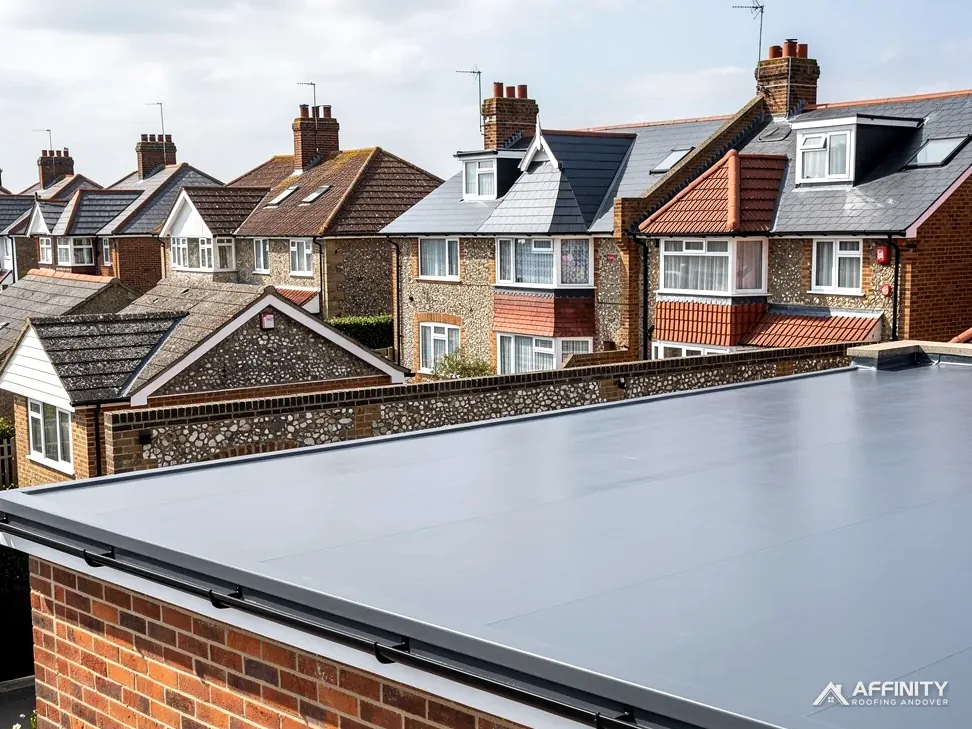
Flat roofs on extensions and garages follow their own logic. They are judged on falls and drainage, and standing water on a membrane is the first sign of trouble. Our flat roofing page sets out the options.
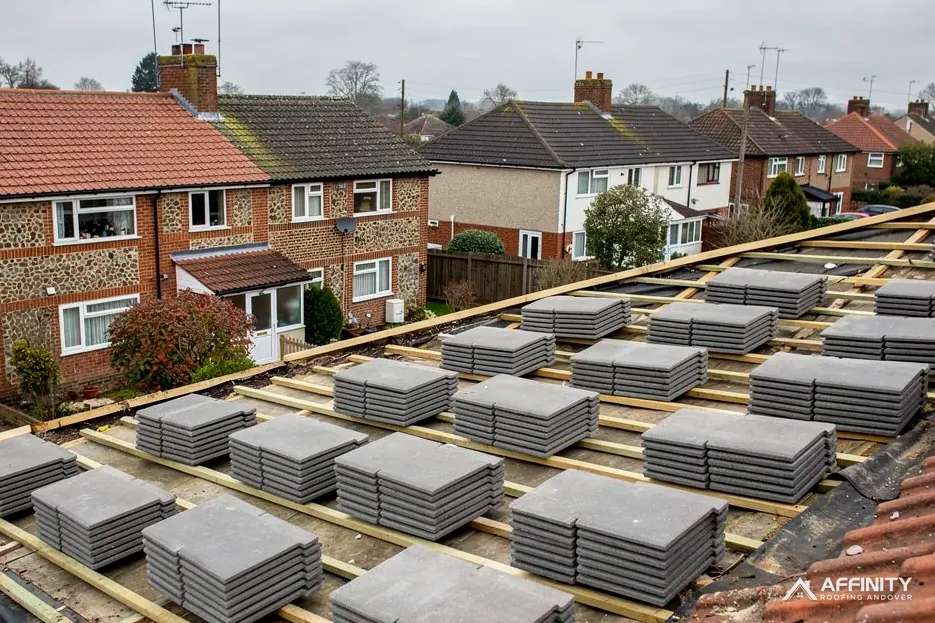
On pitched roofs the real choice is repair or re-cover. Repairs such as slipped tiles or a lifted flashing belong on our roof repairs page. Where a whole slope has failed, a re-cover is the answer, and the proof is shown to you.
Everything is collected in a file for you to keep: the photographs, the council's answer if one was needed, and the written price.
Roof windows sit between the two worlds. Cutting a window into a pitched slope changes that slope's frame and insulation, so our skylights page deals with the building control side as well as the glazing. We cross-check the opening against the rafters during the survey, before any window is ordered.
“Tidworth's Article 4 area is in Wiltshire Council's own data, so check it before changing a roof's look.”
Source: Wiltshire Council Article 4 data, via planning.data.gov.uk
Flood Zone 2, scaffold notice and everyday work
On the Environment Agency's Flood Map for Planning, the centre of Tidworth falls in Flood Zone 2. That is a land classification used in planning. It names no street and has no say over whether a roof may be mended. We mention it because roof water leaves through gutters and downpipes, so outlets, brackets and the ground by the walls get checked on every survey.
Scaffold that blocks any part of the highway is licensed under section 169 of the Highways Act 1980, and in Tidworth the licensing body is Wiltshire Council. Its MiPermit portal is where the scaffold supplier applies. Wiltshire Council's fee turns on notice: £143.80 when the notice exceeds three working days, £164.70 when it falls short.
Notice is therefore part of planning a job. The scaffold date is fixed early enough for the lower fee to apply, and the scaffolder is told in good time. Wiltshire Council also says unlicensed scaffold attracts a late fee of £292.50, so the licence is in hand before the first pole goes up. Hoarding, the fencing around a work area, is licensed separately from scaffold under Wiltshire's rules, and we say at survey whether your job needs it.
Where scaffold can stand wholly on private ground, no highway licence comes into it. Where a plot has room, scaffold can go up on the owner's own ground and leave the pavement untouched, a choice open to a Tidworth house with the space. That is checked during the first visit, and you hear the answer then.
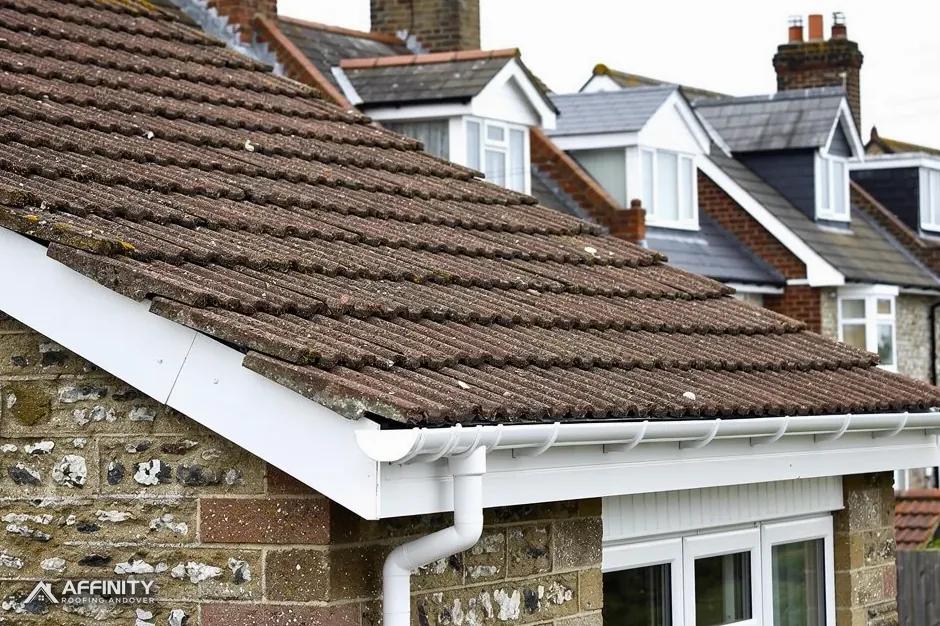
Tidworth's services are varied. Pitched roofing covers whole slopes, with tiles, battens and underlay. Guttering, soffits and fascias deal with the eaves. Roof windows are handled on our skylights page, where the rules on glazing and insulation are set out.
Each job closes with a tidy site. Waste goes as the work proceeds, the scaffold is struck, and the ground is checked for fallen tile or mortar. At the end, new photographs of the finished roof sit alongside the survey set, and both go to you with the price.
Each survey finishes with a written total, one figure that already includes the scaffold and its licence, the roof work itself and the waste carted away. The consent route is named alongside it, so you know in advance who must say yes.
A busy road needs a delivery plan. The standing places for the tile lorry and the skip are chosen in advance, walkers are kept clear and neighbours get the dates.
A message with the address and a photograph starts things, and the reply names the council rules that apply to your roof.
Our services for Tidworth homes


Tidworth roofs: Article 4, flood map and scaffold notice
What does the Article 4 area in Tidworth mean for a roof repair?
Wiltshire Council's data lists an Article 4 area for Tidworth. Such a direction withdraws certain permitted development rights across a defined area, and which rights it removes is for Wiltshire Council to confirm. A repair that keeps the roof's present look is unlikely to be touched, but we ask the council in writing before pricing any change, and send you its reply in writing, dated, to keep with the survey photographs.
Is my Tidworth house roof affected by the Flood Zone 2 classification?
Not the roof itself. The town centre is mapped in Zone 2 on the Environment Agency's Flood Map for Planning, a planning classification of land that names no street. It does remind us that roof water has to drain away, so gutters, downpipes and the ground alongside the walls are checked at survey, with photographs of each. Nothing is guessed.
What does Wiltshire's scaffold notice period change on a Tidworth job?
Wiltshire Council's fee is £143.80 when the notice exceeds three working days and £164.70 when it falls short. Wiltshire Council also says every licence lasts 28 days, with the scaffold supplier applying through its MiPermit portal. The date is fixed early so the lower fee applies. Private ground needs no highway licence at all.
Do I need building control to replace a flat roof in Tidworth?
The question is the same as for any roof. Planning Portal guidance draws the line at a quarter of the building envelope and half of the roof; a job under both generally needs no application. Building control comes from Wiltshire Council's service or from a registered approver, and the route is confirmed at survey and written down.
Have a Tidworth roof surveyed
Give us your address and a photo. A visit and survey follow, then a written price and the route for consents.
10-year workmanship guarantee, in writing.