The short answer
Start with the builder and your warranty papers, not a roofer. A new home usually comes with a builder warranty and, if it is NHBC-registered, a Buildmark policy. Foam added during construction is a matter for the builder to explain, and your mortgage provider needs to hear about it. Collect the documents first, then get the loft surveyed.
Find out who fitted it and when
In a new build, foam can be fitted by the developer's own contractor during construction, or added later by a previous owner. The first step is to establish which. Look for the sales pack, the specification, the completion paperwork and any handover documents. Insulation is usually named in them.
If the foam went in during the build, the builder is responsible for explaining it. If it was added afterwards, the installer or the earlier owner is the first point of contact, and the page on spray foam installer paperwork explains what to ask them for.
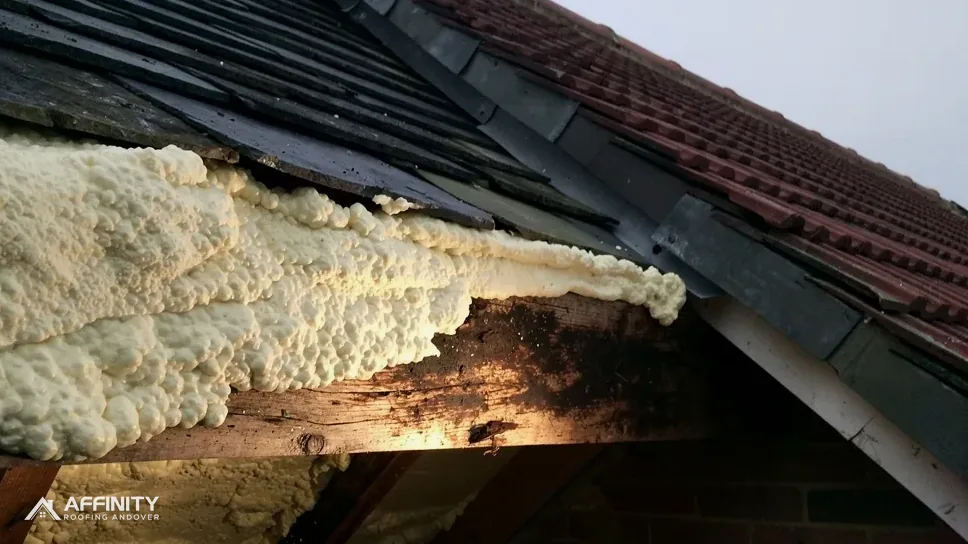
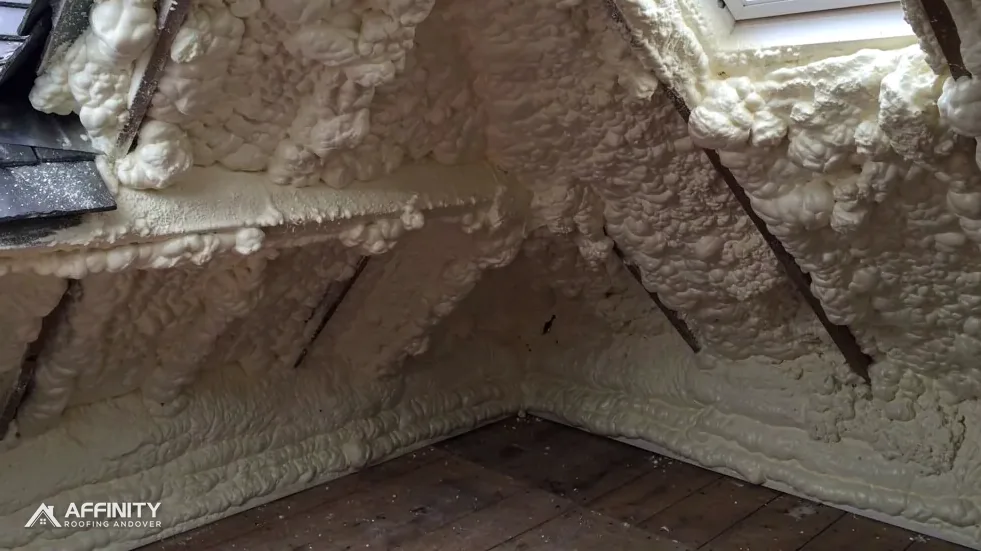
Do not remove anything yet. Taking foam out before the builder or the warranty provider has seen it can complicate a claim, because the evidence is gone. A visit from the loft hatch, with photographs, records what is there without disturbing it. That evidence is useful whether the dispute is with the builder, an installer or a previous owner, and it is the first thing a warranty provider will ask for when you report a problem. Write down dates as well: when you bought, when you noticed the foam and when you contacted anyone.
Your NHBC Buildmark papers
Many new homes in England are covered by an NHBC Buildmark policy. NHBC says the builder stands behind the house at the outset, and the policy then moves to "eight years of insurance cover" for defects, but only in some named parts of the building.
That tells you the structure: the builder is answerable at the start, and an insurance period follows for some parts of the house. Which parts, and whether a particular insulation issue falls within them, is set out in your policy documents, and we cannot say how it applies to your house. Do not assume either that foam is covered or that it is not.
Read your Buildmark documents, note the completion date and the date on which the cover changes stage, and contact the builder in writing. If the home is not NHBC-registered, another warranty provider may have been used, and the same approach holds. Keep copies of every letter and email, and note who you spoke to and when. If the builder responds, ask for the specification of the insulation and the date it was fitted. Those two facts help a surveyor judge what they are looking at, and they help your lender understand it too.
Why the lender needs to know
In March 2023 RICS reported unease in certain parts of the mortgage trade, with equity release as the example, and its advice to owners was to ask their own provider how it treats foam.
For a new build, this is easier to raise because you can say the foam was part of the original construction, supported by the paperwork. The lender may want the builder's confirmation, a survey or both. We cannot say what any lender will decide, so ask yours directly and keep the answer.
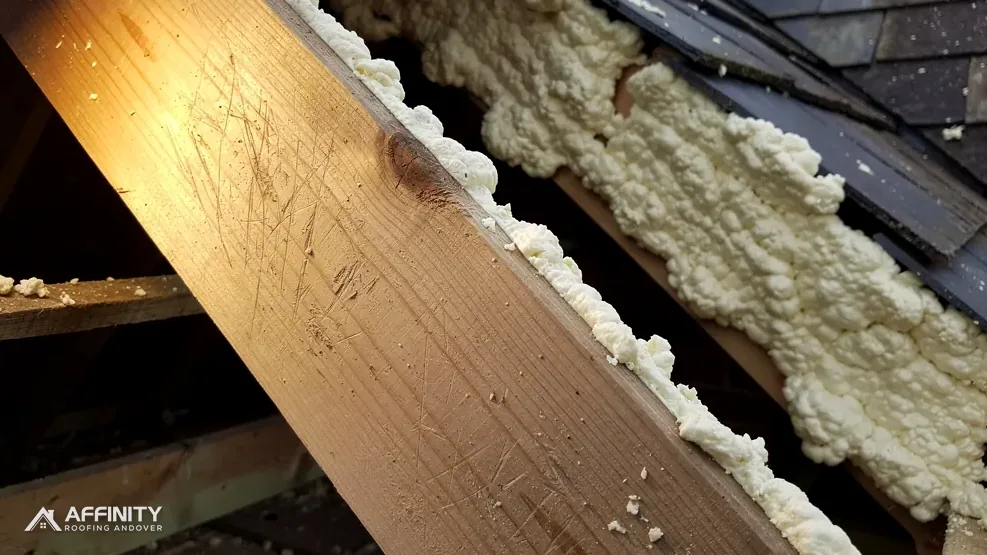
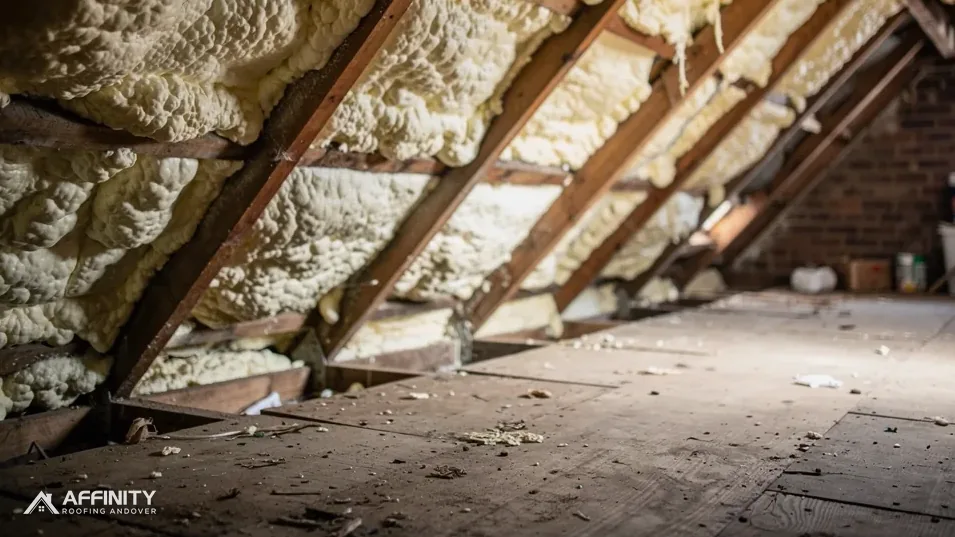
The same guide makes a point about the roof structure: wood under a foam layer is out of view and cannot be properly checked. In a young house, the timbers are likely to be recent, but nobody can confirm their condition under the foam without looking. That is why a survey is useful even when the house is new. Our summary of the RICS spray foam guidance gives the dates and the exact wording if you want to show it to the builder or lender.
When removal makes sense on a newer house
Removal is one option, not the automatic answer. Once the builder has responded, the warranty provider has been told and the lender has said what it wants, you will know whether clearing the foam is needed, and who should pay.
If it is, the sequence is the same as on an older house: a survey, photographs of the foam, clearance, inspection of the timbers, repairs where needed and ventilation checks. A newer roof is more likely to have a modern membrane and engineered trusses, so the details differ, and we look at what the loft shows. Our page on the spray foam removal process sets out the steps.
If a builder or warranty provider agrees to deal with it, let them have access, and ask for a copy of the findings. If they decline, you can still go ahead on your own account, with the record you made earlier. Citizens Advice runs a consumer helpline on 0808 223 1133 if you need advice on a dispute with a builder. The overall picture is on our spray foam removal page, and after the survey you are given a single written total.