The short answer
It varies from loft to loft, so no firm can give one fixed number of days without seeing the roof. The size of the loft, the type of foam, how thickly it was sprayed and what it is stuck to all change the time. After a survey you should be given a plan for the days, in writing, and told what happens on each.
What sets the number of days
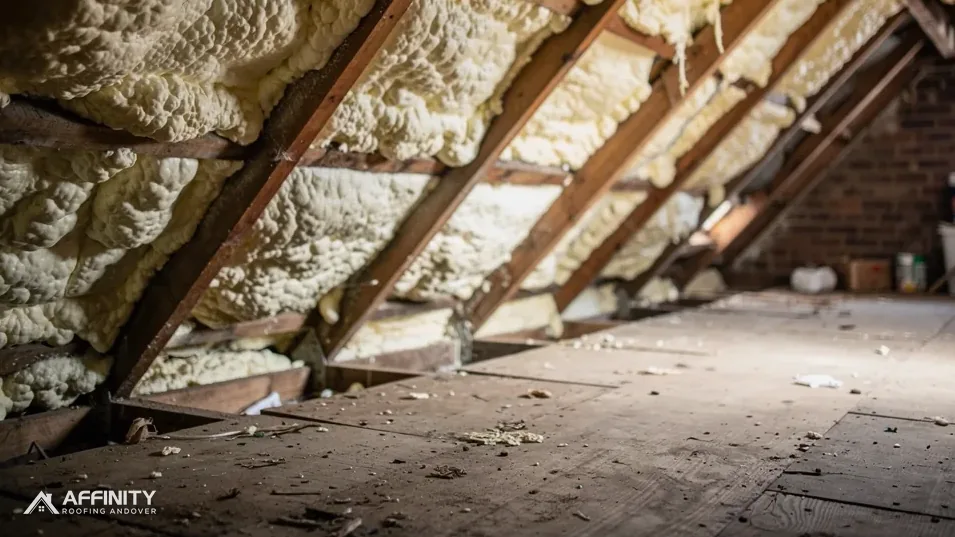
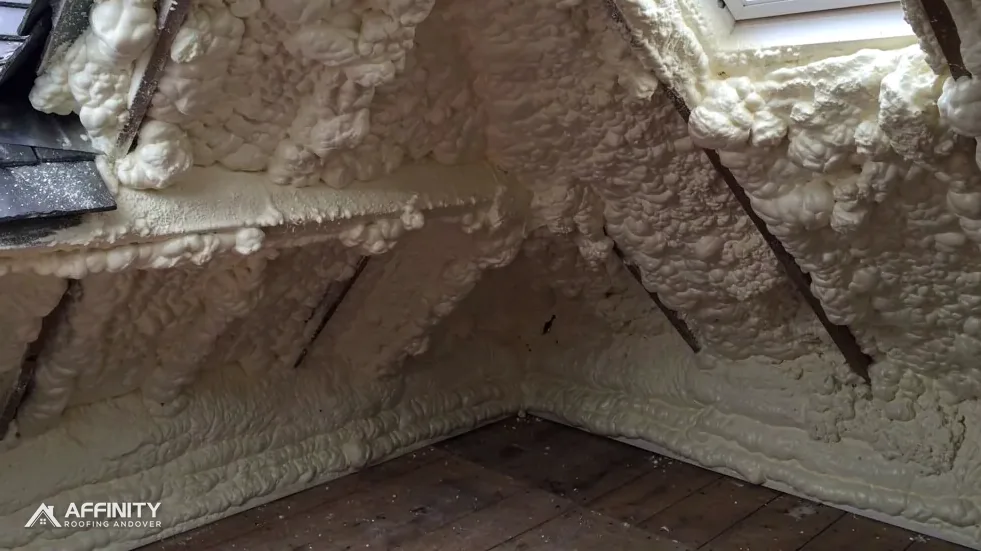
The first factor is area. A loft over a small extension involves far less foam than a full roof space over a detached house, and the time grows with the surface to be cleared, not with the floor area alone, since foam covers the sloping rafters as well as the gables.
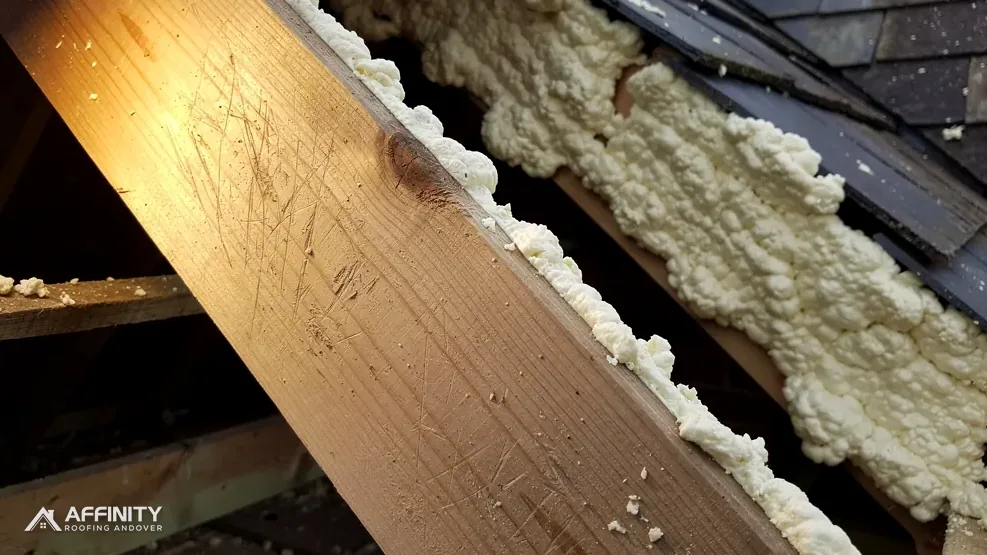
The second is thickness and type. Foam sprayed thinly on the underside of tiles comes away differently from foam built up several layers deep between rafters. The two main types, open-cell and closed-cell, also come away in different ways, one being soft and the other hard and dense.
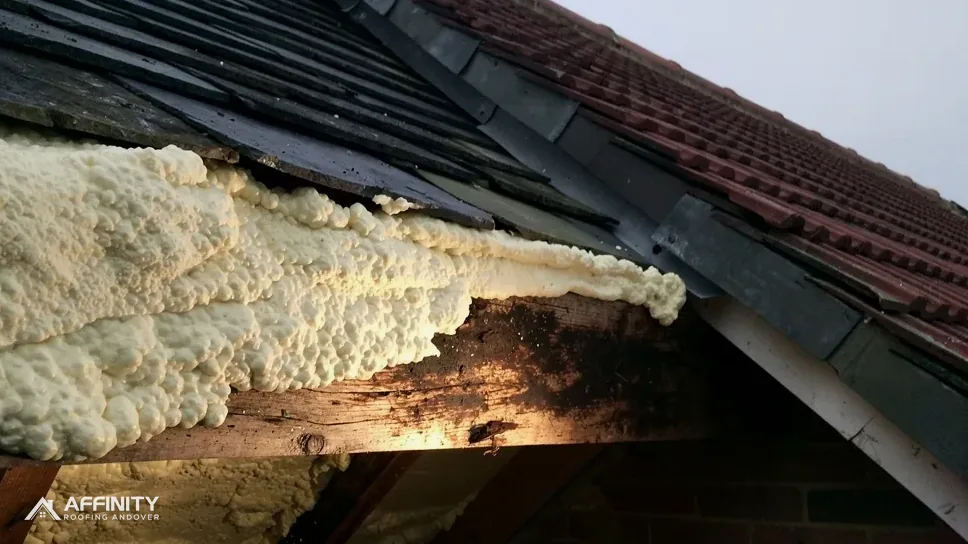
The third is what lies beneath. Foam stuck to bare timber is one task. Foam that has bonded to an underlay, to slates or tiles, or to the back of felt is slower, because the aim is to leave those parts intact and inspectable. A roof with a lot of obstructions, such as pipes, cables and wiring running through the rafters, takes more care and so more time. Access is the last factor: a wide hatch and boarded floor make the work smoother than a narrow hatch and loose insulation.
Why the days wait for the survey
A number given before anyone has seen the loft is a guess, and a guess about days has a way of becoming a promise. We would rather look first. The survey tells us the area, the foam, the covering and the access, and from those we can set out a working plan with the number of days we expect.
Even then, the plan can change when the foam is off. What lies under it can be a surprise: a section of timber that needs attention, a leak that the foam was sealing in, or a covering that needs repair before the roof is closed up again. If something of that kind turns up, we stop, show you what we found, and agree the next step with you before going on.
You can use the same test on any firm you ask. If someone names a duration without visiting, ask what it assumes about the size of your loft and the type of foam. A firm that answers with the survey as the first step is telling you something useful about how the rest of the job will go. Our spray foam removal process guide follows the job from survey to handover.
How the days are usually used
A removal tends to follow a sequence, whatever its length. The first period goes on setting up: protecting the route to the loft, laying sheeting, and arranging safe access and lighting. Then comes the clearing itself, area by area, with the waste bagged and carried out as the work proceeds, so it never piles up inside the house.
Once an area is clear, it is checked: timbers, underlay and fixings are looked at and photographed. Only after that does the work move on. At the end there is a clean-up, a final inspection and a written handover with the photos, which gives you a record of the loft as it now stands.
Re-insulating is usually a separate step, planned after the loft has been inspected and dried out. If you are converting the loft or selling, the order of these stages matters, and we plan the visits with that in mind. The time for new insulation is not part of removal, and is covered in our guide to insulation after spray foam removal.
Planning around the work
Tell us about any dates that matter, such as a house sale, a survey for a mortgage or a loft conversion starting. We can then plan the order of work around them and say plainly if a date looks tight. If the roof covering turns out to need repair, that also affects when the loft can be left open.
At home, clear the area around the loft hatch and the landing so the team can bring equipment up and waste down. Tell us about pets, children or anyone with breathing difficulties, since dust and noise are part of loft work. Our answer on staying at home during spray foam removal goes through what to expect.
Before each day starts you are told what is planned, and when the team leaves the loft and landing are left tidy. If anything changes, you hear it from us on the day, not on the last afternoon. The quote is a single written total, given once the loft has been looked at, and it covers the job as planned. Our spray foam removal page describes the whole service.