The short answer
Mostly, yes. The bulk of the foam can be taken out, but a thin film may stay stuck to rough timber or to the underlay beneath, and how much depends on the foam and how it was applied. The aim is to leave the roof structure open to view, because RICS says timber covered in spray foam cannot be fully seen or inspected.
What comes off and what may stay
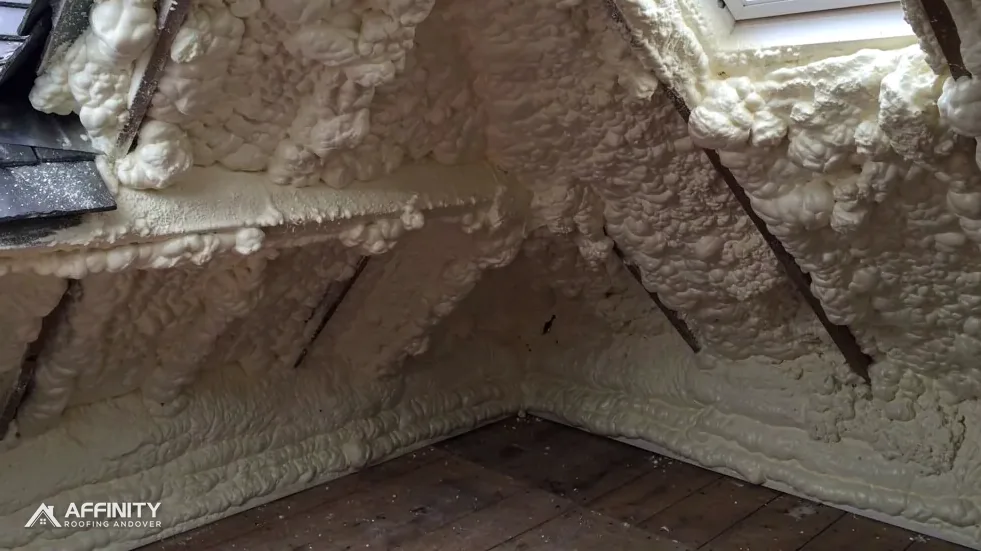
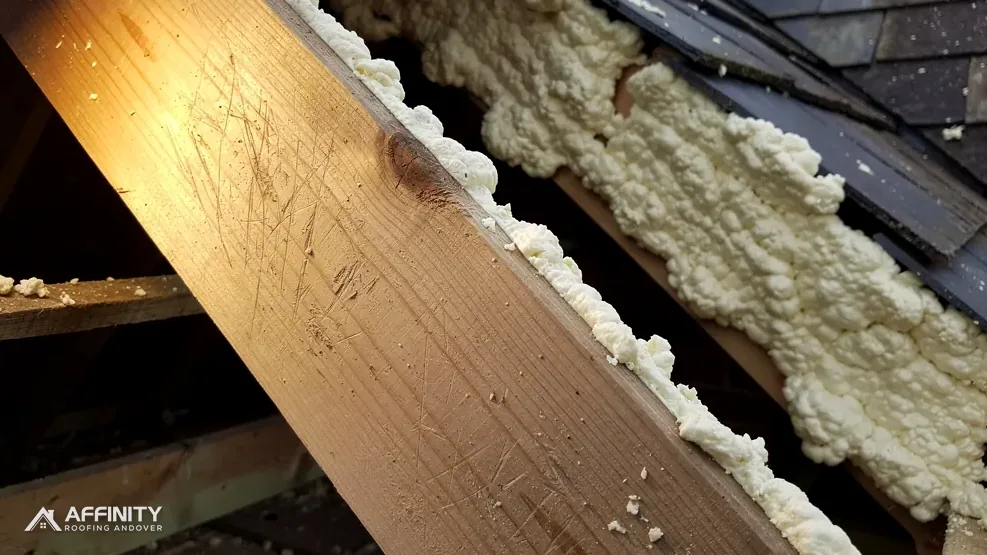
Spray foam is applied as a liquid that expands and sets, so it grips whatever it touches. On a smooth surface it can peel away in sheets. On rough sawn rafters, at the edges of battens and in the angles where timber meets timber, it bonds into the grain and into any gap, and it does not always release cleanly.
That is why we do not promise a perfect finish. We expect to take out the full thickness of foam and then deal with what is stuck behind, working along each rafter. A thin residue on a face of timber may be all that remains, and what matters is whether that residue still hides the wood.
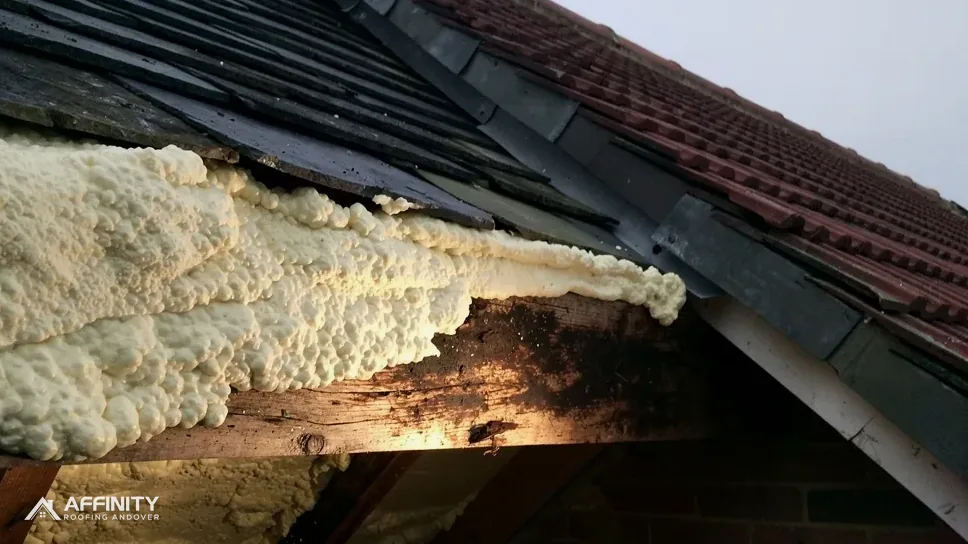
The foam type affects the result as well. Open-cell and closed-cell foam are different products and can behave differently when they come away, a point our guide to open-cell and closed-cell spray foam explains. If the foam was sprayed onto the underside of roof tiles or slates, it may also be bonded to the roof's fixings, which the survey is there to find out.
Why leftover foam matters
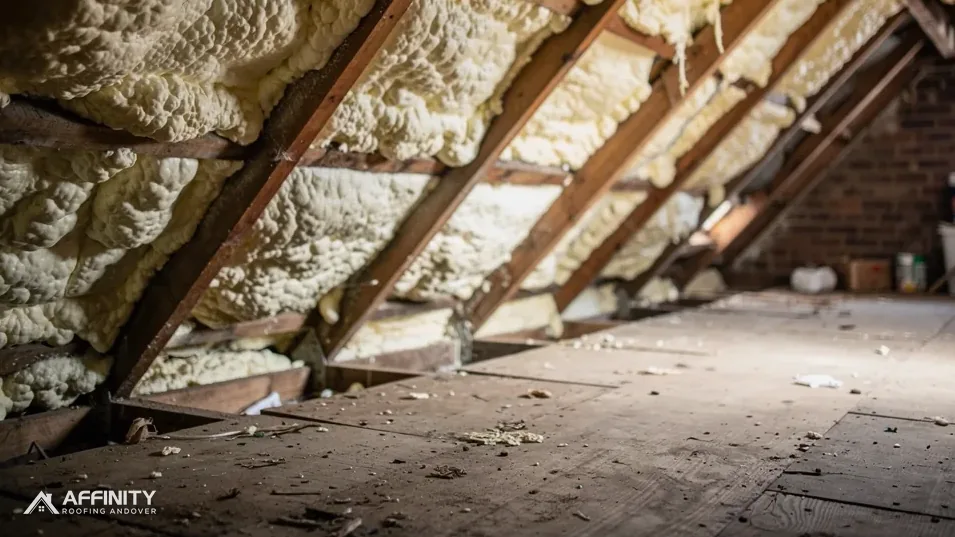
RICS's consumer guide warns that foam sprayed over the rafters hides them from view and from any proper inspection. It also links poorly installed insulation to ventilation problems and moisture damage. Both points come back to what cannot be checked once foam is stuck to the wood.
A buyer's surveyor looks at the roof timbers for signs of decay, insect attack and movement. If a layer of foam still covers part of a rafter, that part cannot be checked. A lender may then ask for more evidence, or may take a view on the house as a whole. In March 2023 RICS reported unease about spray foam in parts of the lending market, equity release among them, so it is sensible to ask your own mortgage provider where it stands.
So the useful test of a removal is not whether every last fleck has gone. It is whether the roof timbers, the underlay and the junctions can be seen and recorded in full, and whether you hold evidence that they can. Our answer on partial spray foam removal looks at the other end of the scale.
Inspecting the roof once the foam is out
With the foam gone, the roof can be read in a way it could not before. We look at the timbers for moisture damage and decay, at the battens and underlay for staining, and, where the covering is slate or tile, at the nails and fixings that held it. These are the parts the foam had been hiding.
The findings fall into two groups. Sound timber needs nothing more than brushing down and ventilation to be restored. Timber that has been affected needs a decision: repair, treatment or replacement of a section. Because the foam was concealing the condition, you cannot know in advance which group your roof falls into, and a survey before the work only gives a view of what shows.
If the inspection turns up damage, we explain it with the photos and agree any extra work with you before it starts. Our guide to roof timbers after spray foam removal sets out what we look for and what the choices are.
The evidence you should end up with
Removal is only useful if it can be proved. A homeowner who needs to sell, remortgage or release equity will be asked what was done and how it was checked. A lender or a buyer's surveyor may not take your word for it.
What we provide is a record of the roof before and after. That means photos of the foam in place, photos of the timbers, underlay and fixings once it is out, and a written note of anything we found and anything we repaired. You keep the lot, and can hand it to your surveyor, solicitor or mortgage provider.
Check with your lender what form of evidence it prefers, because policies differ and RICS's own advice is to ask your mortgage provider. It is also worth asking your solicitor what a buyer's solicitor will want to see. The lender may want an independent surveyor to inspect after removal, and we can work with that. Our spray foam removal page covers the whole process, and our spray foam removal process guide goes through it step by step.