
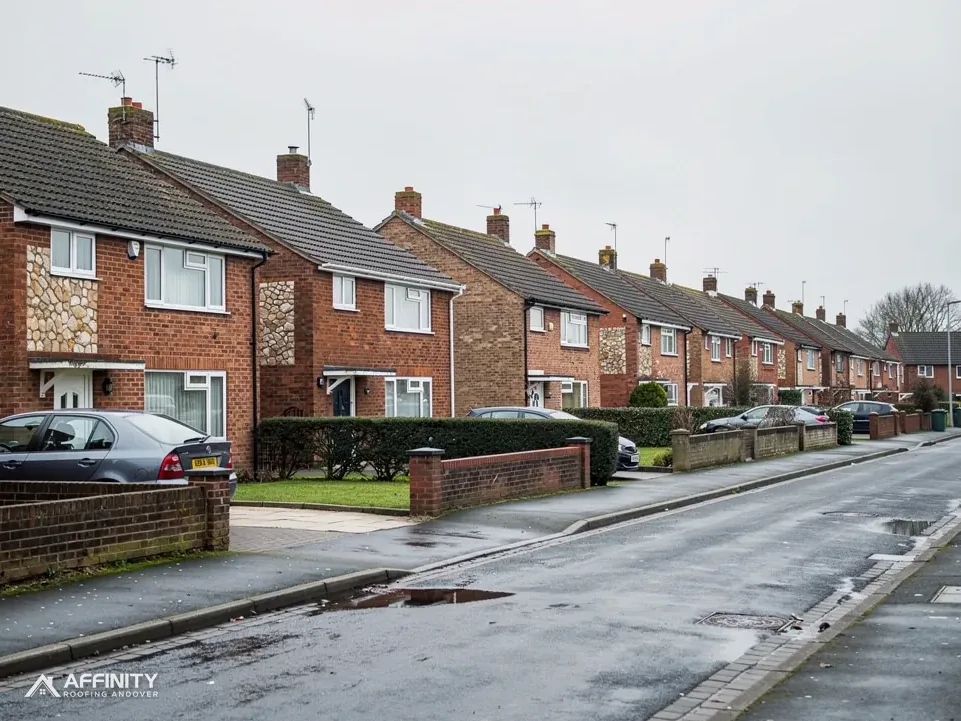
Roofers in Stockbridge
Roof work among Stockbridge's listed fronts and the conservation-area streets around them
Stockbridge has 45 listed buildings within about 900 metres of its centre. We survey each roof before any price, and our photographs show what lies beneath the covering and why it is failing.
Stockbridge roofs among the listed fronts
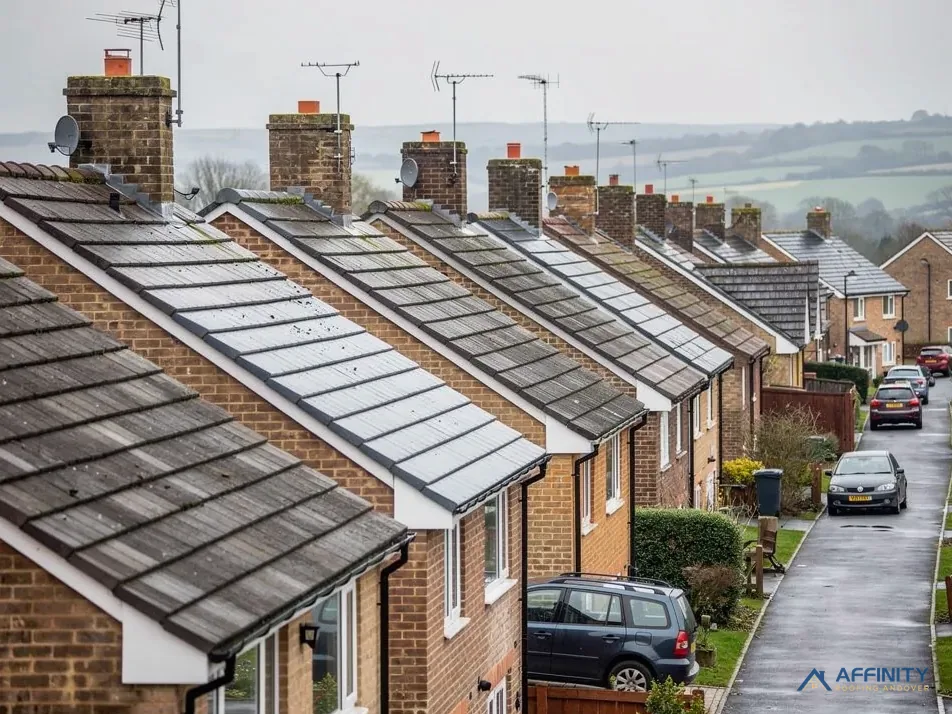
Grade II* landmarks
Fairways the Grosvenor Hotel, listed Grade II* on 29 May 1957, and the Old Town Hall, also Grade II*.
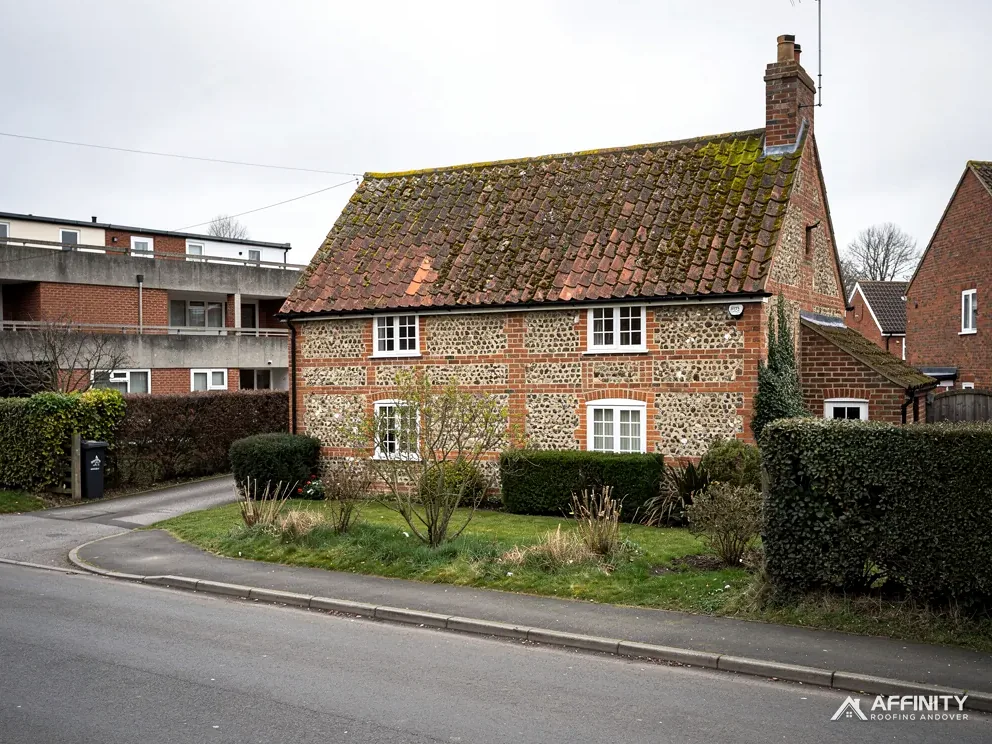
Homes in the conservation area
Houses inside the Stockbridge conservation area, where a visible roof change goes to the council first.
Church of St Peter
A Grade II church still in Church of England use, where roof work goes through the faculty system instead of the council.
Stockbridge between Longstock and King's Somborne
Longstock lies north of the town, King's Somborne south, Broughton south-west and Nether Wallop west, with Chilbolton to the north-east. We survey and mend roofs in all five.
- Distance
- 7.7 road miles south of Andover
- Planning
- Test Valley Borough Council
- Council
- Test Valley Borough Council and Hampshire County Council
The Stockbridge roof report
Local editionStockbridge, HampshireListings, councils and scaffold licences
Stockbridge on the list: reading a roof among 45 listed neighbours
Stockbridge is small, with 579 residents, yet its centre is crowded with protected buildings. Here is who rules on roof work, what the listings and the conservation area change, and how a scaffold gets licensed on a road the county owns.
A small town with a long list
Stockbridge is small on paper. At the 2021 Census the parish had 579 usual residents, yet Historic England's list records 45 listed buildings within about 900 metres of the town point. That is a dense spread of listed fabric for a place this size. We assume a neighbouring building may be listed until the map says otherwise, and we ask the council before ordering a single tile.
Three entries stand out. Fairways the Grosvenor Hotel is listed Grade II* (list entry 1093088), and so are the Old Town Hall (1093093) and the Remains of Old Church (1302362). St Peter's church is Grade II (1339465). Roofs beside the three Grade II* buildings are the ones where we expect the closest questions, so those surveys run slower and look harder.
Any work touching a listed building's character needs listed building consent, in addition to the usual planning rules. For a listed house in Stockbridge, the application is made to Test Valley Borough Council's planners. The pack holds photographs of the covering, a note on what is failing and a description of the repair, which lets the officer judge the change on paper.
The conservation area is the second layer. The Stockbridge conservation area appears in national planning data, from council-supplied boundaries, within about 0.75 km of the town centre. Inside it, altering the shape or look of a roof needs more thought than on an ordinary street. Only Test Valley Borough Council can say if an Article 4 direction touches your street, so we ask before pricing anything visible from outside. Our guide to planning permission for roof work covers the national picture.
Church roofs run on their own track. St Peter's is a parish church in Anglican use, so roof works to it are cleared by faculty and not by the council. Its faculty comes from the diocese's consistory court, Stockbridge's church included, and an owner next door, or a buyer weighing up a house nearby, should know the church is a separate case from a listed house or a hotel.
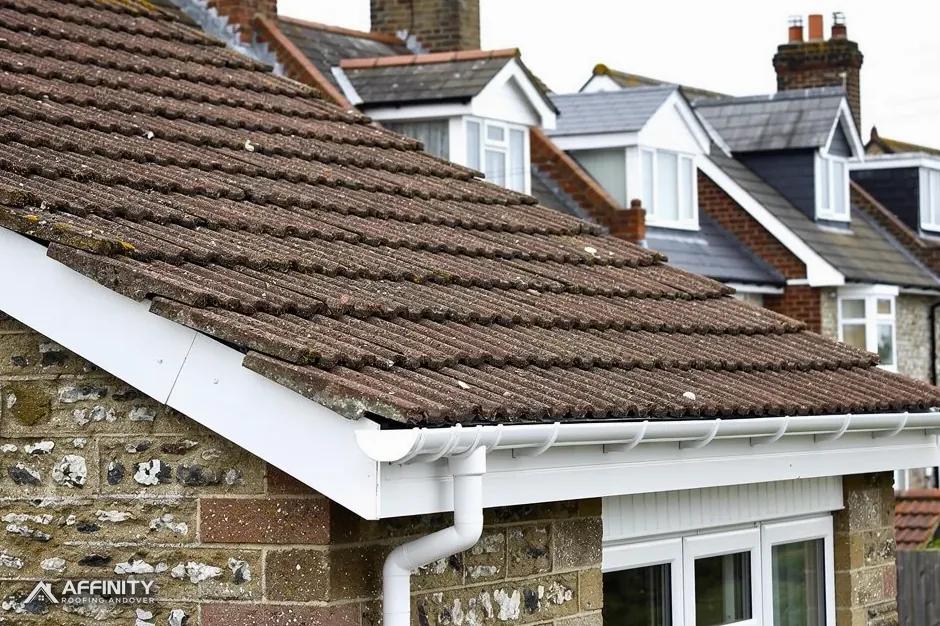
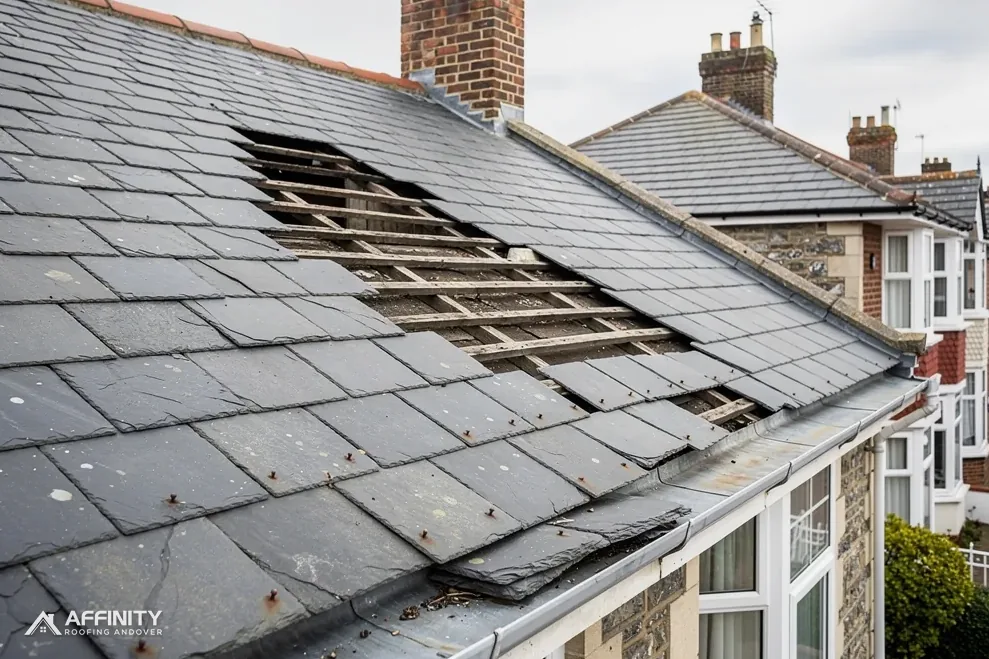
On every survey we photograph the ridge, verge, valleys and chimney stacks at close range, noting how each slate or tile is fixed and where earlier repairs were made. The record shows you what is wrong and gives the council something concrete to read. Where a covering is past repair, matching reclaimed material is worth the search before we propose anything new, because a patch in the wrong tone shows from the street for years.
Who answers for a Stockbridge re-roof
Stockbridge and Andover share a borough, so the planning authority will be familiar: Test Valley Borough Council is the one to answer, whichever of the two towns your roof is in. That helps in practice, because a question that has a known answer in Andover is usually a good place to start for a Stockbridge address. Above it stands Hampshire County Council, which is the county council and the highway authority. Hampshire keeps its two tiers. The plan to swap its councils for new unitary authorities has been withdrawn pending a national review, so what you see today is what governs a roof booked this winter.
On building control we say your building control body, because the choice is yours. The choice lies with you: local authority building control, or a registered building control approver, a private option regulated since 6 April 2024. Either way, the question is put before any scaffold goes up, and the reply comes to you on paper.
The Planning Portal states the national bar for a re-roof plainly. A job touching under 25 per cent of the building envelope and under 50 per cent of the roof would rarely become an application. That is a national test and not a Stockbridge rule. If a slope sits near the line, we ask your building control body and keep its answer with your survey photographs.
A heavier covering changes the picture. If the covering is to be 15% or more heavier, Building Regulations approval is needed, along with a structural check of the frame beneath. Light slate going over to heavy concrete tile is the swap we look out for. This is a Building Regulations matter and not a planning one, so it is a separate question from any conservation-area one.
Which test applies depends on what the survey shows. Slipped tiles or a failed valley are repairs, and the thresholds do not apply. When a covering has given up over a whole slope, the answer is a re-roof, and the route, the council's view and the people we will ask are set out. Our page on roof replacement explains the stages in order. Either way you hear the route first, in plain words, and the price follows the survey photographs rather than leading them. Nothing is ordered before you have seen both.
Questions about any step are welcome. The first reply to an enquiry says which route is likely to apply to your roof, so you know what to expect before the survey visit.
“Stockbridge has 45 listed buildings within 900 metres, so we ask the council before we order tiles.”
Source: Historic England list entries around Stockbridge
Scaffold on the road, and the flood map
Scaffold that stands on a public carriageway or pavement is controlled by section 169 of the Highways Act 1980, and the permission takes the form of a licence from whichever authority maintains the road. For a Stockbridge street that means Hampshire County Council. Test Valley, a district, issues none, so asking the borough about scaffold only sends you in a circle.
The scaffolding company applies for you, because Hampshire County Council expects the firm acting for the customer to make the application. You will never complete the form yourself, and nor will we on your behalf. Under the county's rules a licence cannot start sooner than ten clear working days after the application, and no extension is possible. Hampshire County Council charges £211.90 on application for the first 2 weeks and £72 for every further 2-week period. Scaffold kept entirely within the plot falls outside the scheme.
Because a county licence cannot be stretched, sequence matters on a listed or conservation-area job. While consent is pending we leave the licence application alone, since hired scaffold that sits unused is paid for all the same. When both permissions are in hand you are given the start date. The cost of the licence is folded into the single figure you are quoted, so no surprise arrives with the scaffolder's invoice.
The Environment Agency's Flood Map for Planning gives the centre of Stockbridge the label Flood Zone 2. That is a planning classification of the ground. It does not say that any particular street or house floods, and it has no bearing on whether a roof repair is allowed. We mention it because a slope that sheds water badly feeds the gutters and downpipes, and those are worth checking on any survey here.
Stockbridge roofs need the everyday services, each quoted as a single total once the survey is done. Roof repairs after a slipped tile or a worn flashing are the most direct. On our chimney repairs page you will find stacks with failed pointing or flaunching, the mortar cap that holds the pots. Guttering, soffits and fascias finish the work along the eaves. Pictures from the survey show you the fault itself, and nothing is agreed until you have seen them. If the roof turns out to be sound, you hear that plainly and we leave it alone.
Access in a town centre needs thought. Tile and batten deliveries arrive by lorry, so stopping places for the skip and materials are fixed first, walkers have a clear route and neighbours learn the scaffold dates beforehand.
Fixes and replacements in Stockbridge
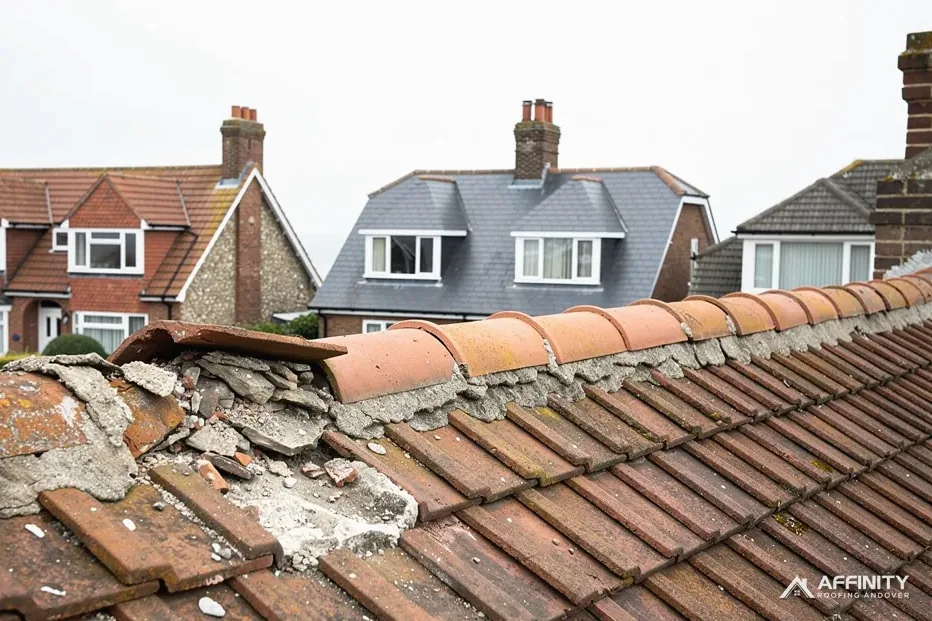
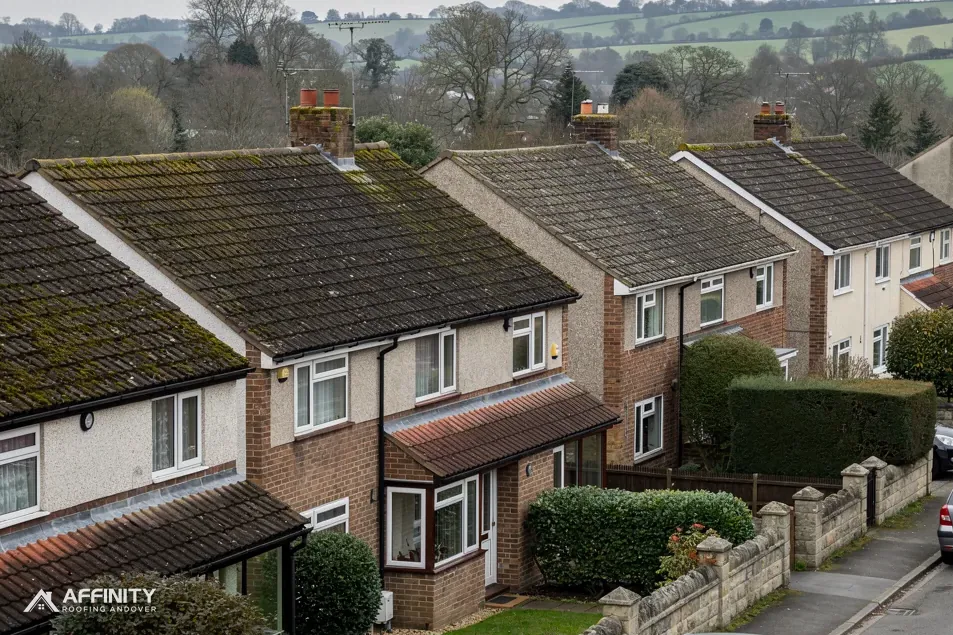
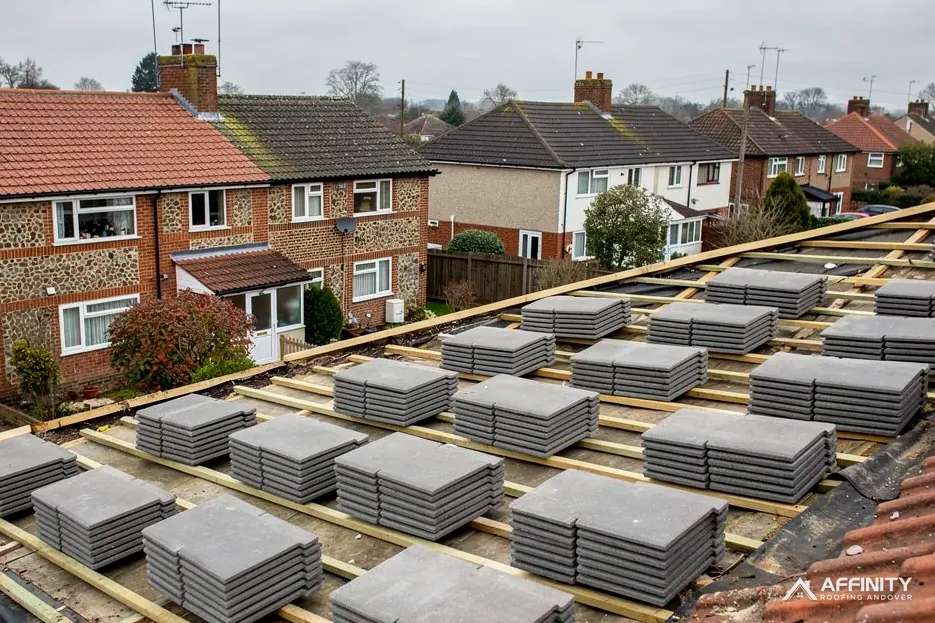
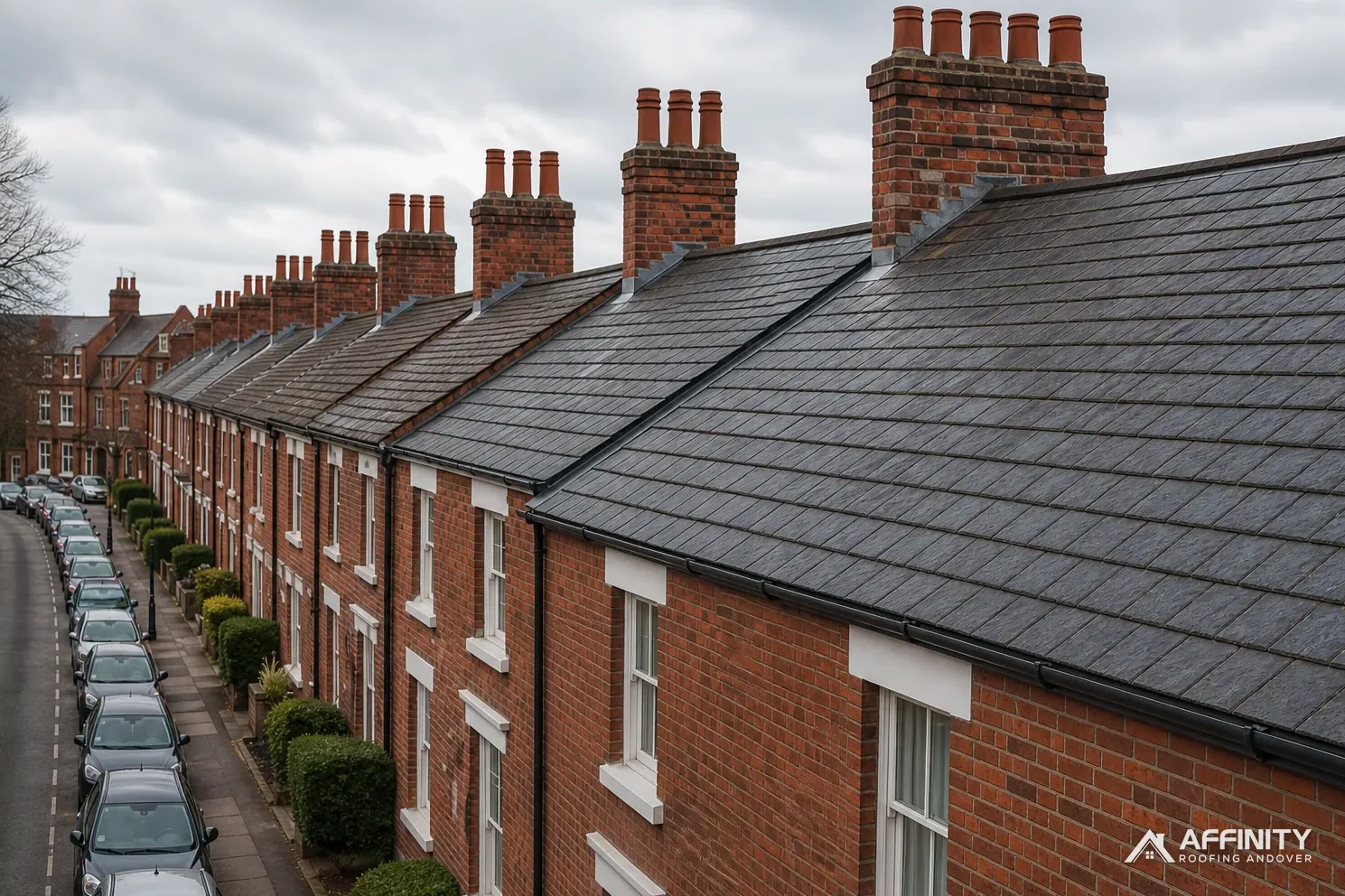
Stockbridge roofs: listings, scaffold and the church
Is listed building consent needed to mend a Stockbridge listed roof?
Work that alters a listed building's character needs listed building consent, and Test Valley Borough Council's planning team decides whether it applies. We begin from a like-for-like repair in matching materials. The covering is photographed, the repair described and the council's answer filed before any scaffold is ordered, so the order of events is right.
Does the Stockbridge conservation area stop a roof repair?
No. A roof mended so that it keeps its present look gets the same treatment as one anywhere. Alterations to a roof's shape or visible materials face tighter scrutiny inside a conservation area. Test Valley Borough Council alone can confirm whether an Article 4 direction covers your street, so it is asked before pricing and its reply passed on to you.
Who looks after the scaffold licence for a Stockbridge roof job?
The highway authority is Hampshire County Council, and its page has scaffolding companies apply for customers, with ten clear working days needed first. For the licence itself Hampshire County Council charges £211.90 for the first 2 weeks and £72 for each further 2-week period. The scaffolder deals with it and the cost sits in your written price.
Is the Church of St Peter in Stockbridge treated like a listed house?
Not for consent. The church is listed Grade II and serves Anglican worship, so a faculty clears its roof works and listed building consent does not apply. A listed house or hotel nearby takes the council route instead. We tell each owner which of the two applies before the survey visit, and the reasoning behind it.
Send us your Stockbridge address
Send the address and one photograph. After the survey you receive a written price and the consent route.
10-year workmanship guarantee, in writing.