A sale often runs smoothly until somebody looks in the loft. Then a surveyor notes foam sprayed across the rafters, adds a line to the report, and the buyer's lender wants to know more. A deal that looked settled turns uncertain, and the seller is asked for paperwork they may never have been given.
It does not have to go that way. Spray foam in a roof is a known issue, with published guidance from the body that sets surveying standards, and sensible steps a seller can take before anyone climbs into the loft. Some owners remove the foam before listing. Some collect evidence and sell with the foam in place. Some remove it once a buyer has asked. Each can work, and the right choice depends on the timbers, the buyer and the timetable.
This guide explains what RICS said, how a buyer's surveyor goes about the loft, what a good evidence pack contains and how the options compare. It does not promise any outcome with any lender, because each sets its own policy.
Why foam comes up in a sale
Selling a house means opening it up to scrutiny, and the loft is one of the first places a surveyor goes.
What the surveyor sees
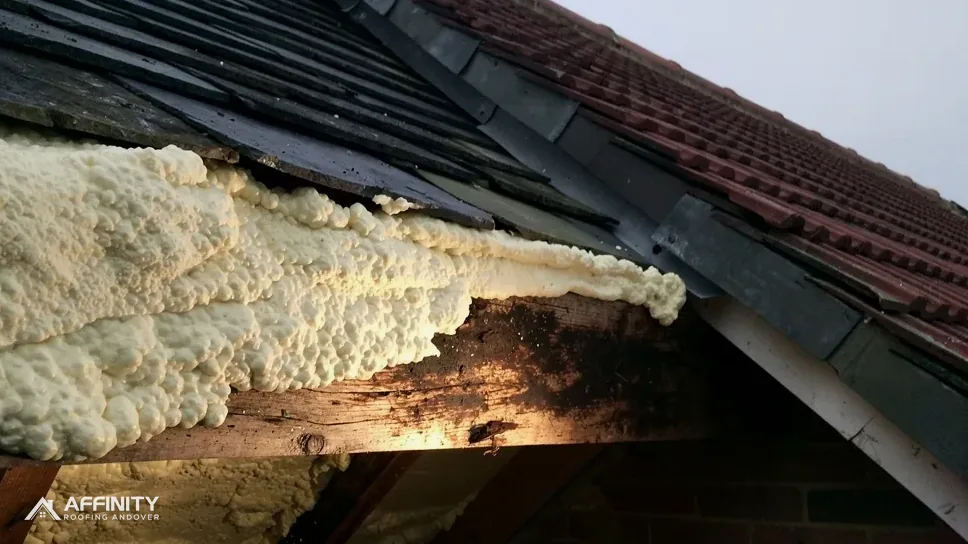
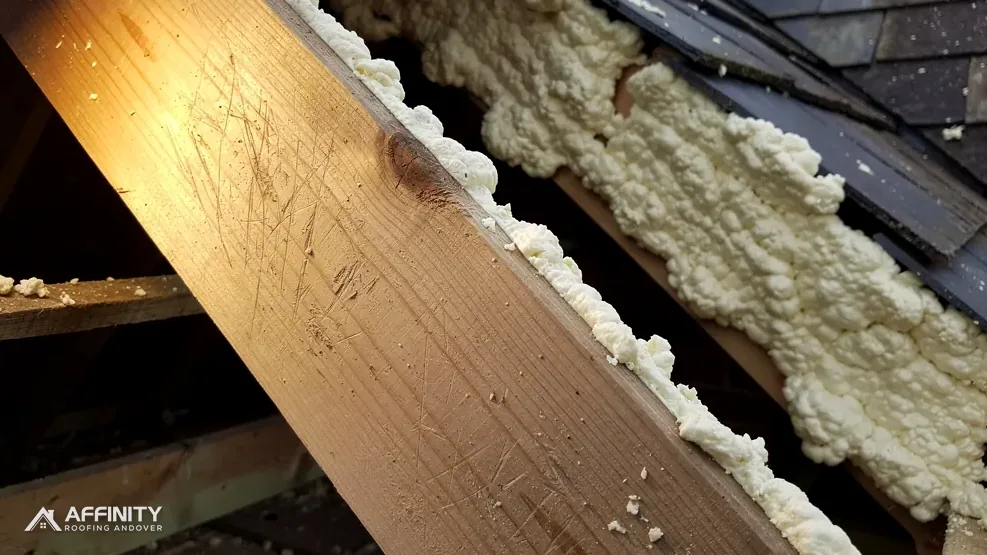
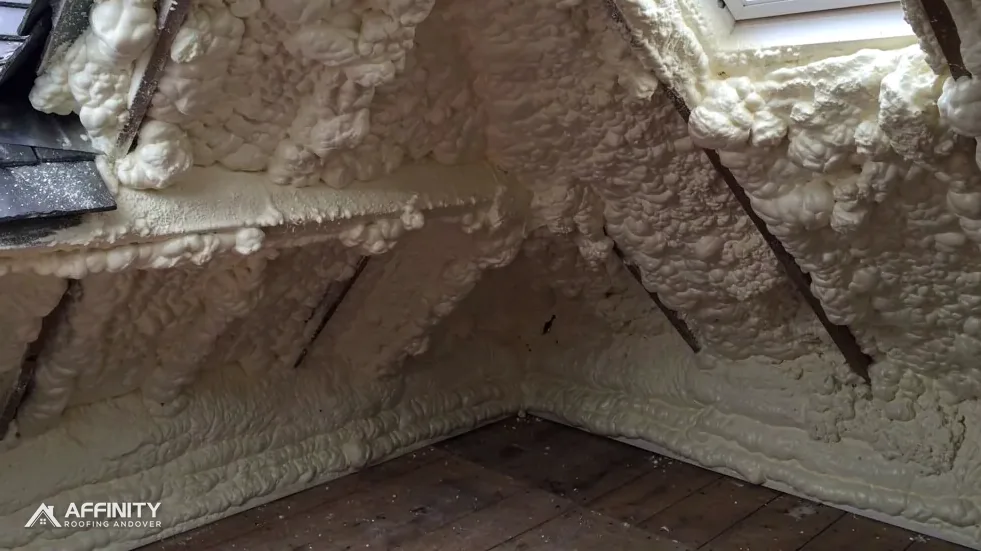
A pitched roof normally shows its rafters, battens and underlay from the hatch, so a surveyor can form a view in a minute or two. A foamed loft shows a grey or cream coat across them instead. The surveyor cannot judge the timber behind it, and a report that says so passes the doubt to the buyer and the lender.
Why lenders pay attention
A mortgage lender lends against the value and condition of the property. If a surveyor says part of the roof structure cannot be inspected, the lender has to decide whether that matters. Policies differ. One lender may want a specialist report, another may insist on removal, and a third may be content with proof that the timbers are dry. Nobody outside the lender can tell you which.
Why it feels sudden
Lofts foamed some years ago were sold on warmth and energy bills, and the later question of inspecting the roof rarely came up. The guidance that now shapes surveyors' thinking dates from 2023, so owners who foamed in earlier years may meet it for the first time at sale.
What you can do
Get ahead of it. Learn what your loft holds, and how the roof beneath is faring, before the surveyor does. Our spray foam survey guide explains what such a survey covers.
The RICS guide that surveyors know
RICS, the professional body for chartered surveyors, has published consumer guidance that buyers' surveyors are likely to know.
The press release
RICS announced its consumer guide to spray foam on 3 March 2023. The release reported unease in particular corners of mortgage lending, with equity release the example given, spreading to lenders more broadly. The guide document is dated 31 March 2023.
What the guide advises
Homeowners are told to ask their mortgage provider if its policy permits foam installation at all. The guide also points out that timber under a coat of foam is hidden from view and cannot be examined in full, and it cautions that badly fitted insulation can interfere with ventilation and lead to damp.
What it does not say
The guide does not say that every foamed home is unsellable, that every lender refuses or that foam must always be removed. A statement of that kind would go beyond what RICS wrote. What it does is explain the concern and point owners to their own lender.
Reading the guide fairly
Because the guide is a consumer document, it is written in plain terms and aimed at owners as much as surveyors. Reading it yourself, rather than relying on an estate agent's summary, takes ten minutes and shows you exactly which points a buyer's surveyor may raise. It is available from the RICS website.
Your lender and the buyer's lender
As a seller you have two lenders to think about: your own, if you have a mortgage, and the buyer's. The second matters most, as its decision determines whether the sale can complete. Our guide to equity release and spray foam covers where the concern started.
How a buyer's surveyor approaches the loft
Knowing what the surveyor will do lets you prepare for it. None of it is secret or unreasonable, and an owner who understands the routine is much better placed to help.
The look from the hatch
Surveyors differ in how long they spend in a loft, and some will not go in at all if the hatch is awkward or the space is full. A clear hatch and a tidy loft help. The surveyor opens the hatch, shines a torch across the loft and records what is visible: the coverage of foam, its colour and thickness, any damp-looking patches, signs of tiles lifting and smells. Photographs go in the report.
Limits of the inspection
The surveyor is not allowed to cut into the foam to see behind it. The report then states that the timber cannot be inspected. That statement is what triggers the questions from the lender.
What they ask for
Typical requests are the installation invoice, the product name and type, any certificate and the date, plus confirmation of whether the foam went over a membrane or straight onto the covering. They may also ask whether there have been leaks and whether an independent report on the timbers exists.
What worries them
Foam sprayed onto a roof that was leaking, foam over old slate with no underlay, foam that has blocked eaves ventilation and signs of damp at the rafter ends all raise concern. A clean, documented, dry installation raises less.
The surveyor's recommendation
The surveyor may recommend a specialist inspection, removal or no action at all. Their wording often decides what the lender asks for next.
Building the evidence pack
The most useful thing a seller can hold is a short folder that answers the questions before they are asked. A buyer's surveyor works to a deadline, and a clear pack lets them close the point in one visit instead of raising it as a query that stalls the sale for a fortnight.
Paperwork from the installation
Look for the invoice, the product data sheet, a guarantee from the installer and any certificate. Note the date, the firm and the type of foam. If you cannot lay hands on them, ask the installer for copies.
A loft survey
An independent survey of the loft by a roofer, with dated photographs of the foam and the visible timbers, gives a buyer's surveyor something to read. It does not replace their own inspection, but it shows you took the issue seriously.
A timber report
If the foam has been removed, or a section opened, a report on rafters, battens and underlay carries the most weight. Moisture readings, photographs and notes on repairs make it concrete.
Roof history
Note any past leaks, repairs, re-roofing and the age of the covering. If the roof was repaired before the foam went in, say so.
The pack in order
Put it all in one folder, dated and indexed, with a one-page summary. Give a copy to your estate agent and solicitor. A buyer who sees an organised folder worries less than one who sees a gap.
Our spray foam removal page describes the record we provide.
Your options, compared
There are three sensible routes, and none suits everyone. The right choice depends on the timbers, the buyer, the lender and how much time you have, and you can change your mind as the facts emerge.
Sell with the foam in place
This works when the timbers are known to be dry, the lender is content and the buyer is relaxed. It needs evidence in hand: a loft survey, paperwork and ideally a statement from the buyer's lender. It carries the risk that a surveyor or lender raises a late objection.
Remove the foam before listing
Removal turns the loft into an ordinary loft, with rafters, battens and underlay in view. The buyer's surveyor can inspect it in the normal way, and the lender has less to ask. The cost is paid up front, and the roof may need repairs that were hidden. Time is needed for the work, so plan it before the house goes to market.
Remove during the sale
If a buyer's surveyor or lender asks, removal can be done during the sale, with the buyer's agreement on timing and, ideally, access for their surveyor to see the finished loft. This keeps the sale alive but compresses the timetable, so ask for a realistic schedule on the survey and tell your solicitor.
A foamed new build
Where the house was sold new with foam already fitted, begin with the builder. Under NHBC's Buildmark the builder gives a warranty for the first 2 years, and from then 8 years of insurance cover apply to named parts of the home, so check your policy wording before you spend anything.
Choosing
The survey gives you facts to choose with.
Talking to lender, solicitor and buyer
The sale depends on a handful of conversations, and each goes better with preparation. Write down what each person has said and when, because sale chains are long and memories differ.
Your solicitor
Tell your solicitor about the foam at the start. Enquiries in a sale ask about alterations and insulation, and answers must be truthful. Giving the pack early prevents delay.
The buyer and their surveyor
If the buyer knows about the foam from the listing or the first viewing, they can plan around it. If they discover it at survey stage, they may feel misled even if nobody hid anything. Early honesty usually keeps deals alive.
The buyer's lender
It is the buyer's lender who has the final say. Ask the buyer's broker or solicitor to put the lender's actual requirement in writing, not a summary of it. The wording shows whether the lender is asking for removal, a timber report, or something else entirely.
Your own lender
If you are selling to repay a mortgage, your lender does not usually care about the foam. But ask whether it affects any plan to port the loan.
Timing
Removal and any repairs take time, and the schedule depends on the loft and the roof. We tell you early if the job is bigger than expected, so you can keep everyone informed.
Costs
Nobody can fix a figure from outside the loft, because the foam type, the area covered and the state of the roof beneath all change the work. Ask any firm quoting by telephone how it can know.