
Roofers in Weyhill
Weyhill Lodge, the church and what a roof's age really means
Weyhill has a Grade II* church, a listed lodge and four conservation areas within about 2.5 km. A survey with photographs shows how much life your roof has left.
Weyhill roofs, church to lodge
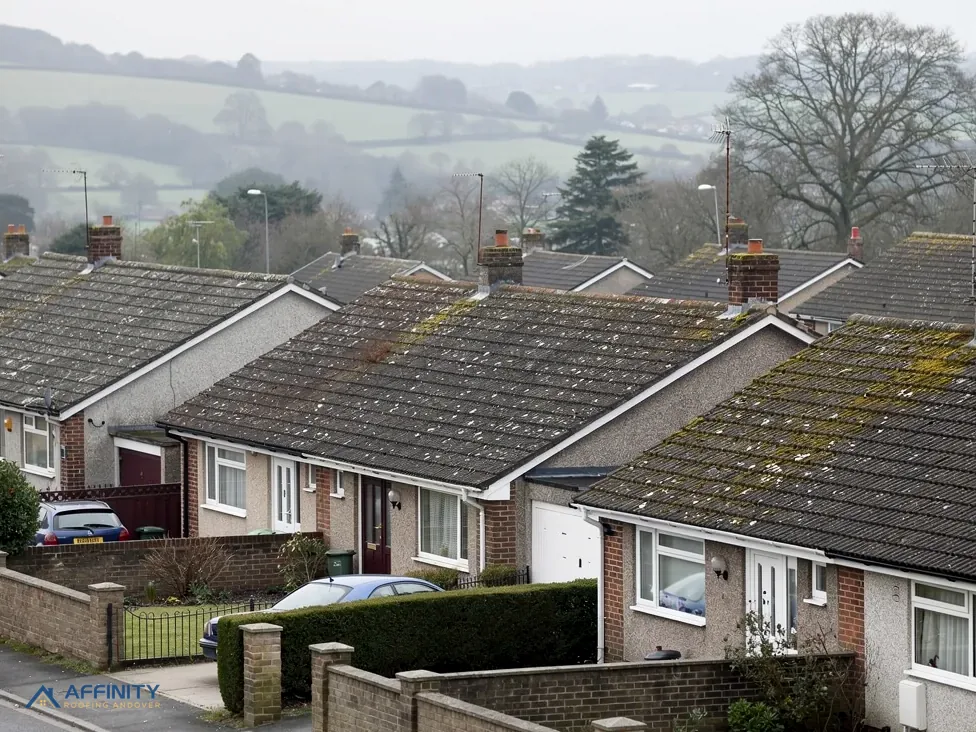
St Michael and All Angels
A Grade II* Church of England church, first listed on 20 December 1960, whose roof sits under the faculty system.
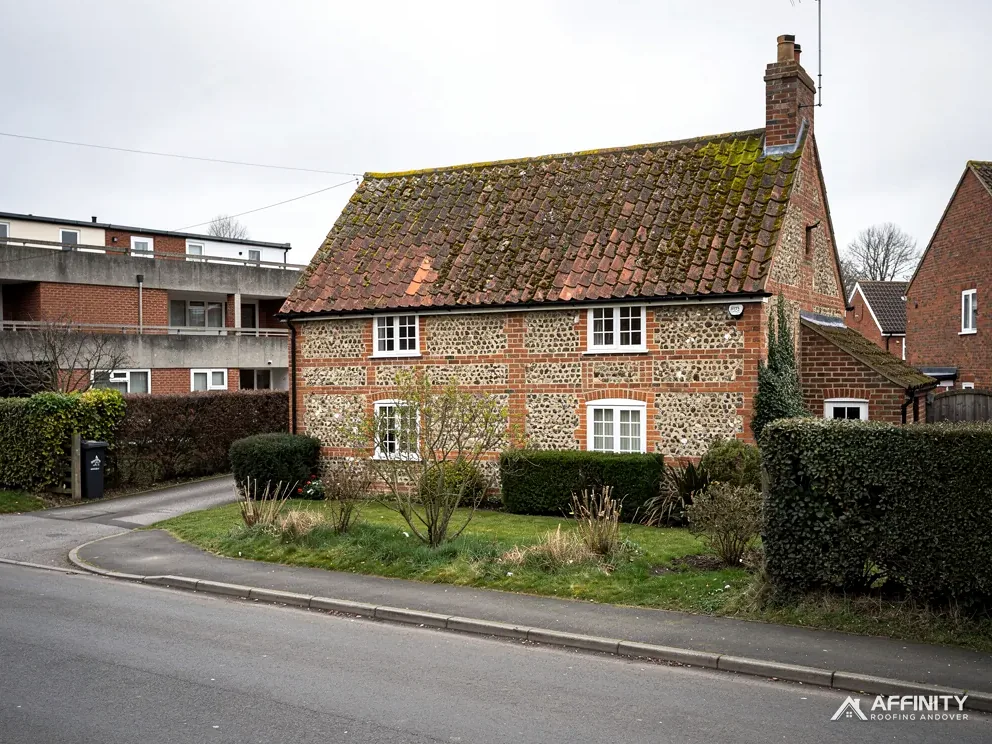
Weyhill Lodge
A Grade II listed lodge, entered on 30 April 1985, where repairs follow the covering already on the roof.
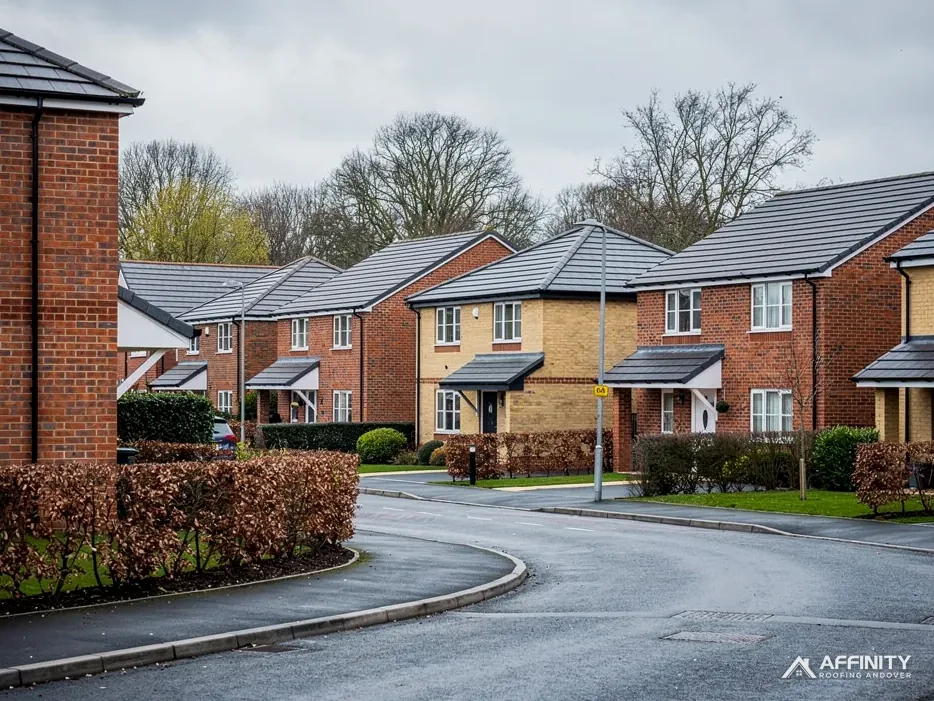
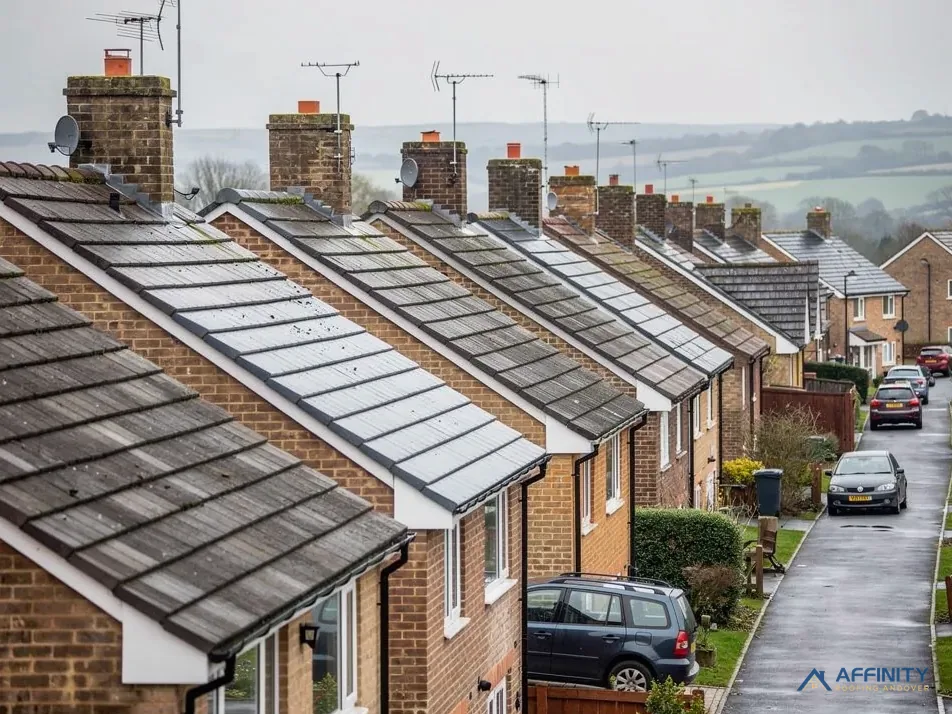
Homes near four conservation areas
Houses close to the Amport and Monxton, Appleshaw, Fyfield and Pentons boundaries, where the council is asked first.
Weyhill beside Penton Mewsey and Amport
Penton Mewsey lies to the north-east, Appleshaw to the north-west, Thruxton to the west and Amport to the south-west, and Monxton to the south. We cover them all.
- Distance
- 4.2 road miles west of Andover
- Planning
- Test Valley Borough Council
- Council
- Test Valley Borough Council and Hampshire County Council
The Weyhill roof report
Local editionWeyhill, HampshireChurchyard, lodge and the age of a roof
Weyhill roofs: nearby conservation areas, a Grade II* church and how a covering's age is judged
Weyhill has four listed buildings within about 500 m of its centre and four conservation areas within about 2.5 km. Here is which council decides, how the church route differs and what the published lifespans really tell you.
Nearby conservation areas and the two councils
In Penton Grafton parish, Weyhill is 4.2 road miles from Andover's East Street, to the west, and the census counts the parish, not the village, so Weyhill has no figure of its own. Two councils share the paperwork. Test Valley Borough Council takes planning; Hampshire County Council takes the road. Neither a national park nor a National Landscape reaches the village.
Conservation areas are the live question. Four lie within about 2.5 km: Amport and Monxton, Appleshaw, Fyfield and The Pentons. Being near one is not the same as being inside one, and only Test Valley Borough Council's map can settle your road. Ask it, along with whether an Article 4 direction touches the street, before a roofer prices anything that would alter the roof's appearance.
Re-roofing meets building control at two thresholds. The Planning Portal puts the first at 25 per cent of the building envelope together with 50 per cent of the roof, and work under both limits does not usually need approval. A dozen replaced tiles are nowhere near either figure. A full slope is another matter, and your building control body, whether local authority building control or a registered building control approver, is the right place to ask.
The second threshold is weight, which every roof must pass. If the new covering outweighs the old by 15 per cent or more, Building Regulations approval follows; the Planning Portal also suggests a structural look from an engineer or surveyor first. Swapping a light covering for concrete tile is the case that most needs it.
What we bring to these questions is evidence. A climb, one raised tile and photographs of the timber and membrane beneath replace opinion with evidence about the roof. The two layers a roof conceals are the battens, the timber strips fixed across the rafters to hang tiles from, and the underlay, a waterproof membrane under them. The report that follows is written for the householder first and the council second, in ordinary words.
Where the roof still has life in it, the report says so and the job is a repair. Where it does not, the pictures say why, and nobody is asked to take a replacement on trust.
Photographs also protect the householder. They record the roof before work, and they stay with the house when it is sold, so a buyer's surveyor finds the answers already on file. A short call to the council costs nothing, and its answer is passed on with the report.
St Michael and All Angels, the Lodge and four listings
Historic England records 4 listed buildings within about 500 m of Weyhill's centre. Grade II* is the listing of St Michael and All Angels (entry 1229819), on the list since 20 December 1960. Weyhill Lodge is Grade II (1093897), listed on 30 April 1985. With so few, each listing is easy to check by name before a neighbouring roof is priced.
Roof work on St Michael and All Angels follows the Church of England's faculty process, as the church is Anglican and in use, and not listed building consent. Its faculty comes from the diocese's consistory court, Weyhill's church included. We contribute the paperwork's evidence: survey, near pictures and a brief note on what covers the roof today and what is planned. Access for a scaffold is agreed with the parish where a path or wall is shared with the churchyard.
Weyhill Lodge needs the council. Listed building consent from Test Valley Borough Council covers any work that touches its character. Small buildings with prominent roofs show every mismatch, so the safest proposal copies the present tile or slate in size, colour and laying pattern. Switching material is a bigger question for the council. A lodge is often seen from the road, so a repair that changes the roofline changes that view, and the photographs are taken from several points along the lane so that the council sees the roof as passers-by do. Because a church roof is a landmark, we also record the view of its neighbours from the churchyard path, so the parish can see how a nearby repair would sit beside it.
An unlisted house still has neighbours. A covering chosen to sit with theirs keeps the street looking whole, and matching is a matter of care at survey rather than luck. We include photographs of the adjoining roofs, taken from the road, in the survey report so that the choice is made with them in view.
A frame or tower near a listed wall is placed with the owner's knowledge and kept off the stonework, because damage there is expensive and avoidable. With four listings in the immediate area, the chance of a shared boundary is real, and a call to the neighbour before the date is fixed is part of the job.
A few minutes on Historic England's online list, searched by address, show whether a house is listed. If it is, the consent route is known before the first price is discussed, and the timetable includes it from the start.
“A roof's age is a published range; its condition is something only a survey can tell you.”
What a roof covering's age really tells you
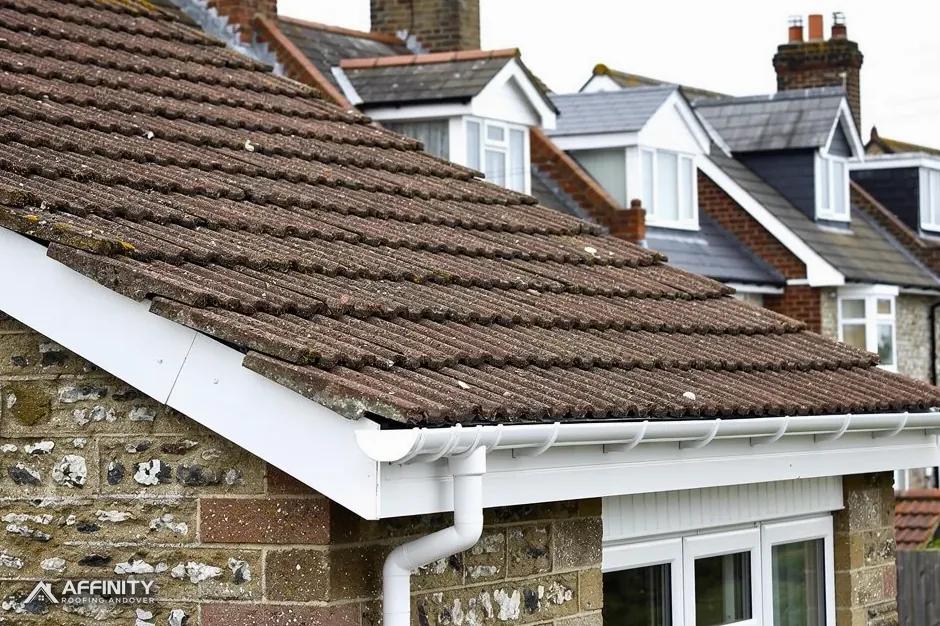
Published lifespans disagree, which is itself useful. Marley's expectation for concrete roof tiles is around 60 years, with a plain warning that it is not a guarantee. HomeBuilding (September 2025) sets plain concrete at 40 to 50 years and gives the same for Double Roman, the large interlocking tile with a double roll. For fibre cement it offers 30 to 40 years. Treat all of them as typical ranges and never promises.
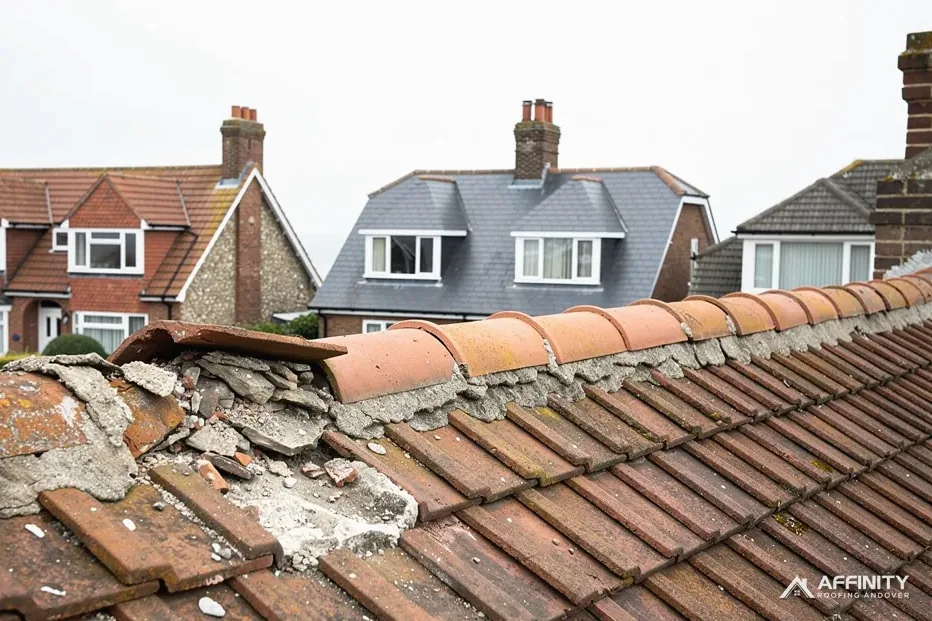
Condition beats date. Colour held, edges intact, battens dry and underlay unbroken: such a roof can outrun the range. Crumbling faces, rotted battens and torn underlay can end one early. At survey a gloved thumb tests the face of the tile, a torch finds hairline cracks, and the nibs, the small lugs that hang each tile from its batten, are checked on a few tiles raised for the purpose.
Pitch limits the choice. Marley's concrete tiles start at 12.5 degrees for its Mendip 12.5, rise to 22.5 degrees for smooth Double Roman and reach 35 degrees for plain tile, and the data sheet for the actual tile settles it, including how each tile must be fixed. A shallow roof can rule out a covering you had set your heart on, which is why the angle is measured before an order is placed.
Licensing for a frame on the road lies with Hampshire County Council, under section 169 of the Highways Act 1980. Under Hampshire County Council's rule the scaffolding contractor makes the application, and the application must be in ten clear working days before the work starts. Hampshire County Council charges £211.90 on application for the first 2 weeks and £72 for each further 2-week period. Where the frame stands on private ground, no licence is involved.
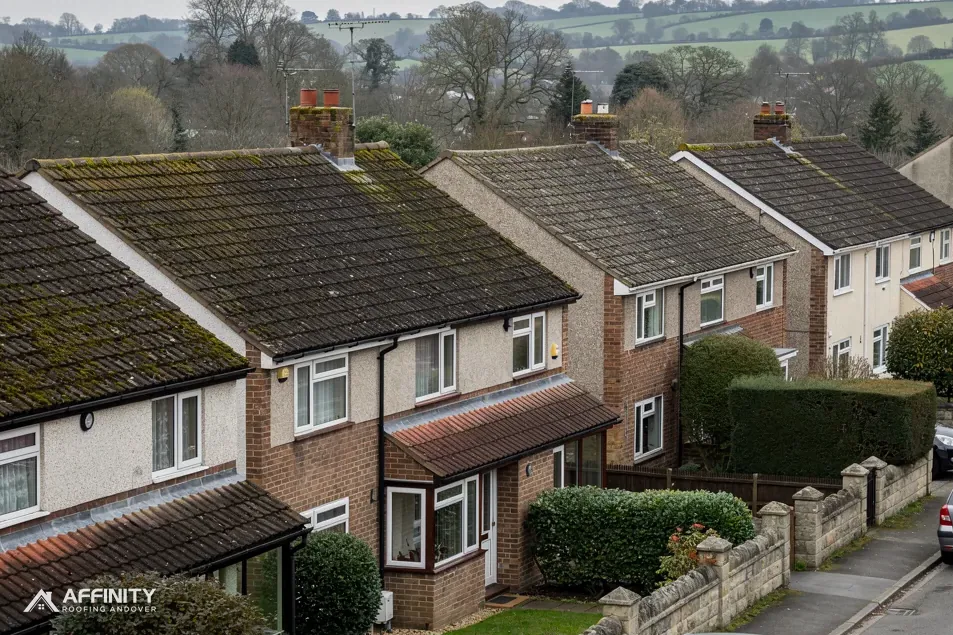
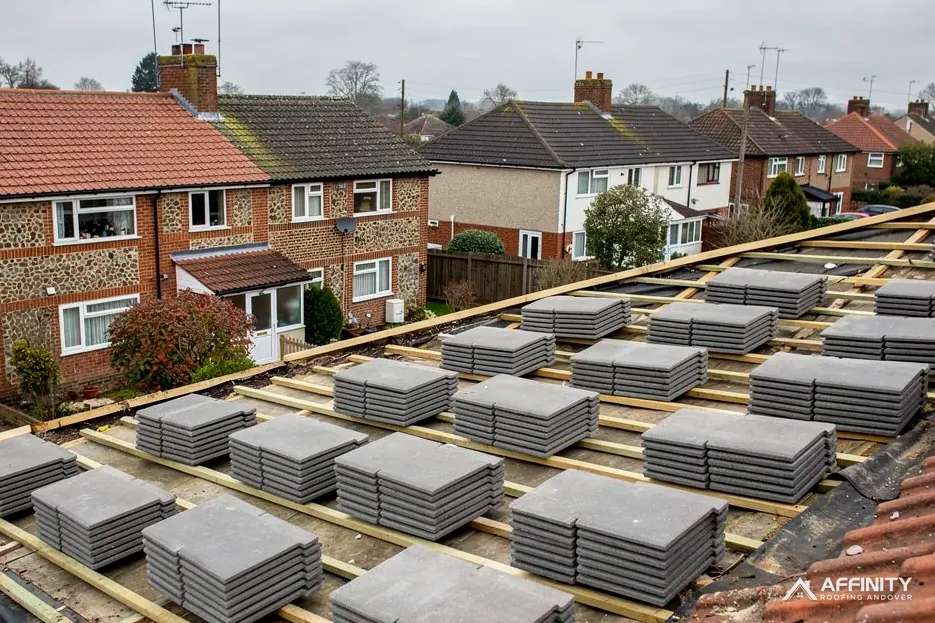
If a roof is at the end of its range, replacing only the failed slope is sometimes enough. Mixed ages can occur on one roof after earlier repairs, and the survey maps which slopes are old and which are newer, so the work is limited to what has to be done. A stripped slope gets new battens and underlay in the same visit, because fresh tiles on worn timbers are wasted.
A Weyhill roof starts with roof repairs, moves to pitched roofing when a slope is spent, and ends in roof replacement only when the photographs justify it. The covering decides which, and the survey photographs show why. Either way the site is cleared as work proceeds, and rubbish is carted off by the crew.
Weyhill roofs: lifespan, the church and the conservation areas
How long should a concrete tile roof last in Weyhill?
Marley's figure is around 60 years for concrete roof tiles, with the warning that it is not a guarantee, while HomeBuilding (September 2025) gives plain concrete 40 to 50 years. Because the guides differ, your own roof's condition is the better guide. At survey we test the tile faces, the nibs and the battens, photograph the evidence and estimate the remaining life.
Does Weyhill sit inside a conservation area?
Four conservation areas lie within about 2.5 km of the village: Amport and Monxton, Appleshaw, Fyfield and The Pentons. Test Valley Borough Council's map settles whether one covers your road. A plain repair seldom raises the point; a new covering or dormer should go to the planners first, and the council is asked before pricing, with its answer passed to you.
Does the Weyhill church roof need a faculty?
Yes. St Michael and All Angels is a working Anglican church, so faculty rules govern its roof and listed building consent does not, its faculty coming from the diocese's consistory court, Weyhill's route. We supply the evidence: survey, photographs and a brief account of the present covering and the proposed repair. Neighbouring houses follow the council's routes instead, with access for any frame agreed with the parish beforehand.
What pitch does a Weyhill roof need for concrete tiles?
It depends on the tile. Marley gives a minimum of 12.5 degrees for Mendip 12.5, 22.5 degrees for smooth Double Roman and 35 degrees for its plain tile, and always says to check the data sheet. We measure the pitch at survey, so you know which tiles the roof can take before any are ordered, and the figure goes into the report beside the photographs.
Arrange a roof survey in Weyhill
Say where the house is and what has changed. A survey leads, and one written price comes after.
10-year workmanship guarantee, in writing.