The short answer
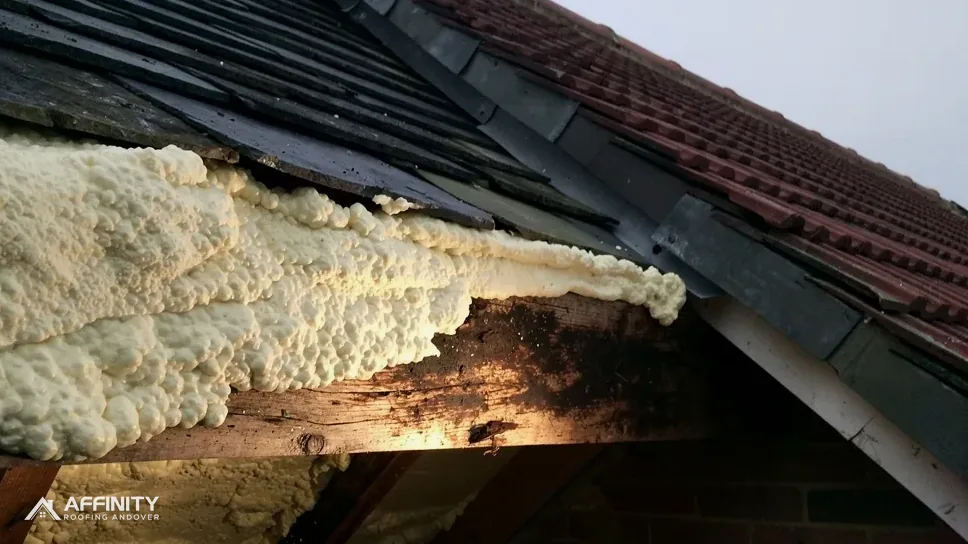
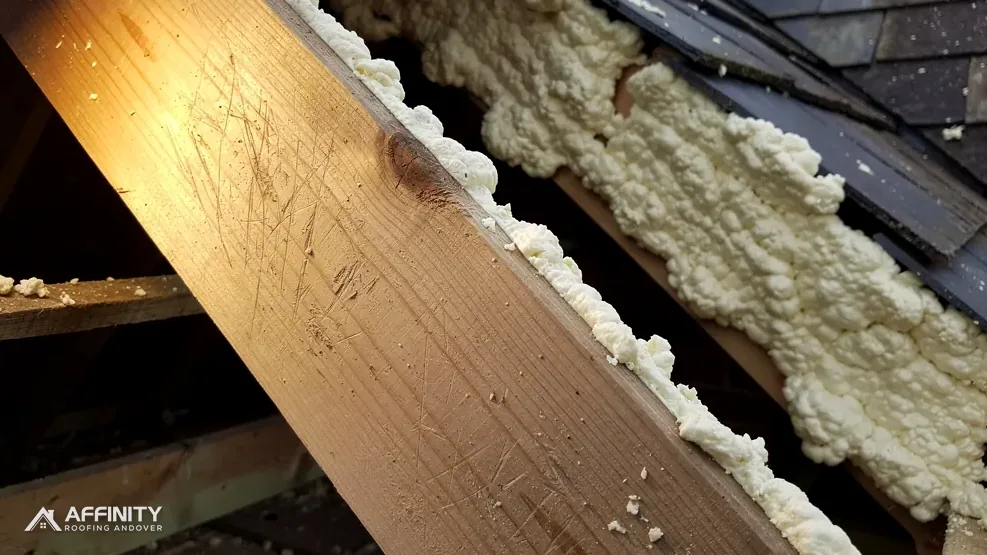
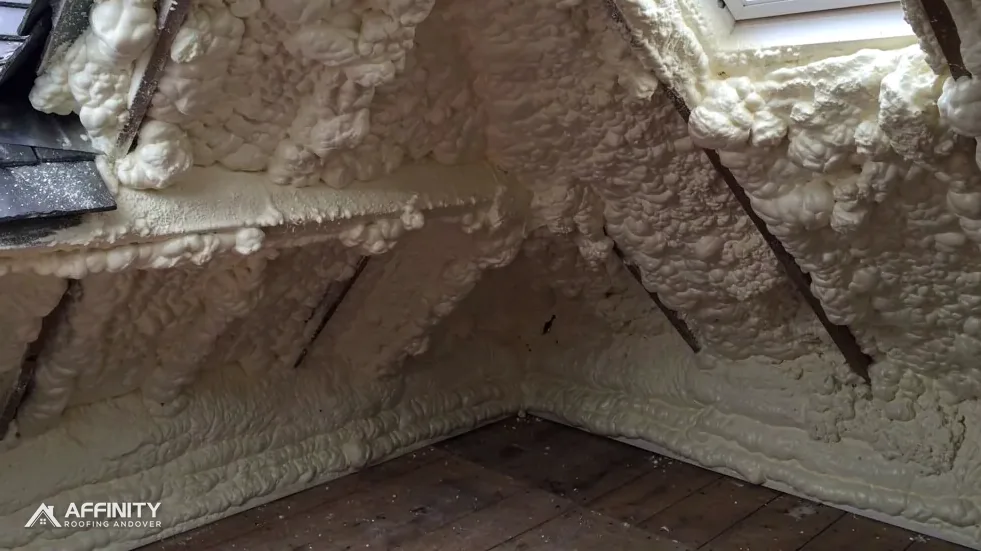
It can, but not automatically. RICS links poorly installed spray foam with ventilation problems and moisture damage, and RICS says timber covered with spray foam cannot be fully seen or inspected. The difficulty is that foam over the rafters hides the wood, so a problem may sit unseen until the foam is cleared and the timbers are inspected.
How timbers end up damp under foam
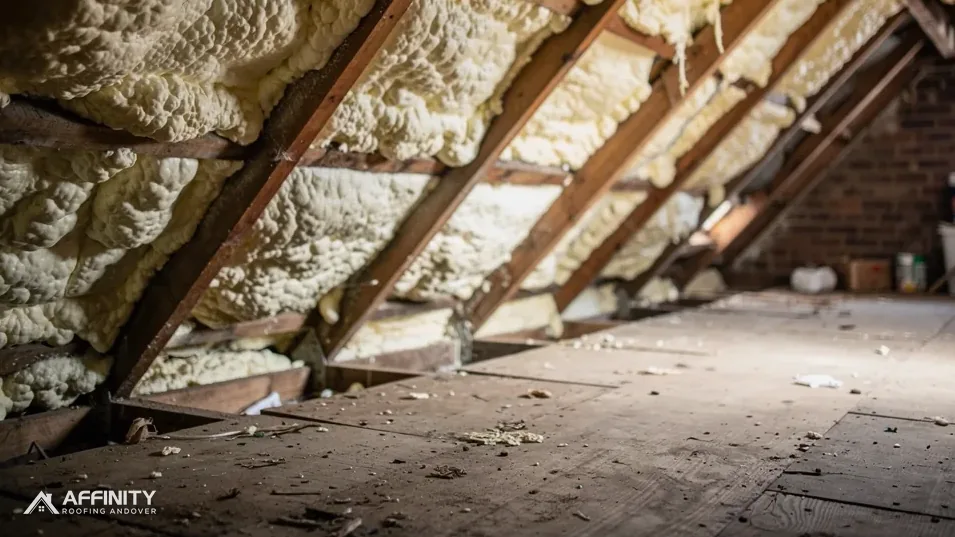
Roof timbers last when they stay dry. In a traditional loft, air moving beneath the covering carries away small amounts of moisture, and the rafters, battens and underlay dry out between wet spells. Spray foam changes that arrangement. It is stuck directly to the underside of the roof, so the wood is sealed behind a layer of insulation instead of sitting in moving air.
RICS, the surveyors' body, voices the worry plainly in its consumer guide: insulation fitted badly can hamper airflow in the roof and end in damp damage. The guide does not claim that every foamed roof will rot. It treats the risk as real enough that anyone with spray foam should know where moisture might come from.
There are two routes. Water vapour from the house can drift up to the cold side of the covering and settle on the timber, and rain or condensation already in the roof can be sealed in when the foam goes on. Either way, timber kept damp for long enough can be attacked by fungi, and the damage is slow and quiet at first. That quietness, more than any single product, is why surveyors look closely at foamed lofts.
Open-cell and closed-cell foam
Spray foam comes in two broad types. Closed-cell foam is made of tiny sealed bubbles and sets hard and dense. Open-cell foam has cells that connect to one another and is softer and more spongy. Our guide to open-cell and closed-cell spray foam sets the two side by side.
Neither type is a clean bill of health, because an open-cell layer can still hold moisture against a rafter if the roof above it leaks or the loft is badly ventilated. Any chance of damp still leaves the need to look.
You may not know which type you have, and the installer's paperwork does not always say. A firm, dense layer suggests one kind and a soft, springy layer the other, but the surest answer comes from a survey. It matters because the type affects both the rot risk and the way the foam is taken out if you decide to remove it. A sample cut from an out-of-sight corner can also be examined without disturbing the rest of the loft.
A leak hiding underneath
The worst case is a roof that was leaking before it was foamed, or has started to leak since. Water comes through a slipped tile or a cracked slate, runs onto the foam and stays in contact with the timber behind it. On a bare roof, staining would show on the underside of the covering and in the rafters. Under foam, nothing shows.
On the matter of foam over a roof that is already leaking, the Energy Saving Trust is direct: it does not recommend doing this. The sensible order is to repair the covering first and insulate afterwards. If the foam went in first, the leak may have been feeding the timber for as long as the foam has been there. Our guide to spray foam on a leaking roof covers that sequence.
A loft that looks dry is therefore not proof of sound wood. A dry surface on the foam says nothing about the timber behind it. If you have had a leak at any point since the foam was installed, mention it at the survey, because it points us to the area where the timber is most at risk, and to the part of the covering worth checking from outside.
Finding out for certain
The only dependable way to learn the state of the timbers is to expose them. That means clearing the foam from at least the areas of greatest concern and looking at the wood with the covering above it in view. A surveyor and a homeowner face the same limit here: wood that is buried in foam is out of sight and beyond a proper check.
On a survey we go up into the loft, photograph the foam and its condition, and look for tell-tale signs such as staining where the foam meets the wall, daylight, or loose battens. You are told what the visit can and cannot show. Where timbers show decay once the foam is off, we explain whether a section can be repaired, treated or needs replacing, and what that means for the rest of the roof.
Nothing here is a reason to panic, and many foamed roofs are sound. But the question stays open until someone has looked, which is why we advise against leaving it unchecked if you plan to sell, remortgage or convert the loft. See our spray foam removal page and the guide to roof timbers after spray foam removal.