The short answer
It is bagged in the loft, carried out and taken away by a registered waste carrier. It does not stay on your drive, and it does not go in a household bin. Anyone carrying waste away as part of a business should be on the carrier register, and you are entitled to ask for proof of who took your waste and where it went.
Bagging in the loft
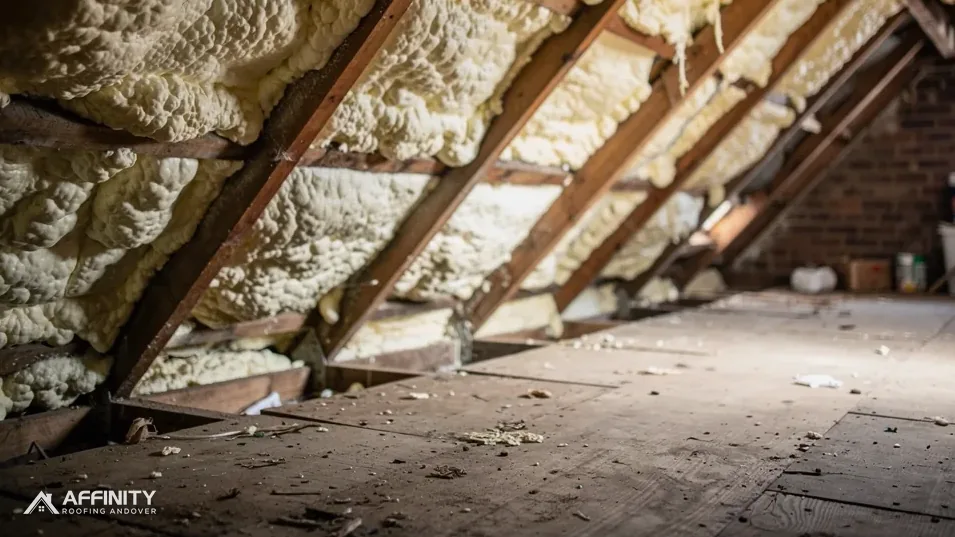
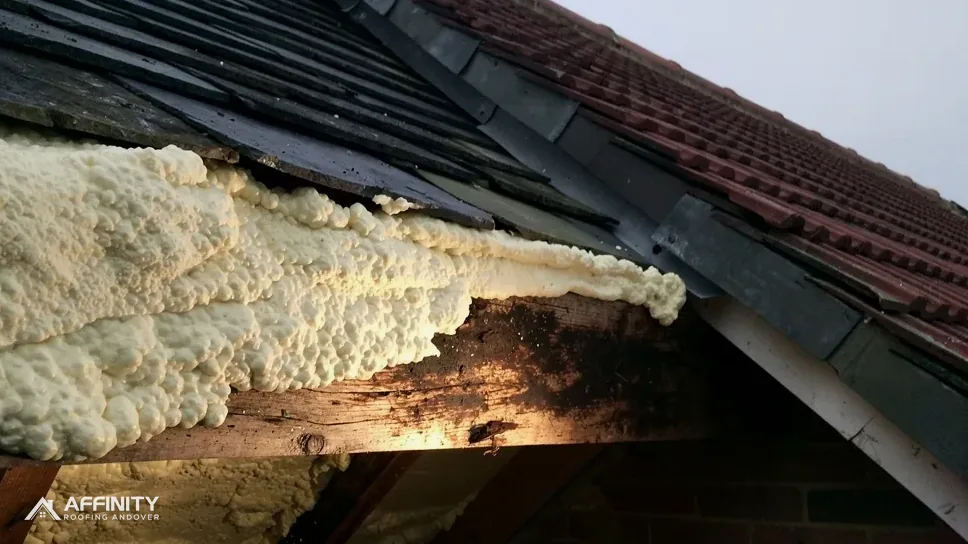
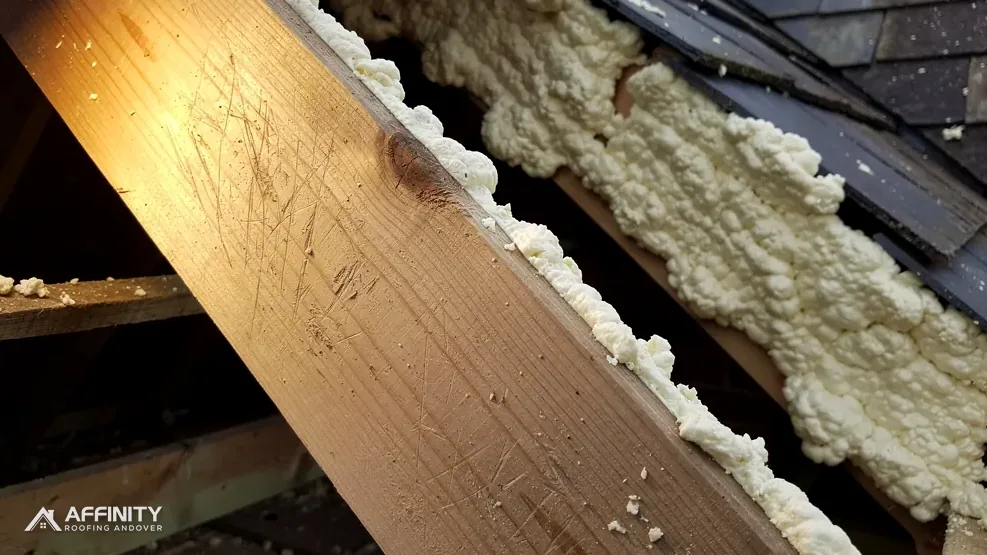
Spray foam comes out in pieces, flakes and dust. Left loose, it spreads through the house on shoes and clothes, so the first step is containment. Foam is cut or lifted away from the timbers and put straight into heavy-duty sacks at the point of removal, before it is carried anywhere.
Bulky rigid foam is light but takes up a surprising amount of room, so a single loft can fill many sacks. They are sealed, passed down through the hatch and carried out by a route protected with sheets, to a vehicle or container outside.
This is also the place to talk about the route before work starts. A narrow landing, a carpeted stair or a house with a lot of fragile furniture changes how we set up. We lay protection over the floor, close doors to the rooms we do not need and agree the path with you at survey. The foam waste leaves the building as it comes out of the roof space; it is not left stacked in a bedroom. You can read how the work is run in our guide to the spray foam removal process.
Why the carrier must be registered
Waste produced by building work is classed as business waste, and it must be moved by someone entitled to carry it. In England that generally means a carrier registered with the Environment Agency. GOV.UK has a service for registering as a waste carrier, broker or dealer, and a public register where you can look up a company.
The registration matters to you because the responsibility for waste does not stop at your front door. A firm that deals with the waste itself, under its own registration, leaves a clear trail from your loft to its destination. Choosing such a firm that deals with the waste itself, under its own registration, is the simplest way to avoid that.
It is easy to check. Ask the firm for its waste carrier registration number, and look it up on the GOV.UK register before work begins. A reputable firm will give it without hesitation. If you are told the waste will be dealt with by a friend with a van, or that you can take it to the tip yourself, ask why.
Records to ask for
Waste has a paper trail, and it is reasonable to ask to see yours. At a minimum, ask for a written note of what was removed, the date, the name and carrier registration number of the firm that took it, and where it was taken. Keep it with the contract and the invoice.
The record is useful for several reasons. If a council or neighbour ever asks where waste came from, you have the answer. If a buyer's solicitor asks what was done about the foam, the paperwork shows the loft was cleared properly and by whom. And if something goes wrong later, it identifies the firm responsible.
Pictures taken at the start, midway and at the end are worth as much as the waste note. They show the sacks leaving, the exposed timbers and the cleared floor. We take them as part of the job and send them with the invoice, so you hold a complete record of the job. Our guide to roof timbers after spray foam removal explains what to look at in the pictures once the foam is gone.
Leaving the site tidy
Disposal is part of leaving a house in good order. When the foam is out, the loft floor is swept and vacuumed, the sheets come up with the dust inside them and the route to the hatch is checked for stray offcuts. Small pieces turn up in odd places, and a quick walk around the garden and drive picks up any that blew out of a sack.
Foam fragments are light and can drift, so we avoid loading in the wind or leaving open sacks on a drive overnight. We load the waste out as it is produced, and we tell you when the last load has gone.
If the job also involves repairs, such as new battens or a replaced underlay, the offcuts from those go the same way. Timber, felt and packaging are taken off site together with the foam.
Tell us at survey if there is anything specific about your site: a shared drive, a narrow access lane, a neighbour who needs warning about noise or vehicles. Our spray foam removal page sets out the whole sequence, and you will be told what happens each day.