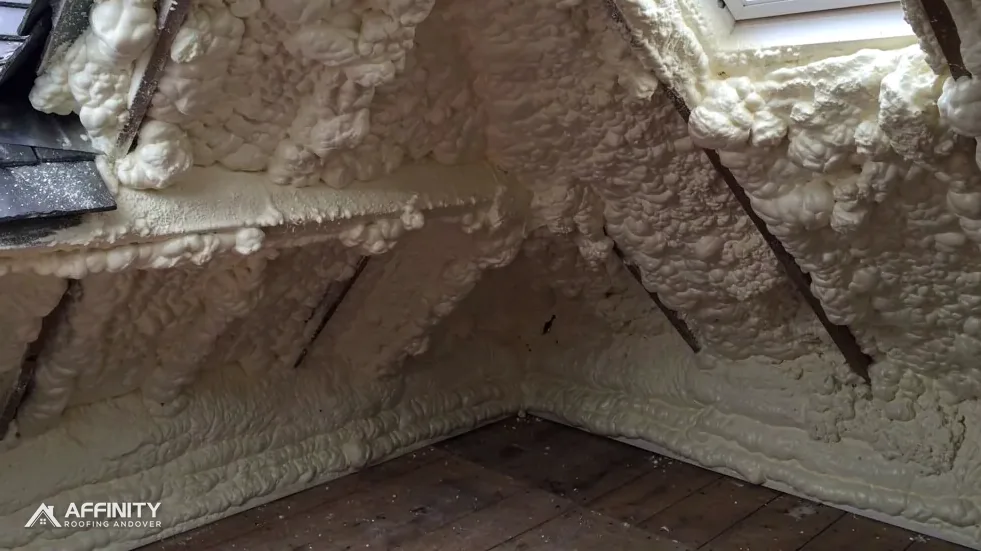
Releasing equity means borrowing against the value of your home, usually in later life, with the loan repaid when the house is eventually sold. The lender takes a long view. It may not see the property again for twenty years, so it cares a great deal about the physical condition of the building that secures the loan, and about whether anything in it could cause that building to lose value.
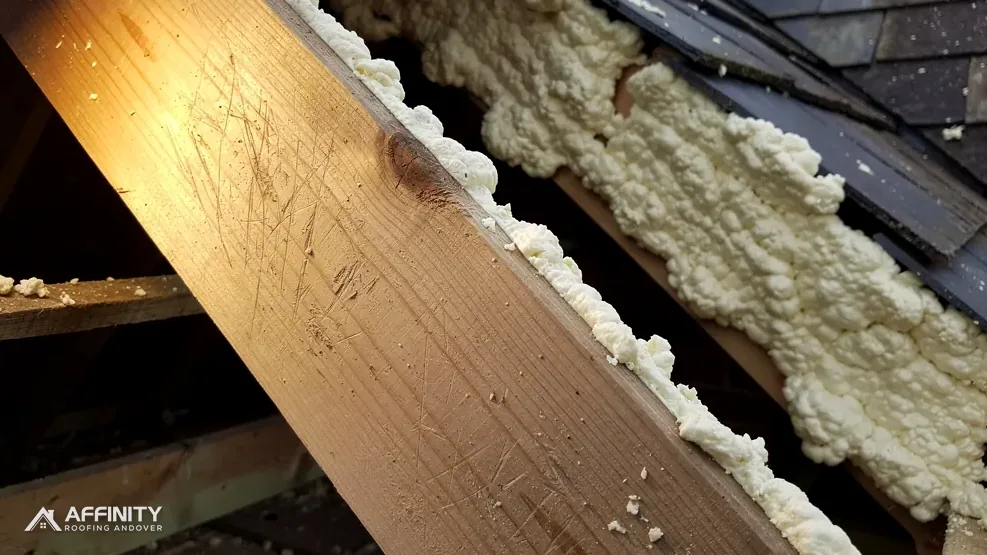
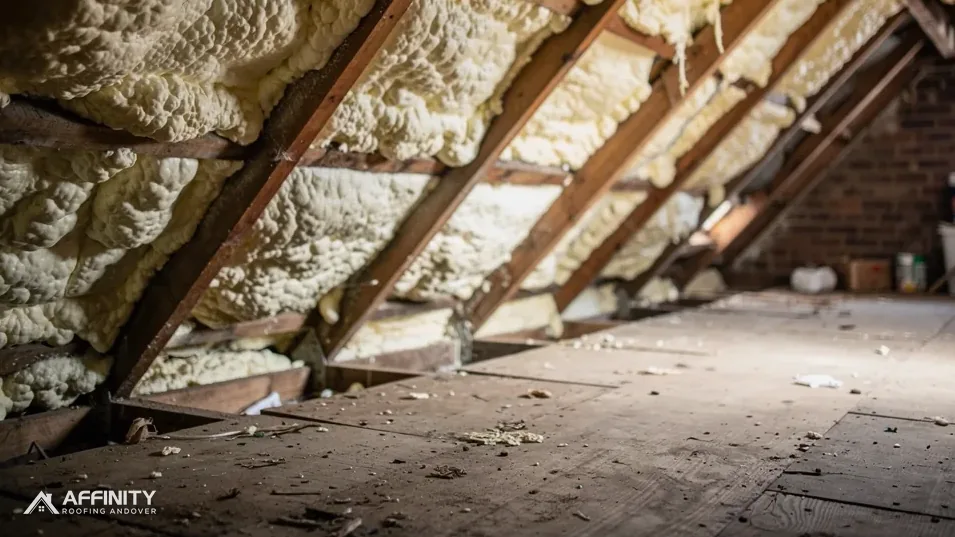
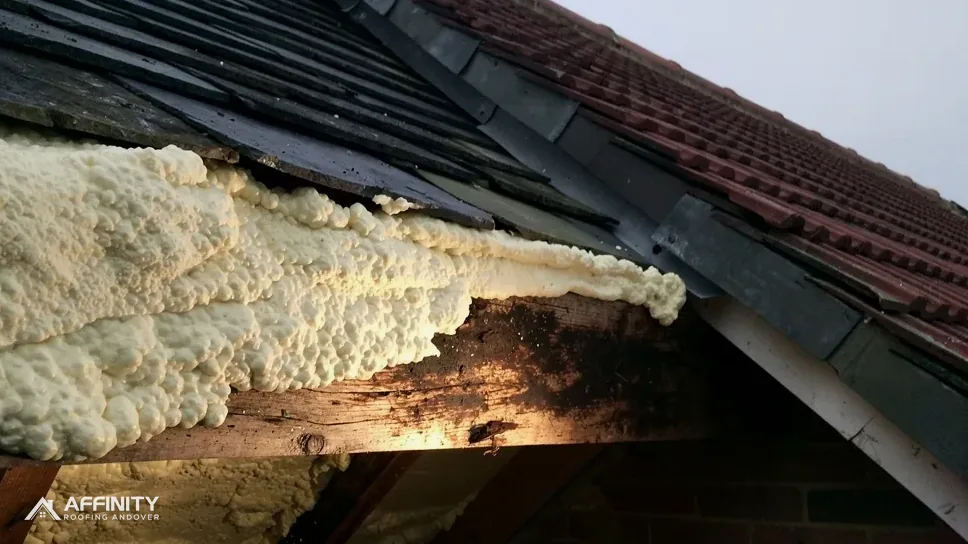
Equity release is the sector RICS named as an example when it reported on spray foam in March 2023. Foam sprayed over roof timbers is exactly the sort of feature that makes a long-term lender hesitate: the roof structure cannot be fully seen, and moisture trouble, if any, could grow unseen for years.
This guide explains what RICS said and did not say, why equity release lenders in particular take an interest, what a valuation involves, and what a homeowner with foam can sensibly do. It names no lenders, because policies vary and change, and it promises nothing about what any of them will do. The one reliable step is to ask your own provider.
What equity release lenders are lending against
To see why foam matters in this sector, it helps to see what an equity release lender is actually doing. The lender is not an enemy of old houses or of insulation. It is protecting a long-dated loan, and its questions follow from that.
A loan secured on the house
An equity release product lets a homeowner take money from the value of the property. The security is the house itself. If the loan is repaid when the owner dies or moves into long-term care, the lender is repaid from the sale proceeds. So the lender's recovery depends on what the house is worth at that future date.
A long time horizon
Twenty or thirty years can pass between the loan and the sale. A lender looking that far ahead worries about any defect that could cost money or reduce a buyer's interest. A roof that cannot be inspected is an obvious example.
The valuation
Before lending, the provider has the house valued by a surveyor, who writes up the condition as far as it can be seen. If the surveyor notes foam in the loft and says the roof timbers cannot be inspected, the provider has to decide what that means for the security.
Why this is not a verdict
None of this means foam makes a property unlendable. It means the provider may ask questions, and those questions are easier to answer if the answers have been prepared. Our spray foam removal page describes how a foamed loft is surveyed.
What RICS reported
RICS, the Royal Institution of Chartered Surveyors, produced a consumer guide that valuers are likely to know. Because it is aimed at consumers, it is short and readable, and an owner can read it in one sitting.
The press release
A RICS news release of 3 March 2023 announced a consumer guide to spray foam. It reported that parts of mortgage lending, equity release among them, had grown uneasy about the product, and that the unease was by then reaching lenders more generally.
The guide
The guide document is dated 31 March 2023. Its advice to owners is to ask the mortgage provider a single thing first: whether the lender's policy permits foam installation. It observes that roof timbers buried in foam are out of view, and that poorly fitted insulation can disturb ventilation and bring on damp.
What it does not claim
The guide does not say that all lenders refuse foamed homes, and it does not say foam must always be removed. Statements to that effect go beyond RICS and would mislead. What it provides is an explanation of the concern, and a pointer to the one source that matters for your own case: your lender.
Equity release and the wider market
RICS named equity release as one sector where concern arose, and said it was having a wider impact on lenders. The position has continued to shift since, and policies are set by each provider, so a statement that was true of one lender last year may not be true this year.
Foam, a valuer and a roof you cannot see
A valuation for equity release is a practical exercise, and the loft is part of it. The visit is usually short, so an owner who has made the hatch accessible and put the paperwork on the kitchen table saves the valuer time and avoids a second appointment.
What the valuer does
The valuer visits the property, looks at its general condition, notes anything that might affect value and reports to the provider. The loft is usually inspected if there is a safe hatch. If foam is present, the valuer records what can be seen: the type, the extent and any signs of damp.
The usual points
Typical comments are that the roof structure is hidden and cannot be inspected, that the age and type of foam are unknown, that moisture damage cannot be ruled out and that a specialist report is recommended. The provider may then ask for that report, for removal or for the application to be reconsidered.
Why paperwork helps
The valuer is more comfortable when they can see an invoice, a product sheet and ideally an inspection report. An owner who has them can often move the process along. An owner who has none starts at a disadvantage, and may need a loft survey to create the evidence.
The cost of delay
An application that stalls over a roof question can take weeks. Having the facts to hand at the start is cheaper than waiting for a query to come back. Our guide to what a spray foam survey covers explains how the evidence is gathered.
Foam already fitted, equity release planned
The practical steps are the same whatever the provider, and they begin with a conversation. Make the call before you spend money on a survey or removal, because the provider's answer shapes what you need.
Ask first
Phone the provider, or ask your adviser to, and ask plainly: do you accept properties with spray foam in the loft, and what evidence do you need? Ask for the answer in writing. Policies differ, change and are applied differently from case to case.
Gather what you have
Look for the installation invoice, the product details, any certificate and any guarantee. Note the date, the installer's name and the type of foam, if known.
Get the loft surveyed
A roofer's survey with dated photographs, and moisture readings where the timbers can be reached, is useful evidence. It shows the extent of the foam and any visible problems. It cannot show what is behind the foam without opening it.
Consider removal
If the provider wants the roof structure visible, once the foam is gone the loft can be inspected as any other would be. A record of the work, with photographs and notes, then goes to the valuer. Our guide to the spray foam removal process shows what the stages are.
Do not rush
No one can promise a particular outcome from any provider. Take time, and speak to a regulated adviser and a solicitor about the equity release itself.
Before you let anyone fit foam
The best time to ask about foam and lending is before the foam goes in, and the second best is before you apply for anything. Nobody regrets asking early.
The RICS advice
RICS points owners to their own mortgage provider as the first stop. For anyone who might release equity later, or who has a mortgage now, that call is the first step and costs nothing.
Think about the future owner
Foam stays in the house after you. A buyer, and their lender, will meet it. Even if your own provider is relaxed, a later buyer's may not be.
Alternatives
A conventional layer of mineral wool at ceiling level keeps the roof timbers visible and does not raise the inspection question. It also sits more happily with the guidance on ventilation, which assumes air can move through the roof space. For a leaking roof, the proper answer is a roof repair, and the Energy Saving Trust, asked about foam on a leaking roof, does not recommend it.
Doorstep offers
If someone calls offering free foam or a grant, check the claim with the scheme. ECO4 runs until 31 December 2026, and a new roof is not funded by any national grant. A contract signed at home also normally carries a 14-day cooling-off right, with limits we set out in our guide to spray foam doorstep sales.
Get it in writing
Ask the installer for the product, the type, the thickness and the areas covered, and keep the paperwork where a future valuer can find it.
Working with advisers and keeping records
Equity release is a serious financial decision, and the roof is one of several matters to settle. It deserves its place on the list, though not the whole of the list.
The right adviser
Equity release advice comes from regulated advisers, and a solicitor acts for you in the legal process. Tell both about the foam early, because it can affect the timing and the paperwork, and they can tell you how their provider approaches it.
Family
You may want to involve your family in the decision. A short note of what is in the loft and what has been done about it prevents surprises later, and helps anyone who has to deal with the property in future.
The records to keep
Keep the installation paperwork, the loft survey, any timber report, the removal record if foam was taken out, and any written reply from the provider. Put the date on each. Store them with the deeds.
What we provide
After a removal you receive dated photographs from before, during and after the work, our notes on what we found in the timbers and underlay, and a description of the ventilation left in place. That gives a valuer something concrete to read.
No promises
We cannot say what any provider will decide. We can show what the roof looks like and let them judge. If the provider's reply asks for something specific, such as a moisture reading at the eaves or a photograph of a particular slope, tell us and we will build it into the survey, so that one visit answers the question.
Taking the long view
Equity release is meant to last. A roof that has been inspected, recorded and, where needed, repaired is easier to live with and easier to hand on to the next owner, whatever the lender decides. That is worth having in its own right, apart from any single application.