The short answer
Gutters overflow for three main reasons: they are blocked with leaves and silt, they have lost their fall so water sits instead of running, or they cannot carry the volume the roof sends them. A blocked or undersized downpipe or outlet causes the same symptom. Clearing the run is the first step, and a survey finds the cause if the overflow carries on.
Blockage, the first suspect
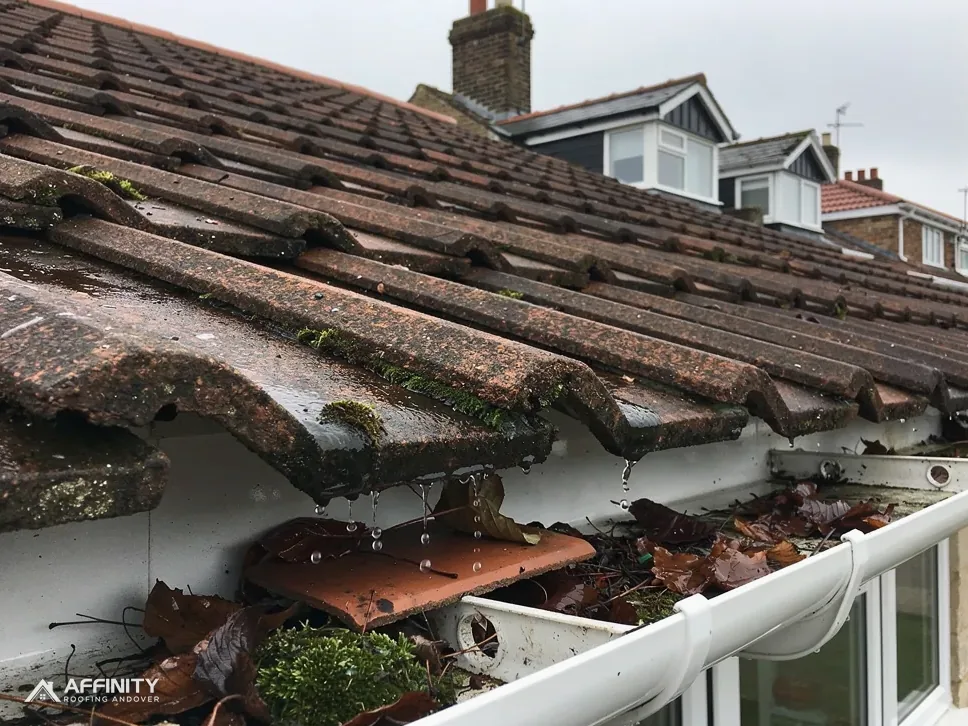
Start with the simplest cause. Leaves, moss, silt and the occasional ball or nest build up in the channel, and above all at the outlet where the water drops into the downpipe. Rain then has nowhere to go and spills over the lip, usually near the blockage.
You can often tell from the pattern, which the position of the wet patch on the wall helps to show. A gutter overflowing at one spot, with the rest running well, points to a local blockage close by. Water spilling along the whole run suggests either a general build-up of silt or something more fundamental.
Look on a dry day for plants growing in the channel, rainwater stains below the lip, a thick layer of dark silt or a plug of debris at the outlet. If they are visible from the lawn or a bedroom window, the gutter needs clearing. Our answer on how often gutters need clearing sets out a sensible rhythm, and the guide to gutter cleaning describes the job.
Never rest a ladder on the gutter, which can crack the run or drag it off its brackets.
A bucket of water poured in at the far end shows how the channel drains. Watch where it pools and how fast it reaches the outlet.
Fall and capacity
A clear gutter can still overflow if it holds water instead of moving it. The channel needs a gentle fall towards the outlet, and Brett Martin gives 1 mm for every 600 mm of run. If brackets have slipped, the fascia has sagged or the run was fixed level, water pools and spills at the low point. Our answer on gutter fall explains the figure.
Capacity is the other half. BS EN 12056-3 is the British Standard on roof drainage design, and it exists because the size of the gutter and the number of outlets must suit the roof area feeding them. A large roof draining into a small half-round gutter with one outlet at the far end can overflow in heavy rain, however clean it is.
Changes to the house add to this. An extension, a re-roof that sheds water differently or a roof valley that discharges onto one spot can overload a gutter that once coped. Wide, deep profiles and an extra outlet are the usual answers.
Overshoot is a separate case: in a heavy storm, water runs fast down the roof and shoots straight over the gutter, which a deeper or wider profile can help.
Downpipes and outlets
The pipe at the end matters as much as the channel. If the downpipe is blocked below the outlet, water backs up and the whole run fills. Leaves can lodge in the bend, a bird can nest in the top, or the pipe can be crushed or choked with silt where it meets the drain.
Test it on a dry day by pouring a bucket of water into the outlet and watching the flow. If it comes out slowly or not at all, the pipe is partly blocked. The fix is to rod or flush the pipe from the top or the bottom, and to check the drain or gully where it discharges.
Sometimes the pipe is too small, bent awkwardly or crushed at a joint. A downpipe that has cracked or split and leaks needs replacing. Our guide to downpipe replacement covers when that is the answer.
Where a pipe feeds a drain that is itself slow, the problem is in the ground and falls outside roofing work. A drainage specialist then takes over.
Finding the fault and fixing it
The order of work is simple. First clear the gutter and flush the downpipe, so you know the run is open. Then watch it in rain, or test it with a hose. If water still spills, the fault lies in the fall, the fixings or the capacity, and a survey will find which.
At the survey we check each bracket and joint, sight along the run to see where it dips, test the outlets and look at what feeds them. We photograph the low points and any pooling, and tell you what we would do: reset the run, add brackets, fit a wider profile or an extra outlet.
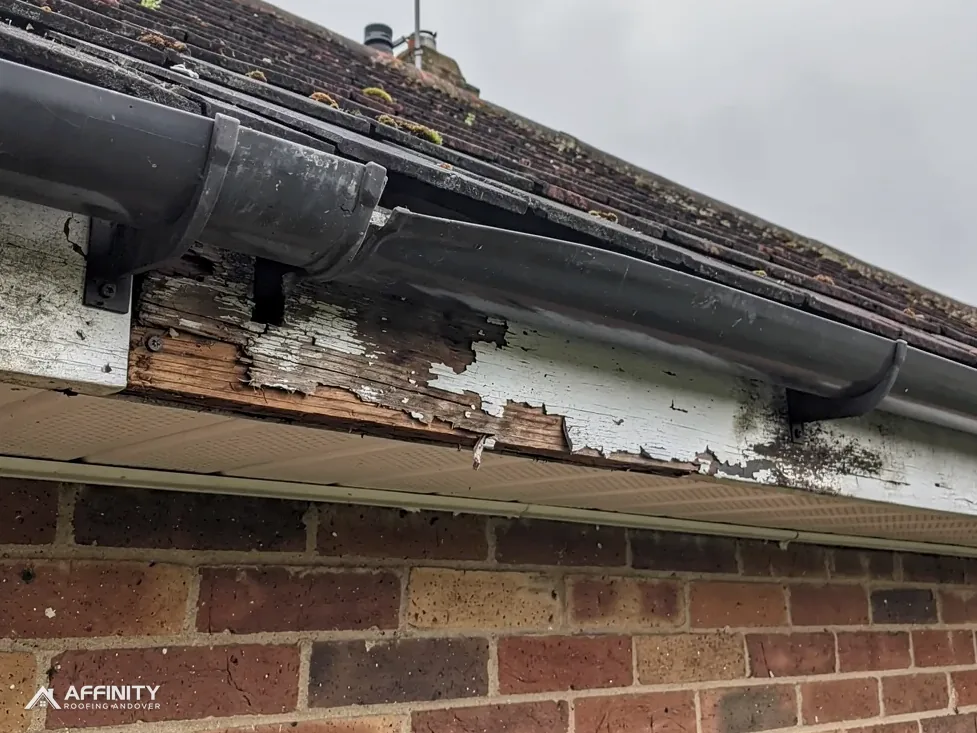
The cost depends on the fault and on access, and the single written price follows the survey. If the cause is rotten fascia, the board has to be repaired before any new fall will hold.
Overflow is also the cause of the stains described in our answer on black streaks on fascias. The guttering, soffits and fascias page explains what a full roofline survey includes.