The gutter collects the rain, but the downpipe decides where it goes. It is the vertical pipe that carries water from the gutter outlet down the wall and away to the ground. When it works, you never think about it. When it fails, the first you know is a green stain down the brickwork, a pool at the wall's foot or an overflow at the eaves in a heavy shower.
Replacing a downpipe sounds like a small job, and sometimes it is. But the pipe is one part of a drainage path, and the trouble is often elsewhere on it: a blockage at the shoe where the pipe bends, a joint that has split, an outlet narrower than the roof needs or a drain at the bottom that cannot take the flow. Fitting a new pipe without finding the cause just moves the problem along.
This guide covers sizing, especially on larger roofs, the usual blockages, how the pipe meets the drain, and what a replacement involves. Our guttering, soffits and fascias hub covers the rest of the system.
How a downpipe fits into the system
A rainwater system is a chain, and the downpipe is the middle link. It helps to know the parts so you can say where a fault is.
Outlet and hopper
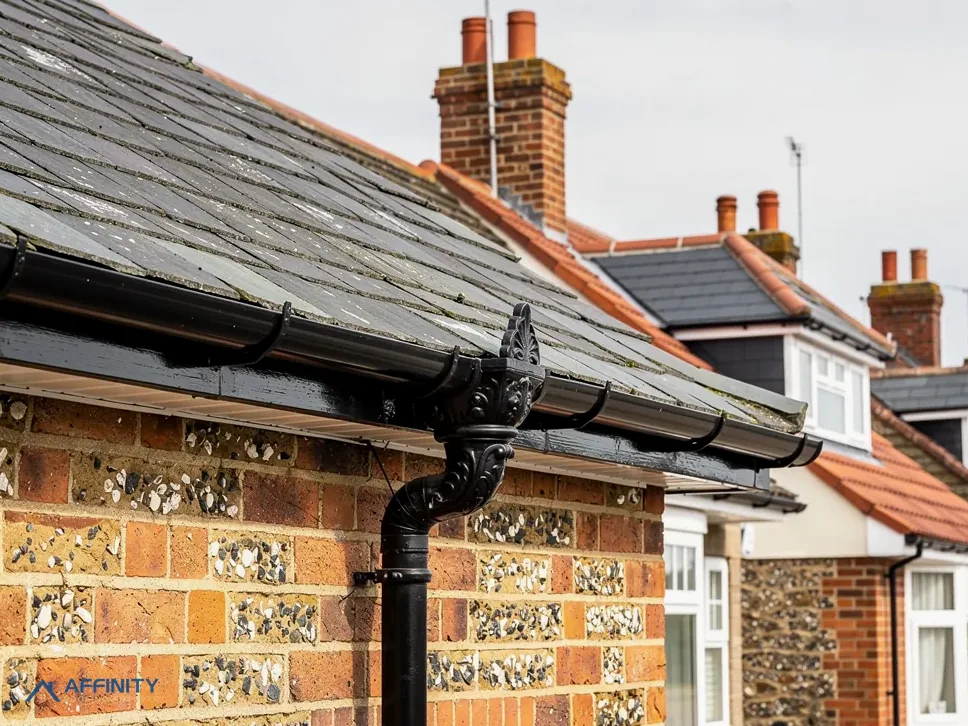
At the top, the gutter has an outlet, a hole through which water drops into the pipe. On older houses the outlet may feed a hopper head, a funnel shape that takes the flow from one or more gutters and passes it to the pipe. Hoppers catch leaves and often overflow when they block.
The pipe and its fixings
The pipe itself is made in lengths, joined by sockets that slot together, and held to the wall by clips or brackets. It may be round or square, and in plastic, aluminium or cast iron. The clips must be properly spaced and fixed into sound masonry. A pipe that sags or leans away from the wall has lost its fixings.
Offsets and shoes
Where the pipe has to step out over a projecting course of brickwork or the edge of a bay, it uses offsets, short angled lengths. At the bottom a shoe, a curved section, turns the flow outward or into the drain. These bends are where debris collects.
The ground connection
The pipe finishes in one of three ways: over a gully, which is a grated opening in the ground connected to a drain; straight into an underground pipe; or into a soakaway, a pit that lets water soak away into the ground. Where it goes matters as much as the pipe itself.
A survey follows the water from top to bottom, looking at each of these links.
Sizing for large roofs
One downpipe cannot serve a roof of any size. The question is how much roof each outlet is asked to drain.
Roof area decides the flow
The larger the area of roof draining to a gutter, the more water arrives in a heavy shower. A long gutter on a wide roof, or a big roof with a single downpipe at one end, will overflow when the pipe cannot take the flow. The calculation relates roof area and rainfall intensity to the capacity of the outlets and pipes. BS EN 12056-3 is the European Standard covering the layout and calculation of roof drainage, and its edition from 2000 is the one listed as current.
Signs of undersizing
The gutter overflows at the outlet in heavy rain while the rest of the run stays empty, water pours over the hopper head, the pipe splashes at its joints and the stain below the outlet is always there. If a roof has been extended, re-roofed with a larger covering or had a dormer added without changing the drainage, the existing pipe may now carry more than it was meant to.
Fixes
The options are an extra outlet and downpipe to share the load, a larger pipe in a bigger section, or a deeper gutter profile that moves water more quickly towards the outlet. Our guide to gutter profiles explains the capacity differences. Adding an outlet is often the neatest answer on a long roof.
On larger roofs, such as barns, workshops and commercial units, the sizing needs to be worked out and not guessed.
Blockages and what causes them
Most downpipe problems are blockages, and most blockages are found at the same few places.
Where they form
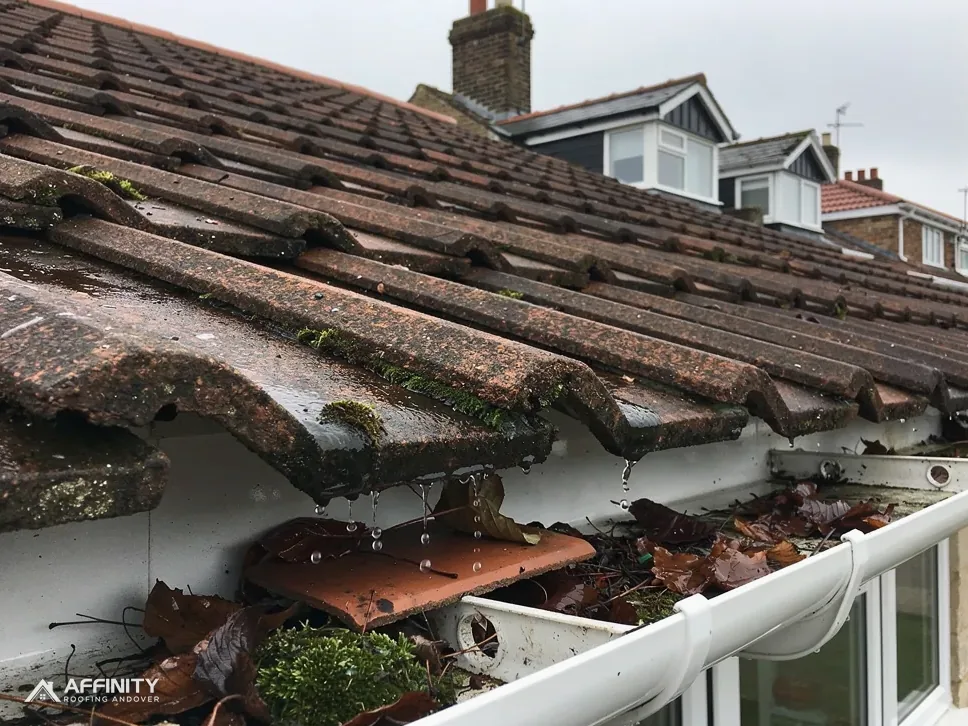
At the top, leaves, moss and roof grit settle over the outlet. At bends and offsets, debris catches on the inside of the turn. At the shoe, silt and small stones from the roof gather and build up. In winter, ice can plug a pipe that is partly blocked, and then crack it as it expands.
Signs
Water spilling over the gutter at one point, a downpipe that is dry when it is raining hard elsewhere, a gurgling sound in the pipe, or a stain at a joint where water has been forced out under pressure. The gutter above a blocked pipe usually holds water for days after rain.
Clearing
A short blockage can often be cleared with a rod from the top or by taking the shoe off and flushing the pipe from the bottom. A long or hard blockage may need the pipe taking down in sections. Clearing out the gutters at the same time is sensible. Which? puts the clear-out of a whole house's gutters at £75 to £350, ex VAT (Nov 2025), a national range.
Why they return
If a blockage keeps coming back, the cause is upstream: a gutter with no leaf guard under a tree, a pipe that is too narrow or an offset that traps debris. Our answer on overflowing gutters goes through the common causes. Clearing the blockage is the first step, and finding why it formed is the second.
Cracks, leaks and when to replace
Pipes wear out in ways that are easy to see from the ground, once you know where to look.
Cracks and splits
Plastic becomes brittle with age and sun, and frost can split a pipe that has held water. A vertical crack in a plastic pipe usually means it has frozen with water inside. Cast iron cracks when it is knocked or when rust has weakened it, and aluminium dents.
Leaking joints
Socket joints are pushed together, not glued, on many rainwater systems, which lets them move but also lets them leak if they are not pushed home or the seal has aged. A green or black streak below a joint is the classic sign. Joints on cast iron are caulked and may need re-making.
Loose or missing clips
A pipe that has lost clips will lean and rock in the wind, putting strain on the joints and the gutter above. Clip spacing and fixings matter, since the pipe is full of water in a downpour and heavy.
Repair or replace
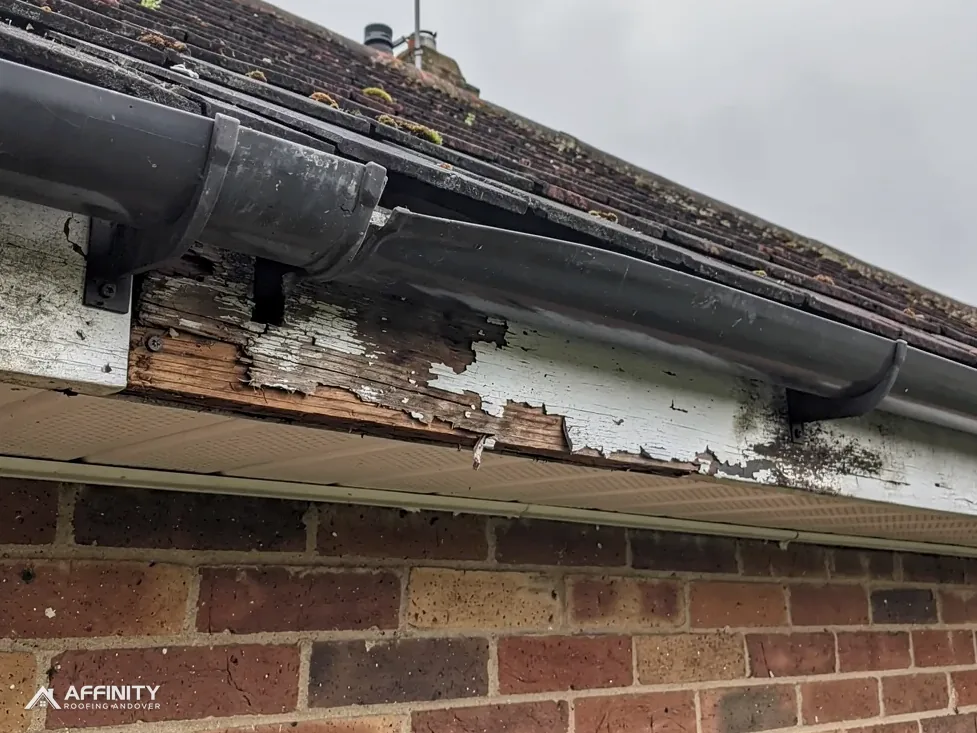
One broken length, a loose clip or a split joint can be put right. A pipe that is cracked in several places, stained at every joint or too small for its roof should be replaced. When the gutter is being renewed, replacing the downpipes at the same time avoids mismatches between old and new, and the cost of a second visit and scaffold. Our guide to gutter replacement cost explains how pipes fit into the published figures.
If a pipe is rusting through on a high wall, take care: a falling length can injure someone.
Where the pipe meets the drain
The bottom of the pipe is the part owners pay least attention to and the part where water can do most damage to a house.
Gullies and soakaways
Most downpipes discharge over a trapped gully set in the ground, with a grate to catch leaves, or into a soakaway. A blocked gully backs water up the pipe and out through the nearest weak joint. A soakaway that has silted up can no longer take the flow, and water pools by the wall.
Direct connections
On some properties the pipe connects straight into an underground drain. It should be properly sealed so it cannot leak into the soil next to the foundations. If you are unsure where your rainwater goes, ask your building control body or a drainage specialist before changing anything, because rainwater and foul drainage are separate systems in many places and should not be mixed up.
Splashing and damp
If the pipe finishes short of the gully, or the gully has moved, water splashes against the wall base and soaks the brick, causing damp and algae. A shoe turned the wrong way, or a missing extension, throws water against the house.
Checking the ground
After a downpour, watch where the water goes. Lift the gully grate and look for silt, leaves and standing water. Our answer on gutter fall also covers how water is directed to the pipe.
A new downpipe that discharges onto a blocked drain simply moves the flood from the eaves to the ground.
What a replacement involves, and what we check
Replacing a downpipe is a short job on a low wall and a bigger one three storeys up.
Access and scaffold
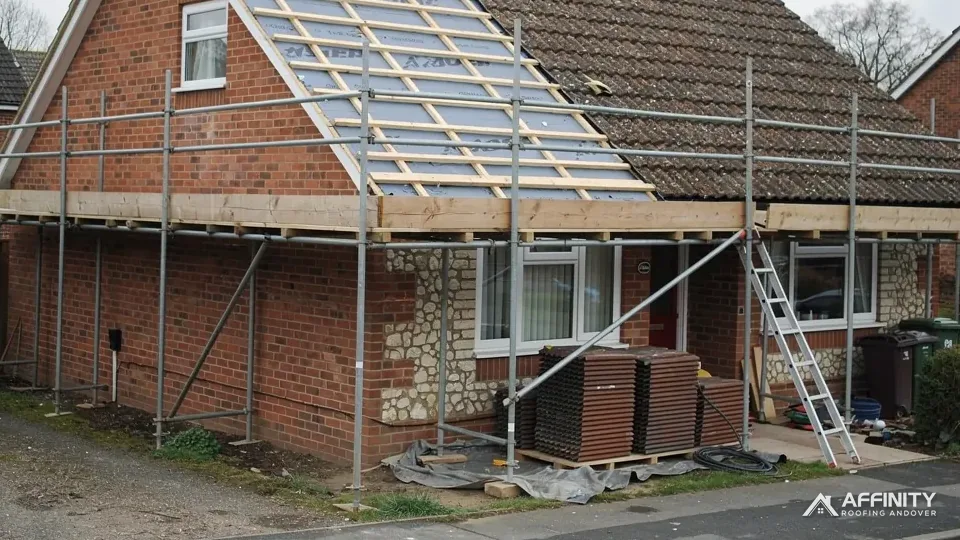
On a bungalow or an extension, a ladder is enough. On a house, a tower or scaffold is needed. Where scaffold stands on a footway used by the public, Hampshire County Council is the one to license it in the Andover area. Where scaffold is already up for gutters or roof work, the pipes are done in the same visit, which saves a second set-up.
The work
The old pipe, clips and shoe are taken off and the wall behind is checked for damp and loose brick. The outlet, offsets and sockets are inspected. A new pipe of the right size and material is fixed with properly spaced clips, jointed, connected to the gutter and set to discharge into the gully or soakaway. We clear the gully and check the flow with water before we leave.
Matching
The pipe should match the gutter profile and colour, and the sections should be compatible with each other so the sockets seat properly. On an older building, round or square cast or aluminium sections may be needed to keep the look. Where a listed building or conservation area is involved, check with Test Valley Borough Council's planning team about changes to materials.
One written price
Our quote is one total, covering the pipes, any scaffold and the waste taken away. The work area is cleared as we go, and the gully is left flowing.