The short answer
Yes. New uPVC fascias come in white, black, brown, grey and woodgrain finishes, and timber can be painted any colour. The checks come first on listed homes and in conservation areas, because an Article 4 direction can control fascias, soffits and guttering. Ask your planning authority before you order boards.
The colours and finishes on offer
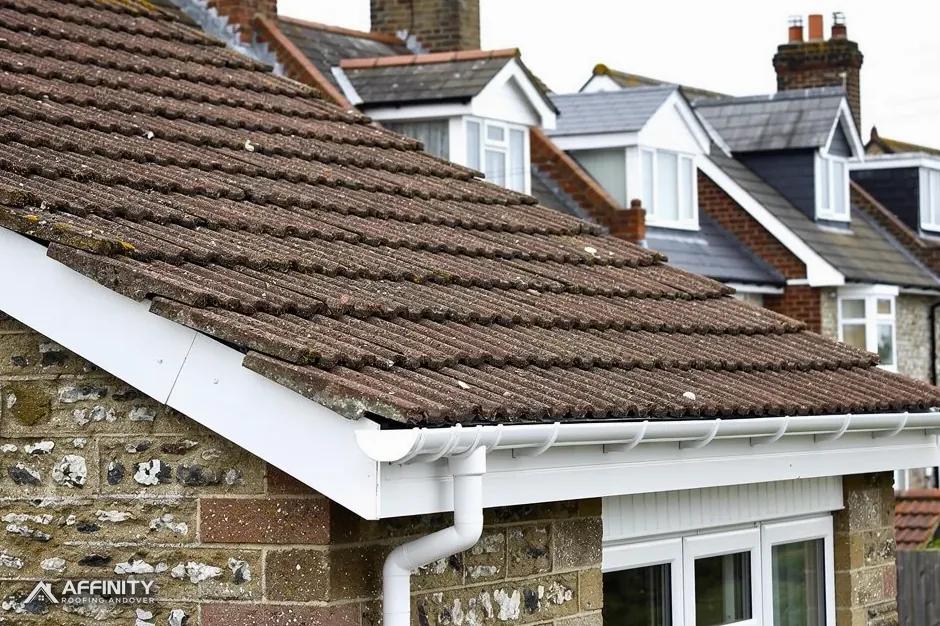
White is the long-standing default, and it still suits a great many houses, but it is far from the only choice. uPVC fascias and soffits are routinely made in black, brown, grey and cream, and in foil finishes that mimic oak or mahogany. Because the colour of uPVC runs through a laminated or foiled surface, a scratch does not show timber underneath, though a deep gouge on a foiled board can reveal a lighter core.
Aluminium and composite boards come in a wider spread of powder-coated colours, and timber fascias can be painted or stained to any shade. A painted timber board needs repainting every few years, while uPVC needs only an occasional wash.
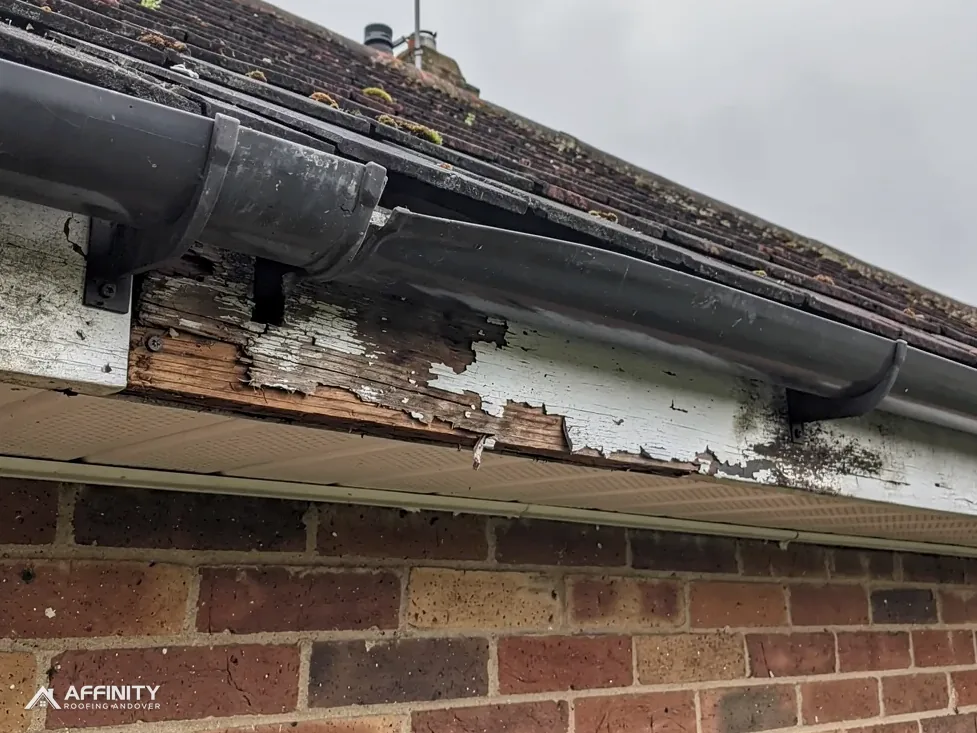
Pick a colour that sits well with the windows, front door and gutters. A mismatch between white fascias and brown window frames, for instance, looks unplanned from the road. A change of colour is also the moment to ask whether the boards behind need work, since new trim over weak timber is wasted. Dark fascias hide dirt better but show dust and water marks, and light ones reveal streaks quickly. Grey sits between the two and suits many window frames. Our answer on black streaks on fascias explains what causes them.
Matching the gutters and soffits
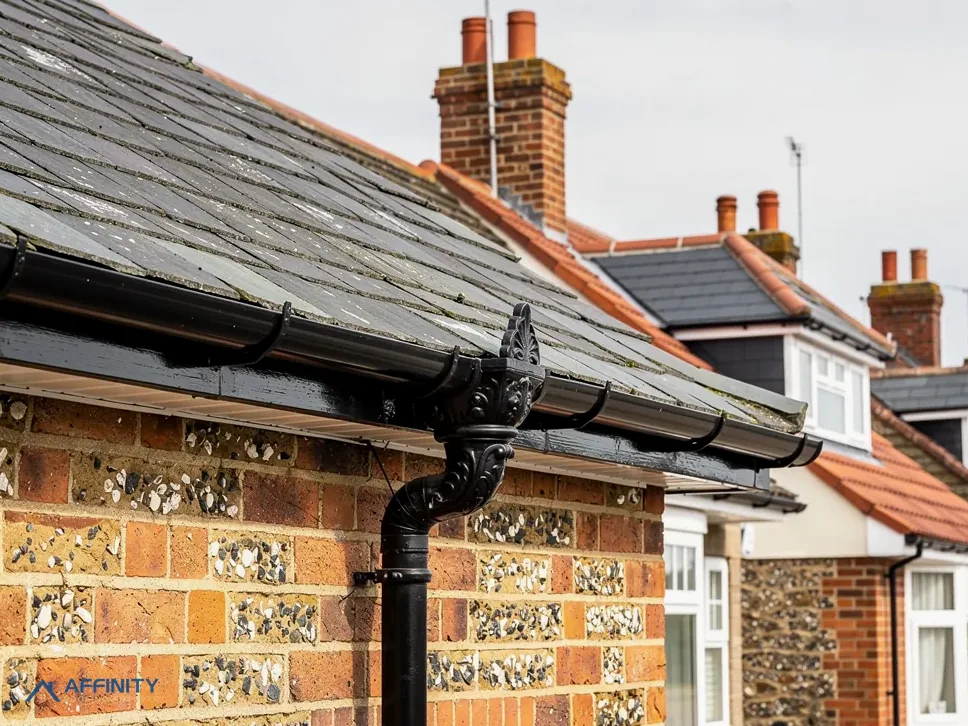
Gutters and downpipes are normally chosen with the fascia, because the gutter hangs directly in front of it and the two are seen together. A white fascia with black gutters is a recognised combination on some period houses, but a single colour across the roofline gives a tidier line.
The soffit is generally matched to the fascia, although some houses suit a white soffit with a darker fascia. The choice is yours, and a tidy result matters more than the rule. Whatever you decide, keep the same shade on every board so the roofline reads as one line. If you are changing the colour, think about the whole run, including the bargeboards at the gable ends, so the finished roofline looks consistent from every side.
Foil-finish boards need extra care at corners and joints, where the cut edge is visible. A good fitter uses matching corner pieces and trims to hide them. Ask to see a sample board in daylight before you decide, because colours look different on a showroom card, indoors, than on the front of a house in the open. Hold it against the window frames and the brickwork, and look at it again on a dull day and in bright sun.
Our guide to gutter profiles helps you choose a shape that suits the colour you pick.
Conservation areas and Article 4
A conservation area is a place designated for its special character, and councils can ask for more care over changes that show from the street. An Article 4 direction goes further: it is a direction that lets a council take away named permitted development rights over a set area, so work that is normally allowed then needs a planning application.
For roof edges, the clearest example is Basingstoke and Deane. Its Article 4 directions in four of its town conservation areas, among them Fairfields and South View, cover replacing fascias, soffits or guttering. Each direction has its own boundary, so look up the street rather than relying on a neighbour's experience. An owner in those areas should apply before changing them, and the council's wording is that original materials should be retained.
For every other council in our area, the right step is to check whether an Article 4 direction applies with your own planning authority. Get the reply in writing and keep it with the quote, so the street is checked rather than assumed. A short email to the planning team is enough, and it protects you if a neighbour or the council queries the work later.
Listed buildings and other checks
A listed house keeps its permitted development rights, but listed building consent is a separate requirement for works touching its character. Changing the colour or material of a fascia on a listed building can fall within that, so ask the conservation officer at the council before work starts.
Flats are different again, since permitted development rights for dwellinghouses do not cover a building containing flats. A leaseholder will also need the freeholder's agreement, because the roofline usually belongs to the building rather than the flat.
If none of these applies, the change is a matter of choosing boards and fitting them properly. Whatever the colour, new boards should be fixed to sound timber, with the correct ventilation maintained in the soffit. The guttering, soffits and fascias page explains the survey that comes first.
Our guide to capping over or replacing fascias sets out the choice that sits behind the colour.