The short answer
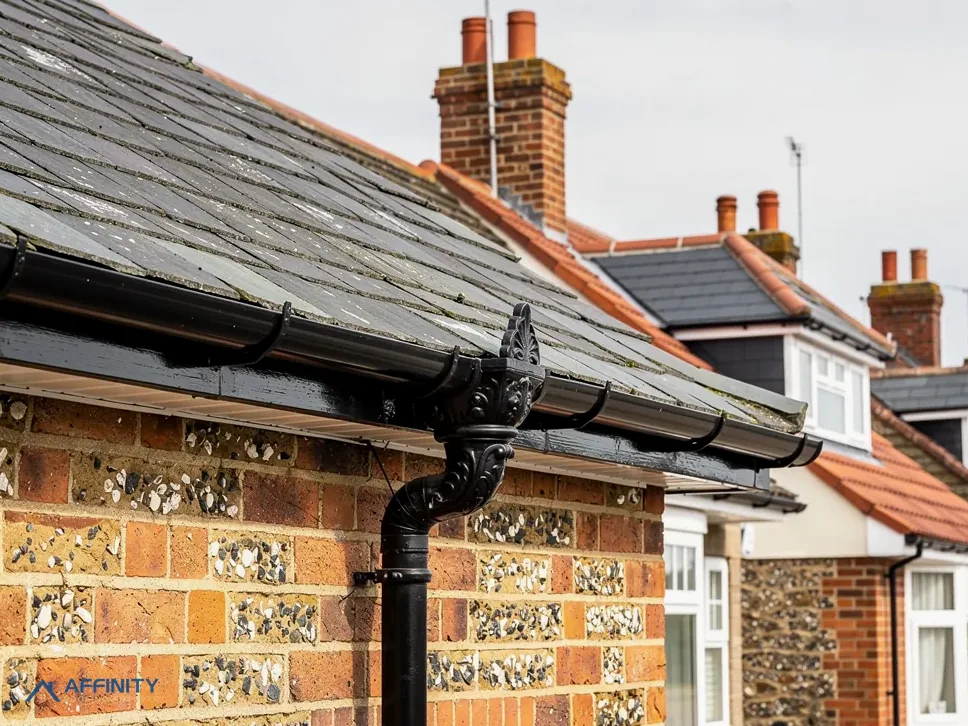
A gutter needs a slight, even slope towards its outlet. Brett Martin's installation guidance gives 1 mm of fall for every 600 mm of gutter. That is a very gentle slope, almost invisible from the ground, but without it water lingers in the channel, collects debris and drips out through joints. A gentle, even slope is the aim.
The figure and where it comes from
British Standards deal with roof drainage in BS EN 12056-3, which covers the layout and calculation of roof drainage. For the slope itself, the practical guide is the maker's. Brett Martin, a UK gutter manufacturer, advises fixing a rainwater system with 1 mm of fall for every 600 mm of its length.
To put numbers on it, a 6 m run would therefore drop by 10 mm from the high end to the low end. That is no more than the thickness of a pencil, and well under the width of a thumb. You cannot judge it by eye from the ground, which is why fitters use a string line or a spirit level with a measured packer.
Do not confuse this with the fall on a flat roof. The 1:80 and 1:40 figures in BS 6229:2025 and IKO's design guidance are for flat roofs with membranes, and BS 6229 does not apply to guttering. A gutter fall is a separate, much shallower matter set by the gutter maker and the layout of the outlets.
If the gutter system is a different make from Brett Martin, check its own fitting guide, because spacing and fall can differ.
Why fall matters
Water in a gutter moves under gravity, and a slight slope is all it needs to run to the outlet. The gutter does not have to look sloped, and a visibly steep one is usually a sign of poor fixing. A gutter set dead level gives no help to water or debris. Leaves, silt and moss settle in the channel, build up and cut the capacity of the whole run, until the next downpour spills straight over the front lip.
Standing water has other effects. In winter it freezes and expands, putting pressure on joints and brackets. In summer it breeds algae and smells. The seal at each union spends its life under water when the run does not drain, so it fails sooner than one that stays dry.
Fall also protects the building. A gutter that cannot clear its water overflows against the wall and fascia, leaving stains and damp patches. The guide to gutter cleaning explains why a clear run still depends on its slope.
Ponding and how to spot it
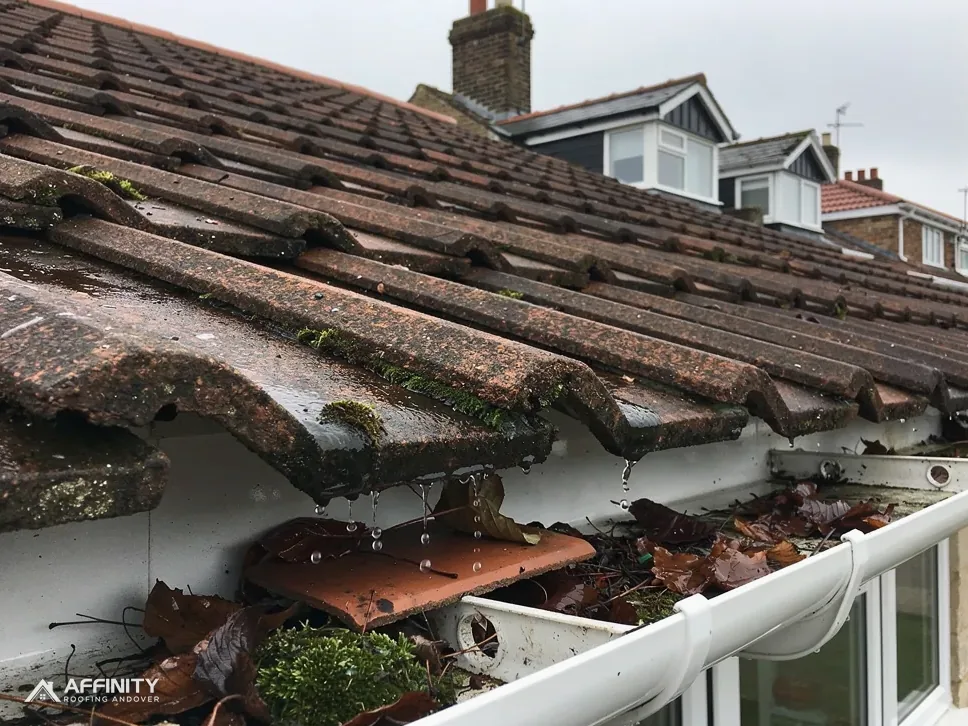
Ponding is the name for water that stays in a gutter after rain has stopped. It is the most reliable test of fall you can do without a ladder. Wait for a dry hour after a shower, then look along the run from a distance or from an upstairs window. Water sitting in a stretch of gutter, or a line of green growth, points to a low spot.
Common causes are brackets that have slipped, a fascia board that has sagged, a gutter that was never set properly or a run that has been bent by ladders. Heavy debris can also pull a run down at one point. Long runs with a single outlet at the end are more prone to it, because a small error builds up along the length, and a fitter allows for that when setting the first bracket. Some runs are better with an outlet in the middle so each half falls from the centre.
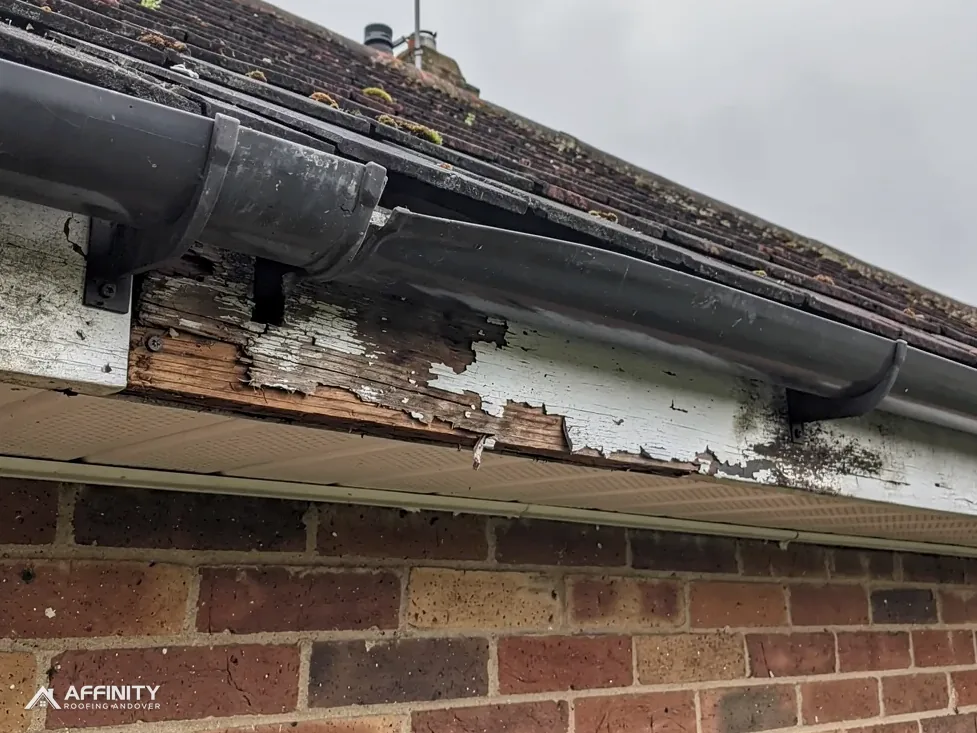
The low point is normally the place where a leak starts. Water there rots the board behind it, so a tidy-looking gutter can hide a fascia in trouble. Look for peeling paint or dark staining under the ponding stretch, and press the timber with a screwdriver to test it. A board that gives under light pressure needs repair before the gutter goes back.
Putting the fall right
Resetting the fall means unclipping the gutter, correcting the brackets and rehanging the run. If the brackets are sound and the fascia is firm, that can be done in a short visit. The fitter strikes a line from the outlet back to the high end, marks each bracket height, and refixes the gutter along it. Checking the line with a level at the end confirms the slope before the job is signed off.
Where the fascia has dropped or rotted, the board is repaired or replaced first, and our guide to capping over or replacing fascias explains which suits the damage. Without a firm base, any new fall will not last.
Spacing counts as well, since too few brackets let the channel dip between them, as our answer on gutter bracket spacing explains. Once the run is reset, we usually test it with a bucket of water to see it drain, and we watch the water reach the outlet.
The guttering, soffits and fascias page sets out how a survey finds these faults, with photographs, before the written price is given.