The short answer
A bargeboard needs replacing when the timber has gone soft, split or opened at the joints, or when it no longer holds firm at the gable. Worn paint alone is not a reason. Once rot reaches the ends or the fixings, the board is carrying nothing, and repainting only hides the problem. A survey tells you whether capping or full replacement is the right fix.
Where bargeboards sit and why they rot
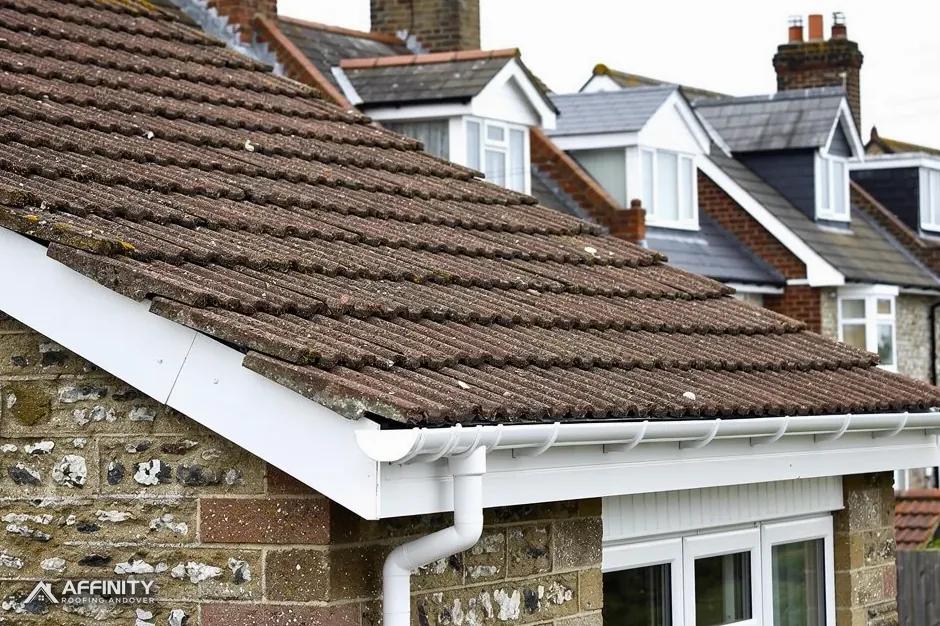
A bargeboard is the board fixed along the rake of a gable, covering the ends of the roof timbers where the roof meets the wall. Fascias do the same job along the bottom edge of a roof, but the bargeboard has a harder life. It is exposed on its face, its underside and its upper edge, and the lower end sits in the wettest spot on the whole gable.
Rot normally starts in three places. The first is the lower end, where water runs down the board and stands on the end grain. The second is any open joint, where two lengths meet and the paint has cracked. The third is behind the board, where a failed verge lets rain soak the timber from above, a cause you cannot see from the ground.
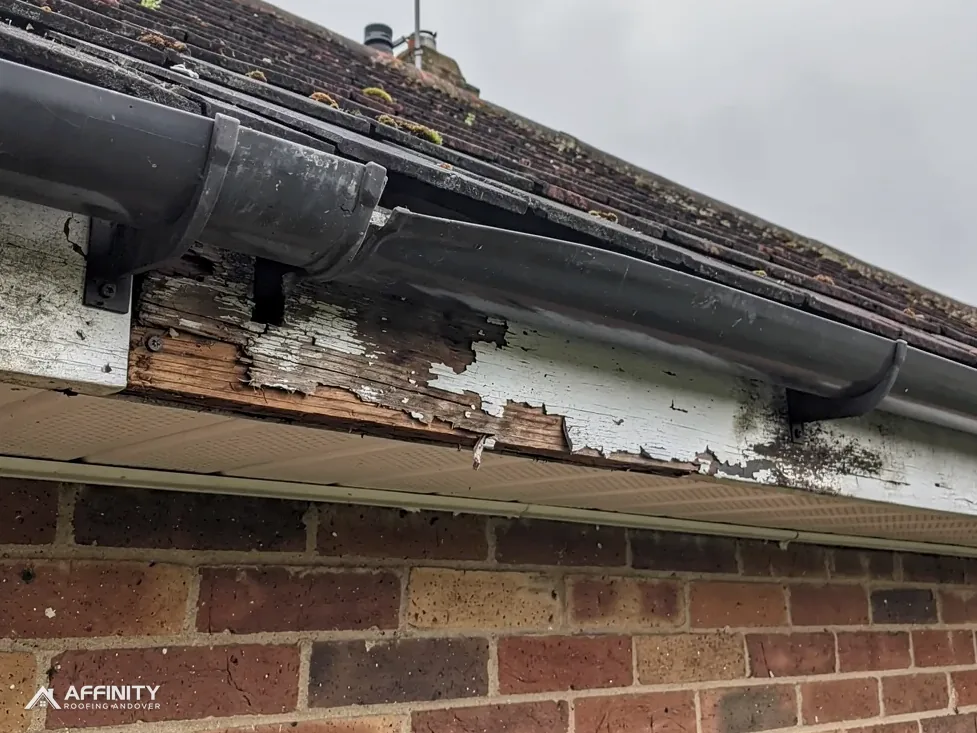
Painted softwood needs repainting every few years to keep water out. A board left to peel will absorb moisture and swell, and the fixings behind it will rust and loosen as that happens. Layers of old gloss paint can also trap moisture, so a board that looks thick and solid may be wet inside. Our guttering, soffits and fascias page covers the rest of the roofline.
Signs it is time to replace
From the ground you can check several things. Look for paint that has lifted in sheets or bubbled, boards that bow outwards or sag in the middle, and joints where daylight shows through. At the lower end, check whether the tip has crumbled or gone dark and spongy. Small fungal fruiting bodies on the underside point to wet rot in the timber.
A screwdriver pressed into bare wood tells you more than paint ever will. If it sinks in with little effort, the section is rotten through, and sanding or filling will not hold. We photograph that test on the roof and the photograph goes to you with the quote.
Replacement also makes sense when the whole board has been patched several times, when the fixings no longer bite, or when the board sits loose against the barge. Loose boards can flap in strong winds, and a length that drops is a danger to anyone below, so keep people away from the area until it has been checked.
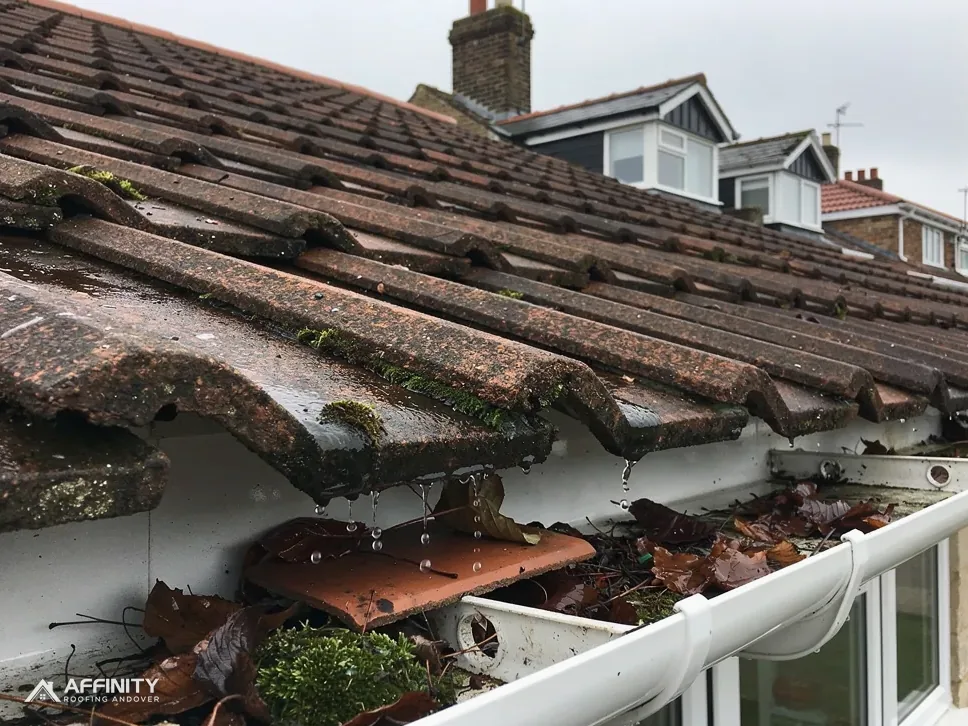
Check the tile edge too. Crumbling mortar, loose end tiles or daylight under the overhang mean the board has probably been taking water for some time.
If you notice a board that moves when you push it from an upstairs window, mention it when you contact us, because that tells us to plan for extra timber.
The verge link and what sits behind
The verge is where tiles or slates finish over the gable wall. On older houses the tiles at the verge are often bedded in mortar, which can crack and let water reach the bargeboard. Newer roofs sometimes use a dry-fix verge system instead, held with clips or cappings that need no mortar. Our dry ridge and verge page explains the two methods.
This matters because a new bargeboard fixed under a failing verge will rot again. When we take the old board off, we look at the rafter ends, the tile edge and the verge material behind it. If the verge is defective, it can be put right in the same visit, so the new timber is not soaked from above within a couple of winters.
The soffit under the roof edge and the lead or flashing where the roof meets a neighbouring wall are checked too, before any new board goes up. Each one is a place water can enter, and a board is only as good as the detail behind it. We photograph the rafter ends once the old board is off, so you see what the new one will be fixed to.
Capping over or replacing
Capping fits a new uPVC or aluminium covering over the existing board. It is quicker, needs little change to the timber behind, and the finish asks for nothing beyond an occasional wash. It only works if the wood underneath is sound enough to carry the fixings. Capping over rotten wood traps damp, and the rot carries on out of sight, so a soft board should never be capped.
Full replacement strips the old board off, renews damaged timber and fits a new board, either painted timber or boxed uPVC. It costs more and takes longer, but it is the right answer when the structure behind is damaged. Our guide to capping over or replacing fascias sets out the same choice for the lower edge of the roof.
Conservation areas and listed houses add another step. Check whether an Article 4 direction applies with your council, because swapping a timber bargeboard for plastic may need consent. In Basingstoke and Deane's four town conservation areas, the Article 4 wording covers roofline changes.