Walk through the older streets of Andover or any of the Test Valley villages and you will see black iron gutters and downpipes on terraces, cottages and farmhouses. Cast iron was the standard material for rainwater goods for a long time. It is strong, it can be moulded into decorative profiles, and when it is looked after it lasts a very long time.
It also rusts, cracks when it is hit and gets blocked at joints that have lost their seal. Leaks tend to show up as damp patches on brickwork, algae below the joints or a downpipe that has come away from the wall. At that point the question arrives: patch it up, or replace it?
This guide sets out how to decide, step by step. It covers what repair really involves, what to check if the house is in a conservation area or is listed, what modern alternatives look like and why the heavy weight of iron matters to the timber behind it. Our guttering, soffits and fascias hub covers gutters in all materials.
What goes wrong with iron gutters
Cast iron fails in predictable ways, and many of them can be seen from the ground with binoculars or from a ladder.
Joints and bolts
Lengths of iron gutter are bolted together at the joints, with a putty or sealant between the faces. Over time the seal dries and cracks and the bolts rust. A leaking joint is a simple fault to put right, provided the iron either side is sound.
Rust and cracks
Surface rust is cosmetic. Rust that has flaked and left a thin, pitted section, or a crack from frost or a knock, is a structural fault. A section that has split along its length will not hold water however it is sealed. Iron is brittle, so cracks tend to run.
Sagging and detachment
Brackets rust, screws pull out of soft timber and the weight of a full gutter drags it down. A run that dips between brackets holds water, which freezes and splits the iron. A downpipe that leans out from the wall has often lost its fixings, or the masonry behind it is damp.
Blockages
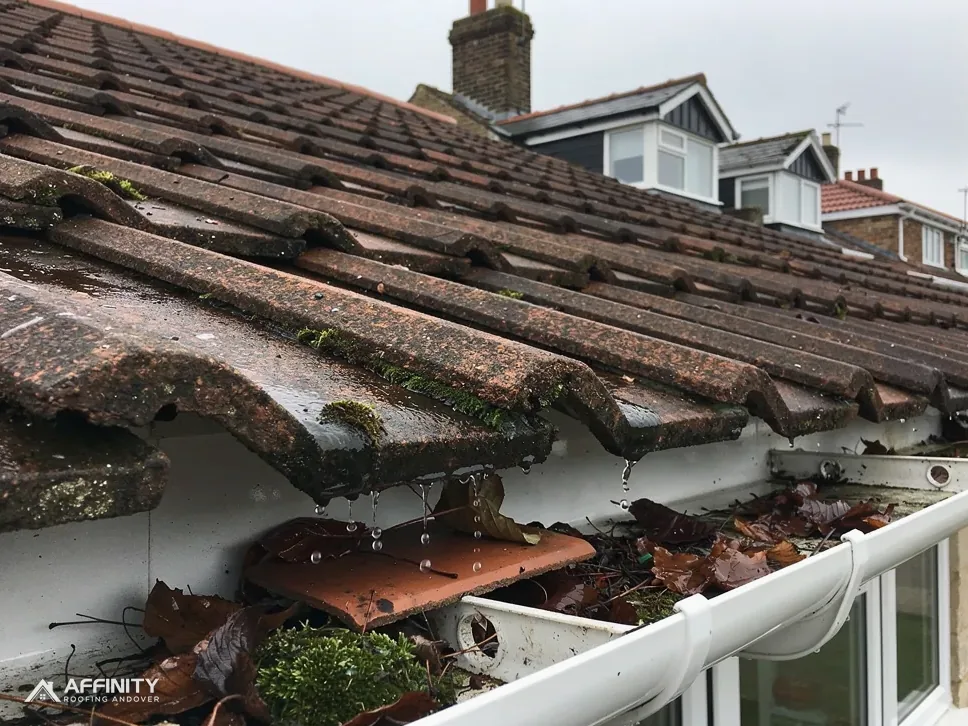
Cast iron downpipes narrow with rust scale and debris, and a clogged hopper head spills over the wall. Overflowing is as damaging as a leak. Our answer on overflowing gutters explains what causes it.
The first job of a survey is to sort these into faults that can be mended and faults that mean the section is finished.
Repair or replace: how the choice is made
Because iron is durable and often looks right on the building, the case for keeping it is strong. It is not always a case that wins.
When repair makes sense
Where most of the run is sound and the faults are joints, a few rusted bolts, loose brackets or a short cracked section, repair is usually the better course. Joints are cleaned out, resealed and rebolted. Rusty sections are wire-brushed, treated and painted. A short length of broken iron can be replaced with a matching new length, or a salvaged one. The result is a gutter that looks as it always did and works again.
When it is time to replace
When corrosion has thinned the metal along much of the run, when cracks keep reappearing, or when the run has lost its fall and cannot be set right without removing it, replacement is the more sensible spend. Repeated patching of a failing run costs more over time than doing it once.
The fall
Gutters must slope towards the outlet, and the slope is slight. Brett Martin gives 1mm for every 600mm as a guide for a gutter run. Iron that has settled into a dip will pond, and cleaning it out does not cure that. Our answer on gutter fall explains how the slope is set.
What it costs
Published figures do not separate cast iron from other materials, so a national average, such as MyJobQuote's range of around £1,000 to £1,600 for gutter replacement (Oct 2026), is only a rough yardstick. Iron costs more to buy and fit than plastic, and the written quote after the survey gives the real figure.
Conservation areas, listed buildings and consent
On an older house the rules about what you can change may matter as much as the state of the gutters.
Listed buildings
A listed building needs listed building consent for any alteration affecting its character, and swapping iron rainwater goods for another material can count. Historic England's list records Grade II* buildings in Andover, among them the Guildhall and the Church of St Mary. If your house is listed at any grade, ask the council before replacing anything except like for like. Repairing iron in iron is a different matter from switching to plastic.
Conservation areas
Planning.data.gov.uk holds a conservation area boundary for Andover, supplied by Test Valley. Being in a conservation area does not by itself stop you repairing gutters, but it can affect what changes need permission. Check with Test Valley Borough Council's planning team before you replace iron with another material on a street frontage.
Article 4 directions
An Article 4 direction withdraws permitted development rights across an area. Basingstoke and Deane's directions in four of its town conservation areas cover replacing fascias, soffits or guttering, and say original materials should be kept. For addresses in other council areas, we do not know what a direction covers, so ask the council whether one applies to your street.
What this means in practice
Repairing cast iron in iron is the safest course on a protected building. Our answer on lead roofs in a conservation area shows the same kind of question for another material.
The weight problem behind the gutter
Iron is heavy, and the timber it hangs from carries all of that weight, plus water when it rains.
Fascias and brackets
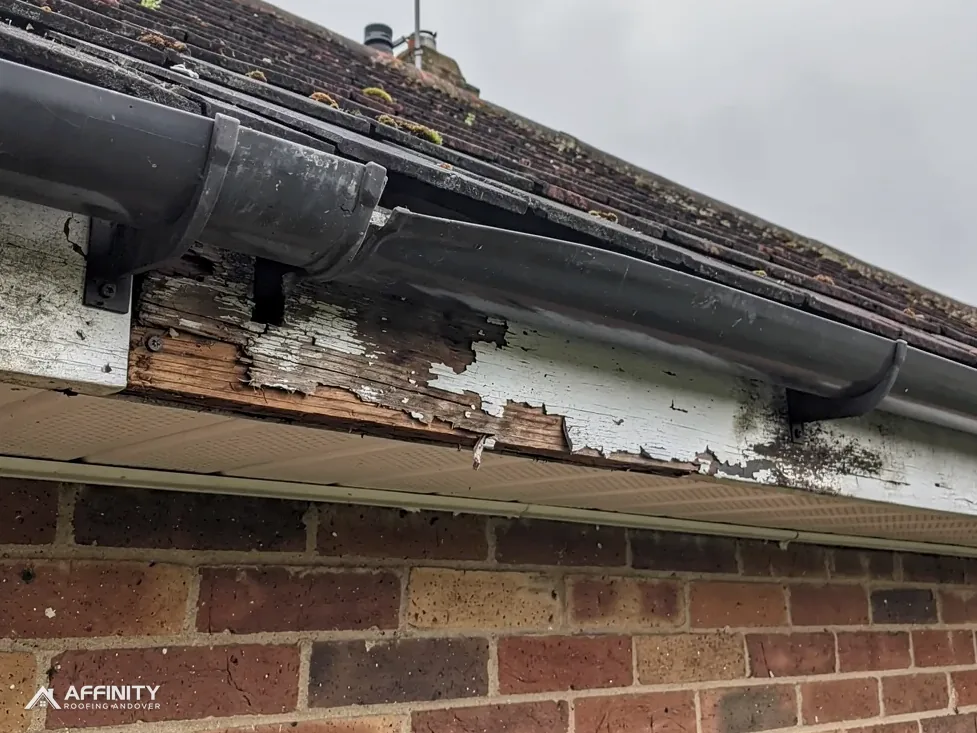
A cast iron gutter fixes either to the fascia board with brackets, or to the rafter ends with long spikes or rise-and-fall brackets. Over decades the load, and the damp that leaks from failed joints, can rot the board or the rafter ends. A new gutter bolted on to rotten timber will pull away again within a few years.
What to check before anything is fitted
Press along the fascia and the rafter ends to find soft spots. Look for stains, flaking paint and gaps behind the gutter. Where the timber is soft, it must be repaired or replaced first. Our guide to rotten rafter feet explains why this damage so often goes unnoticed.
Fixing a heavy run
New iron needs strong, correctly spaced brackets fixed into sound timber or masonry. Slim plastic-style brackets, or too few of them, will not carry a full iron run. A good installer will tell you how they will fix it and where, and will show you the sound timber they are fixing into.
Taking the old iron down
Lengths are heavy, and a cracked section can fall. Scaffold or a proper tower is needed for most two-storey houses. Scaffold on a public footway needs a licence in the Andover area from Hampshire County Council, and the scaffold firm is the one that applies. Scaffold is built into the written price.
A job that respects the weight is one that lasts.
Alternatives that look like iron
Sometimes the original iron cannot be kept, or the cost of matching profiles is out of proportion. There are choices.
New cast iron
Foundries still make cast iron in standard period profiles, such as half-round, ogee and moulded sections. It is the closest match for a listed building or a conservation area street and is the option the council is most likely to accept. It is also the most expensive and the heaviest.
Cast aluminium
Aluminium is cast in the same profiles as iron, painted black or another colour. It looks very like iron but is lighter, does not rust and is usually easier to fit. Our answer on aluminium vs uPVC guttering compares the materials. Whether the council will accept it on a protected building is a question for them.
uPVC
Plastic gutters are the lowest-cost and lightest option, in black as well as white. Cast iron-effect uPVC profiles exist. Up close they are noticeably different from the real thing, and on a period house the difference shows at the eaves.
Choosing
On an unprotected house the choice is about cost, weight and appearance. On a listed building or in a conservation area, the council's view comes first. In every case, the profile should suit the roof's size and the fall should be right, or the new run will overflow in heavy rain just as the old one did.
How we survey an iron roofline
Looking at old iron takes patience, and a cursory glance from the street tells you very little.
Joint by joint
We go along each run from a ladder or scaffold where it is safe, checking every joint, bolt and bracket, looking for cracks and tapping sections to hear whether they are sound. We check the fall, the outlets and the hopper heads, and where each downpipe discharges, whether into a gully, a soakaway or a drain.
Behind the iron
We probe the fascia, the rafter ends and the wall behind for damp, and look for the algae and stains that show a joint has been leaking for years. You receive photos of what is wrong, so you can see the cracked section for yourself.
The recommendation
You are told what can be repaired, what should be replaced and why, and whether the house's status means you need to ask the council first. If the iron can be saved, that is what we recommend.
One written total
The price is a single total for the route you choose, with the repair or replacement, any timber work and the scaffold included. Citizens Advice recommends getting at least 3 written quotes before choosing a trader, and a repair-only quote is a fair one to ask for.
If a downpipe is pulling off its fixings or a gutter is dropping, stay clear and tell us before it falls.