The short answer
Not by any national rule. No law in the planning material we work from says a conservation-area roof must use lead. What counts is whether the finished work visibly changes how the building looks, and whether an Article 4 direction or listed status applies. Lead renewed like for like raises fewer questions than a new material, so put the question to your council's planners before booking anything.
What the law says about replacing like with like
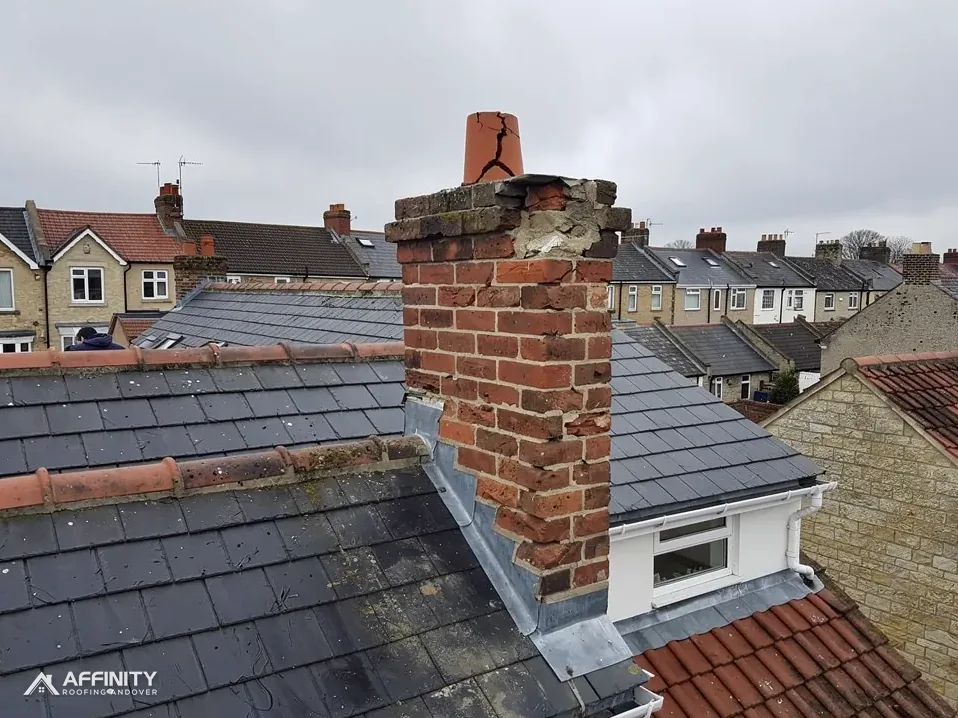
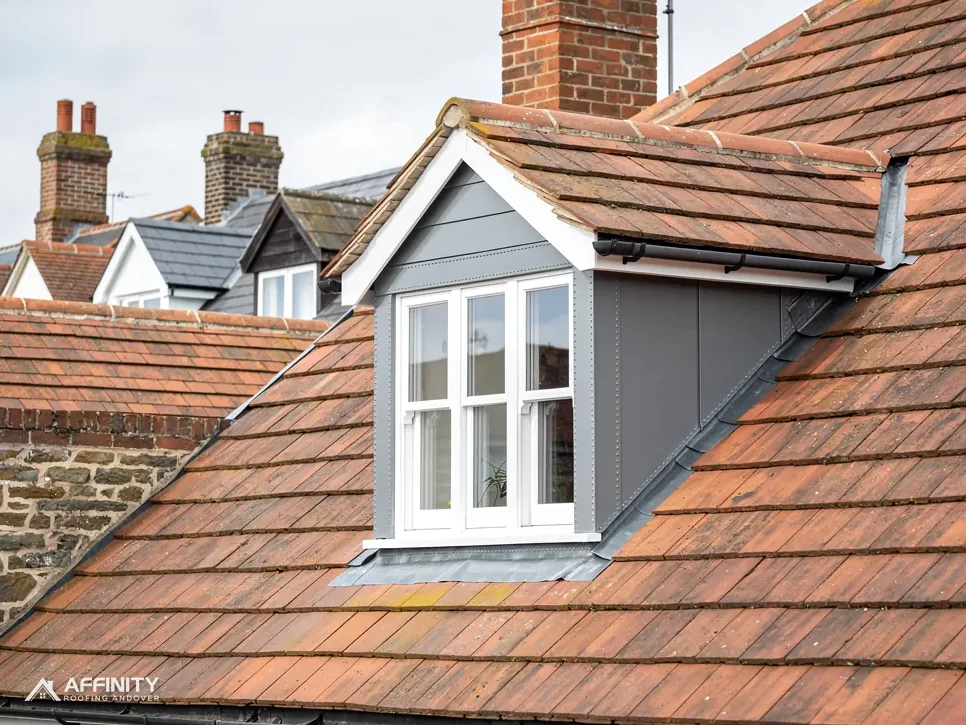
The starting point sits in the Town and Country Planning Act 1990, at section 55(2)(a). In plain terms, work that leaves the outside of a building looking much as it did does not count as development. Putting lead flashing back where lead flashing stood is the plainest case: from the street, nothing has changed.
For a house, the General Permitted Development Order adds Class C, which deals with changes to a house's roof, and a change of covering normally falls within it, so a like-for-like job rarely needs a formal application. Class C has no exclusion for land in a conservation area, which is one reason a re-roof does not automatically need permission there. Flats are outside these rights, since a block of flats is not a dwellinghouse in the Order's meaning.
That is the national picture, and it is not a promise about your address. Swapping lead for another metal, or reshaping the roof itself, raises a different question from renewing what is already there. Planning law is the council's to apply, so the council gives the ruling and we supply the evidence: photographs, measurements and a description of the existing leadwork, so the council is not left guessing.
Check with the council, and check Article 4
A conservation area is also article 2(3) land. That takes away permitted-development dormers, but it leaves Class C alone. The step that can change the picture is an Article 4 direction, a tool a local planning authority uses to withdraw chosen permitted development rights within a mapped area.
Whether one covers your street is a local fact. Andover addresses fall under Test Valley Borough Council for planning, and the Andover conservation area has a boundary the council itself draws. Ask the council's planning team whether your property lies inside it and whether any Article 4 direction touches the roof.
Some councils have published firm wording. Basingstoke and Deane, in its Article 4 advice for four town conservation areas, asks owners to keep original Welsh slate and clay roof tiles and regards modern replacements as unlikely to be accepted. That wording is about tiles and slate. It does not say what happens to lead, and it applies to those addresses only.
Everywhere else, the safe course is to check whether an Article 4 direction applies with your own council, and to ask early, since the reply can alter what you want priced.
Listed buildings are a separate route
A listed building follows different rules. Listed houses keep Class B and Class C permitted development, but works that alter the building's special character also need listed building consent under section 7 of the Planning (Listed Buildings and Conservation Areas) Act 1990. Leadwork can fall inside that, where the job changes its appearance or fabric.
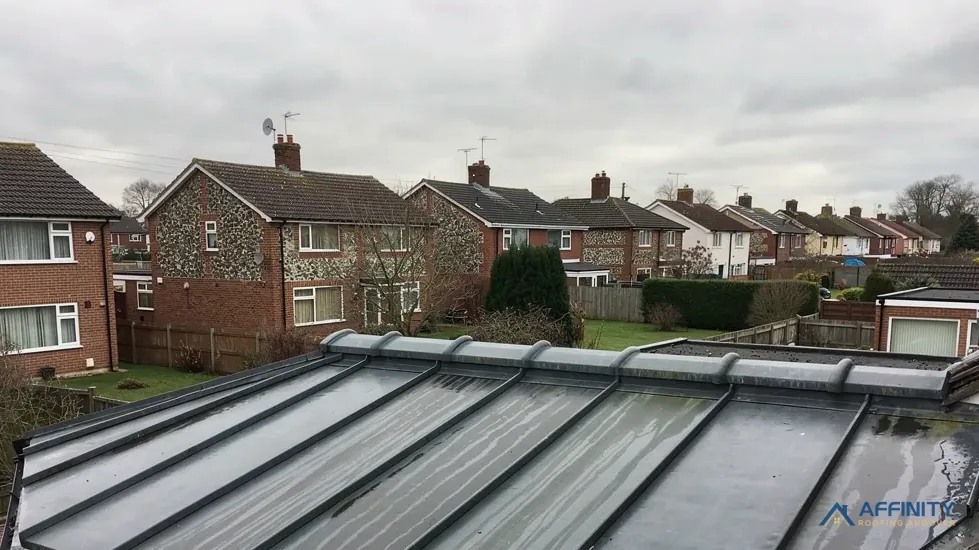
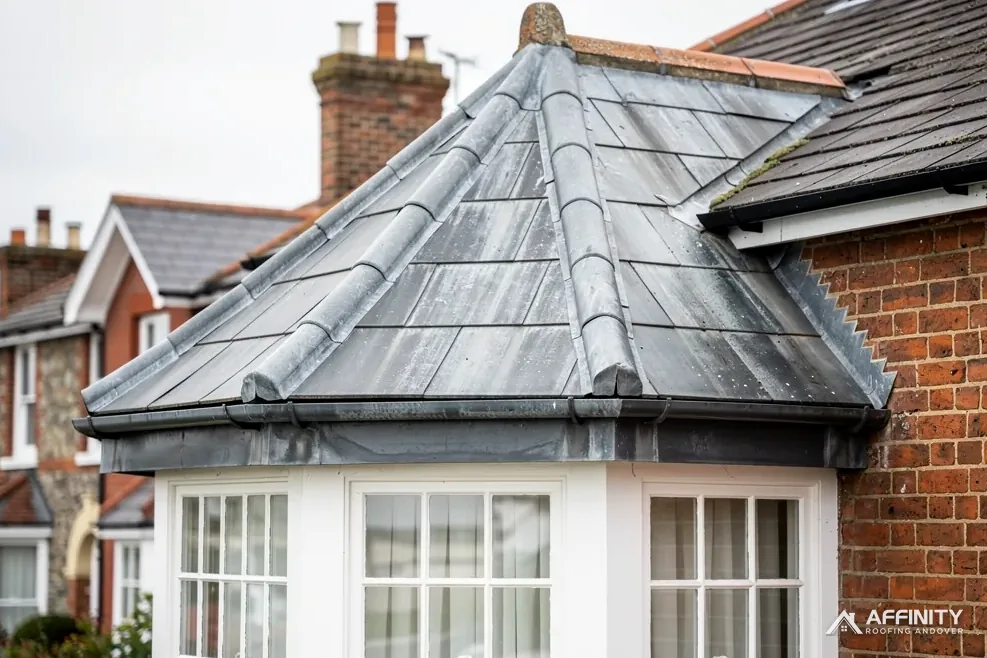
For lead, the detail matters as much as the metal: the thickness, the way a flashing is stepped, the roll and drip pattern on a flat. That is why we photograph existing leadwork and record it before anything comes off, so the replacement can follow it closely.
Andover's town centre includes Grade II* listed buildings, the Guildhall being one. A parish church still in use goes through the faculty system, not listed building consent. If your building is a house, a shop or an outbuilding, ask the planning team which route applies, and bring the photographs with you so the conversation starts from the real condition. A Methodist, Catholic, URC or Baptist Union church in use follows its own denominational system instead.
When another material is considered
Lead is not the only metal made for roofs. Zinc is one: VM Zinc quotes the BRE Environmental Product Declaration as giving 100 years. GRP, a glass-reinforced plastic, is another, and it gives a flat roof or valley a joint-free finish. Our page on lead flashing alternatives compares them.
In a conservation area, the question for any alternative is how it looks from the street and how closely it follows what was there. A concealed valley or a flat roof out of public view can raise different questions from a front-facing flashing, but the council decides what it accepts. For a protected building, take planning advice before any substitute is chosen, and keep the reply in writing.
Before work begins, we survey the leadwork, photograph its condition and explain whether like-for-like renewal is possible. You can then take that evidence to the planning team if a query is needed. The price is set by how much lead is involved, how the roof is reached and what the survey turns up, and one written total follows it. For the wider subject, see our lead roofing page.