The short answer
One UK retailer, which has a commercial interest in selling them, says uPVC fascia boards last between 20 and 40 years. Treat that as a broad range, not a promise. Boards fixed well to sound timber, kept clean and ventilated, tend to reach the upper end, while poor fixings, a leaking gutter or sun-baked, brittle plastic bring the end sooner.
A typical range, and who says so
A retailer with an interest in the answer, Plastic Centre, says uPVC fascia boards last between 20 and 40 years. A seller of the product has an interest in a generous number, so the sensible reading is as a broad range for boards that were well made and well fitted, not as an average for any house.
The gap between 20 and 40 years is large, and your own roof will land somewhere in it for ordinary reasons. Boards facing south take more sunlight. Those under a gutter that leaks take more water. Cheap, thin boards behave differently from thicker, branded ones, and the quality of the original fitting changes everything.
A warranty is not a lifespan either. A manufacturer's guarantee covers defects for a stated period under stated conditions, and it says little about how long a board will actually last on your house. Be wary of anyone who treats a guarantee length as a promise of life.
If your boards are already old and you are weighing replacement, our guide to fascias and soffits cost sets out what moves the price.
What shortens their life
Sunlight is the main enemy of the plastic itself. Over years, ultraviolet light makes the surface chalky and then brittle, so the board cracks at an edge or a screw hole. Older white boards often turn yellow or grey, which is a cosmetic sign that the surface is ageing, though it may still be structurally sound.
Heat causes movement. uPVC expands and contracts with the seasons, so boards that were butted tightly together can open at the joints or buckle if there was no allowance for movement. Black and dark boards absorb more heat and move more.
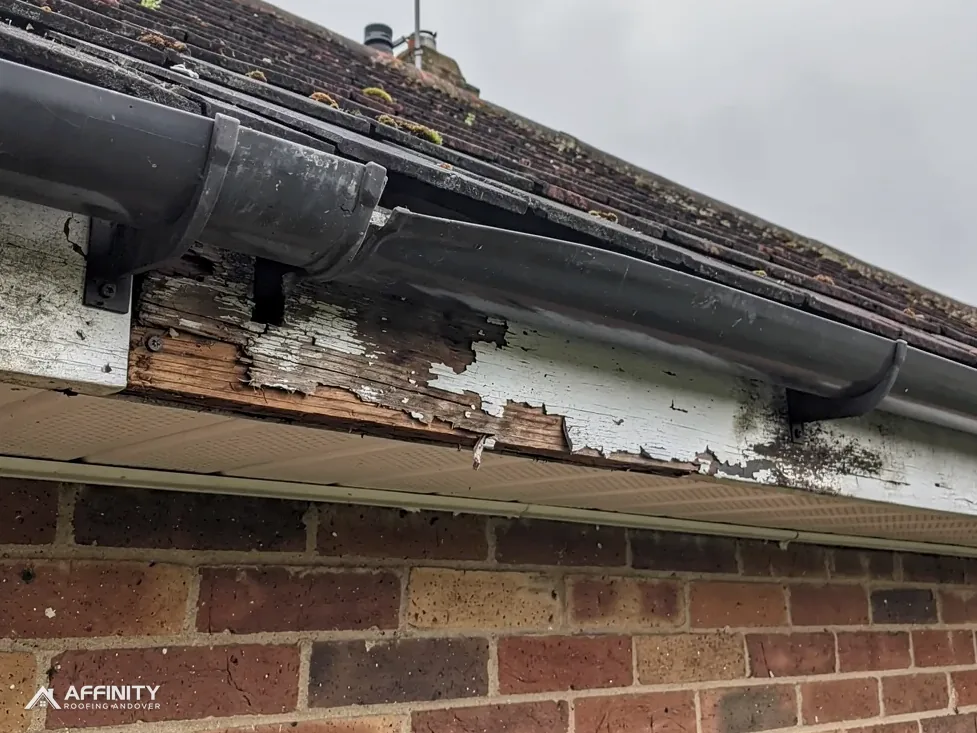
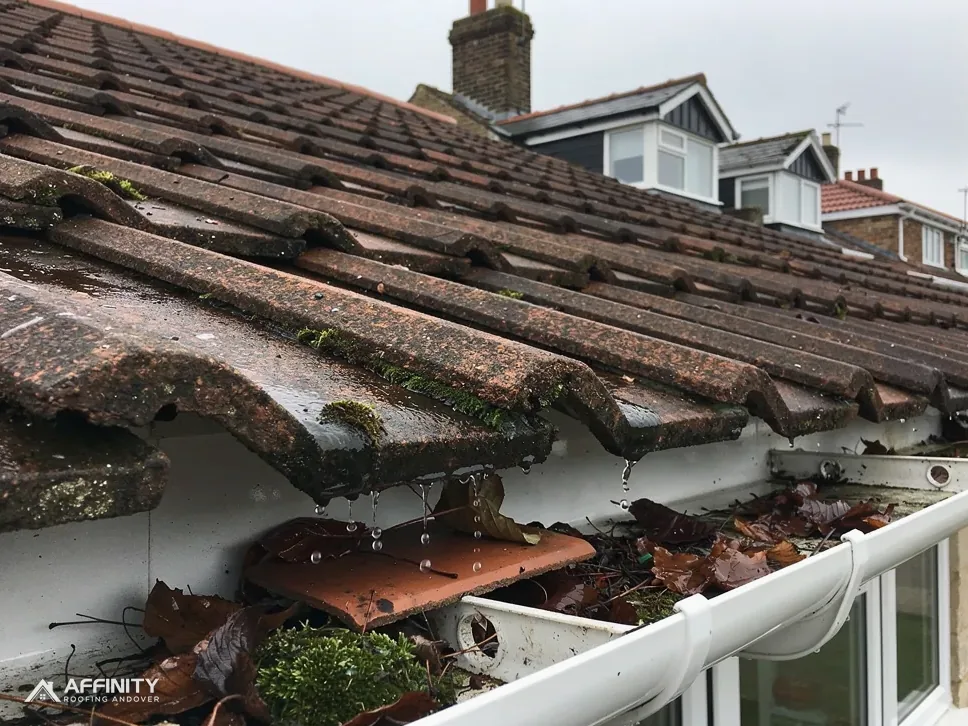
Water is the other factor. A leaking gutter that runs down the face stains the board and, more importantly, wets the timber behind. A constantly damp core, the hidden softwood board under the plastic, is where problems start. Wood that has been wet for years can rot without any sign on the surface. Our answer on black streaks on fascias shows what that water trail looks like early on.
Poor cleaning with abrasives can also scratch the surface, which then holds more dirt and ages faster.
Planting and trees matter as well. Branches that rub the board, or leaf litter that keeps a gutter overflowing, shorten the life of the trim below, so regular clearing is part of keeping the boards sound.
Fixings and the timber behind
uPVC fascia is rarely a structural board. It is a cladding fixed over timber, or a lightweight board screwed to the rafter ends. The strength comes from the fixings and the wood behind, which means a board can look perfect while the structure under it is failing.
Stainless or coated screws hold for decades, while cheap steel fixings rust, stain the board and lose their grip. Plastic expands, so fixings that are overtightened can crack the board, and those that are too loose let it flap. Brackets that carry the gutter must reach sound timber.
Behind the plastic, softwood that has been wet for years can rot unseen, and rotten rafter ends cannot hold a fixing. That is why a survey lifts a section of board or looks in from the soffit, and why we photograph the wood behind. Our guide to rotten rafter feet shows the damage a plastic board can hide.
The board may well outlive the wood it is fixed to, which is a reason to check before assuming a new set of boards fixes everything.
Never a promise, and what to do
A fair statement is that a well-fitted uPVC fascia and soffit can last a long time and needs little care beyond an occasional wash and a clear gutter. A fair warning is that the number of years depends on the board, the fixing, the aspect of the house and the water that reaches it. Treat any single number as a rough guide, and check the boards when the gutter is cleared.
To judge the boards you have, look for cracks at the ends, joints that have opened, boards bowing between fixings, soffits sagging or stained, and daylight or insects at the eaves. Any of those means a closer look is needed.
Repair is possible if the damage is local, while renewal makes sense once the plastic is brittle or the wood behind is soft. A cap-over fitted onto sound timber can extend the life of the structure, but not onto rotten boards. Our guide to capping over or replacing fascias sets out the choice.
For the whole roofline, the guttering, soffits and fascias page explains the survey and the single written price that follows it.