Roof repairs begin on the ground, with the question of how to get up there. The answer shapes the cost, the time and, most of all, the safety of the job. A single slipped tile at a low eave is a very different problem from a failed valley above a first-floor window or a ridge that runs the length of a terrace.
Roofers use a ladder, a roof ladder, a scaffold tower or a full scaffold, and the right choice follows from the height, the length of the job, the weight of materials and the ground below. Choosing too little puts someone at risk. Choosing too much adds a cost the repair did not need. A good roofer explains the choice before the day and puts the cost into the one written price.
This guide compares the options, explains when a tower or roof ladder is enough and when scaffolding is needed, sets out how the licence for pavement scaffolding works, with Hampshire's published fees, and covers the safety points that apply whichever method is used. It does not give legal advice, and the council or your scaffolder confirms the detail for your address.
Ladder, tower or scaffold: what each is for
Three kinds of access cover the ground between a quick look and a full re-roof, and each has a job it does well and a job it does badly.
Ladders and roof ladders
An ordinary ladder gets a person to the eaves. It is a means of getting up and down, not a place to work for hours. A roof ladder is a different tool: it hooks over the ridge and lies along the slope, spreading the roofer's weight and giving a foothold on the tiles. It suits inspection and small repairs on a pitched roof whose eaves can be reached safely from the ground.
Scaffold towers
A tower is a free-standing frame with a working platform, built from a kit and moved on wheels or shifted by taking it apart. It gives a stable platform at height, with guard rails. It suits a defined spot, such as a chimney on a gable, a section of fascia or a single dormer.
Full scaffolding
A scaffold is a fixed structure, tied to the building, with boarded platforms and guard rails along its length. It lets the roofer work along a whole elevation, carry tiles and tools up safely and keep both hands free. It suits longer or heavier jobs and anything where the work is spread out.
The factors that decide
The height of the eaves, the length of the area to be worked on, how many days the job takes, the weight of the materials and the ground conditions all matter. Our guide to bungalow roof repairs shows how a low roof changes the sums.
The roofer's survey should say which method is proposed and why, in words you can follow, and the photographs should show where it will stand.
When a roof ladder or tower is enough
For small, local repairs at modest height, lighter access is often the sensible answer, and it keeps the price down.
Typical cases
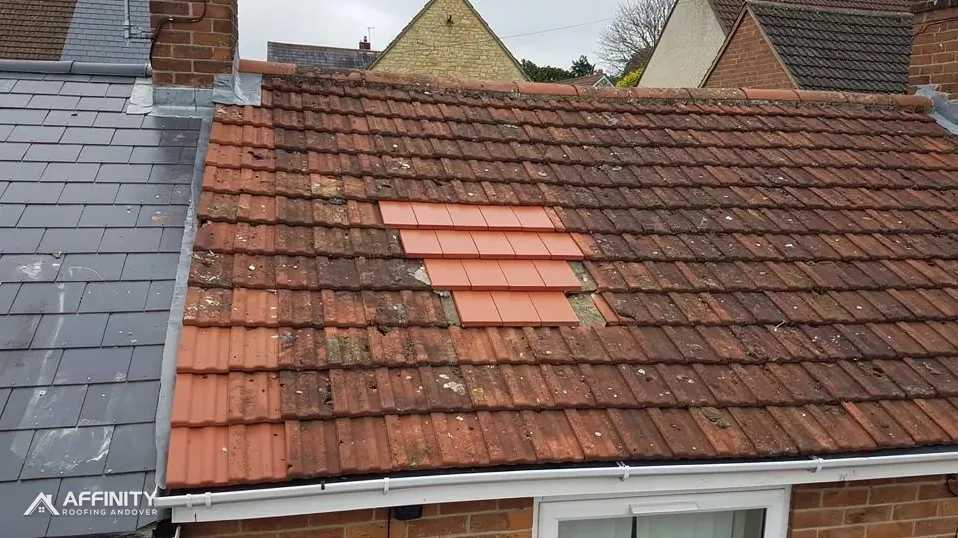
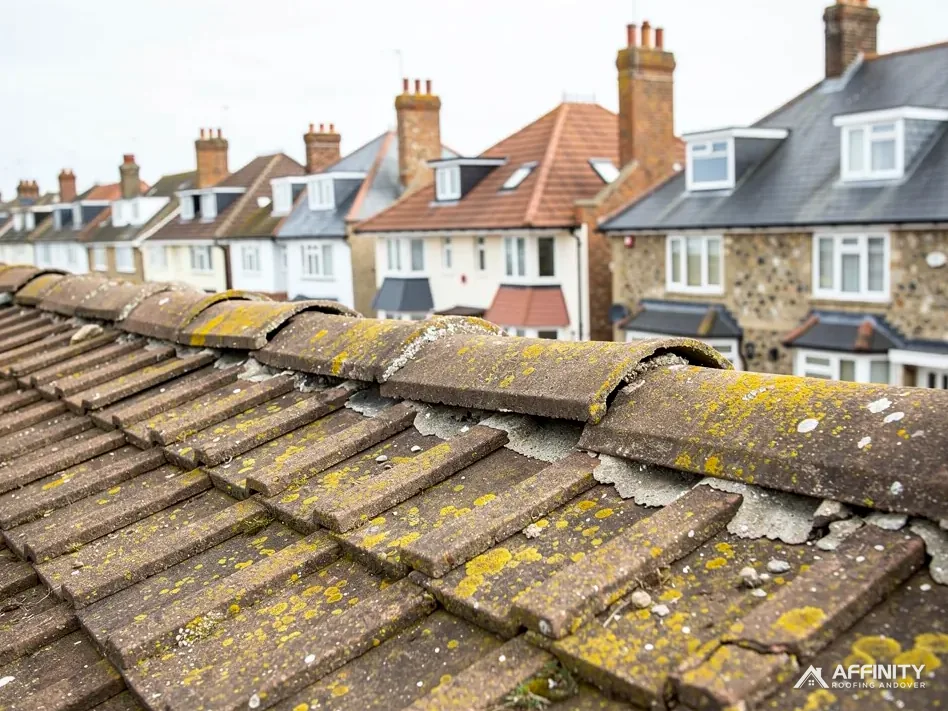
Swapping a few tiles within reach of the eaves, refitting a lifted flashing at low level, clearing a gutter, re-bedding a short stretch of ridge on a low roof or inspecting a roof for a survey can each be managed from a ladder or a tower. The deciding test is whether the work can be done safely, with both hands free, from a stable position.
Why lighter access saves money
A scaffold has to be hired, erected, inspected and taken down, and each stage costs time. For a one-hour repair the scaffold could cost more than the work itself. Which? gives £75 to £400, ex VAT, for a small repair of cracked or missing tiles (Nov 2025), a typical UK range that assumes simple access. Our answer on replacing roof tiles without scaffolding shows when that assumption holds.
Conditions for a tower
A tower needs firm, level ground, space to stand and a clear route for materials. It should be assembled to the maker's instructions by people who know how, with guard rails fitted before anyone climbs, and used within its stated limits. A tower on soft earth or a sloping drive needs more thought than one on a flat patio.
Weather
Wind, rain and frost all change what is safe, and a tower in a gusty position is a hazard to everyone nearby. A roofer who postpones a job in poor conditions is protecting you and themselves.
If a ladder will do, the written price should say so, and it should not include a scaffold you do not need.
When full scaffolding is the right answer
Some jobs need a full scaffold, whatever the cost, and a roofer should say so plainly.
Long runs and heavy work
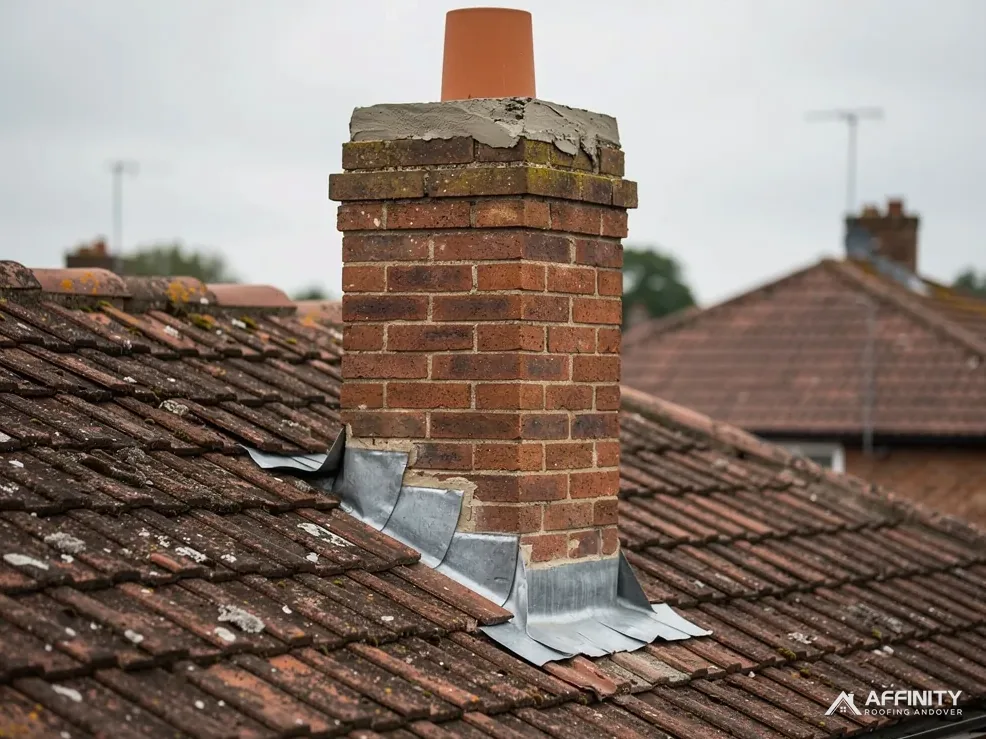
A repair that runs the length of an eave, a ridge or a verge, new fascias and soffits, a re-lay of a slope or a chimney rebuild all call for a working platform along the wall. Carrying slate, tiles and lead up a ladder by hand is slow and unsafe.
Height
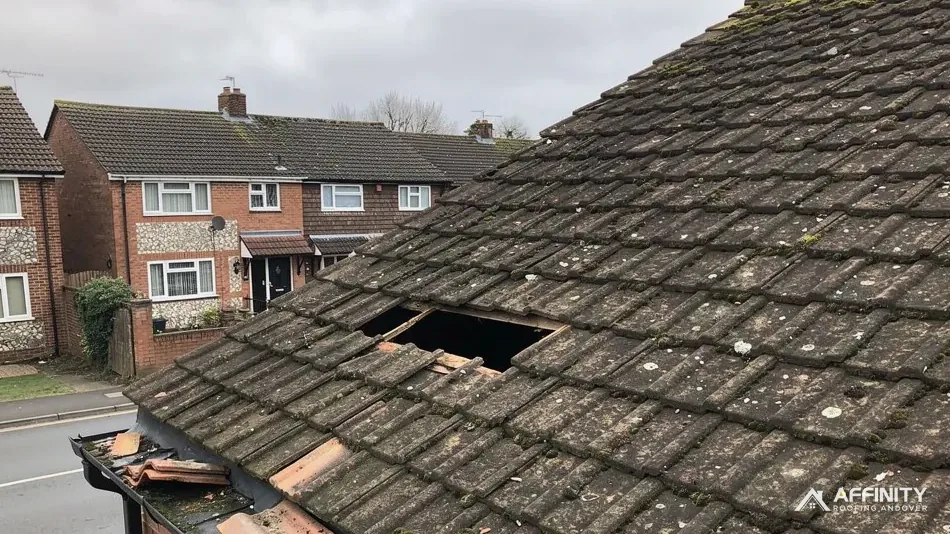
A two-storey house has eaves several metres up. A ladder reaches them, but a repair of any size needs a platform and edge protection. The higher the work, the stronger the case for scaffolding.
Duration
If the job takes several days, a scaffold gives a stable base that stays in place, and the roof can be left covered and secure overnight. It also lets work carry on after weather breaks.
Protection for everyone
A scaffold with debris netting and a brick guard keeps falling material off the people and property below, and the boarded platform stops a stumble becoming a fall.
Awkward properties
A steep roof, a narrow plot or a roof over an extension is difficult to reach any other way.
Cost
The scaffold sits inside the one written total, and on larger jobs it is a significant share of that figure. Our guide to what a roof repair costs shows how access moves the price. Be wary of any figure that seems to leave scaffold out, because it tends to reappear later as an extra, and ask for the access plan in the same document as the price.
Scaffold on the pavement: the highway licence
Section 169 of the Highways Act 1980 bars scaffolding that obstructs a highway unless the highway authority has licensed it. A scaffold kept entirely inside your boundary is a different matter, and it needs no highway licence.
Hampshire addresses
For every address in Hampshire's districts, Test Valley included, the highway authority is Hampshire County Council, and the district councils issue no scaffold licences. Hampshire County Council's guidance makes the scaffolding firm the applicant, not the householder.
Fees and notice in Hampshire
Hampshire County Council charges £211.90 when the application goes in, which covers the first 2 weeks, then £72 for each further 2-week period. Hampshire County Council counts ten working days clear of both the application date and the start date, and it does not extend licences. Its conditions include £10 million of public liability insurance for the scaffolding company and a structure built to BS EN 12810/12811 or NASC guidance TG20:13. Hoarding adds a fee.
Private roads and land
For private roads, Hampshire County Council says no licence applies, and a scaffold within your own drive or garden stands in the same position. Only the part over the highway needs permission.
Timing
That notice period is why pavement scaffolding can hold up an urgent job, and why a roofer who promises it for tomorrow has not read the council's page. A roofer may make the roof safe first from a ladder and book the scaffold for the permanent work. Our answer on who applies for a scaffold licence sets out the practical side.
Wiltshire, West Berkshire and neighbours' land
We work across the Test Valley and its borders, so some addresses fall under other highway authorities, each with its own rules and units.
Wiltshire Council
Under Wiltshire Council's rules the firm providing the scaffolding applies on the MiPermit portal. Wiltshire Council's fee is set by the warning given: £143.80 with more than three working days and £164.70 with fewer. Each licence runs for 28 days, and Wiltshire Council wants proof of £5 million in public liability cover for the scaffold.
West Berkshire Council
West Berkshire Council leaves the application to the scaffolding provider and not to the resident. West Berkshire Council charges £125, plus £71 per week, and wants ten working days at the least. Like Hampshire, it needs no licence for scaffolding on private roads.
Other authorities
For other highway authorities the licence is a matter for the scaffolder and us together, so ask who applies. Never compare fees across councils as if they were measured in the same units, because each uses its own, and the notice each one asks for differs too.
Your neighbour's land
If the scaffold has to stand on a neighbour's land, such as a side passage or garden, ask permission and agree it in writing. Our answer on scaffolding on a neighbour's land explains what to do if they refuse.
Parking bays
If a scaffold occupies a marked parking bay, a separate suspension may be needed, and the scaffolder normally deals with it.
Safety first, whatever the access
Working at height is among the most dangerous parts of building work, and roof repair is no exception. A few rules apply to every method.
Who answers for the work
Under regulation 7 of the Construction (Design and Management) Regulations 2015, the contractor takes on a domestic client's duties. Several contractors on one project bring extra roles, such as principal designer and principal contractor, while a lone contractor still prepares a construction phase plan. In practice the roofer, and not the homeowner, answers for how the work is done.
Ladder habits
A ladder should stand on firm ground at a safe angle, extend above the landing point and be secured. It should not be used for heavy or lengthy work.
Fragile roofs
Some roofs cannot take a person's weight. In HSE guidance, roofs of asbestos cement are fragile every time, and for older buildings, built or refurbished before 2000, asbestos is to be assumed until shown otherwise. Nobody should walk on such a roof.
Owners on the roof
Please stay off the roof, even to look. Wet tiles are slippery, old ones crack and a fall from a low roof can still injure seriously.
Neighbours and passers-by
Access equipment should be set up so that people below are protected. Tell neighbours when a scaffold is going up.
Ask the roofer how they will reach the repair. We explain it at the survey, and the written price covers it. Our roof repairs hub explains how the service runs.