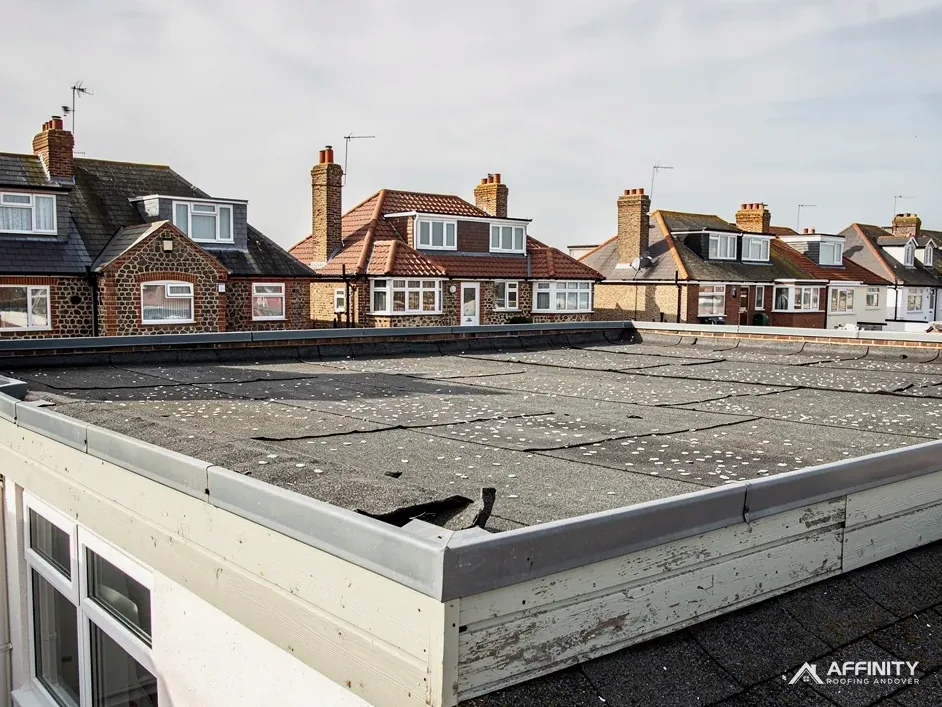
Repair prices vary so widely that a single number is almost meaningless. Replacing a handful of tiles on a low roof is a morning's work. Rebuilding a failed valley, three storeys up, with a scaffold, takes days. The straight answer to what a repair costs is that it varies, and the useful question is what it varies with.
This guide gives the figures that national cost guides publish, with the guide and the date named, so you can set a quote against something. It then explains the factors that move a price: access, area, covering, the number of faults and what is found once work starts. Finally it covers how to read and compare quotes. These are typical UK ranges from third parties. They are not our prices, and they are no substitute for a survey of your own roof.
For an Andover address the answer is the same as anywhere else, and it turns on the roof itself. We look, take photographs of every fault and write down one total. The sections below show what shapes that total, without pretending a single number suits every house.
The headline figures from national guides
Two sources give the broadest picture: MyJobQuote, a quotes marketplace that publishes cost pages with their update dates, and Which?, whose cost guide rests on a survey of 11 traders.
An average repair
MyJobQuote says the average roof repair costs around £650 in 2026 (page updated Oct 2026). That is an average across everything from a small patch to a sizeable job, so it sits somewhere in a wide spread. Plenty of repairs come in under it, and some come in well over.
Emergency call-outs
MyJobQuote gives emergency call-out charges as typically from £150 to £300 (Oct 2026). That covers attending and assessing, and can include making safe, such as a temporary covering over a leak. The permanent repair is a separate job afterwards, priced after the survey, and an invoice should keep the two apart.
Which? survey
Which? gathered its prices in November 2025, counting labour and materials but leaving VAT out, and we quote them below job by job. They are typical UK ranges, not quotes.
How to use these figures
Treat them as a guide to scale. They tell you whether a quote is in the right region, and they cannot tell you what your repair should cost. A figure far above or below a range is a reason to ask why, though it proves nothing by itself, and the answer may be simple, such as a long scaffold hire.
Our wider costs page sets out the other national figures, and the roof repairs hub shows how a repair job runs from survey to finish.
Tiles, ridges and gutters
Small jobs on the main covering and the roofline are the repairs the cost guides cover well.
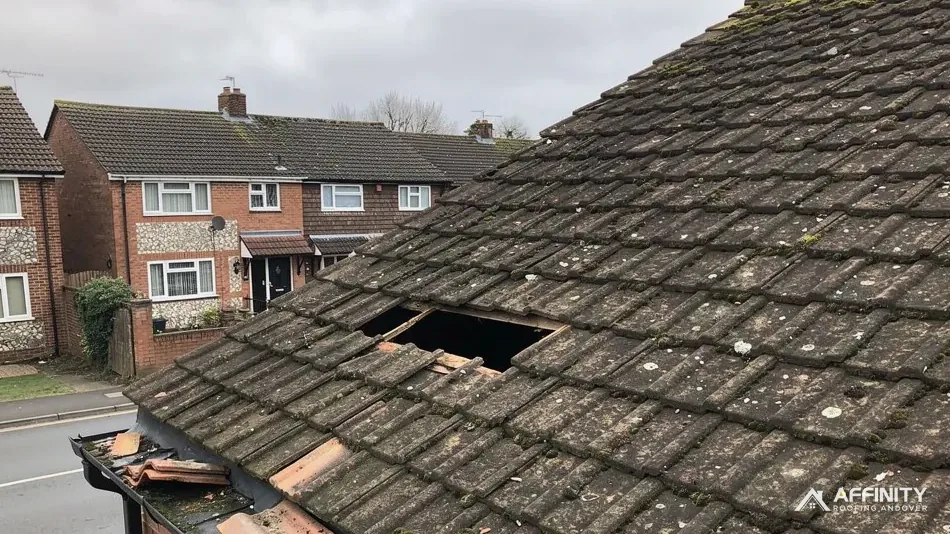
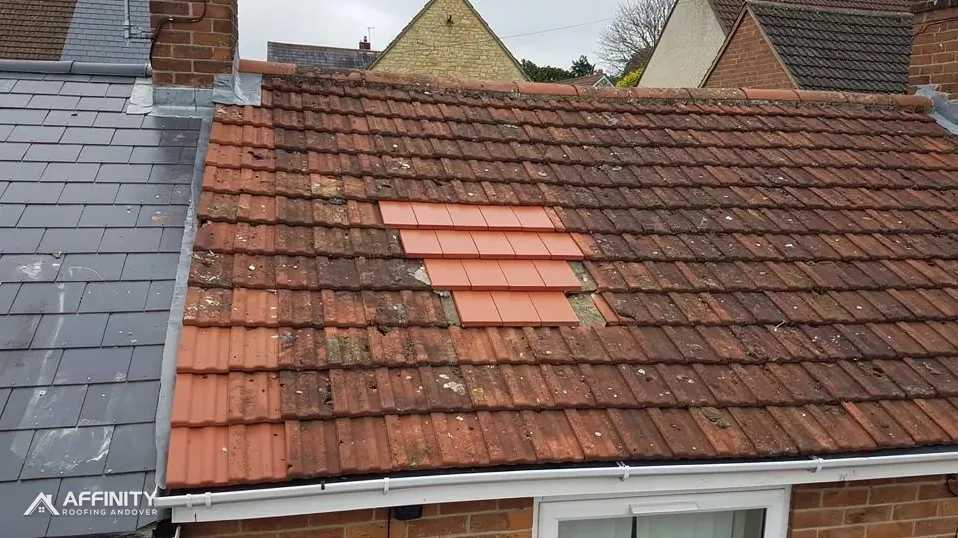
Broken or missing tiles
Which? gives £75 to £400, ex VAT, to replace between one and six standard roof tiles (Nov 2025). MyJobQuote's page on replacing roof tiles puts an average at around £215 (Oct 2026), a figure based on five tiles. Both assume reasonable access. The spread reflects how hard the roof is to reach and how well the replacement tile matches.
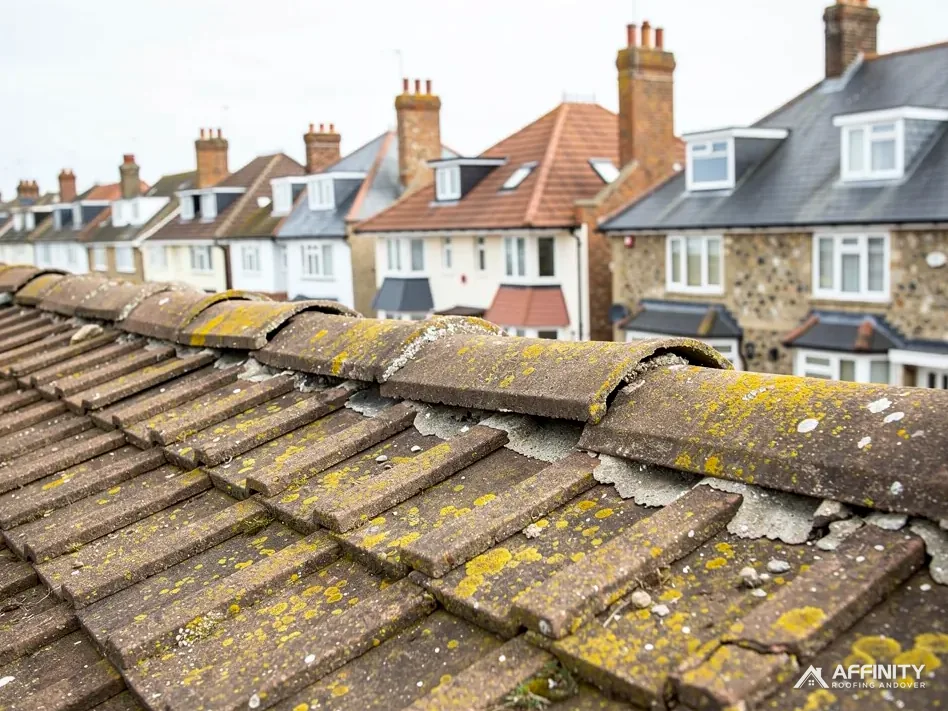
Ridge tiles
Which? gives £80 to £300, ex VAT, for a new ridge tile (Nov 2025). MyJobQuote's range for ridge work is £225 to £550 (Oct 2026), and length and the fixing method both move it. Dry verge systems usually fall between £500 and £2,000 (Oct 2026).
Gutters
Clearing every gutter on a house costs £75 to £350 in the Which? guide, ex VAT (Nov 2025). Replacing guttering is a larger job, with MyJobQuote giving around £1,000 to £1,600 (Oct 2026), and capping fascias and soffits at around £800 for a three-bedroom semi (Sep 2026).
What a small repair hides
A single slipped tile can be the visible end of a batten or underlay problem, and a fix that does not look beneath it may need repeating. Raising the neighbouring tiles costs little and tells you far more than a glance from below, and the photographs let you see for yourself. Our guide to small roof repairs explains what counts as small and how it is priced.
Valleys, flashings and chimney leadwork
Repairs at the joins of a roof take longer because they involve lead, careful fitting and often higher access.
Valleys
For valleys, MyJobQuote gives around £540 for a typical full replacement (Sep 2026), and that is for a standard run. Long valleys, awkward junctions or a valley that has damaged battens and rafters beneath will cost more.
Chimney leadwork
MyJobQuote gives full chimney leadwork between £350 and £920 (Sep 2026), and notes that the figure depends heavily on scaffold. A stack on a high gable can need a tower or scaffold, which can be a large part of the cost.
Lead lasts when it is fitted well
MyJobQuote reports that lead flashing can last over 80 years, a figure that sets a minimum, with no promise attached. Where it fails early, the fixing or the support beneath it is often to blame. Repairs that patch a failed flashing without fixing the cause tend to return.
Chimney work generally
Pointing, pots, flaunching and rebuilding sit in their own hub, and repointing in particular is priced only once the stack has been inspected closely. Chimney breast removal is given by MyJobQuote as between £1,200 and £3,500 (Aug 2026), but that is structural work, not roof repair.
For the lead itself, see our lead roofing hub. Where several faults share one scaffold, the scaffold cost is spread across them, which is one reason to deal with them together.
Storm damage and emergency repairs
Storm repairs come in two sizes, and the cost guides treat them separately.
Ordinary storm repairs
MyJobQuote says storm repairs start at around £300. That is the entry point for a modest job such as re-fixing a few lifted tiles or a section of ridge.
Extensive damage
MyJobQuote gives £1,200 or more for extensive storm damage (Oct 2026). That means a significant area of covering, timbers or flashings affected. It is a floor for large-scale damage, not a typical bill, and some jobs run far higher.
Make-safe visits
An emergency visit to stop water coming in is priced as its own job. The £150 to £300 call-out range quoted above is for the visit, and can include a temporary measure. The permanent repair is agreed afterwards, once the roof has been properly surveyed.
Insurance and costs
With buildings insurance, ring the insurer before anyone starts, have the roof made safe, then file the photographs and receipts. Whether the policy pays turns on its own storm definition and conditions. Our guide on storm damage and home insurance sets out the principles.
Beware cold callers
After a storm, uninvited callers may offer a quick fix at an inflated price, and a figure quoted on the doorstep without a survey is a guess at best. Our roofer cold calling after a storm answer explains what to do.
Nothing here is a price list. It shows the sort of money national guides report so that a quote sits in context.
What moves the price
Two repairs that look the same from the garden can cost very different amounts. These are the factors that make the difference.
Access
Reaching the repair can be a large variable. A low roof reached by ladder is cheap to work on. A high gable, a roof over a conservatory or one behind a narrow side passage may need a tower or scaffold, and the scaffold cost can exceed the repair. Where scaffold stands on the pavement, the highway authority has to license it, which in Hampshire means Hampshire County Council. On Hampshire County Council's website the scaffolding firm is the applicant, so the cost and the lead time belong in the quote.
Covering and matching
Common concrete tiles are easy to match. Old clay, natural slate or a discontinued profile may need reclaimed or special-order pieces, and the hunt takes time.
Number and spread of faults
One fault in one place is cheaper to deal with than several scattered across the roof, because each location needs setting up.
What is underneath
Once tiles are lifted, battens, underlay or rafters may prove worse than expected. A good roofer photographs this and tells you before carrying on, with the cost of any extra work stated in writing before it starts.
Roof age and condition
On an old roof, repairs can disturb neighbouring tiles. If repairs keep adding up, a larger job may be better value, as our guide on when to repair or replace a roof explains.
Why a per-metre figure fails
Rates per square metre exist for new coverings, but multiplying one by a roof area gives a misleading total for a repair, because a repair is dominated by access and set-up. Never use a per-metre rate to estimate a repair bill.
Reading a quote and comparing them
A good quote is easy to read and hard to misunderstand.
One written total
The price should be a single total, in writing, after the roofer has surveyed the roof. It should say what work is covered, what covering will be used and when the job starts. A verbal figure over the phone, without a look at the roof, is a guess.
Check what is included
Ask whether the total carries VAT, at the standard 20%, whether scaffolding is in it and whether waste removal and clearing up are covered. Which? figures exclude VAT, so a quote that includes it will look higher against them. MyJobQuote does not say which basis its figures use, so do not assume either.
Get more than one
Citizens Advice advises collecting three written quotes before you decide. An emergency reverses the order: make-safe work happens first, and the permanent repair is priced once the roof has been properly looked at.
Look at the evidence
Photographs of the actual faults should support the quote. If the roofer cannot show you what they found, ask for them. A repair that cannot be seen cannot be judged.
Compare like with like
When two quotes differ, check the method, the materials, the access and the extent of work. The lowest total may leave out something the higher one includes. Do not compare quotes only on the final number.
Send us photographs and we will survey the roof and show you the faults.