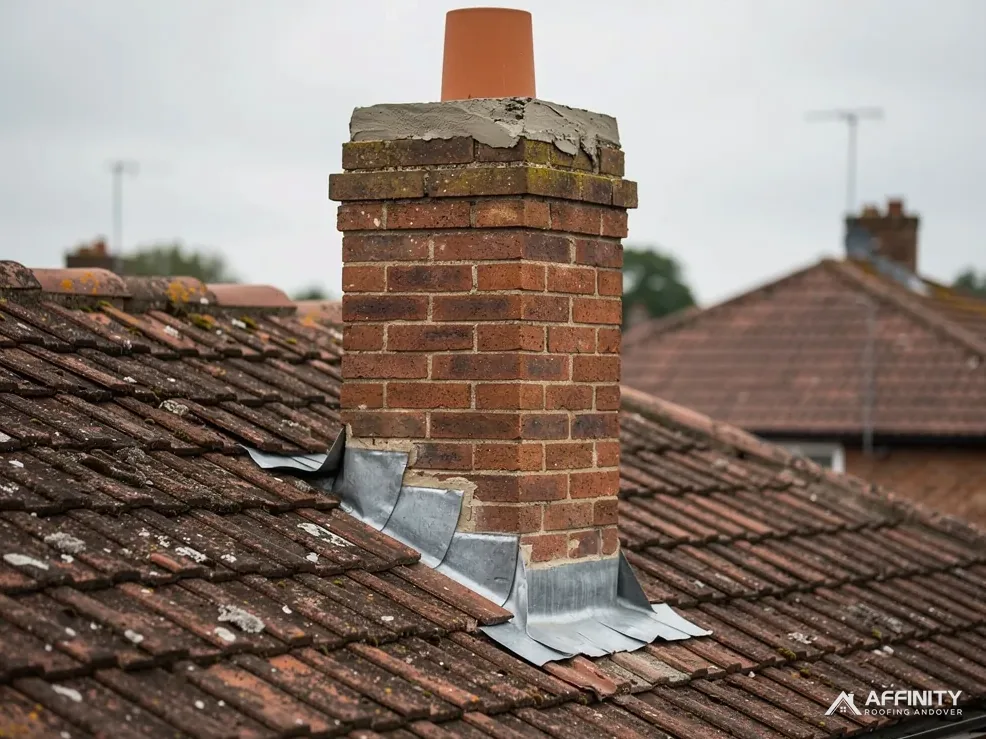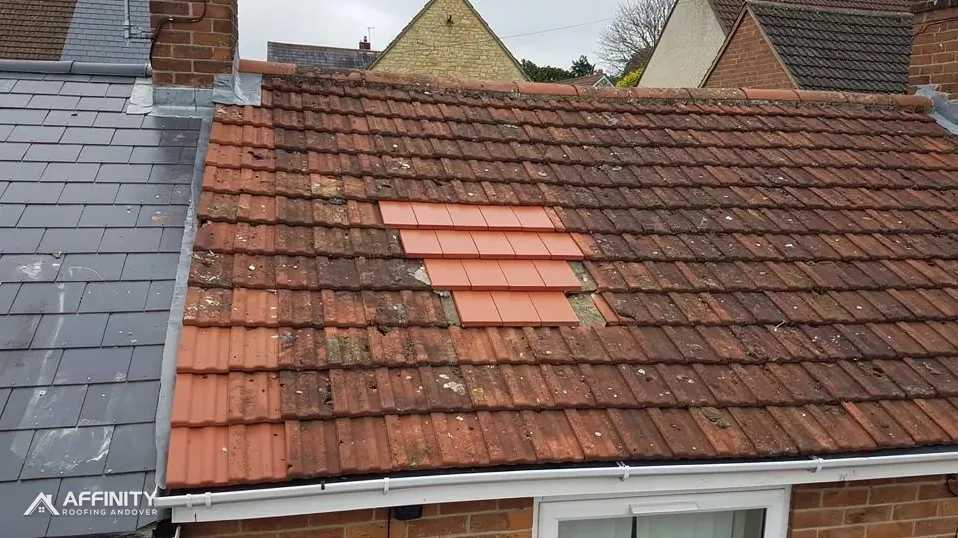
Will a roofer come out for a single tile? We will, and small repairs are welcome. A slipped tile, a cracked ridge piece, a lifted patch of flashing or a gutter joint that drips onto the doorstep get the same survey, photographs and pricing as a large one. Small jobs matter because they are where bigger problems start, and because a sound fix now often saves a larger bill later.
What owners find surprising is how the price of a small job is made up. The materials are often cheap. The cost that varies is getting to the repair safely: ladder, tower or scaffold, plus the time to set up and clear away. A repair that takes twenty minutes on a roof reached from the garden can cost far less than the same repair six metres up over a conservatory.
This guide explains what counts as small, how the national cost guides price typical small repairs, how access changes the sum, when a small repair is really a sign of something bigger and what the survey and the written price should contain. The figures come from named guides and show typical UK ranges. None is an Affinity price, and none can stand in for a survey of your roof.
Small repairs are welcome
No job is too small to look at. People sometimes hesitate to call a roofer for a single tile, assuming it is not worth anyone's trip. We would rather see it early, for three reasons.
Small faults tend to grow
A tile that has slipped leaves the felt beneath it exposed. A cracked ridge piece lets rain and wind in along the top of the roof. A lifted flashing sends water into the wall. Each is cheap to put right when found and costly after a winter or two of neglect.
The survey does more than the repair
While we are up there, we look at the surrounding roof. Neighbouring tiles, the next section of ridge and the condition of the felt where it can be seen all go into the photographs. A small job often shows whether anything else needs attention, and you decide what to do about it. Often the answer is nothing, and then you have a dated record that the rest of the slope was sound.
One price, however small
A small repair gets the full treatment: a survey, photographs, the cause in plain words and a single written total. Nobody quotes from the doorstep.
How to start
Take a zoomed photograph of the problem from the ground, in daylight, and send it with your address. We tell you whether a visit is needed and what to expect. Please do not climb up for a better picture: wet or old roofs give way without warning.
For the full range of faults a roofer deals with, our guide to common roof repairs sets them out with causes and fixes, and the roof repairs hub gathers the whole service in one place.
What counts as a small repair
There is no official definition, but in practice a small repair deals with a local fault in a day or less, without stripping a slope or replacing a major component.
Tiles and slates
Replacing or re-fixing a few broken, slipped or missing tiles or slates. Our answer on slipped roof tiles explains what that involves and what you can safely do while you wait for a visit.
Ridge and hip pieces
Re-bedding or replacing a few capping tiles, or fixing a loose end piece, whether the ridge is mortar-bedded or dry-fixed. Capping sits on the highest line of the roof, so a loose piece deserves quick attention.
Flashings
Re-dressing or patching a short length of lead or other flashing at a chimney, wall or dormer, where a lifted edge is letting water behind the metal. Flashing is the metal strip that weatherproofs the point where a roof meets whatever rises through it.
Gutters and roofline
Re-sealing or re-fixing a leaking joint, replacing a bracket, clearing a blocked outlet or refitting a short run of fascia.
Valleys and small flat areas
Clearing and patching a valley, which is the channel where two slopes meet, or patching a small area of felt or membrane on a porch.
What is not small
Re-covering a slope, rebuilding a chimney stack, replacing a long valley or a flat roof covering, and anything that needs the roof stripped back to the rafters. Those are priced as bigger jobs.
The grey area
A repair that looks small can turn out larger when the tiles come off, for example when the battens beneath prove soft. A good roofer says so beforehand and agrees what happens if it does. If it does, you are told and shown the photographs before anything further is done.
Typical UK figures for small repairs
Published cost guides help with scale on small jobs. Each figure below is a typical UK range with its source and date, and none is our price.
A few tiles
Which? surveyed traders in November 2025 and puts a repair of half a dozen or fewer broken or missing standard tiles at £75 to £400, before VAT. MyJobQuote's page on replacing roof tiles gives around £215 on average, working from five tiles (Oct 2026).
A ridge piece
Which? gives £80 to £300, before VAT, to fit a new ridge tile (Nov 2025). MyJobQuote gives ridge work between £225 and £550 (Oct 2026), a wider band because it includes longer runs.
Gutters
Which? gives £75 to £350, before VAT, for clearing out all the gutters (Nov 2025).
The overall average
Across all repairs, MyJobQuote's mean figure is around £650 (Oct 2026). That figure mixes small and large jobs, so a small one usually lands below it.
Emergency visits and storms
For an emergency call-out, MyJobQuote gives a range from £150 to £300 (Oct 2026). Storm repairs begin at around £300, it says, and extensive storm damage is £1,200 or more.
Reading the ranges
The Which? figures leave VAT out. MyJobQuote does not say which basis it uses, so do not assume either. A quote that includes VAT and access equipment will look higher than a figure that does not. Our roof repair cost guide gives the larger picture.
Access decides more than the tiles do
On a small repair, the materials may cost a few pounds and the roofer's time an hour or two. What lifts the price is reaching the spot.
Low and easy
A roof whose eaves are within reach of a ladder, with firm ground and clear space around it, is cheap to work on. A bungalow is the usual example, and the same logic applies to any single-storey extension.
High or awkward
A chimney on a gable end, a valley above a conservatory or a roof reached only down a narrow side passage may call for a tower or full scaffolding. Setting it up and taking it down is time the roofer has to be paid for, and it can outweigh the repair.
The pavement
Section 169 of the Highways Act 1980 makes scaffolding over the public highway subject to the highway authority's licence. In Hampshire that means Hampshire County Council, whose page has the scaffolding firm applying for the customer. Private land sits outside the rule. Our scaffold tower or full scaffolding guide goes through the options.
Sharing the access
If you have several jobs on the same elevation, such as a gutter, a fascia and some tiles, doing them together shares the cost of reaching them. A roofer can advise on grouping before the visit.
Why the quote says so
The written price includes access, so the day holds no nasty surprise. If a scaffold is proposed for a small job, ask why a ladder or tower will not do, and expect a straight answer with a photograph of the position.
When a small repair points to something bigger
Most small repairs stay small. A few are the first sign of a bigger problem, and the survey is where that shows.
Several faults at once
One slipped tile is a fixing failure. A scatter of them across a slope suggests battens or nails giving way. Repeating small repairs on the same slope is a pattern worth stopping to look at.
Age of the covering
Typical lifespans, never promises, give a sense of where a roof stands. HomeBuilding gives plain concrete tiles 40 to 50 years and clay 60 to 80 years, and Marley describes its tiles as expected to last around 60 years while saying that is no warranty. A roof near those ages will need more frequent attention.
Signs inside
Stains that return, damp insulation and daylight in the loft all suggest the problem is wider than the visible fault. Our guide on when to repair or replace a roof explains how to weigh it.
Underlay and battens
When tiles are lifted, rotten battens or torn felt may come to light. A good roofer photographs them and tells you before going further, then agrees what to do.
Building Regulations
A small repair needs no application. The Planning Portal's re-roofing test looks at whether less than 25 per cent of the building envelope and under 50 per cent of the roof is involved, and a repair sits far inside both. If a job grows, we confirm the route with building control first.
Small repairs are sensible, and a trustworthy roofer will tell you plainly when the roof needs more than that.
What a small repair visit should include
The size of the job does not change what you are entitled to expect.
A survey
The roofer looks at the fault and at the roof around it, from outside and, where useful, from the loft. The loft view shows daylight, stains and the state of the underlay in a way the outside cannot.
Photographs
You receive photographs of what was found, taken before and after, so you see the same things the roofer did. They are also the record you will want if you ever sell the house or claim on insurance.
A plain explanation
The cause of the fault, what the repair involves and whether anything else needs attention soon. If nothing else does, you should hear that too, and the photographs back it up.
One written price
A total, in writing, that includes access. Citizens Advice suggests collecting quotes from three traders where time allows, and a small job is a fair place to do it, if the fault is not letting water in.
A tidy finish
Broken tiles, mortar and packaging are taken away, gutters are checked for debris and the site is left as it was found.
Your next step
If you are unsure whether a fault is worth a visit, send a photo and we will give our view. Where rain is entering now, we cover the hole first and plan the permanent repair after a proper look.