Damp in the top of a house points the eye straight to the roof. Sometimes that is right: a tile has slipped, a flashing has lifted and rain is coming in. Just as often, the roof covering is sound and the water has come from the air inside the house, which has cooled against a cold surface and turned back into liquid.
The two look alike. Both stain ceilings, dampen insulation and darken timber. A roofer who treats condensation as a leak will repair tiles that were fine, and the damp will carry on. A homeowner who treats a leak as condensation will open a window and wait while rain keeps coming in. Getting the diagnosis right comes first.
This guide sets out the signs of each, the weather patterns that give condensation away, what the Building Regulations guidance and British Standards expect of a roof, and the ventilation fixes that cure condensation. It answers the question in the title directly: look at timing, shape and place, and if the signs are mixed, have both checked in one survey. Any cost mentioned comes from a named guide as a typical UK range.
One patch, two possible causes
Water in a roof space arrives by one of two routes. It either comes in from outside, as rain or snow past a defect in the covering, or it forms inside, as condensation from household moisture.
The leak route
A leak needs a defect: a cracked or slipped tile, a lifted flashing, a blocked valley, a failed junction at a chimney or a roof window. Rain gets in at the gap and travels down. The amount of water follows the weather, heavy when the rain is heavy and nil when the day is dry.
The condensation route
Air indoors carries water vapour from breathing, cooking, bathing, drying clothes and ordinary living. Warm air holds more vapour than cold air. When it drifts up into the loft and meets cold surfaces, such as the roof covering's lower face, the underlay or the nail tips, the vapour turns into droplets. The amount of water follows the temperature and the moisture produced in the house.
Why both cause damage
Constant dampness rots timber, spoils insulation, grows mould and corrodes metal. It does not matter whether it came in as rain or formed as dew: wet timber is wet timber. But the cure for one will not work for the other. Fixing tiles will not stop condensation, and ventilating will not seal a crack.
When it is both
Plenty of roofs have a minor leak and a ventilation problem at once. The signs overlap, and a good survey looks for both. Our guide on how roofers trace a roof leak covers the entry-point side of the search, and the roof repairs hub gathers the rest.
Signs that point to a leak
A leak has a source and a schedule, and both can be read.
Timing with the weather
The clearest clue is that wetness appears during or soon after rain and dries out in settled weather. If the stain grows after a downpour but not after a cold, dry night, rain is the likely cause. Wind-driven rain adds a twist: some leaks only show when the rain comes from one quarter.
Location near features
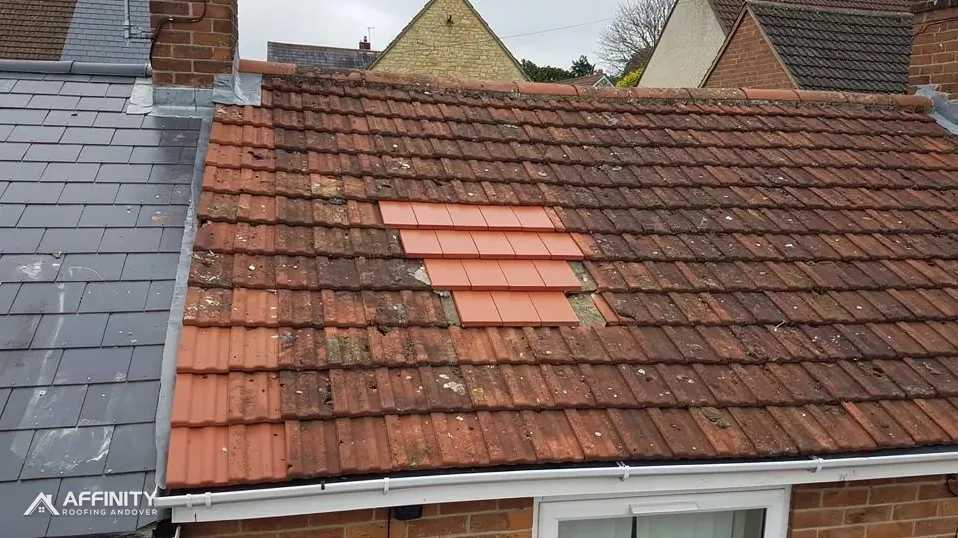
Leaks cluster at breaks in the roof surface: chimney stacks, valleys, abutments with walls, roof windows, dormers, the ridge and the eaves. A stain close to one of these, and directly below it or downslope, makes a leak likely.
A defined patch with an edge
Water entering at one point spreads in a roughly circular shape, often with a darker ring at the margin where dissolved dirt dried. Over repeated wettings the rings build up like contours.
Wet to the touch, and local
Check the timber and insulation in the loft in the middle of a rainy spell. A localised wet area, with dry timber on either side, suggests a point of entry. A trickle running down a rafter or dripping from a nail is a sign too.
Visible defects
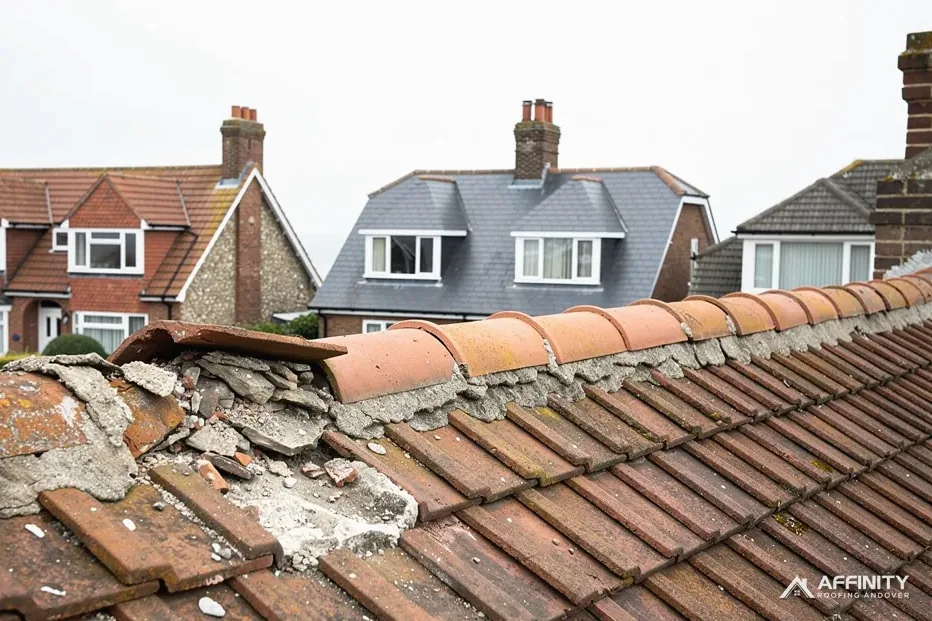
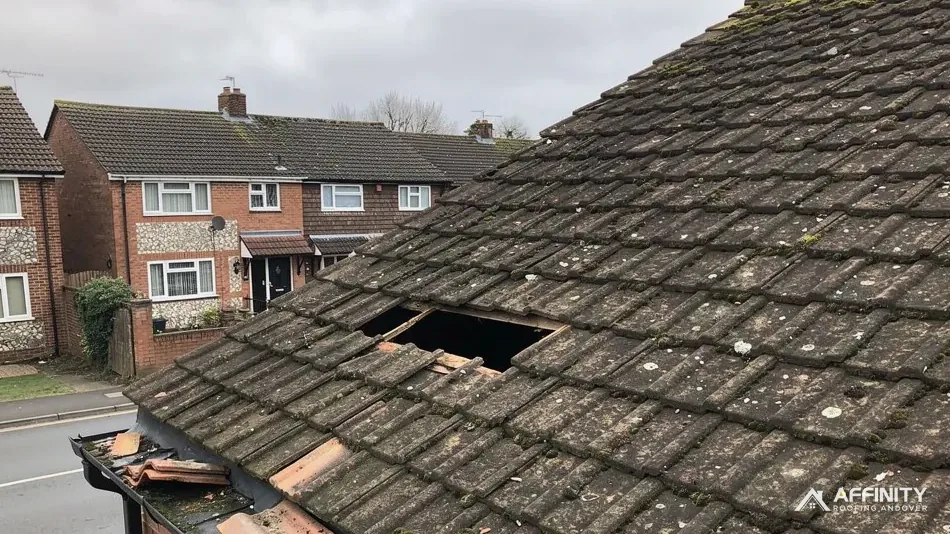
Daylight through the covering, tiles lying out of line, a torn flashing or a displaced ridge are direct evidence. Our answer on a water stain on the ceiling shows what the stain's shape can tell you.
If any of these fit, treat it as a leak until a roofer shows otherwise.
Signs that point to condensation
Condensation is a pattern of behaviour, so its clues are about where, when and how widely the damp appears. Reading them takes patience, and a few weeks of notes will tell you more than a single look.
Cold surfaces, cold times
Condensation collects on the coldest surfaces first: the underside of the underlay, nail tips that project through the roof covering, the north slope of rafters and the corners of rooms. It is most noticeable in cold weather, particularly on still mornings after a night of heating being off.
Widespread damp without a source
Where a leak makes a patch, condensation tends to spread across a large area of the roof space or a whole ceiling. Droplets form on the lower face of the felt, beads cover the nails and timbers look uniformly damp or spotted with mould.
Black mould and a musty smell
Mould grows on damp surfaces, and black spotting on rafters, ceilings and the corners of rooms is typical of persistent condensation. The smell is stale and earthy more than sour. Mould on its own does not prove condensation, because a long-term leak can cause it, but a lack of any rain pattern leans that way.
Companion signs downstairs
Streaming windows, damp in cold corners, wallpaper lifting behind wardrobes and condensation inside double glazing all suggest high moisture in the house. They often come together with damp in the loft.
Frost and thaw
In a hard frost, vapour can freeze as a white rime on nails and underlay. When the temperature rises, it melts and drips, which looks exactly like a leak from the room below.
If several of these fit, condensation moves up the list.
Cold weather patterns that give condensation away
The calendar is a useful tool, and it costs nothing. Condensation follows the thermometer, and a leak follows the rain gauge.
The first cold snap
Loft damp can show for the first time when autumn turns cold. The house is warm, the roof space has turned cold, and a summer's worth of moisture in the building fabric begins to move. Spots of damp appear without any change in the roof.
Dry days with drips
If a ceiling stain gets worse on dry, cold days, rain cannot be the cause. A thaw after frost is a good example: rime melts and drips, with no rain involved.
Mornings and evenings
Condensation worsens after cooking, showers and baths, and after clothes have been dried indoors. If damp patches are worst in the morning and ease later in the day, moisture produced in the home is the likely source.
Heating habits and household moisture
Rooms heated only occasionally have cold surfaces, and moist air from elsewhere condenses there. Cutting the heating to save money can make it worse, as can closing every vent against draughts.
Keep a record
A simple diary of dates, weather, heating and which rooms are damp makes the pattern plain in a couple of weeks. Add photographs. A roofer can often diagnose from the record before they climb a ladder.
Our answer on a roof leaking only in heavy rain covers the opposite pattern.
What the guidance expects of a roof
The Building Regulations guidance and British Standards give a clear picture of how roofs are meant to handle moisture.
Approved Document C
Approved Document C is the official guidance on moisture. It asks for roofs that keep rain out and stay sound in strength and insulation despite interstitial condensation, meaning dampness that forms inside the roof build-up itself. Cold deck roofs, it says, meet the requirement through ventilation, though a very small roof, such as a porch canopy, may escape the need. A loft hatch should have an effective draught seal.
BS 5250
BS 5250:2021 is the current standard for managing moisture in buildings. Approved Document C still cites the older 2002 edition, so guidance can trail the standard.
Underlay type decides the eaves detail
Under a non-breathable HR underlay, Marley's cold roof guidance asks for an unbroken 25mm opening along the eaves on pitches of 15 degrees or below, and 10mm on steeper ones. A low-resistance, breathable membrane above a well-sealed ceiling is different: Marley says the 3mm that normal eaves construction leaks anyway may suffice, if the membrane's third-party certification allows.
What this means for you
Insulation stuffed into the eaves, a hatch that lets warm air through or a bathroom fan blowing into the loft all mean the roof is not working as designed. See also our guide to pitched roof ventilation.
Ventilation fixes and when to call a roofer
Condensation is cured by managing moisture and airflow, and the fixes are generally modest.
Reduce the moisture at source
Use extractor fans in kitchens and bathrooms, vented to the outside and not into the loft. Dry clothes outdoors or in a ventilated room, keep lids on pans and close bathroom doors during showers. Heating the house evenly helps keep surfaces above the temperature at which moisture condenses.
Seal the ceiling
Warm air leaks up through hatches, light fittings, pipe holes and gaps around the loft access. A draught seal on the hatch and sealing round penetrations cut the supply of moist air to the loft.
Open the eaves
Where insulation blocks the gap at the eaves, it can be pulled back and held clear with a tray or baffle so air can enter. This is often the single most useful fix, and a roofer can see whether the gap meets the manufacturer's figures, then photograph the result so you can see the clear path for yourself.
Check the roof's ventilation and underlay
A roofer can assess whether vents, ridge ventilation or a different membrane are needed. Where insulation is being added, the ventilation needs to be reconsidered at the same time.
Spray foam
RICS makes two points in its consumer guide: roof timber under spray foam cannot be fully inspected, and badly installed insulation can disturb ventilation and bring moisture damage. See our guide to spray foam condensation if your loft has been foamed.
Ask for the survey photographs and one written price for whatever is needed.