The short answer
A brown or yellow mark on a ceiling means moisture has reached the plaster. Its source could be a roof leak, a plumbing fault or condensation. A mark that swells after rain suggests the roof, one that swells in any weather suggests pipes or a tank, and a mark that returns in cold spells with mould points to condensation. The loft usually settles it.
Reading the mark itself
Look at the stain before you look at anything else. A roof leak usually leaves a rough, ringed patch with a darker edge, because each wet spell deposits a fresh band as it dries. The mark often grows after rain and settles in dry weather, so keep a pencil outline with dates beside it.
A plumbing leak behaves differently. It may be constant, or tied to when a tap, shower or heating cycle runs, and the plaster tends to stay damp. Stains under a bathroom or a tank belong to that family, and a plumber is the right call.
Condensation shows as a scatter of dark speckles or a soft grey bloom, usually in corners, along outer walls and behind wardrobes. It comes with cold surfaces and indoor moisture, not with rain.
Texture helps too. Bubbling paint, a soft or sagging patch and a musty smell suggest water has been present for a while. A sharp, fresh ring suggests recent entry. None of this is certain from the floor, which is why the loft deserves a look as well.
Our guide on roof leak or condensation goes deeper into telling these apart.
Check the loft from the hatch
With a torch, look into the loft from the hatch and work out where the stain sits above you. You are searching for damp insulation, dark tide marks on timber, drips from the underlay, daylight at a tile, or a trail of water running down a rafter. Water travels, so the entry point can sit well upslope or to one side of the stain.
Stay on the joists and never step on the ceiling boards between them. Do not go further than the hatch if the floor is not boarded.
Roof ventilation matters in this check. Marley advises that where non-breathable HR underlay is used in a cold roof, eaves ventilation of 25mm suits pitches up to 15 degrees, with 10mm above that. The guidance on moisture sits in BS 5250, a British Standard. Where the eaves are blocked by insulation pushed too far, damp air cannot escape and moisture condenses on the underside of the roof, dripping onto the ceiling from above.
AD C asks that a roof resist rain penetration and also avoid problems from interstitial condensation, so both causes can be in play at once, and a visit weighs up both.
When it is a roof leak
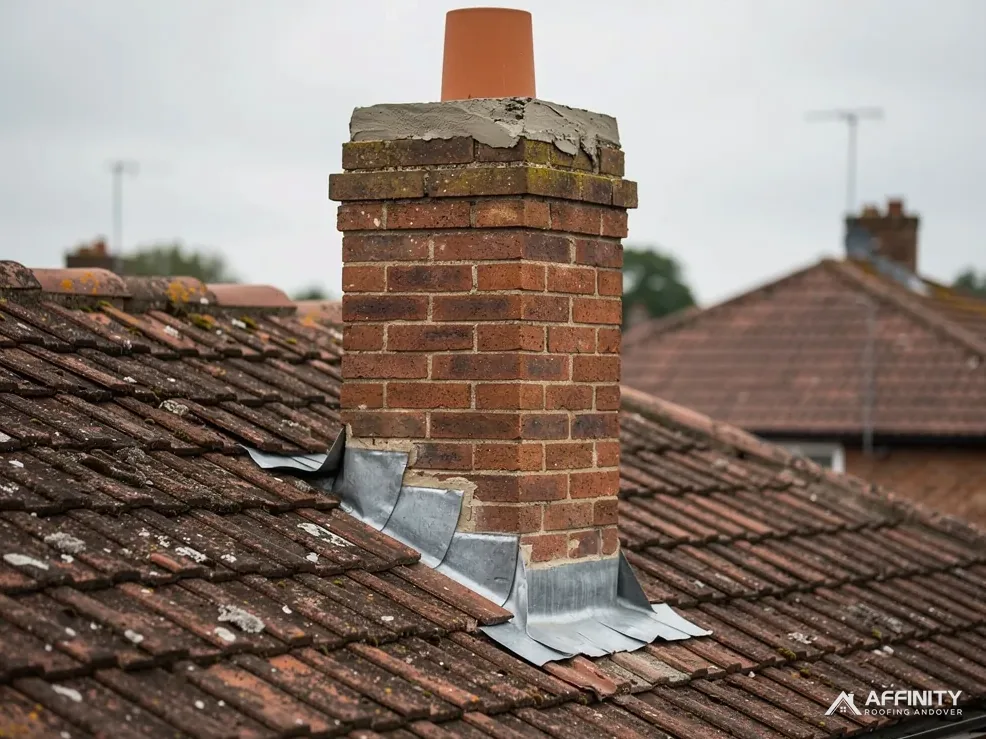
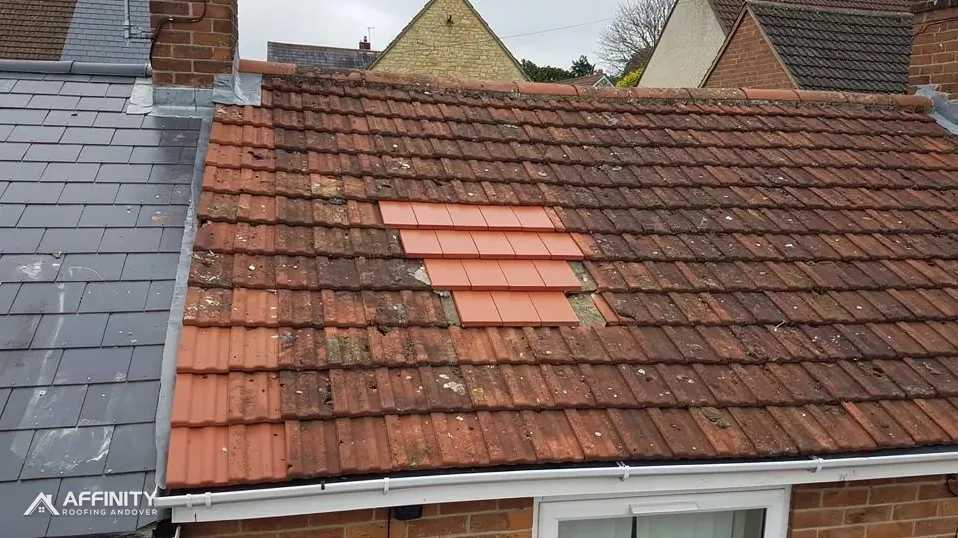
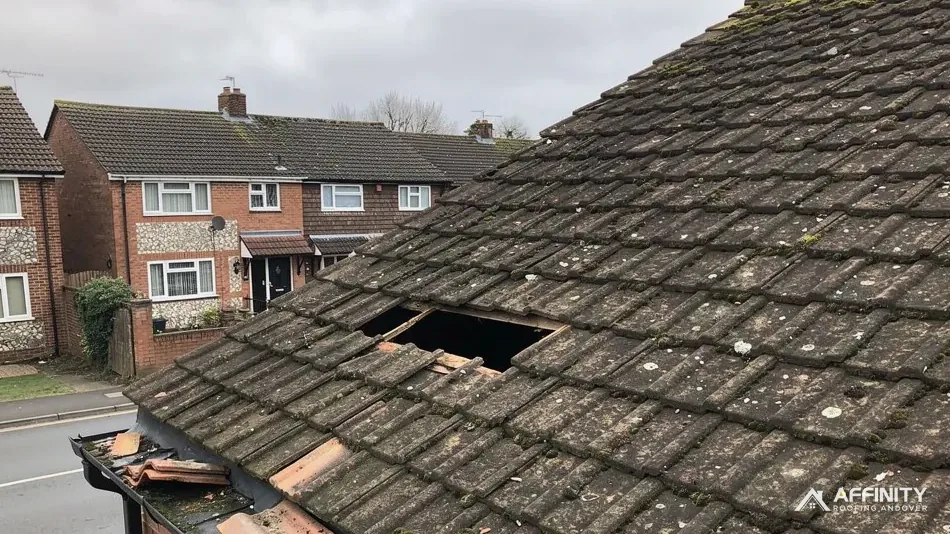
If the loft shows damp timber under a tile area, a stained rafter, or water under a flashing, the roof is the likely source. Typical faults are slipped or cracked tiles, failed flashing round a chimney or wall, a blocked valley, a gutter spilling into the eaves, or tired underlay. A flat roof might have a split in the membrane or a failed joint at an upstand.
Do not rely on where the stain is. Water runs along the underlay, down a rafter or across the top of the plasterboard, so the visible mark can be a metre from the source. Pinpointing the entry means following the route with patience. Our guide to finding a roof leak describes how that is done.
Once the source is known, the repair is often modest if caught early: refix the tile, renew the flashing, clear the valley. Left alone, saturated insulation, softened battens and decayed plaster make the job bigger.
For the full list of what we repair, see our roof repairs page. We give one written price after we have surveyed and shown you what we found.
Acting before the plaster fails
A ceiling is heavy when wet. Plasterboard soaked with water sags and can let go without much warning, and a bulge in the middle of a stain is the sign. Keep people out from underneath, and do not poke it with anything. Place a bowl below any drip and move furniture.
Wet ceilings and electrics are a poor mix. If the stain is near a ceiling rose or spotlight, isolate the lighting circuit at the consumer unit, then have an electrician check it. Our answer on a roof leak near a light fitting covers this in more detail.
Do not paint over the mark yet. Paint hides the evidence you need, and a damp ceiling will bring the stain back through the paint. Wait until the source is fixed and the plaster has dried before decorating.
Take dated photos and keep a short log. If you will claim on insurance, that record carries weight, and you should tell the insurer before arranging permanent repairs. If the cause stays unclear, a survey will put someone on the roof and in the loft, and you will be shown pictures and told plainly what is found.