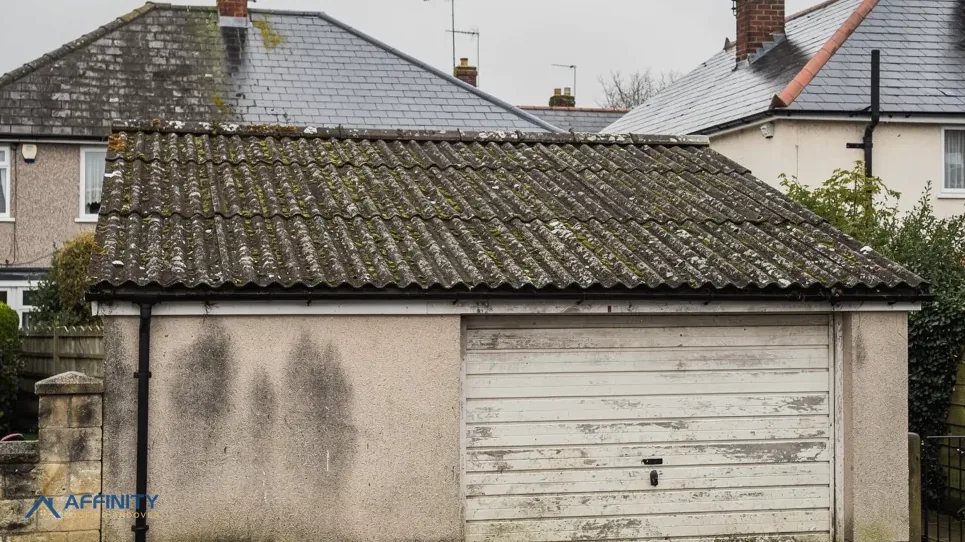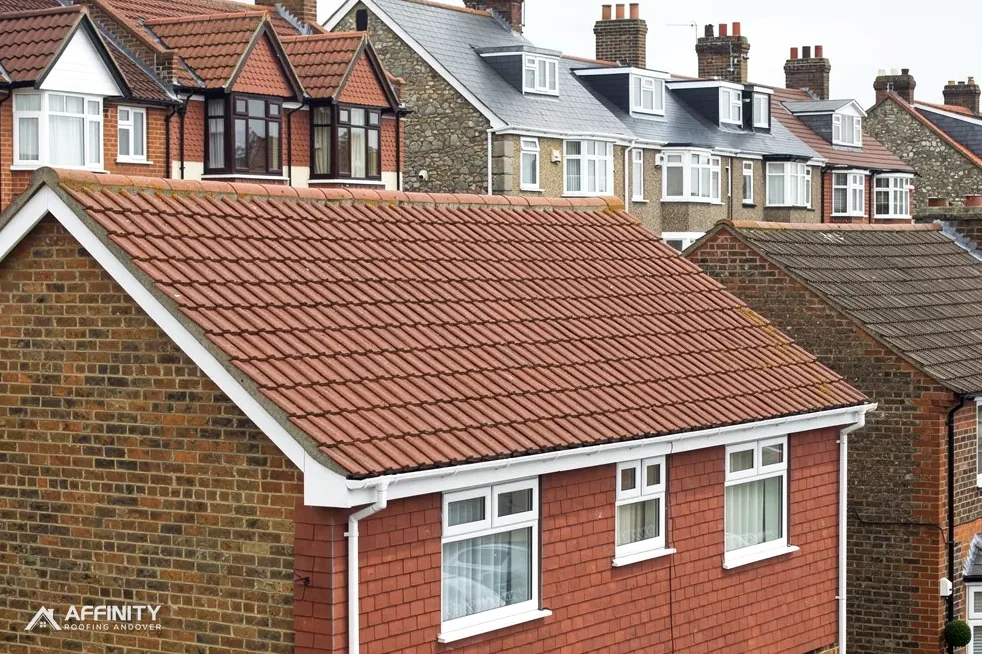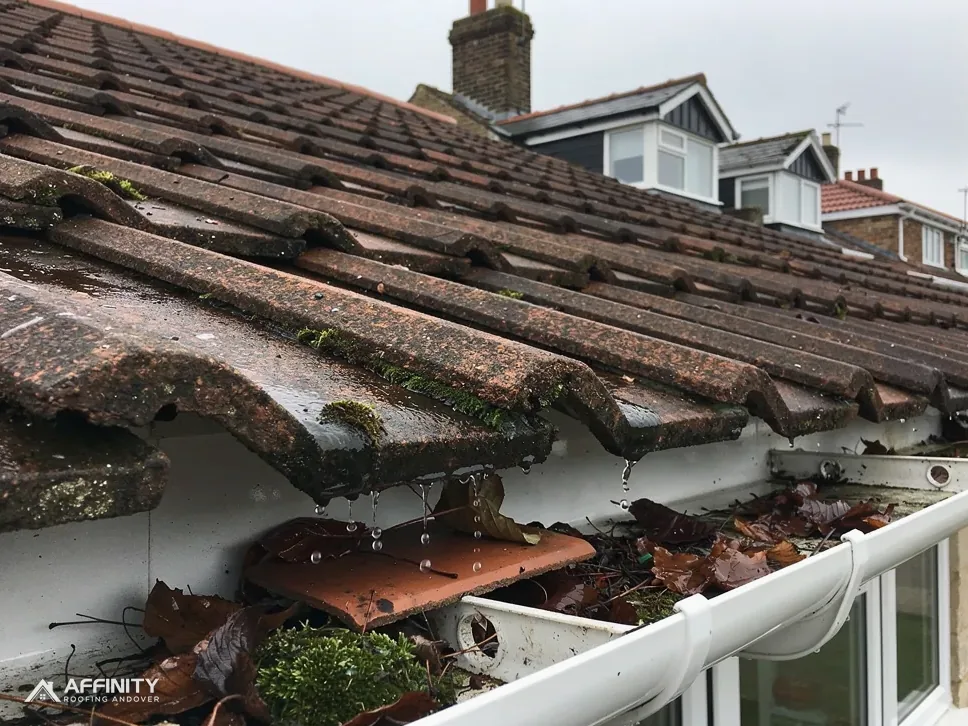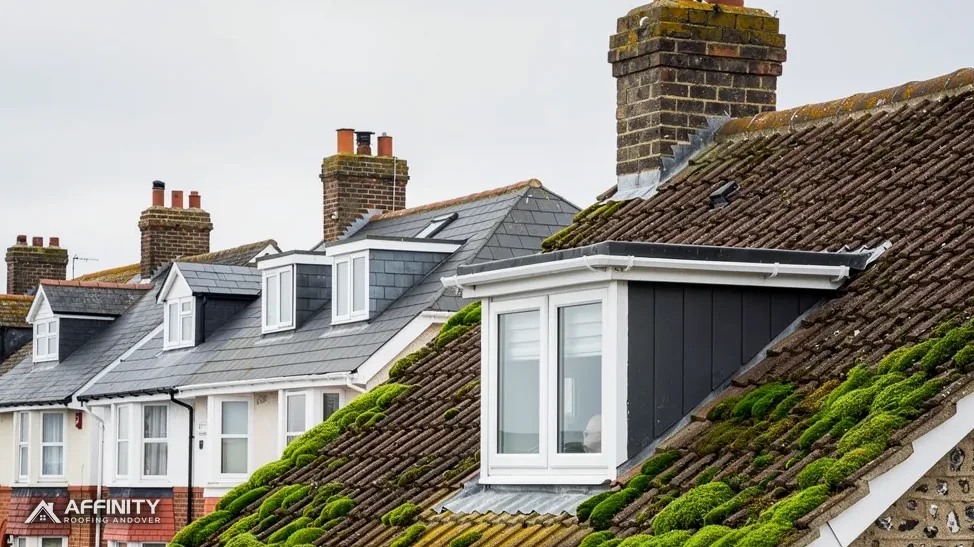
A moss clean is a rare chance to see a roof properly. For years, the covering has been a green or grey surface seen from the garden. Take the growth away and you can see the tiles themselves: which are cracked, which have slid, where the ridge is open and where the lead has lifted.
That is why a cleaner who is also a roofer is worth having. A cleaner with a brush sees the roof as a surface to be restored. A roofer sees it as a set of parts that keep water out, and each part has its own ways of failing. The findings matter more than the cleaning, because a clean roof with a failed valley still leaks.
This guide goes through the faults that can come to light during a clean: slipped and cracked tiles, ridge and hip bedding, valleys and flashings, and gutters and eaves. It then explains how findings should be reported to you, so that you receive photographs, a clear explanation and one written price for any repair, and you stay in charge of what happens next. Cost figures here are typical UK ranges from named guides.
Why a clean doubles as an inspection
Growth sits in the places where water lingers, and those are also the places where faults begin. A thick moss line along a hip, a tuft in a valley or a dark patch around a chimney marks somewhere that has been wet for a long time. Removing it exposes whatever lay beneath.
Seeing close up
From the ground, a tiled roof is a pattern. Up close, each tile is an object that is whole, chipped or broken, held or loose. A roofer working along a slope handles the tiles and feels the ones that rock. That tactile information is something no photograph from below can supply.
What the loft adds
A visit to the loft before or after a clean pairs the outside view with the inside. Daylight at a lap, stains on rafters and damp insulation under a valley all connect to what was seen on the slope. Not every survey needs a loft entry, but the useful ones usually include it.
Why photographs matter
The roof can only be judged by the person up there. Photographs let you see what they saw. We take them at each stage: before the clean, once the growth is off and of every fault. You get the lot, so there is nothing to take on trust.
When cleaning should wait
If a survey finds a leak, a failed valley or a large number of loose tiles, repairs should come first. Cleaning an unsound roof can make things worse, and the roof cleaning and moss removal hub explains how we sequence the work. Our can moss cause a roof leak answer explains how moss and leaks interact.
Slipped, cracked and missing tiles
The most common finding is a tile that is not where it should be.
How tiles move
Each tile is held to its batten, the timber strip across the rafters, by a moulded nib, a metal clip or a nail. When the nail rusts through or the nib snaps, the tile slides down until it catches on the one below, leaving a gap at the top. Moss can hold a slipped tile in place for years, which is why the fault appears when the moss comes away. Frost can also split an old tile along its length.
Signs to expect
Look for tiles sitting lower than their neighbours, courses that wander, hairline cracks that run across a tile and corners that have broken off. A tile that rocks under a gentle press is loose. In the loft, a patch of daylight or a dark stain below a suspect area confirms it.
What repair involves
A single tile is replaced with a match, or a sound one salvaged from a less visible part of the roof. Fixing is by nail or clip according to the covering. Which? gives £75 to £400 as a typical UK range (ex VAT, Nov 2025) where between one and six standard tiles are cracked or gone. MyJobQuote puts replacing around five tiles at about £215 (Oct 2026). Access is a large part of the price, since scaffolding for one repair can outweigh the tiles.
Many slipped tiles
A scatter of slipped tiles across a slope is a different problem. It suggests tired battens or failing nails, and a larger repair.
Our answer on the slipped roof tile shows what to do in the meantime.
Ridge and hip bedding that has aged
The ridge runs along the very top of a pitched roof, where two slopes meet, and hips slope down the outside corners. Both are capped with ridge tiles, traditionally bedded in mortar.
What goes wrong
Mortar cracks and crumbles with age and weather. Moss grows in the cracks and holds water against them. A loose ridge tile can shift in the wind, and open bedding lets rain and wind-blown debris into the roof space. From below, you may see pale crumbs of mortar in the gutter, a ridge line that is not straight or gaps at the ends.
The standard behind the repair
BS 5534 covers slating and tiling practice. It is not the law, but Marley reports that the 2014 revision settled a point: mortar alone is no longer treated as enough for ridge and hip tiles. Systems that clip or screw the tiles down, called dry-fix, are tested to BS 8612. A repair that only re-bedded the tiles in mortar is therefore worth questioning.
Typical costs
Which? gives £80 to £300, ex VAT, to fit one fresh ridge tile (Nov 2025). MyJobQuote gives ridge work between £225 and £550 (Oct 2026), and dry verge systems usually between £500 and £2,000 (Oct 2026). All are typical UK ranges, and access moves them.
If the ridge is the main concern, our dry ridge and verge hub explains the options in full.
Valleys, flashings and the lead beneath the moss
A valley is the channel where two roof slopes meet at an inward angle, and it carries a lot of water. A flashing is a metal strip, often lead, that weatherproofs the junction where a roof meets a chimney, a wall or a dormer.
Where moss does its harm
Valleys collect leaves, dirt and moss, which hold water and dam the flow. Water backs up under the tile edges and runs in over the headlap. Flashings can lift at their edges as the mortar or sealant ages, and lead can split along folds after long exposure and movement.
Reading lead
Lead is sold in codes, which are weight classes. Royston Lead's brochure gives code 4, at 1.80 mm, as suitable for soakers, flashings and pitched valley gutters, and codes 5 to 8 for bigger gutters and parapets. MyJobQuote says lead flashing lasts over 80 years at the least, which is a floor and no promise, so lead that fails early usually points to how it was fixed or supported.
Costs
MyJobQuote gives most full roof valley replacements at around £540 (Sep 2026) and full chimney leadwork between £350 and £920, scaffold dependent (Sep 2026). Treat those as typical UK figures. A short length of failed flashing is often a patch repair and not a replacement.
Chimneys and wall joints
The joint between a roof and a chimney stack is one place leaks start. If you suspect it, see our lead roofing hub for how leadwork is done properly.
Gutters, fascias and the eaves
The eaves are where the roof ends and the gutter takes over, and growth sends its debris there.
Blocked gutters
Dead moss washes down the roof and settles in the gutter. A full gutter overflows behind the fascia board, soaking the timber, and in time the rafter ends beneath it. Overflow marks down the wall are the visible sign. Our answer on moss blocking gutters explains how it happens.
Sagging and loose gutters
Once the weight of wet debris is cleared, you can see whether the gutter is sagging between brackets, leaking at joints or tilting the wrong way. Gutters need a slight fall towards the downpipe. Brett Martin gives 1mm for every 600mm as a guide to the fall.
Fascias and soffits
Soft, flaking or stained fascia boards and soffits are also visible from the roof edge. They suggest water has been overflowing for some time. An older soffit may be asbestos insulating board, so nothing should be drilled or cut until it is identified, as our guide on asbestos soffits explains.
The felt at the eaves
Old bitumen felt can be seen hanging into the gutter when tiles are lifted at the eaves. If it is brittle or torn, it will not carry water away any longer.
Costs
Which? gives £75 to £350, ex VAT, to clear every gutter on a house, both elevations (Nov 2025). Gutter replacement is a larger job: MyJobQuote puts it around £1,000 to £1,600 (Oct 2026). Both are typical UK ranges.
How findings should reach you
A cleaner can tell you the roof has problems at the door, and you will have no idea whether that is true. A proper report works differently.
Photographs of each fault
You should get a picture of every fault, with a note of where it is on the roof. Not a general shot of the slope, but a close image of the cracked tile or the open ridge joint. Photographs let you ask another roofer for a second opinion without anyone going up again.
Plain explanation
For each fault, you should be told what it is, what it will do if left and whether it is urgent. Some faults are urgent, such as a failed valley above a bedroom. Others can wait, such as a few slipped tiles over a garage. A report that treats everything as urgent is a sales tactic.
One price for the repair
Repairs found during a clean are quoted as their own job, with one written total price. We do not add them to the clean without asking. You can accept some, all or none, and the clean is unaffected by your decision.
No pressure on the day
Citizens Advice suggests getting quotes from at least three traders for building work, and you are entitled to take time. A fault found on a Tuesday does not have to be fixed by Wednesday, unless water is coming in, in which case a temporary make-safe comes first.
Send us the pictures you have, or book a survey, and we will show you the roof in the same way.