The short answer
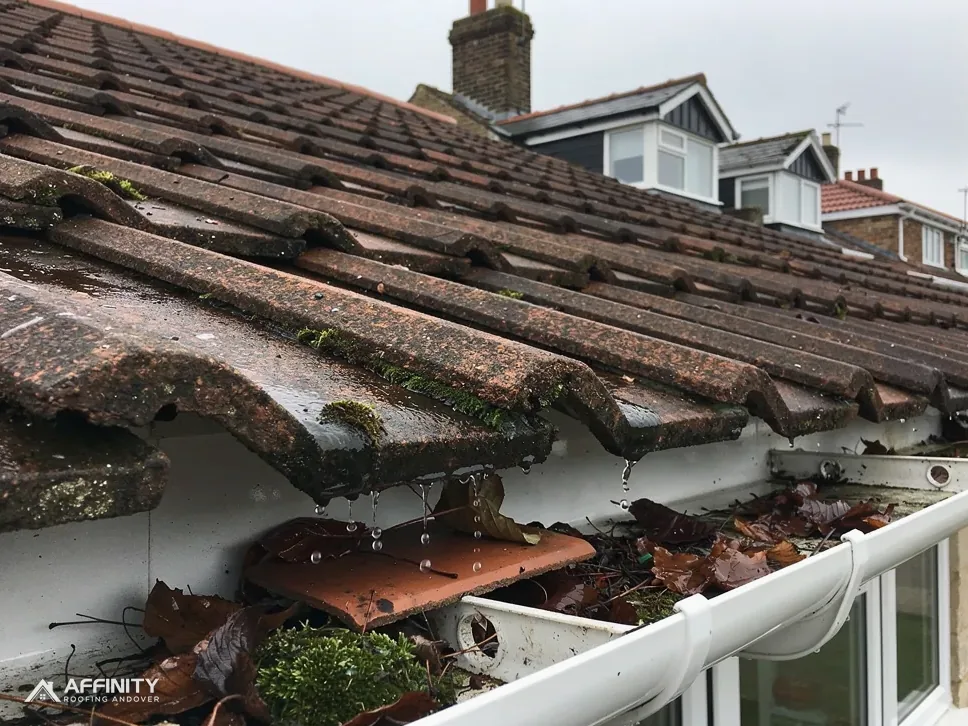
Because the moss on your tiles does not stay put. Rain, wind and frost loosen it, and it drops into the gutter, where it mixes with grit, leaves and seeds from the roof and packs into a plug at the outlet. Once the run is full, rain spills over the edge and soaks the fascia and wall. Clearing the gutter and treating the moss above it stops the cycle.
Where the moss in your gutter comes from
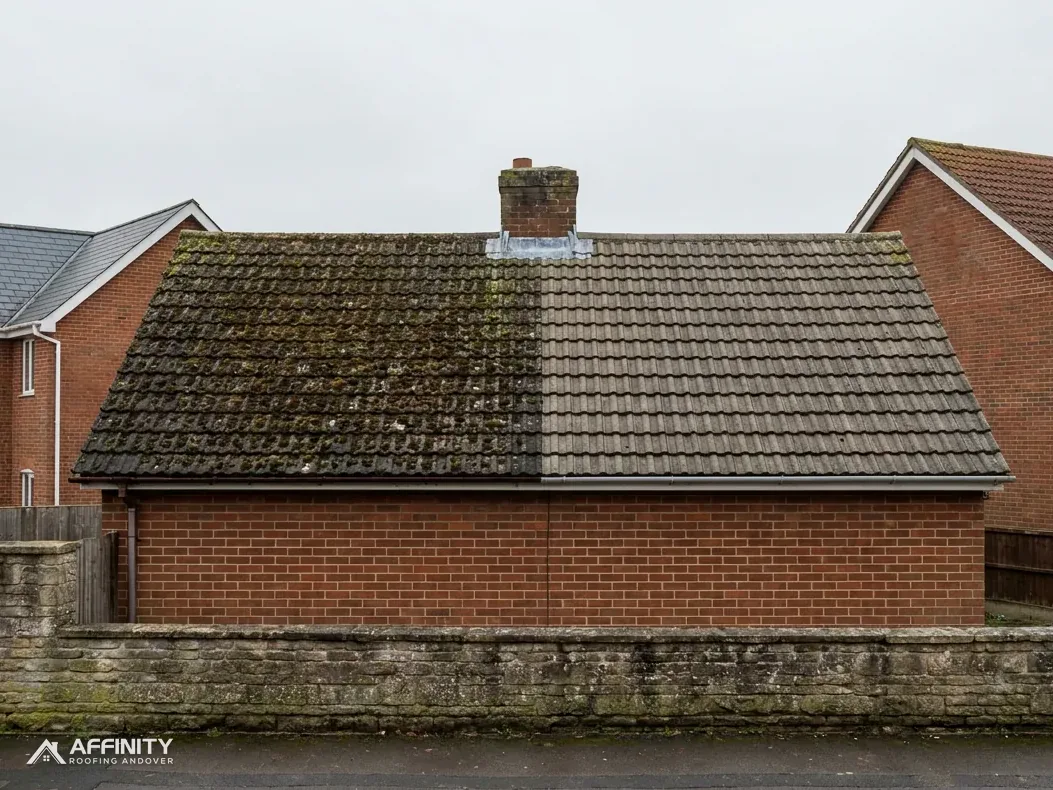
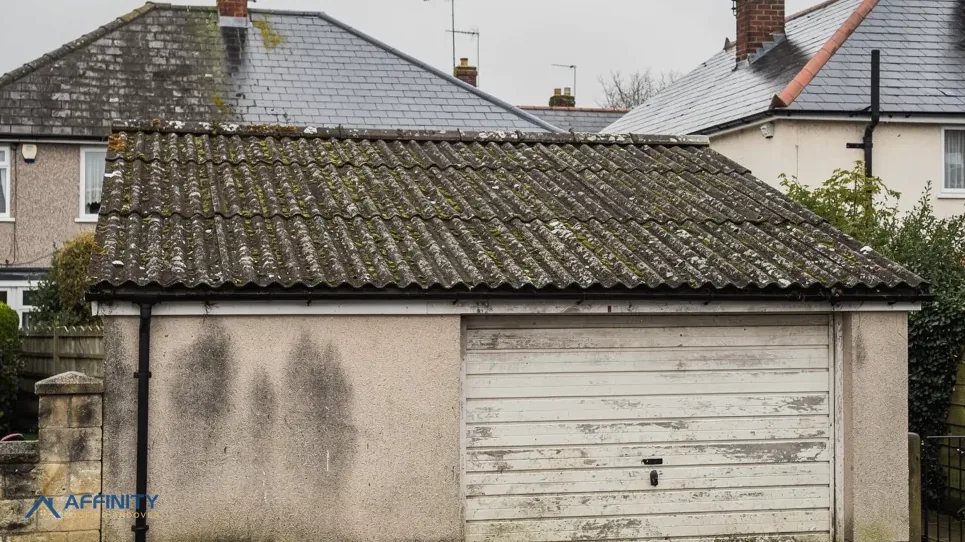
The bulk of it comes from the lowest courses of the roof. Water running down a slope carries bits of moss and a gritty residue with it, and the bottom row of tiles drains straight into the gutter. A moss mat on those courses sheds in every storm. Frost does the same job more slowly by loosening the mat's hold on the tile.
Treatment can make this worse for a while. When a biocide kills the moss, the dead material loosens over the following weeks and washes down the slope. That is the plan, and it is the reason the gutters are cleared again afterwards. If they are left packed, the dead moss will form a plug in the next downpour.
The roof also sheds the granular surface of ageing concrete tiles and the dust that settles on any roof. Add leaves from nearby trees, seeds, bird droppings and the occasional ball, and the gutter becomes a slow collecting tray. Shaded gutters stay damp, so the mix rots into a dense layer that holds water and grows its own plants. Seedlings of grass and sycamore in a gutter are a familiar sight.
What happens when the run overflows
A full gutter cannot carry the rain it was fitted to take. Water tops the front edge and runs down the fascia and the wall, or it falls to the ground along the whole length instead of leaving at the downpipe. Both outcomes cause harm over time.
Fascia and soffit boards soak and rot, paint blisters, and brickwork stays wet below the eaves. Splashback marks the lower wall. Where the gutter is badly out of line, water can run back behind it into the roof edge and the top of the wall, and that leads to damp patches inside. Brackets can fail under the weight of wet moss and mud, so a run sags and loses the fall that carries water to the outlet.
Brett Martin, a gutter manufacturer, gives a fall of 1 mm for every 600 mm of run. Once a gutter sags, standing water collects in the low spot and the moss grows faster there.
Our answer on whether moss can cause a roof leak explains how overflow becomes an indoor problem.
Clearing the gutter and treating the roof
The sequence matters. Clear the gutter first, working from the downpipe end outward so loosened debris does not slide into the outlet. Scoop it into a bucket instead of flushing it down the pipe, because a plug in the underground drain is a larger problem. Then run water along the gutter to prove that it flows freely and look at the joints and brackets as it passes.
Next, deal with the roof. If moss is still thick on the low courses, a treatment will stop fresh supplies arriving. After a treatment, clear the gutter once more when the dead growth has washed down, usually within a few weeks. Doing it once, before the roof is treated, leaves the job half done.
For a house with a conservatory or a long low roof, ladder access to the gutter can be awkward. A tower, a stable ladder with a stand-off or a gutter-vac pole may do the job. Never rest a ladder on the gutter itself, because it bends and cracks.
For a sense of scale, clearing a whole house's guttering has a typical UK range of £75 to £350, ex VAT, when a tradesperson does it (Which? cost survey, Nov 2025).
Keeping gutters clear afterwards
Prevention is a matter of reducing what falls and making sure what falls can leave. Trim branches that overhang the roof, check the gutter in autumn after the leaves have dropped and again in spring, and look at it during a heavy shower to see whether it overflows. A visible spill at one point suggests a blockage or a sag, and it is worth a closer look.
Gutter guards or mesh can reduce larger debris, but they are no substitute for checks, since fine grit and moss still build up and some guards trap material on top. If you use them, lift a section every so often to see what is underneath.
Repair is better than constant clearing when the gutter has lost its fall, has leaking joints or has worn out. A roofer who is clearing the run will see these faults and photograph them, and it may be cheaper to correct the line once than to clean the gutter repeatedly.
Our page on whether a roofer will clean gutters explains how this fits with a roof clean, and the roof cleaning and moss removal page covers the wider work.