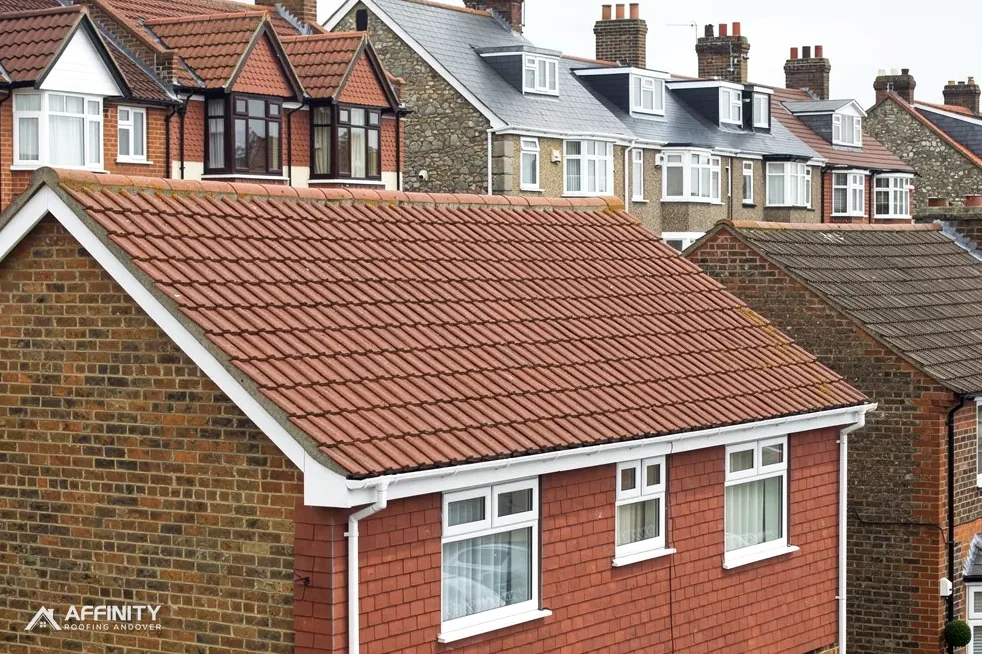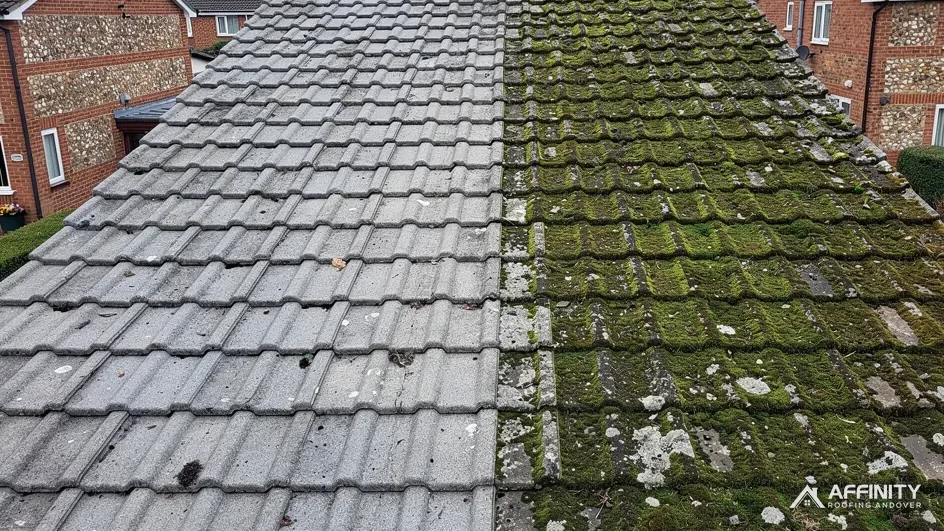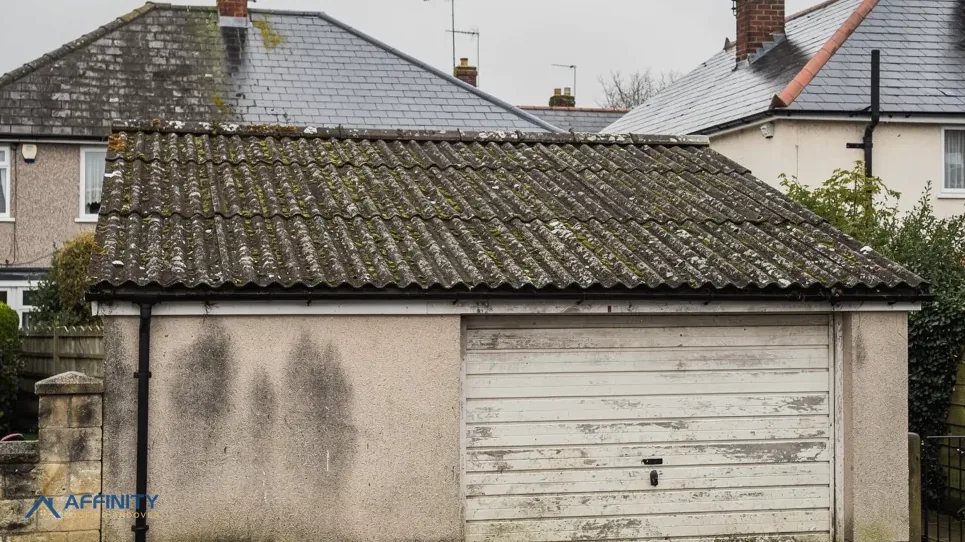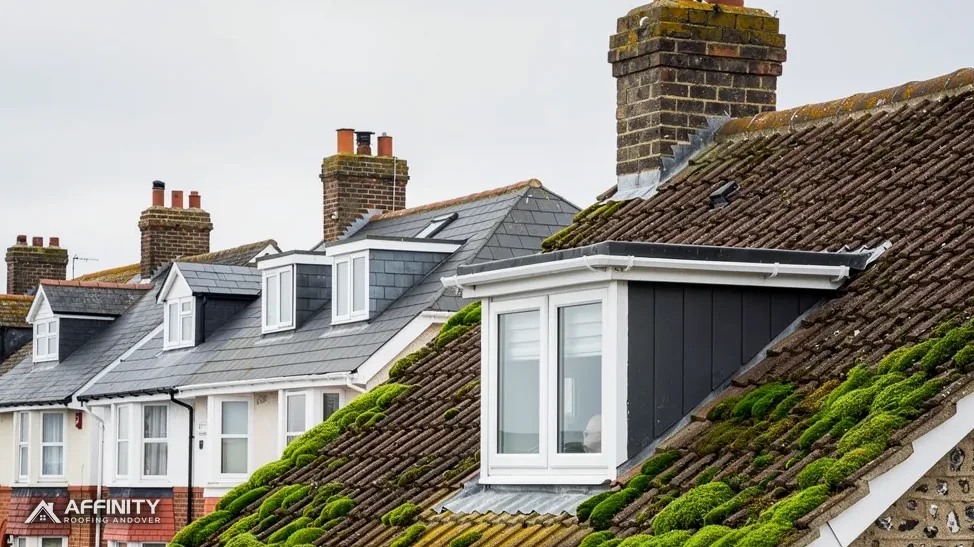
A clay tile roof is the part of the house that tends to look best as it ages. The colours mellow, lichen settles in patches and the courses take on the slight waves that come from handmade tiles hung on old timber. It is also a part owners may decide to clean, after moss has crept into the joints or a dark algae film has taken over a north-facing slope.
The cleaning method matters more on clay than on almost any other covering, because the thing being cleaned is also the thing keeping the rain out. A tile that loses its face or a nib, the small moulded lug that hangs it on the batten, cannot be put back. Marley, a major tile maker, advises against powerful jet washes, because a jet can damage the face of its tiles and slates and cut the roof's expected life by a wide margin.
Below we cover how clay differs, which methods are gentle enough, what to do about biocide products, how conservation rules fit in, and what a roofer should be checking while on your roof.
Why clay needs its own cleaning approach
Clay tiles are made by shaping wet clay and firing it hard in a kiln. Plain clay tiles are small, flat and slightly curved, laid in overlapping courses and held by nibs along the head of each tile. Pantiles, the S-shaped kind, interlock along their sides. Whatever the style, the weather-facing surface carries the colour and the glaze or texture, and that skin is what we need to protect.
A long life is the norm, not the promise
Marley reports that the BRE, the Building Research Establishment, sets a floor of 60 years for clay tile life, and it applies that figure to clay only. HomeBuilding puts clay at 60 to 80 years. Those are typical ranges, never promises, but they show that a clay roof you are cleaning today may already be old. An old tile has had decades of frost, sun and wind, and its surface is rougher and more brittle than a new one.
What damage looks like
Harsh cleaning leaves pale, scrubbed patches where the face has been stripped, chipped corners and cracked nibs that only show weeks later when a tile slips. Water forced up under the courses can also reach battens and underlay that were never built to get wet from below. For that reason, our pressure washing roof tiles guide explains how a jet wash can damage any tile, and clay raises the stakes.
The aim on a clay roof is to lift the growth and leave the tile surface exactly as found, with no scrubbed pale patches and no lost corners to show where the cleaner has been.
Gentle methods that suit old tiles
Roofers use a small set of methods on tiles, and most of them have a version that suits clay. We compare every method side by side in our roof cleaning methods guide. Here is how each applies to this covering.
Hand removal of moss
Thick moss in the joints and along the courses can be lifted by hand or with a soft tool. Done patiently, this removes the bulk of the growth without touching the tile face. It is slower than anything mechanical, and it means working across the roof carefully, from a roof ladder or from scaffolding, because walking on old clay can crack tiles under the foot. The slow pace is a feature: each tile is seen, handled and checked as the moss comes away.
Brushing with a soft brush
A soft brush working downwards, in the direction the water runs, shifts loose growth after it has been treated or has dried out. A stiff wire brush is the opposite of what clay needs, since it scores the face.
Low-pressure rinsing
Low-pressure water from a hose, used to carry debris away, is a different thing from a jet. The distinction matters, because the damage comes from force on the surface and from water driven sideways under the tile laps.
Treatment and patience
An approved biocide, applied by someone entitled to use it, kills moss and lichen where they sit, and the dead growth falls away over the following weeks. That route puts the least force on the tile, and it is covered in the section below.
No method will help a tile that has already lost its face. Those tiles are marked for replacement in the survey.
Biocide treatments: what a householder can and cannot use
Moss killer is a biocide, and biocides are regulated. Under Article 17(5) of the Biocidal Products Regulation, a product may be used only in line with the conditions attached to its authorisation. The HSE is plainer still: householders should never touch biocidal products meant only for professionals.
What the law says about products
COPR, the pesticides rules, adds that advertising, selling, supplying, keeping or using a product that has not been approved is an offence. A bottle bought online, a cleaner sold as a cure for roof algae, or a strong chemical decanted from a trade drum may not be a product anyone is allowed to put on a roof. The label gives the conditions of use. If the label says professional use only, that settles it for a householder.
Why this matters on clay
Harsh chemicals do not suit tiles, and there are practical reasons to take care with runoff. The product ends up in the gutters, downpipes and drains. Our guide to roof biocide treatments explains how the products work and why we treat them as a professional matter.
Questions to ask a cleaner
Ask what product will be used, whether it is approved for the use, and how run-off from the gutters will be managed. A cleaner who cannot give the product name has not answered the question. Ask too whether anyone will be walking on the tiles, what protects the gutters, and who deals with the dead growth once it drops off.
Written down, those answers should sit alongside the single total price, so you know what you are paying for before the day.
Conservation areas, listed homes and clay roofs
Many of the clay roofs around Andover and the Test valley sit on older homes. Some stand in conservation areas, and some are listed. Cleaning is not re-roofing, but the rules around the roof are worth knowing before anything is done to it.
What planning says about roof work
Class C of the permitted development rules normally covers re-covering a house roof, and Class C has no conservation area exclusion. Conservation areas, National Landscapes and National Parks are article 2(3) land, which removes permitted-development dormers but not re-roofing.
Listed homes
Listing does not remove those rights, but listed building consent is also needed for works touching the building's character. If your roof is listed, check with the planning team at your local planning authority before you change how the roof looks or weathers. For Andover addresses that means Test Valley Borough Council's planners.
Article 4 directions
An Article 4 direction lets a council take chosen permitted development rights away within a set area. Basingstoke and Deane says, of four of its town conservation areas with such directions, that original clay tiles and Welsh slate should be kept. Elsewhere, ask the council whether an Article 4 direction applies to your street.
A cleaning job that preserves the original clay is generally in sympathy with those aims, whereas a coating or a harsh clean that alters a tile's appearance is not. Cost should not tempt anyone to replace sound original tiles with a modern covering.
What a roofer should check while up there
Cleaning puts someone on or beside your roof for a few hours, and that is a chance to find faults before they leak. A good cleaner uses the visit as a survey, and a roofer does so by training.
Tiles and nibs
Cracked, slipped or missing tiles show up easily once the moss is gone. So do nibs that have snapped, leaving a tile resting on its neighbours. A slipped tile is one reason for a leak, and our roof problems found during cleaning guide lists what comes to light once growth is cleared.
Ridge and hip tiles
Clay ridge tiles are usually bedded in mortar. BS 5534, the code of practice for fixing slates and tiles, is not the law, but Marley notes that after its 2014 revision, mortar by itself could no longer be relied on to carry ridge and hip tiles. BS 8612 is the test for dry-fix systems. Cracked mortar or a loose ridge is worth recording whatever the covering.
Valleys, flashings and gutters
Lead flashings can be lifted or split, valley lines can silt up, and gutters often turn out to be blocked by what has come off the tiles. A cleaner who has photographed each of these has done you a real service, and the pictures give you something to act on.
Photographs and a written price
You should see the photographs of anything found, not just a verbal report at the door. We send photos with one written price for any repair, so you can decide what to do and when.
When cleaning is the wrong answer
There are clay roofs that should not be cleaned at all, and a roofer should be willing to say so.
Tiles that are already failing
A roof with many cracked, laminating or crumbling tiles is not helped by cleaning. Moss may be the one thing holding some of those pieces together, and removing it exposes the fault. In that case the sensible step is a survey, followed by a repair plan: replace the failed tiles, keep the sound ones, and treat the growth as a minor matter. Our roof repairs hub explains how those repairs run, and the roof cleaning and moss removal hub covers the cleaning side.
Roofs that are leaking or sagging
If the roof is leaking, sagging or shows daylight in the loft, the problem is below the tiles. Battens, underlay and fixings come first. The covering can be cleaned after the repair, but cleaning does not fix a failing structure.
Growth that does no harm
A light dusting of lichen on a sound clay roof can be left. Lichen is a slow-growing crust, and the cure can be rougher on the tile than the growth. If appearance is the only issue, a patient treatment is gentler than any mechanical clean.
The sensible order
Survey first, then repair, then decide what to clean. We would not recommend a coating or a deep clean ahead of that survey, because both can hide the very faults the survey exists to find. The cost of cleaning depends on the roof area, the access and the method, so it is priced as one total figure after we have seen the roof.