The short answer
A lead apron flashing is a single sheet of lead that covers the join between a roof slope and the wall or chimney face rising above it. It sits at the foot of a chimney stack or at the top of a lean-to roof, lying over the covering and turning up the wall, where the top edge is tucked into a chase. It stops rain from running behind the roof edge.
Where an apron goes
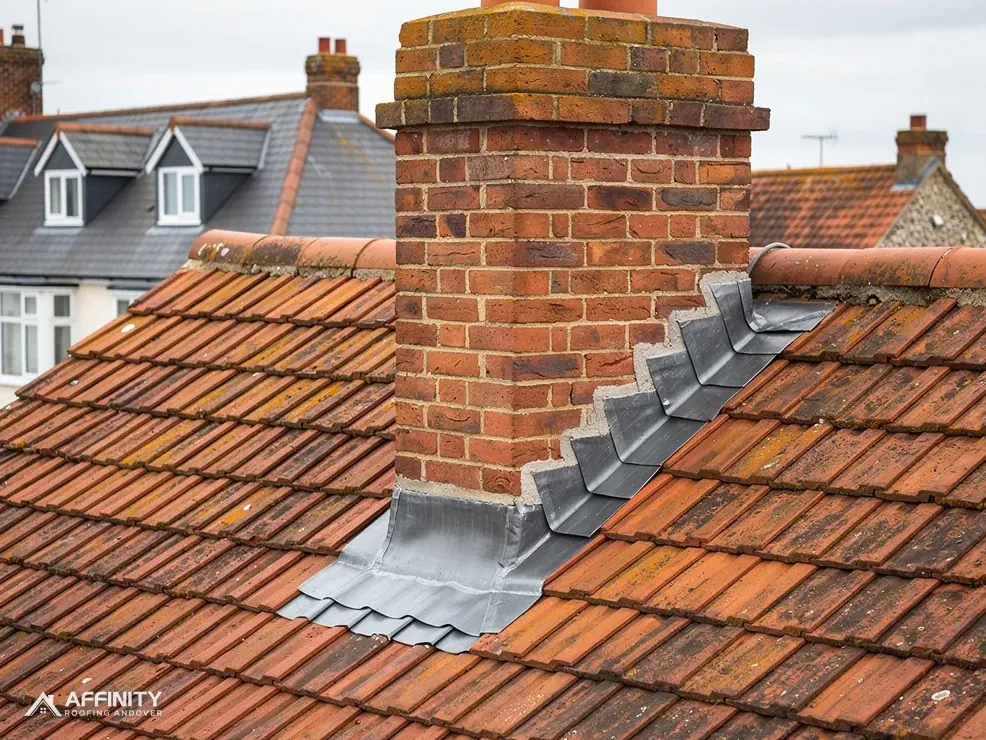
An apron is a flashing that lies flat across the front of a junction. On a chimney stack that rises through a pitched roof, the apron is the piece on the downhill face, below the stack. Water running down the wall of the chimney lands on it and is carried away over the tiles or slates.
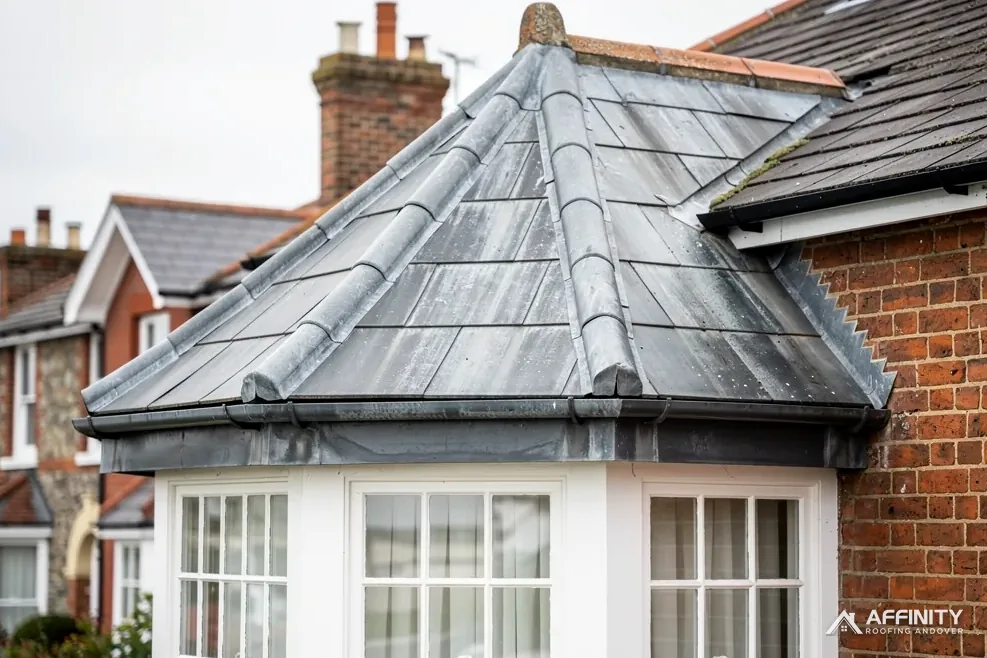
On a lean-to roof, such as a porch, extension or outbuilding built against a house wall, the apron closes the top edge of the roof where it meets the wall. The lower part of the sheet is dressed over the roof covering or a lead tray, and the top is turned up the wall and tucked into a chase.
It differs from the stepped flashings that run up the sides of a chimney, and from the back gutter behind it. All three pieces together make up the leadwork round a stack, as our guide to chimney lead flashing shows.
The apron is long and straight, so it takes the weather along its whole length, and it rewards a careful fitter. It is also the piece seen from the ground, which is why its finish and fit show quickly if they are poor.
How it is made and fixed
A fitter measures the width of the junction and cuts a sheet to suit, allowing for the lap over the covering below and the upstand against the wall. The top edge is tucked into the chase, a groove cut in the brickwork or mortar joint, and held with lead wedges. The chase is then pointed to keep rain out.
The lower edge lies over the tiles or slates, which are shaped to suit. The apron is held at the top and left free at the bottom, so the lead can move as it warms and cools. Over-fixing along the lower edge pins the sheet and leads to splits.
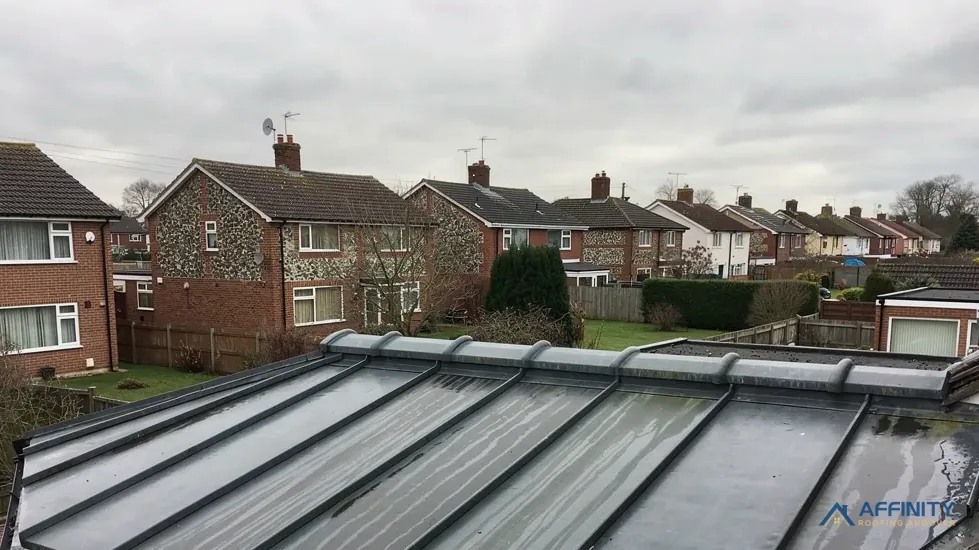
On some roofs, the apron laps over a lead soaker or a tray, and on a lean-to the sheet may continue as part of a flat or low-pitched roof covering. Each detail depends on the roof. Our answer on lead soakers explains the pieces that sit beneath.
The end result should sit tight to the wall at the top, lie flat on the covering and finish neatly at the ends, where it joins the stepped flashings.
Lead code for an apron
Royston Lead's cast lead brochure lists flashings under use B. For that use it names codes 4, 5 and 6, with code 3 reserved for soakers only. Code 4 is 1.80 mm thick and weighs 20.41 kg per square metre, and code 5 is 2.24 mm and 25.40 kg.
An apron is a flashing, so code 4 and above apply. The final choice depends on the length, the exposure and the position. A long apron on a tall chimney in an exposed spot suits a heavier sheet than a short one over a low porch.
Lead for roofs follows BS 6915, to which AD C refers. A fitter can explain which code they propose and why, and it should be stated in the quote. Our guide to code 4 versus code 5 lead sets out the difference in detail.
Thin lead is a common hidden cause of an apron that has creased, torn or lifted, because it cannot stand the movement of a long run.
How aprons fail
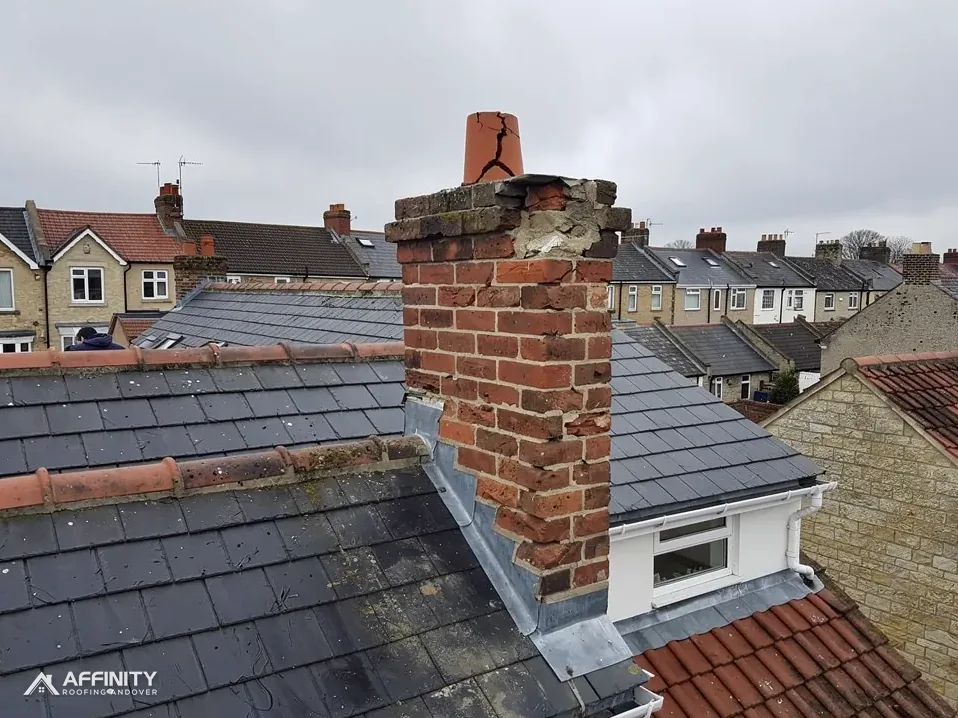
The signs are usually visible from a ladder or a photograph. Look for an apron standing off the wall at the top, cracks along folds or at corners, and gaps where it meets the stepped flashings. Staining on the wall below, or damp on the ceiling beneath, points to water getting past.
One cause is the chase. When the pointing crumbles, the top edge works loose and rain runs behind the lead. A second cause is thin or over-long lead splitting under movement. A third is a sealant repair that has hardened and cracked, leaving a line that looks like a fix and does nothing, as our guide to why sealant is not a lead repair explains.
Repair depends on the cause. If the metal is sound and the mortar has failed, the chase is raked out, the flashing wedged and the pointing renewed. Where the lead is cracked or too thin, a new apron is made and fitted. We photograph each stage so you see the result.
The lead roofing page lists the full service. The written price follows a survey.