The short answer
You can try, but lead flashing is awkward and the risks are real. The work is at height, beside a wall or chimney. Lead has to be dressed to a precise shape, and the joint chased into the brickwork has to shed water. A badly made flashing can leak worse than the old one, which is why the job usually goes to a roofer.
The height is the first problem
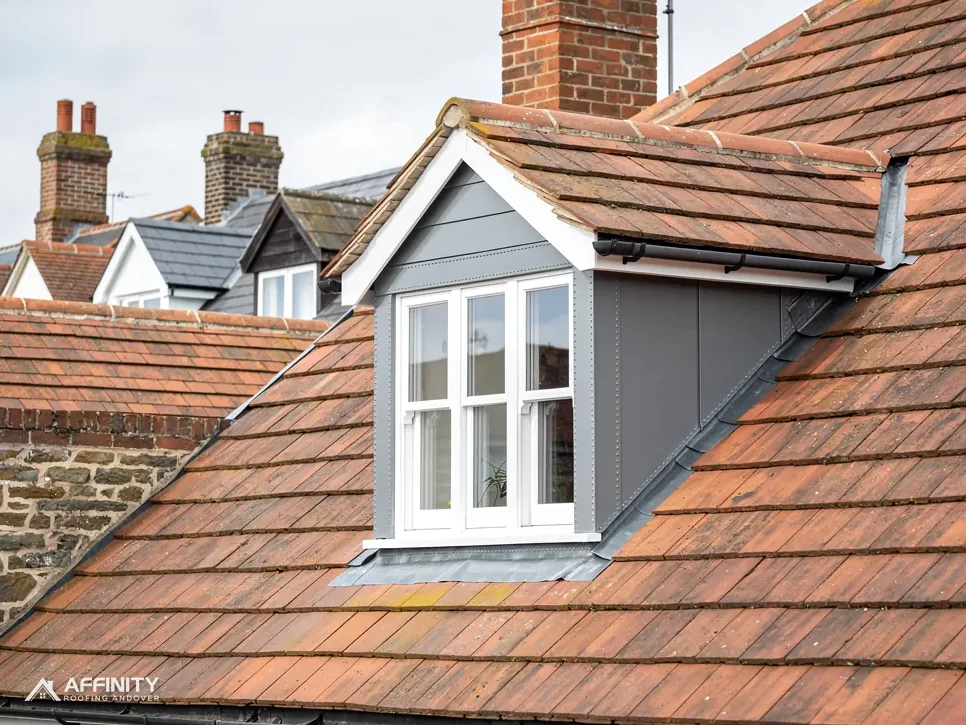
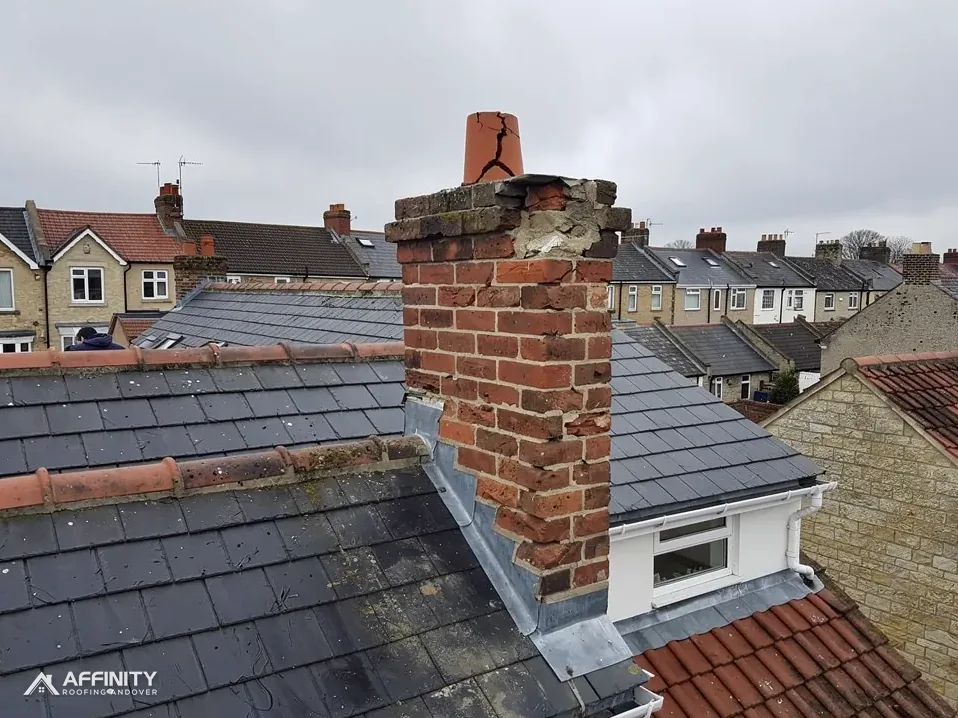
Flashings sit where the roof meets something else: a chimney, a side wall, a dormer cheek, a roof window. These junctions are rarely low. Reaching a chimney flashing means working on a pitched roof, often at the ridge end of the slope, with a stack beside you and nothing to catch a slip.
The roof is also hard to work on. Tiles move underfoot, and slates crack. Moss and algae make a damp slope slick, and a loose tile is easy to dislodge onto the path. A roof ladder with a ridge hook and boards to spread the weight is what roofers use, and the ladder against the eaves has to be tied and footed. Without the gear, the job is risky.
Scaffold is the safer way up for anything above a single storey, and it protects people below. Where a tower or scaffold would stand on the highway, permission from the highway authority comes first, which takes planning. Those are costs and delays a one-off DIY job rarely allows for. A repair that can be seen from the ground should be photographed from the ground first.
Dressing lead is a skill
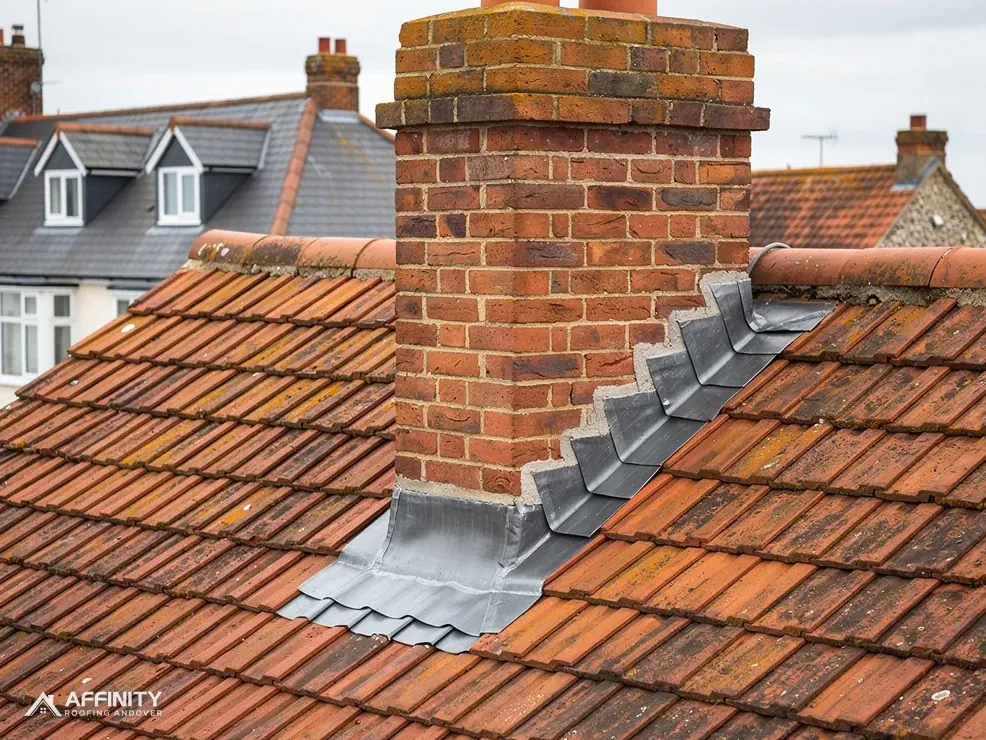
Lead looks easy because it is soft. That softness is also the trap. A sheet has to be cut to the right size, folded to follow the stepped line of a wall, tucked into a chase in the mortar and turned over the soakers beneath, without kinking or tearing. A crease in the wrong place becomes a crack in a year or two.
The thickness matters. Royston Lead's brochure lists code 4 (1.80 mm) and code 5 (2.24 mm) for flashings, and our page on code 4 versus code 5 explains the difference. Using a sheet that is too thin, or a roll sold for another purpose, shortens the life of the joint.
Then there is the wall. The groove has to be cut at the right height, cleaned and pointed with the lead wedged tight, and the line of the flashing must meet the soakers below. A flashing that is pushed into a gap and finished with sealant looks tidy for a season. After that, the sealant splits, and water gets behind. MyJobQuote gives over 80 years as the lower end for lead flashing, but that is for lead properly made.
What a DIY job can cost you
The cost of getting it wrong is not the price of the lead. A flashing that fails lets rain into the wall, the roof timbers or the ceiling. The damage is slow, often unseen for months, and the repair can be larger than the original fault. A job done with sealant can also hide a problem from the next surveyor, which makes the eventual repair harder.
It helps to know what a full job can cost. MyJobQuote's guide to replacing chimney leadwork, updated in September 2026, gives a typical UK range of £350 to £920, and says the scaffold needed affects the total. Set that beside the cost of a fall, an injury or a second repair.
There are smaller things you can safely do yourself. Clearing leaves from a gutter you can reach from a firm ladder, or checking the loft for damp stains after rain, helps a roofer to find the fault. Our guide to lead flashing coming away from a wall describes the signs you can spot from below.
For a temporary stop while you wait, move buckets and furniture clear and ring a roofer for a make-safe, rather than climbing out.
Signs it is time to ring a roofer
Call one as soon as you see a lifted or missing flashing, a ceiling stain beside a chimney or wall, or lead that has slipped down the slope. An early survey keeps a small repair small, because water has had less time to soak into the wall and timbers behind.
We start from the ground and then reach the roof safely, with ladder, tower or scaffold as the height demands. We photograph the lead, the chase, the soakers and the wall, so you can see what is wrong before any price is given. Often a flashing can be re-dressed or patched. When it cannot, we explain why, and what a new one involves: the old lead comes off, the chase is cleaned out and repointed where needed, and fresh lead is cut, fitted and wedged tight. The soakers beneath are checked at the same visit.
The price follows the number of junctions, the length of the flashing, the access and the state of the brickwork. The survey is followed by one written price, and the site is left tidy. For a wider look at leadwork, see the lead roofing hub.