The short answer
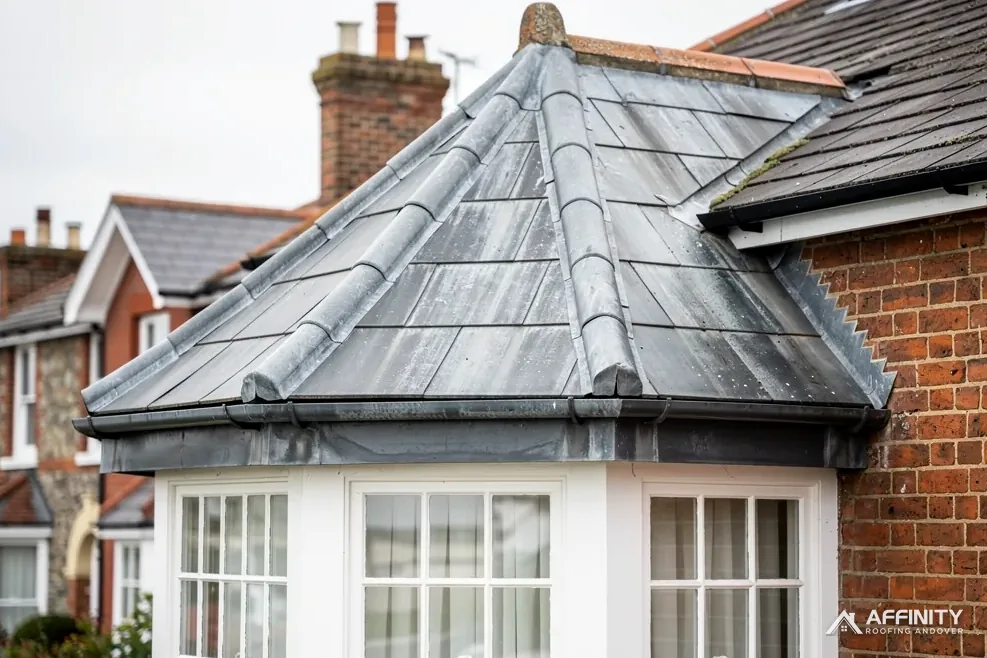
Lead soakers are small, flat pieces of sheet lead, folded into an L, that sit beneath each tile or slate course where a pitched roof meets a wall, chimney or dormer cheek. One half lies under the covering and the other turns up the wall. A cover flashing is dressed over the upturned edge. Together they carry rain down and away from the junction.
One soaker for each course
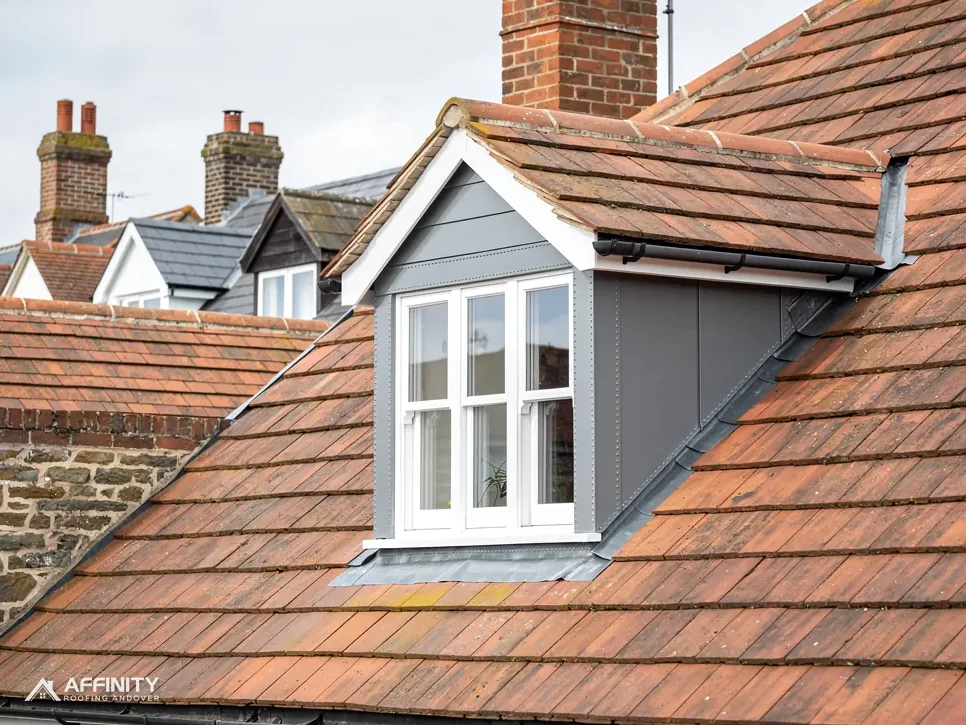
Where a pitched roof stops against a wall, the tiles or slates cannot simply butt up to the brickwork, because the gap would let water straight in. The job of the soaker is to bridge that gap, course by course.
Each soaker is a rectangle of lead folded along its length. One leg lies flat on the batten under the tile or slate, and the other leg turns up the face of the wall. The next soaker overlaps the one below, in the same way the tiles overlap each other, so water that reaches the wall is passed down from soaker to soaker until it leaves the roof at the gutter.
The size is set by the covering. A soaker has to be long enough to lap the one below and sit under the tile above, and it has to match the tile's thickness and shape. In Royston Lead's brochure, the thinnest listed sheet, code 3 at 1.32 mm, is for soakers alone, and code 4 at 1.80 mm is also offered for them. Our guide to code 3 lead explains why a thin gauge can suit a hidden piece.
Working with the cover flashing
A soaker does not work alone. The upturned leg against the wall is sealed by a second piece of lead, the cover flashing, which is stepped along the slope of the roof and tucked into a cut slot, or chase, in the brickwork. The flashing hangs over the top of the soaker, shielding the upturn from rain running down the wall.
This two-part arrangement is what lets the roof and the wall move a little without opening a gap. The soaker moves with the covering, the flashing moves with the wall, and the two slide against each other, which is the whole reason the junction is made of two parts. A bead of sealant between them would lock that movement, which is why a mastic fix tends to crack. Our page on step flashing shows the upper half of the detail.
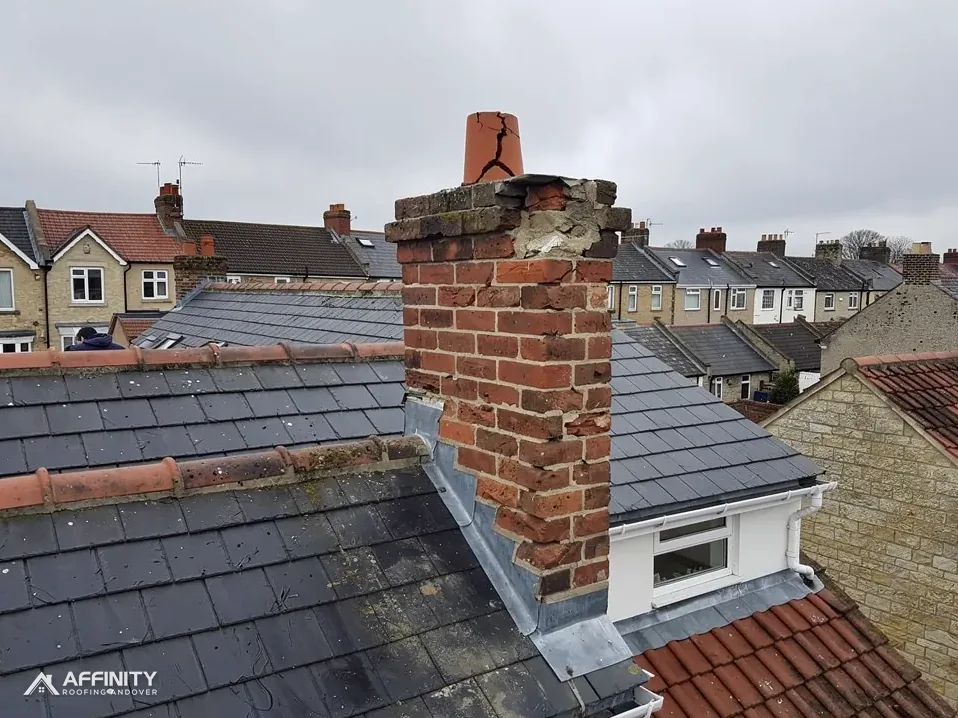
On a chimney the same pair of parts wraps all four sides, with the soakers on the side faces and an apron at the front and a back gutter behind. The way a chimney is flashed is described in our guide to chimney lead flashing.
How soaker leaks show up
Because soakers are hidden, the first sign of trouble is usually damp inside. A stain on the wall or ceiling next to a party wall, a chimney breast or a side extension points to the junction. The cause may be the flashing above, but the soaker below can be just as much to blame.
Soakers fail in a few ways. A tile that was replaced without lifting the one beside it can drag a soaker out of line. Lead that was cut too short leaves no lap. And where a roof was re-covered, the old soakers may have been reused, flattened or left out, so that the new tiles sit on a junction built for the old ones.
Old soakers that have worked loose can also slip down the slope, leaving the top course without cover. Sometimes a strip of felt or a smear of mortar has been put in their place, and neither will carry water for long.
From the garden you can see tile edges that have dropped, a flashing that has lifted or gaps where the wall meets the roof. Stay on the ground for this; a zoomed photo gives us plenty for a first opinion.
Renewing soakers and what it costs
Renewing soakers means lifting the tiles or slates along the edge of the roof, so it is done course by course. The old soakers come out, the battens are checked, new lead is cut to fit and the covering is relaid. The cover flashing is renewed or re-dressed at the same visit, since the two are built to match, and the chase in the brickwork is checked for sound mortar before the new lead is fixed.
That is why soakers are often renewed during a re-roof or a large repair, when the covering is off anyway. Doing them alone is possible, but it still means taking up tiles, so we weigh that cost against the age of the roof around them and tell you where a wider repair would make better sense.
Price follows the length of the wall edge, the covering, how many courses are lifted and how the roof is reached. A scaffold may be needed on a high wall, and a written total follows the survey. For the wider subject, our lead roofing hub is the place to begin.