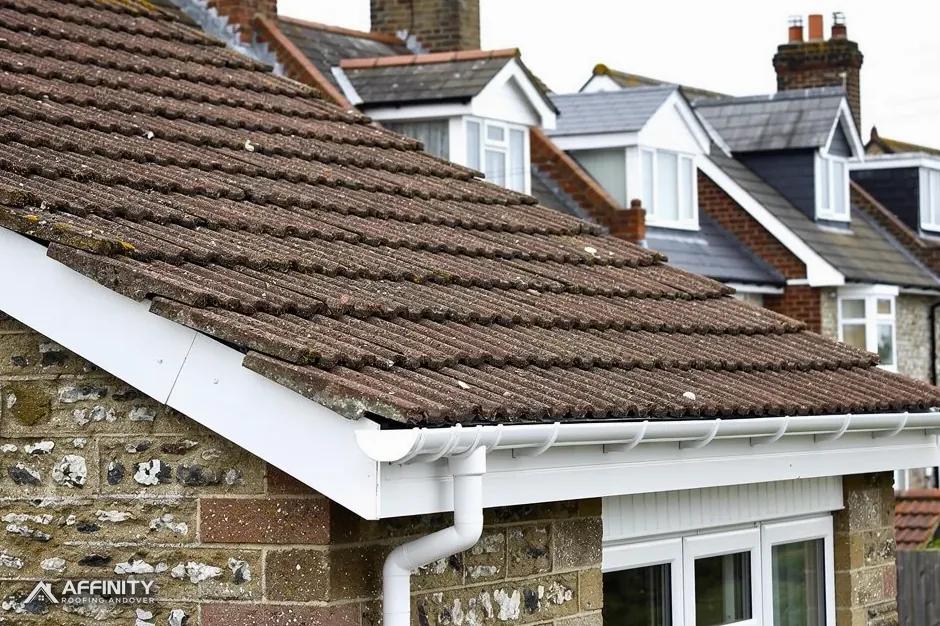
Fascias and soffits are the visible edge of a roof. The fascia is the board facing outward at the eaves, and the gutter hangs from it. The soffit runs underneath, filling the gap between the roof edge and the wall. Replacing them is one of the most common roofline jobs, and one of the hardest to price from a distance, because the work behind the boards is unknown until it is looked at.
The cost guides that publish figures tend to use a three-bedroom semi-detached house as their reference job, which makes them a fair starting point for an Andover owner of a similar house. They are national averages, not local prices, and not our prices. What they show is the order of magnitude, and the way a roofline job relates to gutters, which are usually done in the same visit.
Below are the published figures with their sources and dates, the reasons two similar houses can cost different amounts and what a written quote should tell you. Both new boards and new gutters are covered, since they are usually done in the same visit. Our guttering, soffits and fascias hub covers the whole roofline.
What the cost guides publish
Two sources give figures that bear directly on this job, and they cover different parts of it.
Capping fascias and soffits
For fitting new boards over the old fascias and soffits of a three-bedroom semi, MyJobQuote gives around £800 (Sep 2026). Capping means fixing new uPVC boards over the existing timber, so it is the lighter-touch option. It is an average from one national guide, so a house with difficult access or wet, loose timber can differ from it.
Replacing the gutters
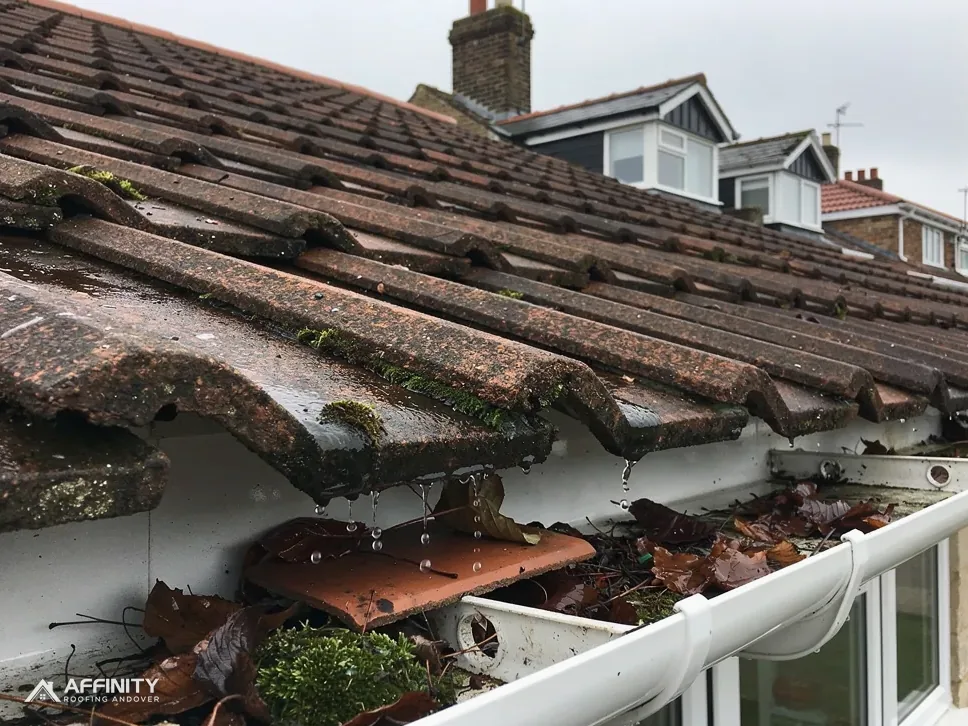
The same site gives gutter replacement as around £1,000 to £1,600 (Oct 2026). The two jobs overlap on a real house, because gutters hang from the fascia. When the board is renewed, the gutter comes down and goes back up or is replaced, so the sensible approach is to price them together.
Gutter clear-outs
Which? gives £75 to £350, ex VAT, for a clear-out of every gutter on a house (Nov 2025). That is maintenance, not replacement, but it shows the scale of the jobs on the roofline.
How to read the numbers
The capping figure is for boards only, over timber that is sound. Full replacement, with the old boards removed and the rafter ends checked, is a bigger job and costs more, and the amount depends on the house. The written quote after a survey is where the real number appears. Our guide to capping over or replacing fascias explains which suits which house.
Why the length of the roofline matters
Fascia and soffit are sold and fitted by the metre, and the metres add up quickly.
The perimeter
A three-bed semi has a roofline across the front, back and often along the gable ends if there are bargeboards. A detached house has more. Every extra metre means more board, more fixings, more trim and more time. Add a rear extension, a porch, a bay or a side garage and there are more runs, each with corners to cut and join.
Corners and details
Corners, returns and joints take longer than straight lengths. A plain rectangular roof is quicker to clad than one with many hips, valleys, bays and changes of level. Ornate or deep fascias take more material. Boards at gable ends, called bargeboards, follow the slope of the roof and need extra care. Our answer on bargeboard replacement covers that part.
Size of the house
Two storeys are different from three, or from a bungalow, and a bungalow's roofline is far quicker to reach. A bungalow's roofline can be reached from a ladder or a low platform. A tall house needs scaffold, which is a cost in its own right. The published figure for a three-bed semi is therefore a rough guide to scale, and a long or tall roofline will sit above it.
Scaffold and access
Scaffold weighs heavily in the price of roofline work, and it is also the part that is least visible in a finished job.
Why it is needed
Working at eaves height on a two-storey house from a ladder is neither safe nor practical for work that involves carrying boards, removing gutters and fixing along a long run. A tower or full scaffold gives a proper platform. How much is needed depends on the number of elevations and the heights involved.
What it adds
Scaffold has a cost to erect, hire and take down. What scaffold costs turns on how long the roofline is, how high it sits and how many weeks the job runs, so the figure sits in the written quote after the survey. Doing the roofline and gutters in the same visit shares that cost, which is another reason to combine the jobs.
Scaffold on the highway
Highways Act 1980 s169 requires a licence for scaffolding that obstructs a public highway, and in the Andover area the licensing body is the county. Hampshire County Council publishes its own fees, quoted per 2-week period, and its page puts the application with the scaffold contractor. Scaffold set up wholly on private land needs no such licence.
Why this matters to you
Hire and any licence fee both sit inside the single written total, so a quote silent about them has left something out. Our answer on scaffolding to replace fascias explains when it is needed.
What lies behind the old boards
The biggest uncertainty in any roofline quote is the timber you cannot see.
Rot at the rafter feet
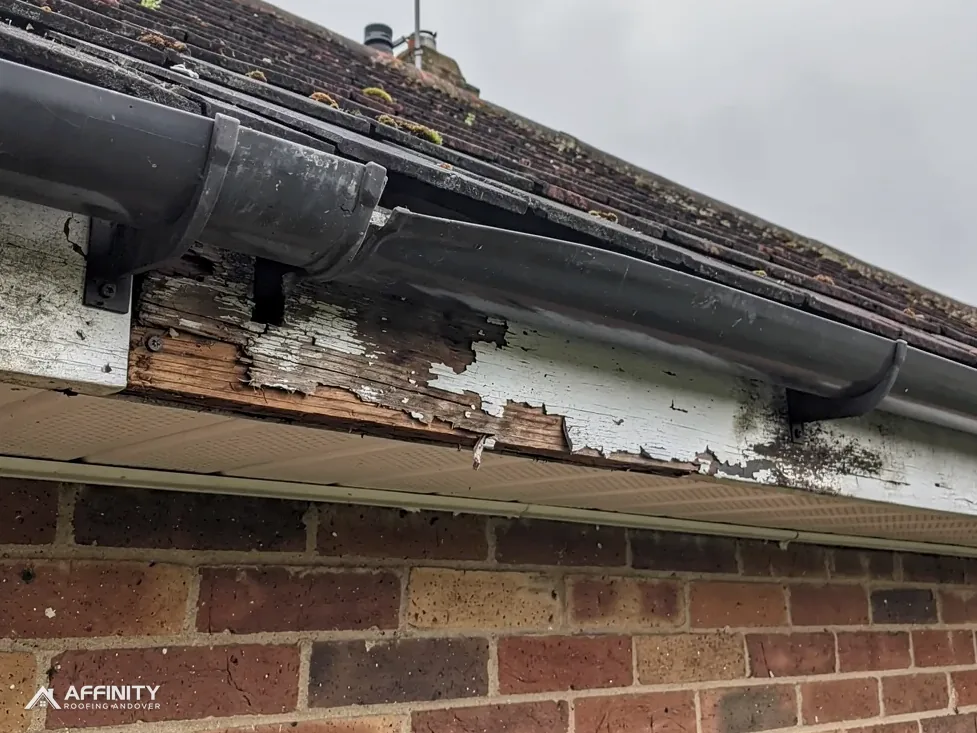
A leaking or overflowing gutter soaks the board and the rafter ends beneath it. If those have gone soft, they are cut out and repaired before any new board goes on. Capping over them hides the problem and puts the new boards on weak fixings. Our guide to rotten rafter feet explains how it happens. Repairs add to the cost, and the amount depends on how far the rot has spread.
Old soffits and asbestos
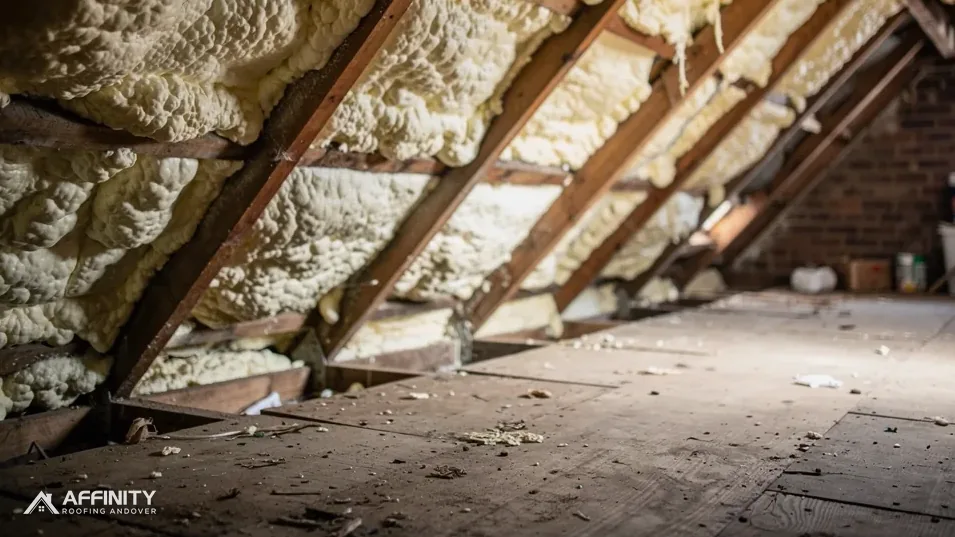
Old soffit boards on older homes can be asbestos insulating board, according to the HSE, and for a property from before 2000 it says to presume asbestos until a test shows otherwise. If the soffit has to be identified, tested and handled by a specialist, the price changes and the timetable lengthens. We raise this at the survey, before any price.
Ventilation and the loft
If the eaves have been blocked by insulation, or the old soffit has no vents, the new boards should be vented where the roof needs it. This is a matter of getting the detail right, not a large cost, but it needs to be in the quote.
The effect on the price
A house with sound timber and plain soffits sits near the published capping figure. A house with rot, an old board that needs testing and a ventilation problem will sit above it. Neither is a surprise if the survey explains it with photos.
Materials and finish
The board you choose changes the price, and so does what you want it to look like.
uPVC
Most modern roofline work uses uPVC, a rigid plastic, in white, black, grey or a woodgrain finish. It needs little maintenance beyond washing. A retailer, Plastic Centre, gives a range of 20 to 40 years for uPVC fascia boards, though as a seller it has an interest in the answer. Treat that as a rough guide and not a promise.
Timber
Painted timber is the traditional choice and suits listed buildings and conservation areas, but it needs repainting and watching for rot. It costs more to fit and keep than plastic, and the paint finish needs renewing every few years if it is to protect the wood. Our answer on how long uPVC fascias last goes into the lifespans.
Aluminium and composite
Aluminium and composite boards exist for particular looks and for buildings where a plastic board would be out of place. They cost more than standard uPVC.
Soffits and vents
Soffit boards can be plain or vented, and the vented type has a continuous strip or a row of vents. The choice depends on the roof's ventilation.
Colours
White is the standard. Darker colours and woodgrain finishes cost more and can fade differently in sun. In a conservation area, ask Test Valley Borough Council's planning team about materials and colours, and in a listed building ask about consent before anything is ordered.
Reading the quote you receive
A good quote makes the job clear. These are the things to look for in it.
What it should state
The boards being fitted, the material and colour, whether the old boards are capped over or removed, what happens to the gutters and downpipes, whether the soffit has vents, how the timber behind will be checked and repaired, whether scaffold is included and who deals with the waste. It should give one total, with nothing left to be added later.
VAT
The standard VAT rate is 20 per cent. Which? states that its cost figures exclude VAT, and other guides do not say, so ask whether the total you are quoted includes it.
How many to get
Citizens Advice suggests collecting at least 3 written quotes before you commit to one trader. Show each of them the same photos of the roofline.
Warning signs
A very low figure with no description of what is included, a refusal to say whether the timber will be checked, or no mention of asbestos on an older house.
How we price
The survey covers the roofline and the boards, with photos of what is found. The price that follows is one written total for the recommended work, which covers boards, gutters if they are included, scaffold and waste. If the work behind the boards turns out to differ from what we found, we tell you before anything extra is done.
Ask for the photos of the timber behind the old boards. They are the best evidence of what you are paying for.