The short answer
The two guides we use disagree. HomeBuilding gives EPDM a typical life of 25 to 30 years, while Less gives 30 to 50 years. Both are typical ranges, not promises. The details around the rubber sheet can fail before the sheet itself. Seams, upstands, corners and the deck beneath decide how much of the range a real roof reaches.
Two sources, two ranges
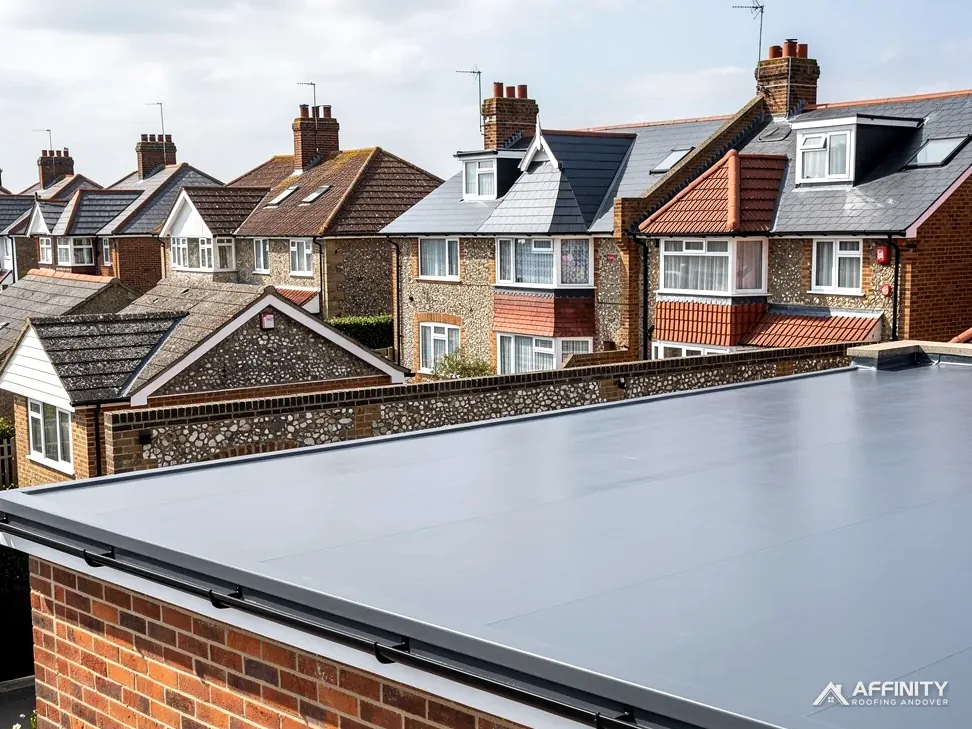
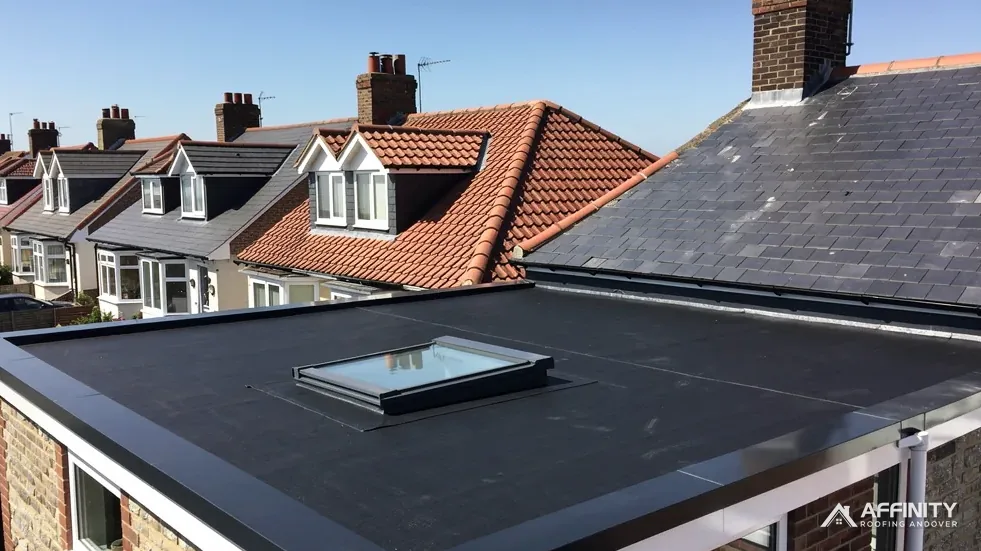
EPDM is a synthetic rubber membrane, usually rolled out as one large sheet and bonded to a deck. Its flexibility and clean finish have made it a common choice for flat roofs on extensions, garages and outbuildings.
HomeBuilding & Renovating, in a guide last updated on 30 September 2025, gives EPDM a typical life of 25 to 30 years. Less, in a flat roof cost guide updated on 27 October 2026, gives 30 to 50 years. The ranges overlap at 30, and differ widely above it.
Why the gap? Published lives rest on different assumptions, such as the quality of installation, the thickness of the membrane, the exposure and whether the roof is maintained. A cautious figure suits a general reader. A higher one describes a good roof in good conditions.
Read both as typical ranges, and avoid taking the top figure as an expectation. A lifespan is not a warranty, and a roof can fall short of its range or exceed it. A maker's own claim for a product is a sales statement, so the survey of the actual roof counts for more.
For comparison, the same guides give GRP 25 to 30 or 25 to 40 years and felt 10 to 15 or 10 to 20. Our GRP roof lifespan answer covers fibreglass.
Why the sheet is rarely what fails
A well-laid EPDM sheet resists sun, frost and ageing better than many coverings, and in the middle of a roof it can look almost unchanged after many years. The trouble spots lie elsewhere.
Seams are one. Where two sheets are joined, the bond depends on adhesive or tape and on the cleanliness of the surfaces when they were stuck. A poor seam can open years in.
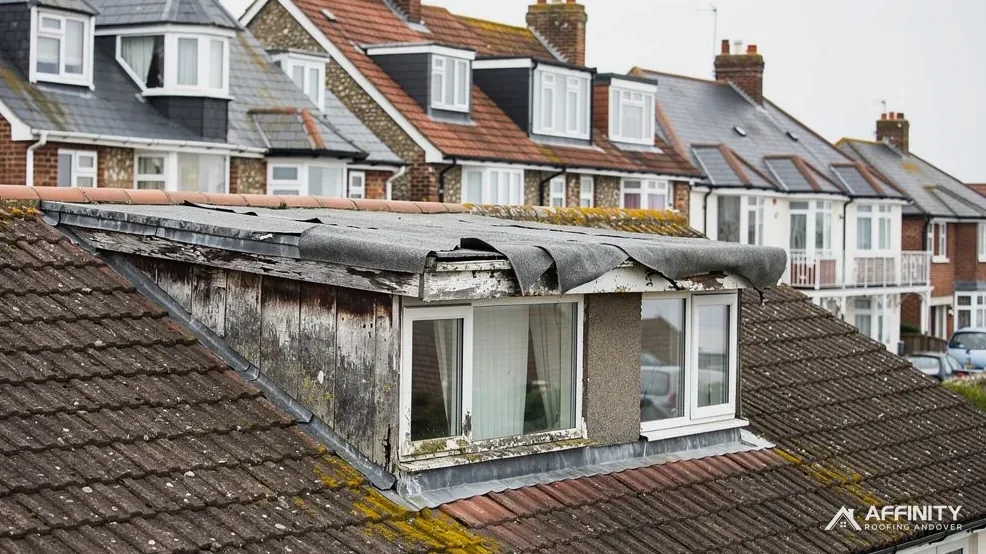
Upstands and corners are another. The rubber is bonded up a wall and held at the top with trim or flashing. Preformed corners and collars around pipes are where improvised details tend to fail. Edges, where the sheet fixes under a drip trim, take wind and weather.
The deck is a third factor. Rubber is laid over timber, and if the timber rots, the roof sags and the sheet fails. A roof that ponds will carry water for days, which is a load on the deck and on every detail. Our minimum fall answer explains how falls prevent that.
Damage from outside counts too: foot traffic, fallen branches, a tool dropped on the surface.
Reading the signs on your own roof
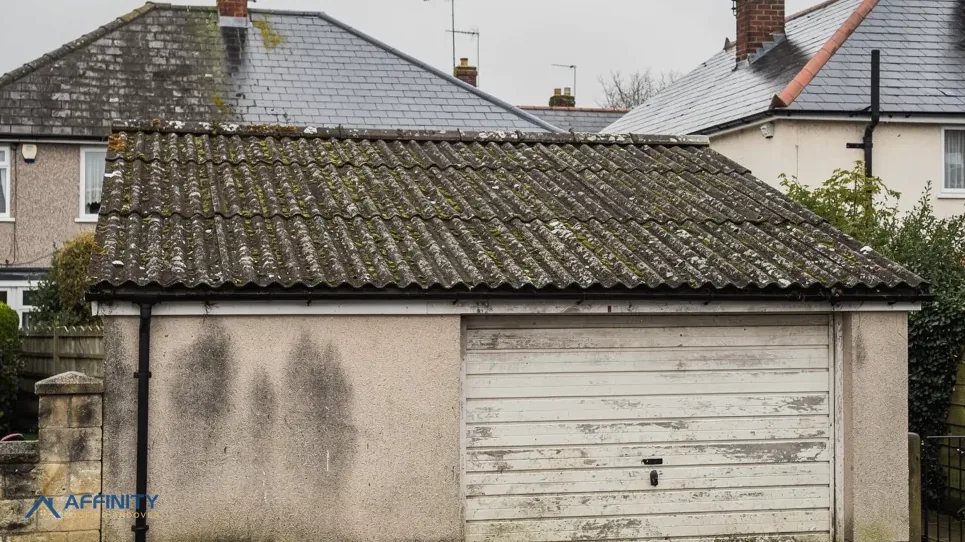
Age gives a guide, and condition gives the verdict. For a rubber roof, signs of a healthy sheet include a supple surface, edges still stuck down and seams tight. Signs of trouble include cracking or crazing in the rubber, a sheet shrunk back from the edges, lifted seam tape, bubbles under the surface and water that stays on the roof for days.
Inside, a ceiling stain that returns after a dry spell is a clue that water is getting into the build-up. A soft spot underfoot, or a roof that has sagged, points to the deck.
A roof within its published range and showing none of these signs can be left with routine care, as our flat roof maintenance answer explains. A roof beyond 30 years with failing seams is a candidate for a planned replacement, and one with a single fault is a candidate for repair, covered in our EPDM roof repair answer.
When you ask a roofer to assess the roof, ask for photographs of the seams, the corners and the edges. They tell you more about its remaining life than the age of the building.
Cost, and planning a replacement
On cost, MyJobQuote (October 2026) shows around £60 per square metre for EPDM and around £1,050 for an average rubber roof, while HomeBuilding's supply-only figure is £105 per square metre (September 2025). Read them as context only: they are typical UK numbers and cannot price your roof.
Area, access, deck condition, the number of details and whether insulation is added all set your price. A replacement also brings the insulation question with it, because Approved Document L treats a renewed waterproof layer as renovation. Our flat roof insulation answer explains.
If you are planning ahead, a roof approaching 25 years is worth surveying. Early warning lets you set money aside, choose a time of year that suits the work and ask for the deck to be checked while a repair is still an option. A roof surveyed at 25 and found sound can simply be put back on a yearly check. A written report with photographs lets you budget, and it shows whether a repair can buy a few more years.
The flat roofing page lists the other coverings. After a survey the quote arrives written down, as one total for the work agreed.