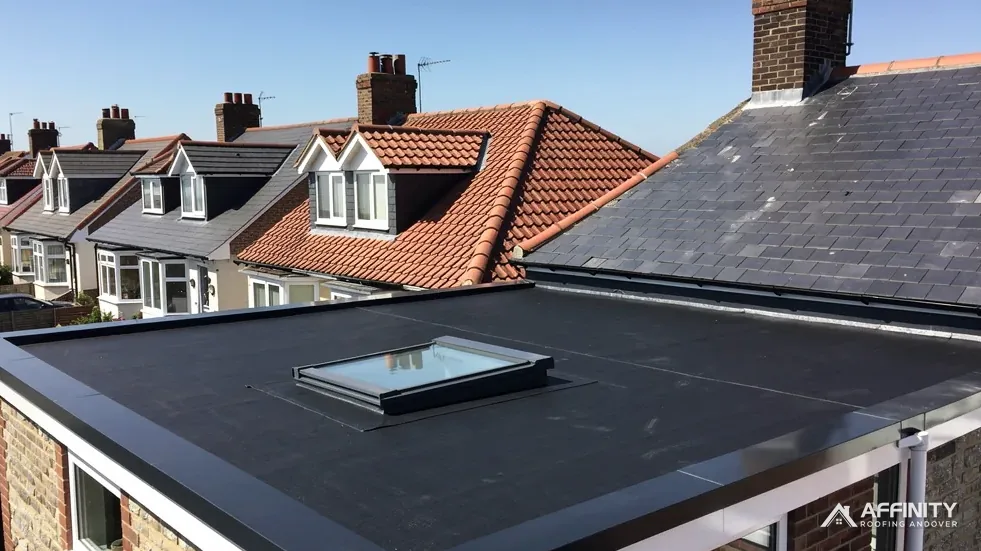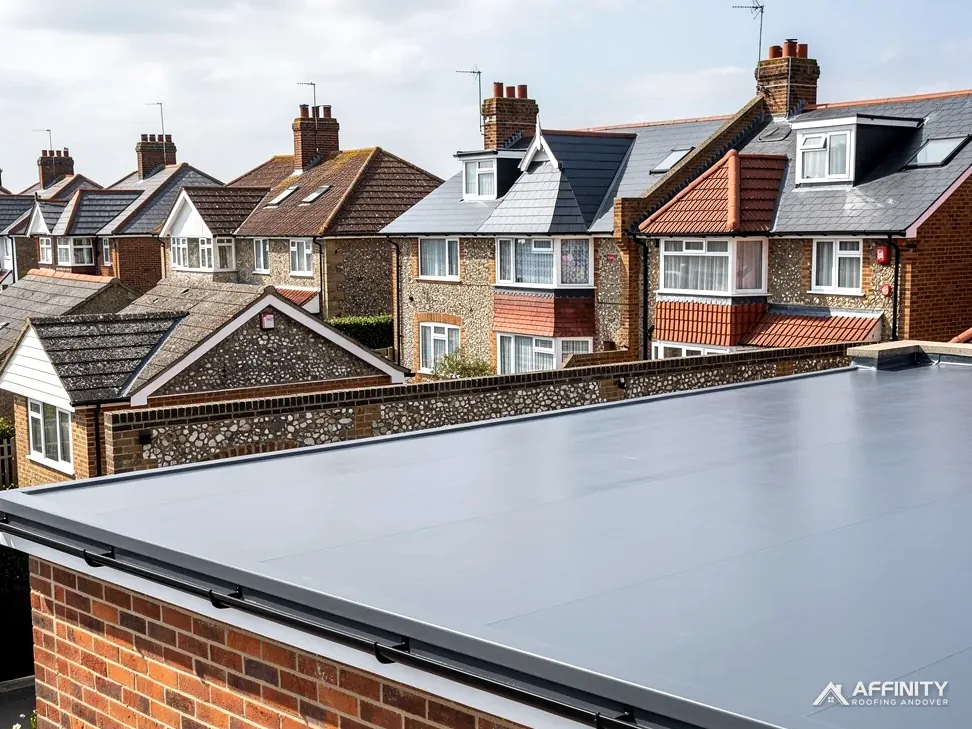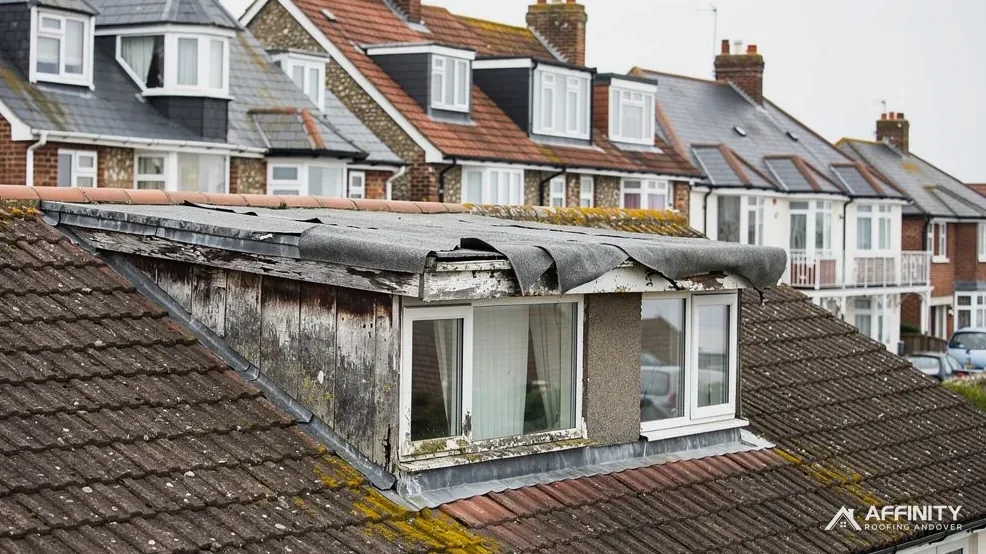
Rain that lands on a flat roof should run to an outlet or a gutter and leave. A thin film on the surface is normal for an hour or two. A pool that is still there when the sun has come out, or that has left a tide mark of dirt, is telling you the roof is not draining as it should.
People often treat a puddle as a cosmetic matter, since the covering is waterproof and nothing has come through. That is a reasonable first thought, and sometimes it is right. But a pool is also a symptom. It can mean the slope was never enough, the deck has sagged, an outlet is blocked or sits too high, or the covering has bulged. Each of those has its own consequences and its own fix.
This guide explains what causes ponding, how to read the pattern, when standing water matters for the life of the covering and why the lasting repair addresses the fall and not just the puddle. It belongs to our flat roofing service and is written for owners who can see a pool from a window or a ladder.
What ponding looks like and what it tells you
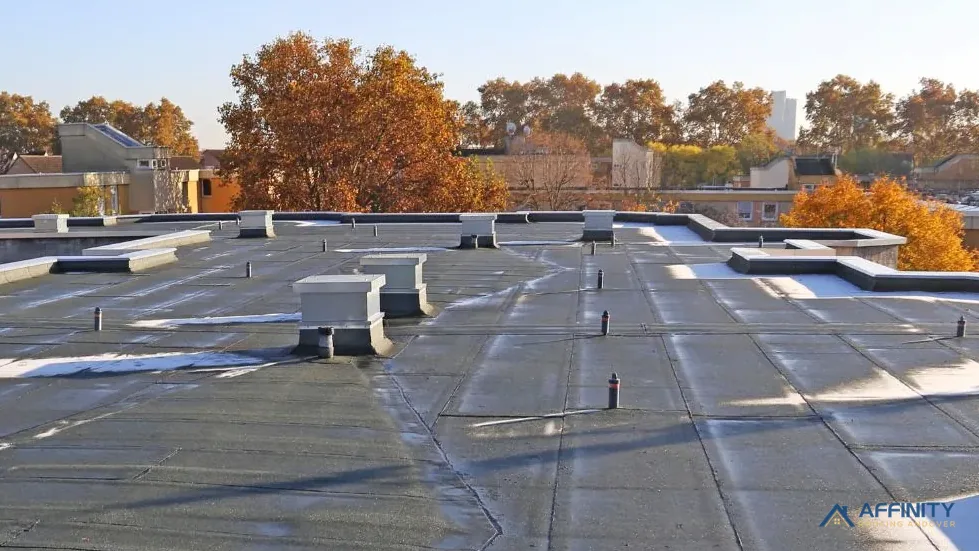
Look at a flat roof a day after rain. A dry, evenly weathered surface suggests water drains well. Shaded patches, green algae in a shallow depression and a ring of dirt marking where a pool once stood are signs of a place where water lingers.
Where the pool sits
The position of a pool is a clue. A pool beside an outlet suggests the outlet is too high or blocked. A pool in the middle of the roof suggests the deck has sagged between supports. A pool along one edge suggests the fall runs the wrong way or the gutter is set too high. A pool at a wall suggests water is being held against an upstand, which is the worst place for it.
Size and shape
A broad, shallow pool across a large area points to an overall lack of fall. A deep, narrow one points to a local dip, such as a soft board or a sagging joist. A pool that shifts with the season may reflect timber movement.
What it is not
A pool is not the same as a leak. A roof can pond for years without letting water through, and a roof can leak with no pool at all. Ponding makes a leak more likely at weak points, because water that sits there has more time to soak through.
Photographs help
Photograph the pool from a window a day after rain, with a fixed object for scale. Send it to us, and note the date of the last rain.
Falls, outlets and sagging decks
Four faults account for nearly every pool. They can occur together.
Too little fall
Every flat roof is meant to slope, and the slope is called the fall. BS 6229:2025 asks for a finished fall of at least 1:80 over the main roof and in internal gutters, and IKO advises designing for 1:40. If the roof was built flatter than that, water has no reason to move. Some older roofs were built almost level, and many were laid to a fall that has since been lost.
Fall in the wrong direction
If the deck was cut to fall away from the outlet, or the outlet was fitted at the high side, water collects at the low point instead. This is a design fault, not a wear fault, and it needs the structure changed.
A blocked or high outlet
An outlet with a leaf blocking it, or one set above the surface of the covering, leaves a pool around it. Our answer on what happens if a flat roof outlet is blocked shows the consequences.
Deck sag
Boards and joists carry the weight of the roof and anything that sits on it. If they are undersized, wet or rotten, they bow. The covering follows the deck, and the dip holds water, which adds weight, which makes the dip deeper. That loop is why sag tends to worsen.
Measuring the fall without climbing up
You can learn a lot about a fall without going on the roof. Do not walk on a flat roof you have not checked, because a soft deck or a brittle covering can give way.
From a window or a ladder
Look along the surface from a low angle, ideally from an upstairs window. A dip shows as a change in the reflection of the sky. After rain, the wet patches map the low points. If you have access to the roof edge from a ladder, look along the line of the gutter for a sag or a reversed slope.
What we measure
On a survey, we use a long straight edge and a digital level to read the slope across the roof, and we mark the low points. That tells us how much fall there is and where it runs. We also check how far the outlet sits below the surface.
The numbers in context
A fall of 1:80 is about 12.5 mm over a metre. On a roof three metres across, that is under 40 mm of drop, which is not much to see. Rainwater gutters follow a different rule, and Brett Martin gives 1mm for every 600mm for a gutter fall. These are small amounts, which is why small errors in laying matter.
Why the standard is for membranes
BS 6229 covers flexible-membrane flat roofs only and not lead. Lead follows BS 6915, as Approved Document C refers.
Our answer on the minimum fall on a flat roof covers the figures in detail.
When ponding shortens a covering's life
Standing water is not always a disaster, and it is not always harmless. How much it matters depends on the covering, how long the water stays and what else is happening.
Published lives
HomeBuilding gives EPDM 25-30 years and Less gives 30 to 50, GRP 25-30 years and 25 to 40, and felt 10-15 years and 10 to 20. These are typical lives and not promises, and a roof that ponds is likely to be at the lower end, because water, debris and algae work on the surface for longer.
What water does to each
Felt can blister and split where water sits and the sun heats it. GRP can craze and crack where it is held wet and the deck moves. EPDM is usually more tolerant of a shallow pool, though the seams and laps are weaker points. Check the covering maker's installation guidance, since some set limits on standing water for their products.
Debris and algae
A pool collects silt, leaves and bird droppings. As it dries it leaves a film that grows algae and moss, which hold more water. That cycle can slowly break down the surface and clog the outlet.
The edges
The risk is greatest at upstands and laps, where water sits against a joint. A pool at a wall can seep behind the membrane. Our answer on what happens if the flat roof decking is rotten covers the worst outcome.
Fix the fall, not just the puddle
It is tempting to patch a hollow, drill a hole or smear a coat over a puddle. Those moves rarely last, because the water comes back to the same place.
Why quick fixes fail
A coating on a hollow gives a smooth finish and the same hollow. A hole drilled at a low point lets water into the structure. Extra felt layered to fill a dip adds weight to a deck that is already sagging. None of them changes the slope, and the slope is the cause.
What puts the fall right
On a replacement, a new fall can be made with tapered insulation boards, which are cut so each board slopes, or with firring pieces, tapered timber strips fixed on top of the joists. Outlets can be moved or added at the low points. If the deck has sagged, the boards or joists are renewed or supported. A guide to whether to repair or replace a flat roof helps with the decision.
When a repair is enough
A small, shallow pool on a sound roof with a clean outlet may need nothing but regular clearing. A blocked outlet can be rodded and cleaned. A local dip over a soft board can sometimes be put right by replacing the board.
What follows
When the fall has been fixed, the covering drains, and the life it was built for has a chance to run its course. The Part L renovation rules may apply to a new covering, which we explain on the survey.
Survey, access and what drives the price
A survey for a ponding roof starts by listening to when the pool appears and how long it stays. We then look at the covering, outlets, gutters and edges from above and the ceilings and walls below for signs of damp.
On the day
We take level readings across the roof, press the deck where we can reach it safely, note the type and condition of the covering and photograph each pool. We check whether an overlay is possible or whether the roof needs stripping. A short answer on whether a new flat roof can go over the old one explains when that works.
Repair or replace
You are given the findings in plain words with photographs, and an honest view of whether a repair will hold. If the fall cannot be put right without stripping, we tell you.
What drives the price
Roof area, the covering chosen, the work needed to correct the fall, how sound the deck is, how many outlets there are and how the roof is reached all play a part. A pool that comes from a sagging deck costs more to fix than one from a blocked outlet. Our price is written once the survey is done.
Where to begin
Photograph the pool from a window a day after rain and send it with the date of the last rainfall.
Looking after the result
After the work, a quick check of the outlet each autumn and after any storm keeps the roof draining as designed. Leaves block outlets, and a small roof with trees nearby needs looking at more often. Walk on the roof as little as possible, and use boards when you must.