The short answer
Keep water moving, keep debris off, and look at the roof once a year. Clear leaves and silt from outlets and gutters, check that upstands and flashings are tight, and watch for splits, blisters and ponding that lingers after rain. Do these from a safe position and leave anything on the roof surface to a roofer. Small faults caught early are cheap to put right.
Outlets, gutters and debris
The single most useful habit is keeping the way out for water open. A flat roof relies on gentle falls to push rain towards an outlet or gutter, and if that outlet is blocked, water builds up and gets in at any weakness. Our answer on a blocked flat roof outlet covers the consequences.
Leaves, moss, silt and the odd tennis ball collect around outlets, especially beneath overhanging trees. Clear them by hand or with a scoop, wearing gloves, and do it after autumn leaf-fall and again in spring. A leaf guard over the outlet helps, but it too needs checking.
Gutters on flat roofs, including internal ones, need the same care. Brett Martin's guidance on fall for rainwater guttering is 1 mm for every 600 mm, and a gutter that has sagged out of line will hold water instead of passing it on.
Debris on the roof surface should go too. Rotting leaves keep the covering wet, and grit can grind into it underfoot. A soft broom will do for a small roof.
If you cannot reach the roof from a safe position, do not climb up. A roofer can clear outlets as part of a visit, and Which? lists clearing gutters front and back at £75 to £350, excluding VAT (November 2025).
Upstands, flashings and seams
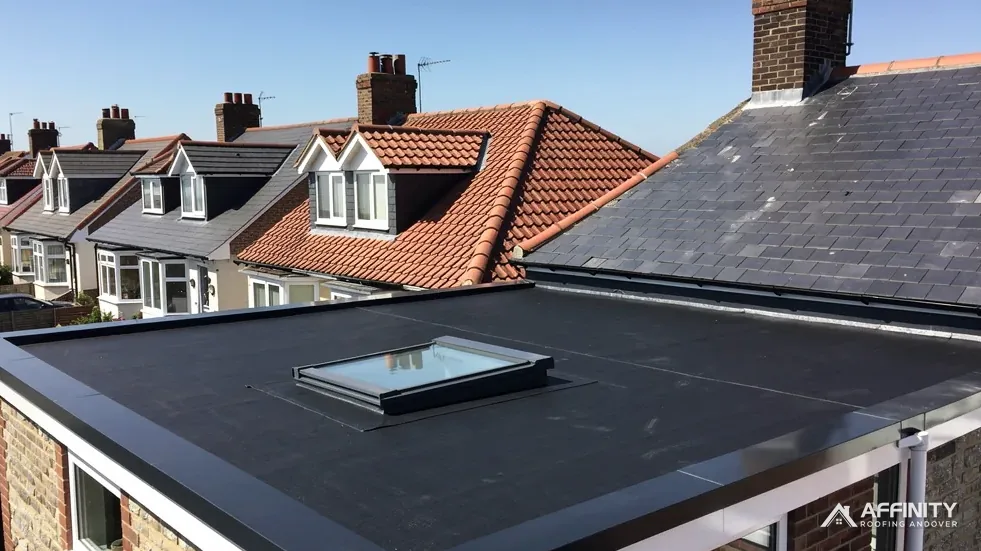
The edges are where flat roofs fail. An upstand is the vertical turn-up where the covering meets a wall, chimney or rooflight, and the flashing above it keeps water out of the top edge. Look for flashings that have lifted, sealant that has cracked or pulled away, and mortar that has fallen from the joint it was bedded in.
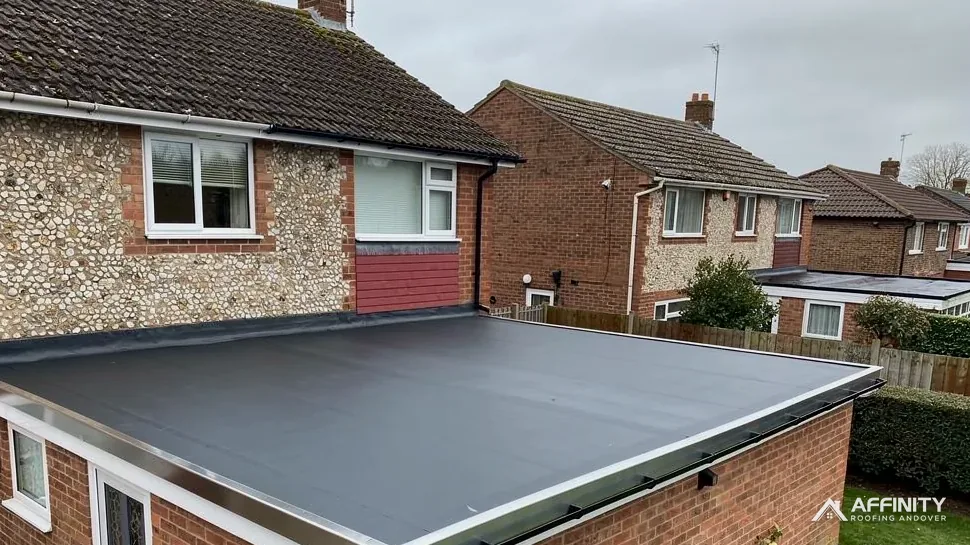
Seams between sheets are the next. On felt, check that the laps are still stuck down and have not opened. On EPDM, look for tape or adhesive at joins that has lifted or bubbled. On GRP, look for hairline cracks along edges and where the roof meets the wall.
Penetrations such as pipes, vents and aerial mounts deserve a glance too. Any collar or seal around them can perish.
Lead flashings on these roofs follow BS 6915 under Approved Document C, and well-fitted lead can last for over 80 years. MyJobQuote (September 2026) gives that as a lower bound. If you find a flashing that is loose, photograph it and have it seen to before the next wet spell.
The same goes for the felt or membrane at the edge. A lifted corner is an invitation for wind and rain, and the repair is cheap compared to the damage that follows.
A yearly look, and what to watch for
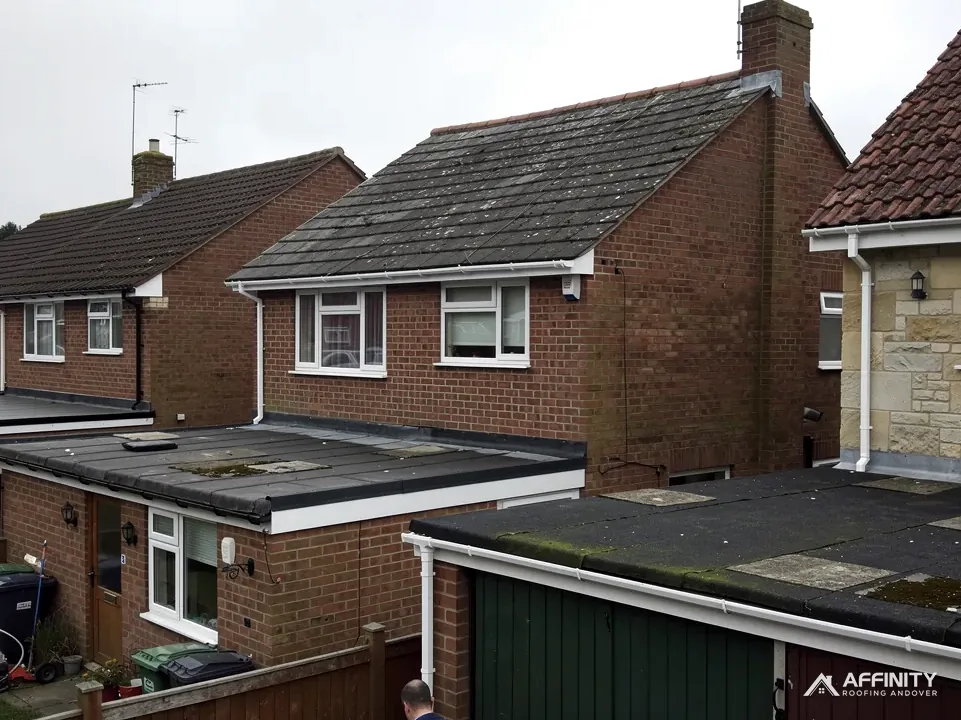
Pick a dry day once a year, and ideally again after a hard winter. From a window or a ladder at the edge, look across the surface. Standing water that is still there a couple of days after rain is a warning, and our answer on the minimum fall on a flat roof explains why it matters.
Note blisters, splits, crazing, bare patches and moss. Check the ceiling below for new stains and the loft or void for damp, and smell for mustiness. A pattern of small faults is more informative than any one of them.
Take photographs with a date, and keep them. A set of yearly pictures shows how fast the roof is ageing and gives a roofer something to compare. It also helps with an insurance claim if damage ever needs proving.
Avoid walking on the roof more than you must. Foot traffic scuffs the surface, and some coverings are more tolerant than others, as our answer on walking on a flat roof explains.
Do not use a pressure washer on the covering, and do not apply paints or coatings without checking what they are for.
When to call a roofer
Call when you see a split, a blister that is growing, a lifted flashing, water that will not drain, or a stain inside that returns. Do not wait for a leak. Repairs on a young, sound roof are modest, and a repair on a failing one buys time but not much more.
Age gives a guide. HomeBuilding gives felt 10 to 15 years, EPDM and GRP 25 to 30 years each. Less gives felt 10 to 20 years, EPDM 30 to 50 years and GRP 25 to 40 years. A roof inside the range with no sign of trouble can be left, and one at the far end of it, or past it, needs closer watching.
A survey can also give you a maintenance picture. We report what we see, photograph it so you can see too, and say which items are urgent and which can wait. The flat roofing page explains the repair and replacement options.
Cheap upkeep does not make a roof immortal, but it pushes out the day when replacement is needed, and it catches the leaks that rot decks. The written price for any repair is a single total, agreed before work starts.