The short answer
Yes, a stack can usually be shortened by taking down its upper courses, and the stack is then finished off with new flaunching and pots or a cap. Whether it should be depends on what the flue still does, how the roof around it is built, and whether the house stands in a conservation area or is listed. Ask the council's planning team before you book anyone.
How partial removal works
Cutting a stack down means dismantling it from the top, course by course, and lowering the bricks to the ground by hand or in buckets, never tossing them. The crew stands on a scaffold or tower tied to the building, since nobody should rely on a ladder for this.
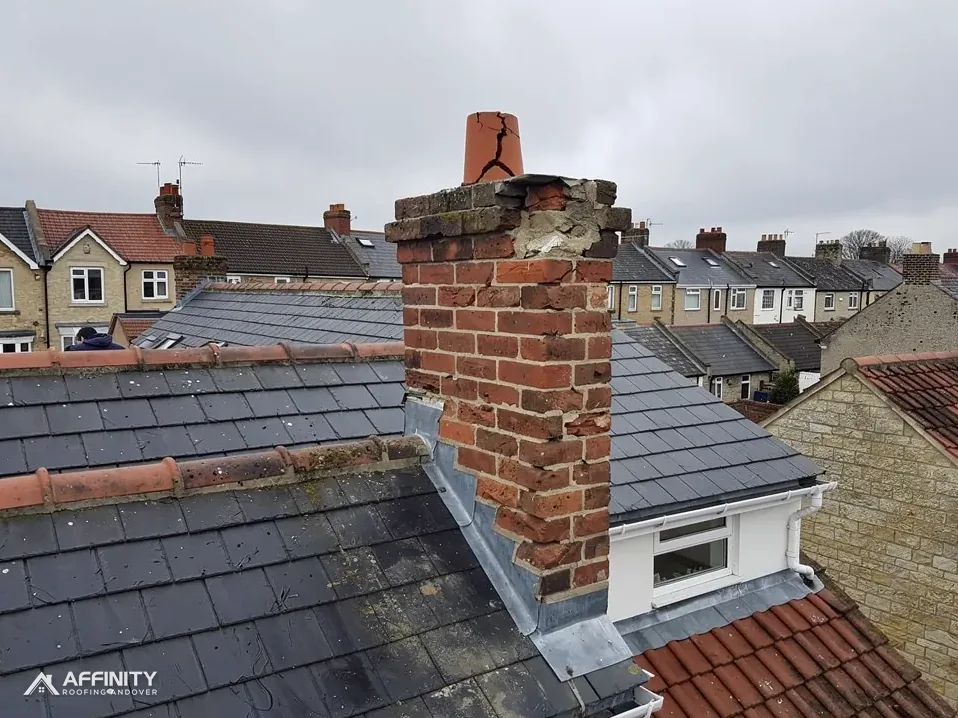
Once the new top height is reached, the stack is capped. The usual finish is a fresh bed of mortar, the flaunching, sloped so that rain runs off and carrying the pots. Where the old pots are cracked or loose, this is the moment to replace them. A flat concrete or stone capping slab may be fitted instead, with a ventilated gap so the flue can breathe.
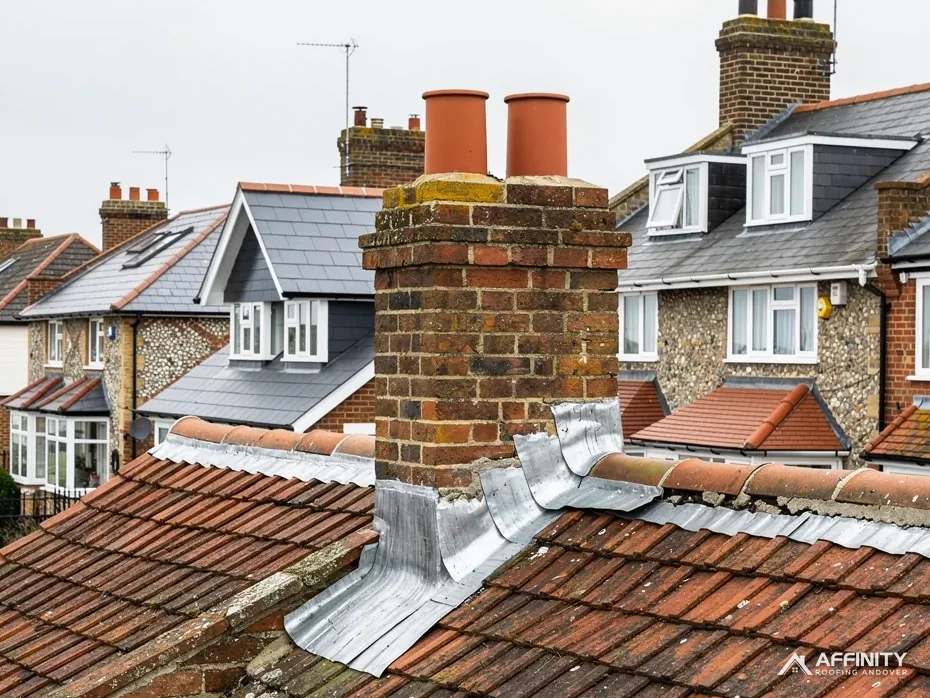
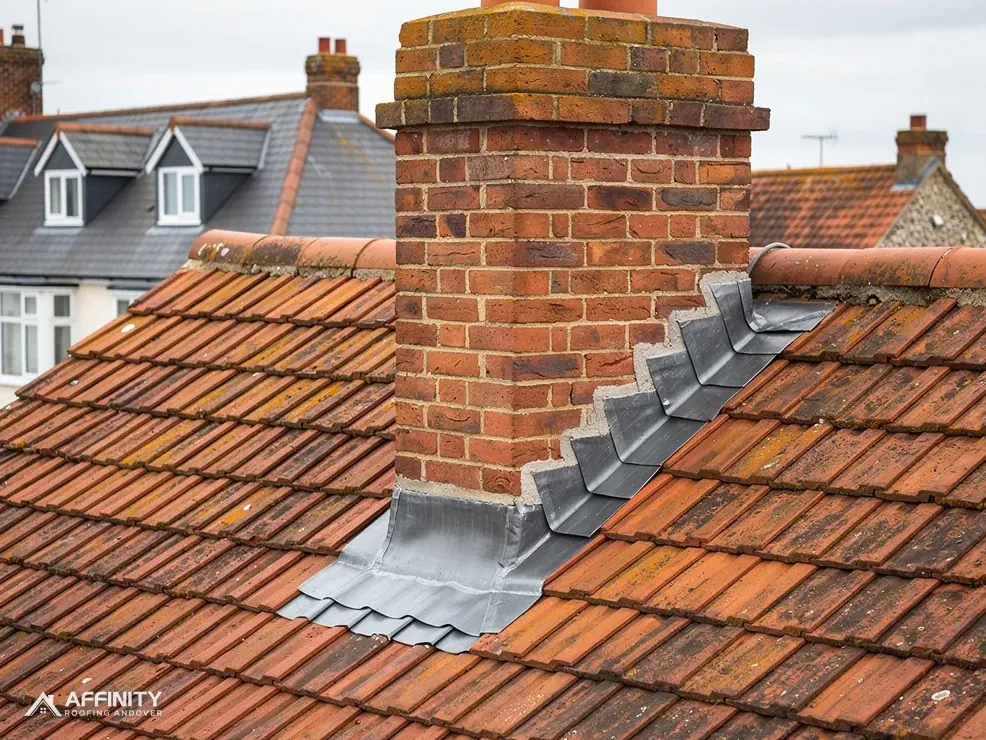
Lead flashing, the metal strip weatherproofing the joint between stack and slope, is checked at the same time. Cutting a stack down does not disturb the flashing at its base, but any section that is lifting or has split is far easier to renew while the scaffold is in place.
Our page on the chimney capping job describes the finish in more detail, and a chimney that is only partly removed is also a good chance to look at the pointing on what remains.
Ventilation and a flue that is still working
Height is not only cosmetic. A flue that serves a working fire or stove draws smoke up and away, and a shorter stack can change how well it does that, particularly if the new top ends up lower than the roof beside it. If the flue is still in use, the person to ask is a qualified engineer for that appliance, together with your building control body, before any courses come off.
If the flue is no longer used, the picture is different but not carefree. A flue closed at both ends holds damp air, which can reach the room as stains and salts on the breast. The established answer is to leave a path for air to move through the flue, with a vented cap at the top and a vent in the breast or fireplace at the bottom. Moisture in buildings is the subject of BS 5250:2021, the code of practice for managing it.
Lowering the stack therefore needs a decision about the cap as well. Our answer on ventilating a capped chimney explains the arrangement, and the same thinking applies when the stack is cut down and sealed.
Planning, conservation areas and listed homes
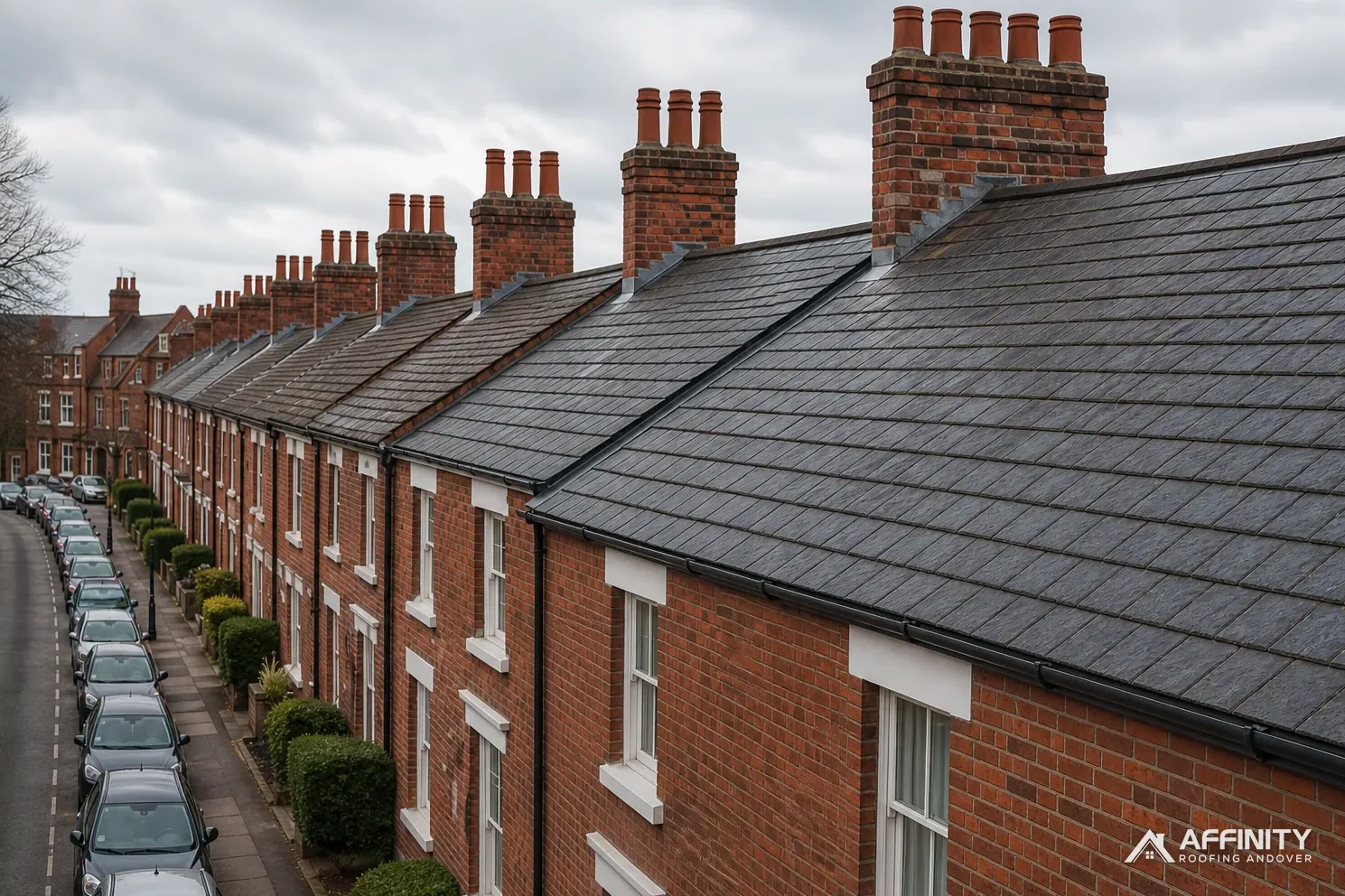
Cutting a chimney down changes the outline of the house, so the council's appearance test applies. Under the 1990 Town and Country Planning Act, section 55(2)(a), works with no material effect on external looks are not development. Class C of the permitted development order covers other roof alterations on a house yet stops short of chimneys and flues, so the simplest course is to ask.
A conservation area is article 2(3) land, and an Article 4 direction can withdraw rights across a defined area. Check with the planning team whether either applies to your address. A listed house needs listed building consent for changes touching its special interest, and a chimney commonly forms part of it, so the conservation officer should hear about the idea first.
Andover's conservation area lies around the town centre, within Test Valley Borough Council's planning remit. Our page on planning permission to remove a chimney sets out the three checks side by side, and our chimney repairs hub covers the wider service.
Why people ask, and what it costs
People usually ask for one of three reasons. A tall, tired stack is leaning or has failing top courses, and cutting it down removes the weakest part. A redundant flue has stopped serving any fire, and the owner wants less to maintain. Or a stack is causing trouble in wind, where a high stack can move before the lower brickwork does.
A lower stack does lower the maintenance, since there is less pointing to renew and fewer courses to inspect. It does not make a leaking roof dry. If water is coming in at the lead or round the base, the flashing must still be dealt with, and sometimes taking down the stack is the cleanest way to deal with a failing one.
Price depends on the height removed, the access, whether the pots are reused and whether flashing is renewed. Scaffold access can push the price up a good deal. After the survey we give one written total, with pictures of the stack as it stands so you can see what is being cut.
If the stack leans, start with our guide to the leaning chimney.