A house around Andover may have a fireplace that has not been lit in years. The chimney still stands on the roof, open at the top, and every storm sends rain down it. Birds find it, leaves drop in, and a stain appears on the chimney breast inside. Capping the top is the sensible answer.
It is also a job with a trap in it. A flue is a long brick-lined shaft, and when you close both ends, the air inside stops moving. Moisture that used to leave with the draught stays and settles, and the damp can show up on the breast, in the room, and in the brickwork. The remedy is to keep a path for air through the flue even when the rain is excluded.
This guide explains how that works: what capping is, why a sealed flue goes damp, the difference between a plain and a vented cap, what the pot and the flaunching need, and how to deal with birds and heritage. For the whole range of stack work, see our chimney repairs hub.
What capping is and when it is used
Capping means closing the top of a flue so rain cannot enter. The cap can be a clay or concrete slab set on the pot or the stack, a hood fixed over the pot, or a purpose-made cap with openings that keep a gap for air. The flue below is left in place, ready to be reopened if you ever want a fire again.
When it makes sense
The usual case is a fireplace that has been blocked up or no longer has a working appliance. Water running down an open flue wets the breast and the room below, and capping stops that at source. It also keeps nesting birds out and prevents debris blocking the flue.
When it does not
If a flue serves a boiler, stove or open fire, it must stay open and sound, and nobody should cap it without advice. If you are not certain what each flue in your stack serves, ask before any cap goes on. A stack often carries several flues, and a single cap may not suit all of them.
What you can see from the ground
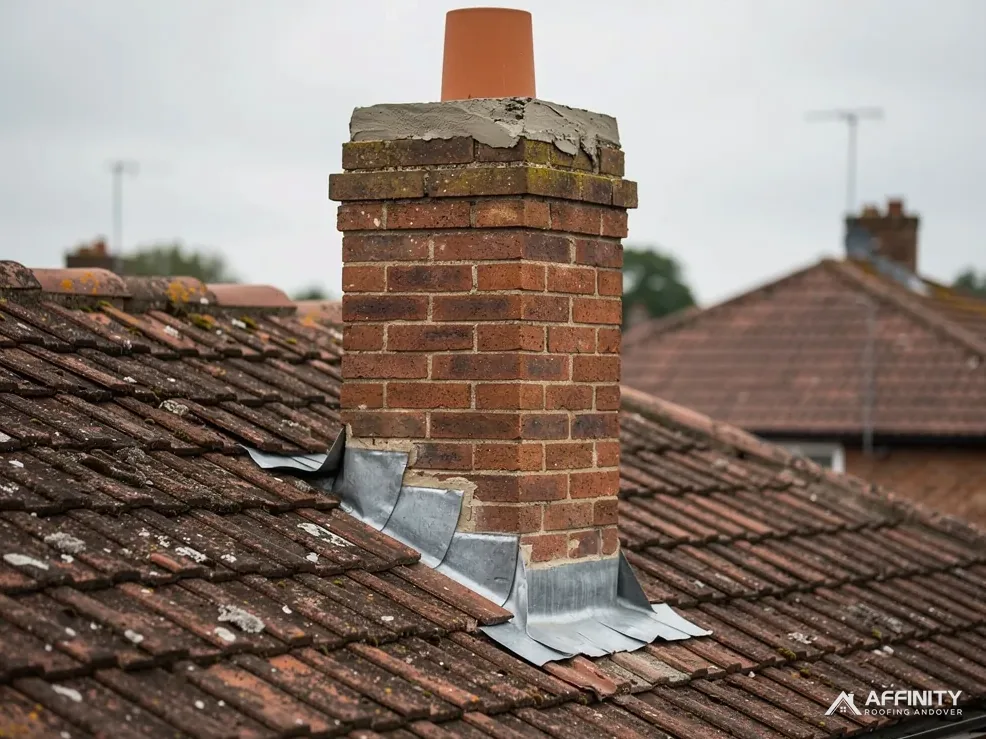
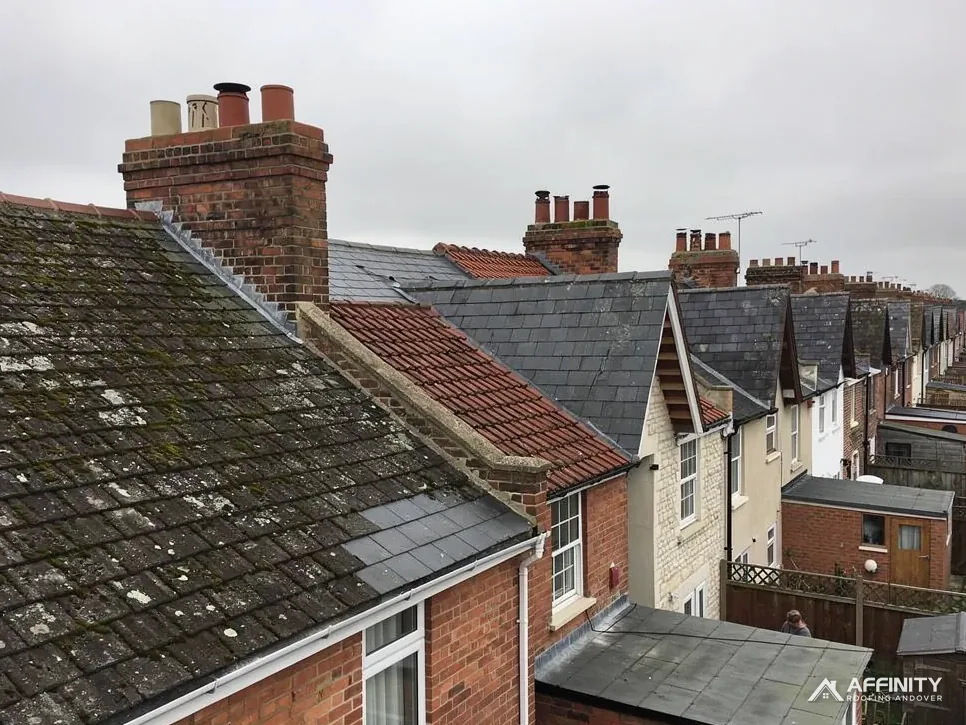
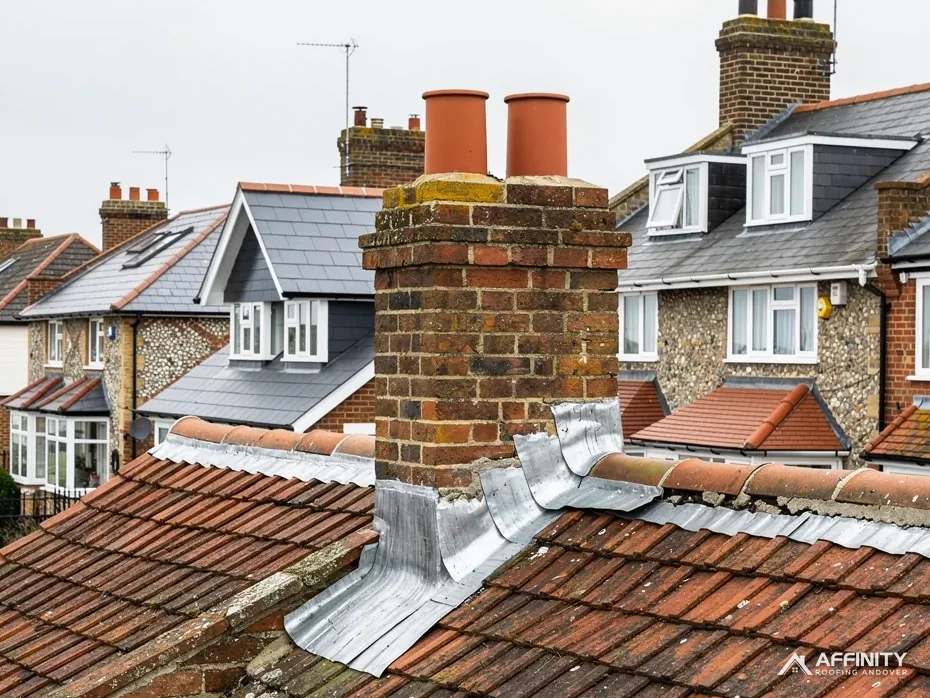
From the garden, look for pots with a sheet of slate or a slab laid across the top, or for pots with a metal hood over them. A disused flue with no covering at all, a pot full of vegetation, or a stain on the breast below are all signs that capping is needed or has failed.
If a pot is cracked or the mortar bed beneath it is loose, the cap is only as good as what it sits on, which is why the stack is checked first.
Why a sealed flue goes damp
A flue is not airtight to begin with. Warm, damp air from the house drifts into it, and in a working chimney the draught carries that moisture out of the top. Seal the top with a solid cap and block the fireplace opening below, and the air in between goes still. It cools, the water vapour condenses, and it soaks into the brick and mortar.
What it looks like indoors
The first sign is usually a patch of damp on the chimney breast, often with a brown stain, peeling paint or a white powdery salt on the plaster. It can look like a roof leak even when no rain has come in from above. Damp on a chimney breast has several possible causes, and a survey tells them apart.
What it does to the stack
Persistent moisture inside a flue attacks the mortar, and a stack can be damaged from within. Winter makes it worse, because frost expands trapped water and loosens joints.
The principle behind the cure
BS 5250:2021, the code of practice for moisture in buildings, is current, and in a roof it underpins ventilating the cold space. The same idea carries over to a chimney, which means keeping air moving through the flue, so that the damp is carried away before it condenses. A capped flue therefore needs ventilation, and a plain solid cap on a blocked flue is the combination that causes trouble.
Vented caps, cowls and air at the bottom
There are two ways to let a capped flue breathe, and good practice often uses both. One is to cap the pot with a vented cover that keeps the rain out but lets air move. The other is to leave a small vent at the fireplace end, so that air can enter below and rise through the flue.
The vented cap
A vented cap has slots or a louvred skirt. Rain is shed by the roof of the cap, while air flows through the openings beneath it. It fits over the pot or sits on the stack, and it is held in place with mortar or fixings. Metal and clay versions exist, and the choice often comes down to appearance and the shape of the pot.
A cowl is a different thing
A cowl is a cover that sits on a pot to modify the draught or stop downdraught on a working flue. It is not designed to close off a flue. The two should not be confused when you are choosing.
Ventilation at the bottom
A ventilator in the breast or in the blocked-up fireplace, with a grille on the room side, lets air enter the flue. Ask your roofer, or whoever blocks up the fireplace, how the flue is ventilated, and see it for yourself. Our short answer on how to ventilate a capped chimney sets out the same point.
Do not seal a ventilator because it feels draughty. A grille on a capped flue is doing a job, and taking it away brings back the still air described above.
Pots, flaunching and the stack under the cap
A cap is fixed to something. If the pot is cracked, the cap goes on a cracked pot. If the mortar bed beneath it, called the flaunching, has failed, the cap sits in a bed that lets water through. Fixing the cap while ignoring those is paying to cover a problem.
The flaunching
Flaunching is the sloping mortar cap on top of the stack that holds the pots in place and sheds water away from the flues. It cracks with age and frost, and it can come away from the pot. Our guide to chimney flaunching explains what it is and how it is repaired.
The pot
Pots are clay or concrete tubes that extend the flue above the stack. They crack with frost, lean, and can come loose. A cracked pot should be replaced before it is capped. See chimney pot replacement for how it is done.
Doing it all in one visit
It is more sensible, and usually cheaper, to repair the flaunching, replace any failed pot and fit the cap in a single visit, when the scaffold is up. Working on a stack from a ladder is risky, and the stack is the highest and most exposed part of the house.
The price depends on how many flues the stack carries, the height and the access. The survey comes with photographs of the stack top, which you can compare against the finished work.
Birds, soot and old stacks
Open chimneys attract birds, and an occupied nest changes the order of work. Section 1 of the Wildlife and Countryside Act 1981 treats anyone who intentionally damages a nest that is in use, or being built, as having committed an offence. If you hear or see birds in a flue, leave the cap until they have finished and gone.
Before the cap goes on
A flue that has been unused for a long time is checked for debris, nests and loose brick before it is capped. Clearing it first avoids capping in a blockage that later falls down into the fireplace. Soot and fallen material can be messy, so the opening is sealed during the work and the room is protected.
Old stacks
On an old house, the brickwork may be soft and the mortar worn. Capping a weak stack without repair puts weight and fixings on it. The better course is to repair or repoint first, using a mortar that suits the brick.
Heritage and planning
Class C permitted development for roof alterations excludes chimneys, so changes to a visible stack are judged separately. On a listed building, listed building consent may be needed. In a conservation area, ask the council whether a direction applies to your street.
Ask the survey to record what each flue serves and how it will be ventilated, and keep the notes with your house papers.
What sets the price, and keeping a cap sound
Capping is small work, but the price is not set by the cap alone. It is set by the access, the state of the stack and the number of flues, and a roofer should explain each of these when quoting.
What moves the figure
A stack with one flue and a sound pot is a short job. A stack with six pots, a crumbling flaunching and awkward access takes longer and needs a scaffold. The height of the house matters, as does whether the roof beside the stack is steep or fragile. Repairs found at survey, such as a cracked pot or loose brick, are part of the same visit.
Scaffold
Working at a chimney from a ladder is not safe, and for most houses a scaffold or tower is the right way to reach the stack. The quote should state in writing whether scaffold is part of the total. If it stands on the pavement, the highway authority's consent is needed, which our guide to preparing your home for roof work explains.
Looking after the cap
After capping, check it from the ground each spring and autumn. Look for a cap that has shifted, a vent that has filled with moss or nesting material, and any new stain on the breast inside. A grille at the fireplace end should stay clear, with furniture kept from blocking it.
If damp appears anyway
A stain that appears after capping means the flue is not drying out, or that water is entering somewhere else, such as a failed flashing. Photograph the stain and its position, and ask a roofer to look at the whole stack.