The short answer
It can be. A hairline crack in the mortar joints is often a repair that can be planned, but a crack running through the bricks, a stack that has started to lean, or bricks that move when touched is a safety matter, because pieces can drop onto the roof or the ground below. Stay clear of the area beneath the stack and have it inspected before the next gales.
Hairline cracks and structural cracks
A chimney stack is brick held together by mortar, and the mortar is the part that opens as it weathers. A fine crack that steps along the joints between bricks often means the pointing has weathered. Rain gets in through it, so it needs mending, but the stack itself may be sound.
A crack that cuts straight through the bricks, or runs the full height of one face, tells a different story. It can mean the stack has shifted on its base, that frost has pushed the bricks apart, or that the flue lining inside has moved and is pressing outwards. A crack wider at the top than the bottom, or one that has grown since you first noticed it, points to movement that has not stopped.
A stack that has begun to lean is a separate problem with its own causes, set out in our guide to a leaning chimney.
Much can be learned from the garden. Note which face carries the crack, how long it is, and whether the brickwork or render around it looks darker than the rest, which suggests damp is getting in behind.
Loose bricks and crumbling joints
Loose bricks are what turn a cracked chimney from a nuisance into a hazard. A brick that rocks under a finger, a corner that has opened up or a course that has slid out of line can come away in a gust, and the top of a stack is a long way to drop onto a path or a car.
Look at the ground beneath as well. Brick fragments, grit from crumbling mortar or flakes of render on a porch roof, a conservatory or the lawn show that the stack is shedding material. If you can see that, treat the area under the chimney as out of bounds, and keep ladders away from the stack itself.
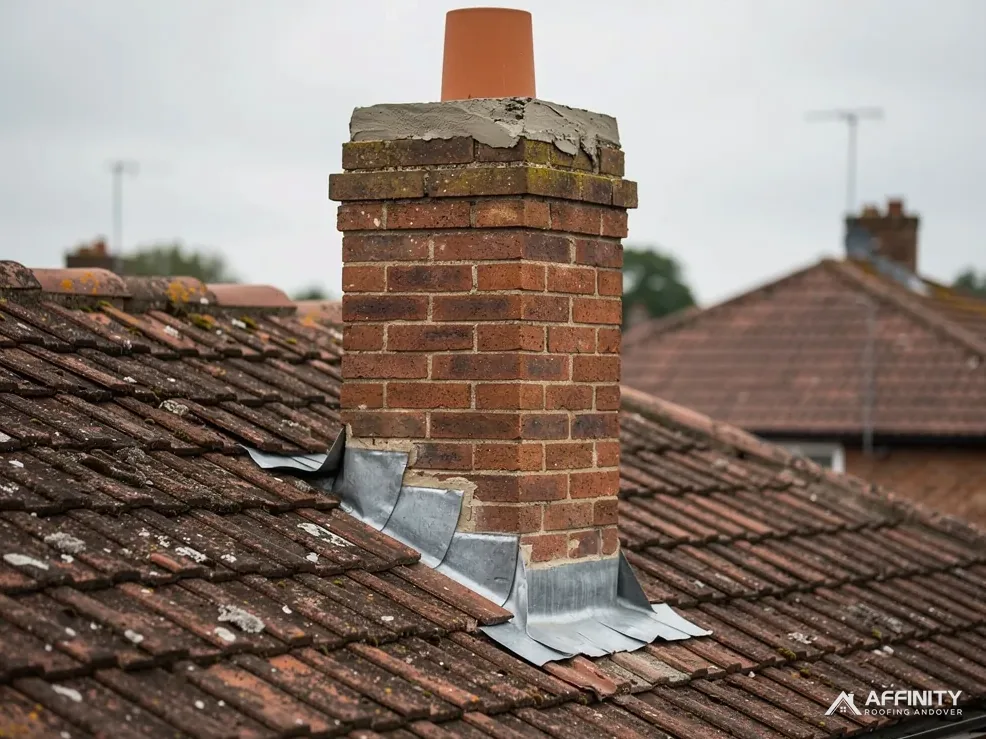
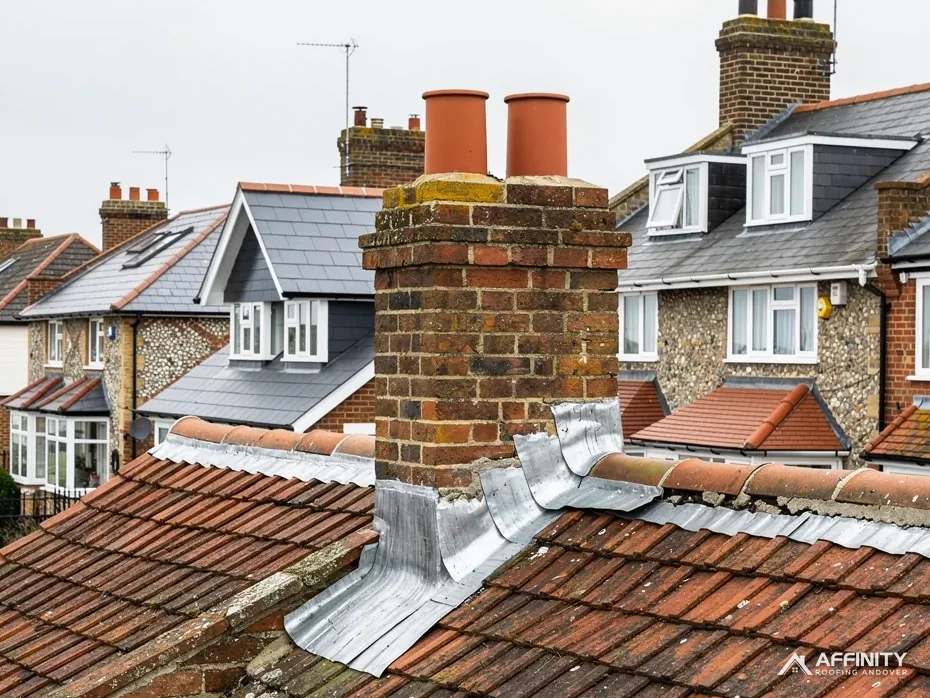
Loose bricks tend to travel with other faults at the top. The flaunching, the sloping mortar crown round the pots, may have split. The pots can be loose in it. At the point where the stack rises through the slope, the lead flashing, a strip of sheet metal sealing that joint, can have lifted. Water entering at the top also soaks the brickwork below, so one fault feeds the next.
Bricks that have already dropped are covered in our answer on bricks falling from a chimney.
What an inspection of a cracked stack covers
We reach the stack safely, from a roof ladder, a tower or scaffold depending on height, and photograph each face, the pointing, the pots and the lead, so you see what we see.
We trace the crack along its length and note whether it passes through the bricks or stays in the joints. We test the bricks around it to find out which are bedded and which are loose, and we look for fresh mortar dust, which shows recent movement. In the loft we check the timbers beside the stack for damp stains, because a stain tells us which face is letting water in.
The result is one of three. Sound bricks with open joints need repointing, and often a new flaunching. A few failed bricks need cutting out and replacing. A stack that has moved on its base, or whose upper courses are loose all round, needs part or all of it dismantled and built again, which our page on a chimney rebuild describes. You are told which of the three applies, and why, before any price is given.
What to do until someone has looked
Keep your feet on the ground. Do not climb up to look, do not pick at loose mortar, and do not light the fire if the crack is on a face that runs down to a flue, because a damaged flue can pass smoke and hot gases into the brickwork. Move cars and garden furniture out from under the stack.
If wind or a storm caused the damage, tell your insurer first, take dated photographs from the ground and keep receipts. Whether a claim is accepted depends on your policy's own wording. Our answer on chimney storm damage and insurance covers what to keep.
If bricks are already hanging or the stack leans visibly, the first job is a make-safe: taking off the loose top courses so nothing can fall, with the full repair planned afterwards. For the wider picture, see our chimney repairs page.
Cost depends on the stack's height, the access and whether the answer is pointing, brick replacement or a partial rebuild, so a price given before a survey would be a guess. Ours is one written total once we have looked.