The short answer
Your policy and the cause decide it. Cover for storm damage follows the policy's own definition of a storm, and wear and tear and slow deterioration are often excluded. Tell the insurer first, make the stack safe, and keep photographs and receipts. No one can say in advance whether a claim will be paid, and a firm that sounds certain is guessing.
How storm is judged
Policies cover storm damage, but each defines a storm in its own words. The Financial Ombudsman Service takes a broad view: the typical picture is violent wind with wet or wintry weather, but it accepts that a storm can occur without high winds, and that a sufficiently heavy fall of wet weather or snow may count by itself.
It also weighs the Beaufort Scale, and recognises that some insurers draw the line at a particular wind force. For rain, hail and snow the question is whether a great deal fell in a short time, or the fall was extreme.
So read your policy's storm definition first. A wind speed written into the wording is a condition, and the insurer can check the weather record for that day against it.
Do not rely on a figure you have heard. No single threshold applies to all policies, and the Ombudsman looks at the facts of each complaint.
If the stack came down on a night of wild weather, that points to a storm. If it fell on a calm day after months of cracking, the insurer will probably see it differently.
Our guide to making a roof insurance claim sets out the general steps.
Wear and tear and existing problems
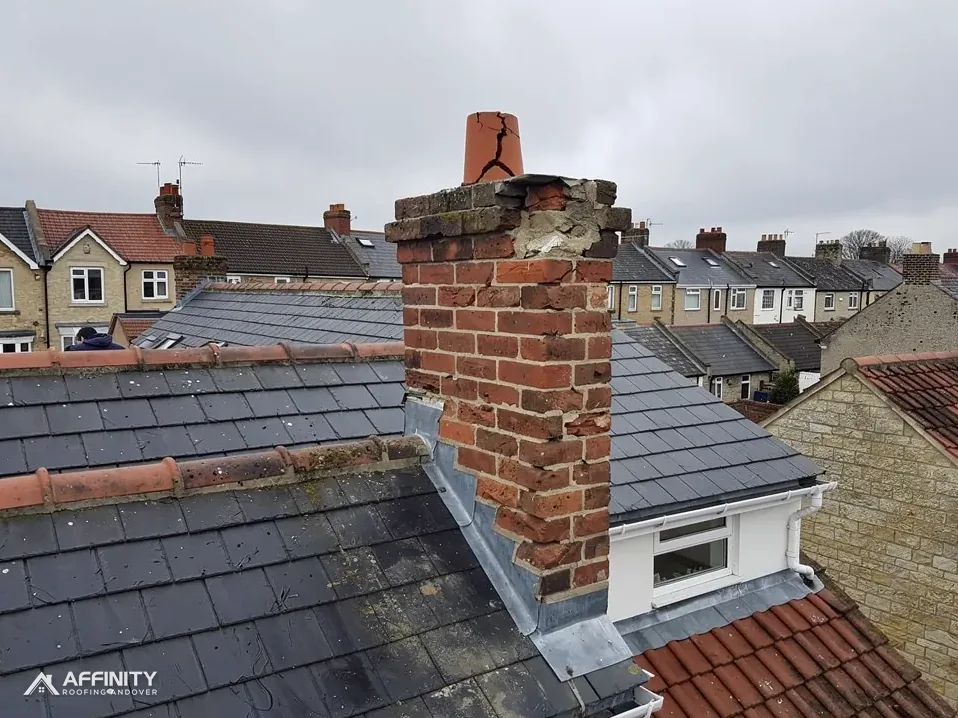
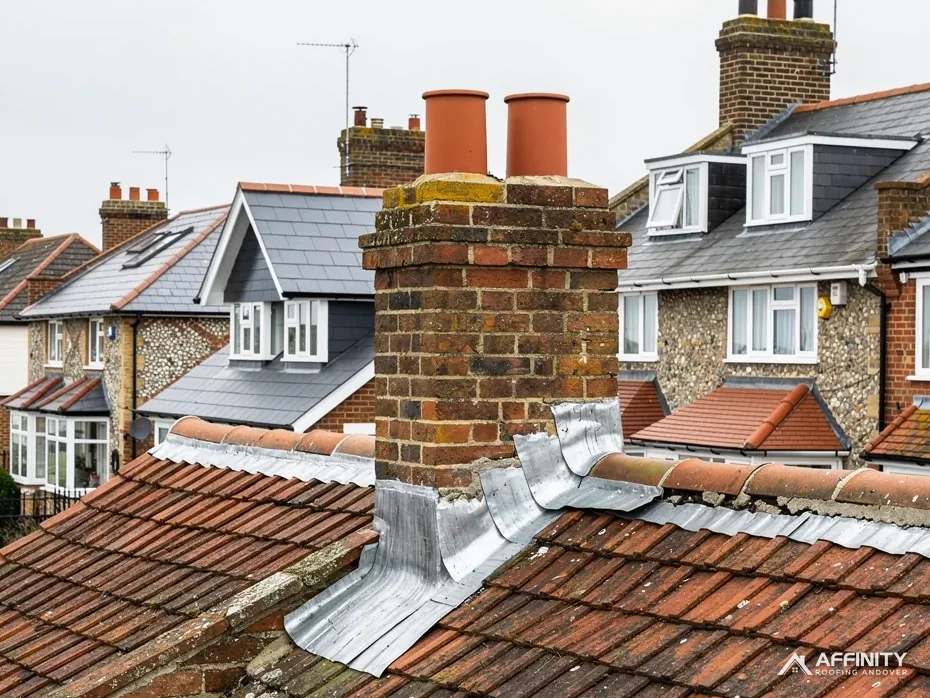
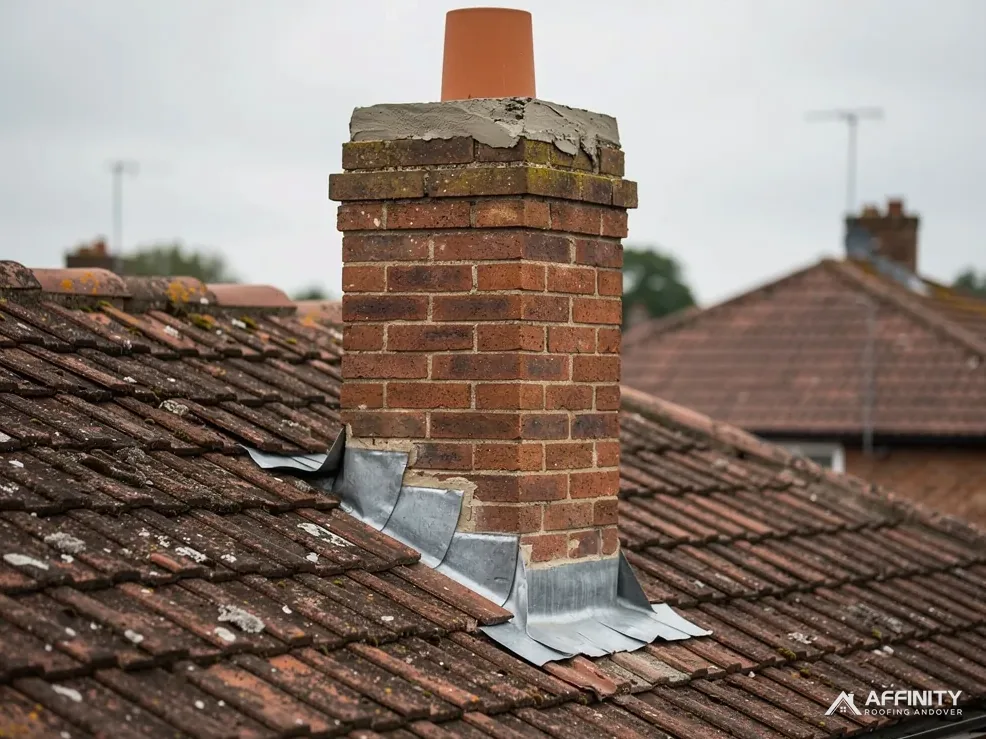
Policies often exclude damage that builds slowly, as well as ordinary wear, and a chimney suffers both. Mortar erodes over years, bricks flake with frost and flashing corrodes. A storm may be the last push, and an insurer may argue that decay did the real work.
The Ombudsman asks three things: was there a storm, is the damage consistent with one, and were storm conditions the main cause. It tends not to side with a policyholder whose roof was already in poor shape and who knew it, or where the storm simply brought an old problem to light.
That is no reason to hold back from claiming. It is a reason to keep a record. Photographs of the stack before the storm, if you have them, and a survey after it, help to show what changed.
A report that records old cracking separately from fresh breakage is more useful than a bare statement that the stack fell. A roofer who has surveyed the stack can say which is which, and our survey photographs record the findings.
Where the damage is partly old and partly new, the insurer may cover only some of it. Ask what part is accepted and why, and ask for the reasoning in writing so that you can compare it with the policy wording.
What to do and what to keep
The sequence matches any other roof damage. Tell the insurer first. Make the stack safe so it cannot cause more harm. Keep photographs and receipts for everything you spend.
Photographs are vital to a claim, the Institution of Structural Engineers advises, because they are visual evidence of the damage. Take them from the ground, from a safe place, before anything is moved, and again as the stack is made safe.
Ask the roofer for a short written note of the stack's condition when it was made safe. Keep the fallen bricks and pots until the insurer says they can go, since they may want to see them. Write down the date and time you noticed the damage and what the weather had been doing.
A make-safe has to be reasonable and recorded. Ask the roofer to describe in writing what was done, why and what it cost, and to record the stack as it comes down, piece by piece.
Our answer on what to do if bricks fall from a chimney goes through the first steps, and the chimney repairs page explains the work that follows.
Challenging a chimney claim decision
If the insurer declines or pays less than you expect, ask for the decision and the reasons in writing. Check the policy wording it relies on, and read the storm definition and the exclusions it cites.
Use the insurer's own complaints procedure first. If you do not get a final response within eight weeks, or you are unhappy with the one you receive, you can complain to the Financial Ombudsman Service. The helpline number is 0800 023 4567, and using the service costs nothing. After the insurer's final response you have 6 months to take it there.
A second opinion on the stack can help. A roofer's report that distinguishes storm breakage from old decay, with photographs, may change the picture.
Be wary of any firm that offers to run your claim, or that talks as though the money is certain. A claim is between you and your insurer, and its outcome is not in a contractor's control.
Our answer on wear and tear and roof insurance looks at the exclusion more closely.