The short answer
It can, if the mast is heavy, the brackets are tight and the brickwork is tired. An aerial catches the wind and passes that force into the stack through its lashings, and a chimney that is already cracked or poorly pointed has less to resist it. Moving the aerial to a wall or a separate pole usually costs less than rebuilding a stack.
Wind load on a stack
A chimney stands at the highest, most exposed point of the house, and an aerial sits on top of it. The mast and the array present a large surface to the wind. Every gust pushes on that surface and the force travels down through the brackets into the brickwork, like a hand rocking a fence post.
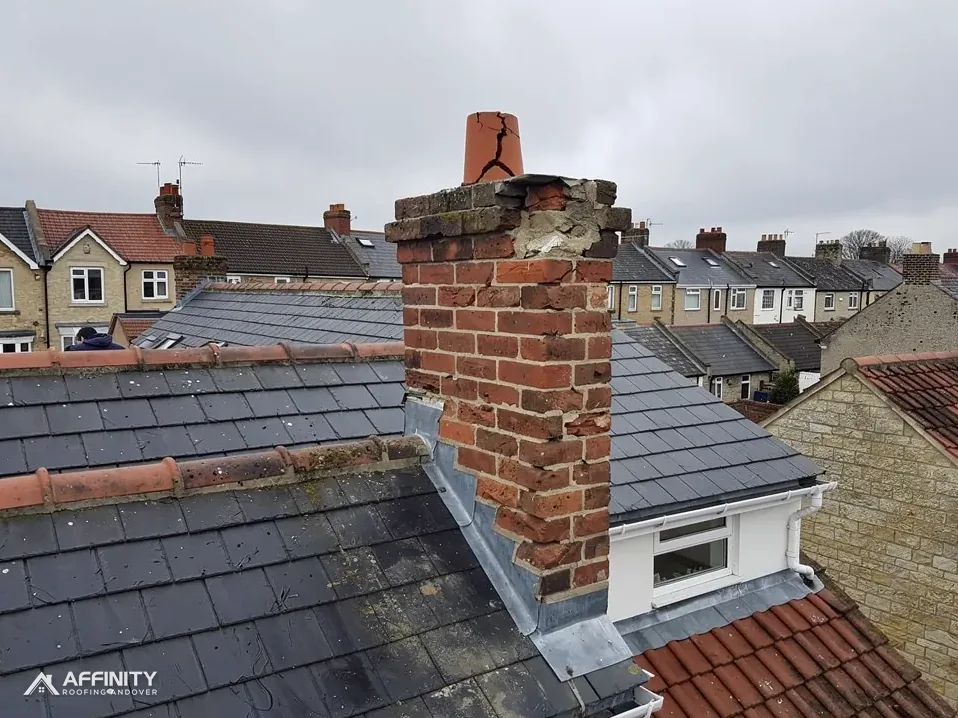
A sound stack takes this in its stride for years. The trouble starts when the masonry is weak. Soft or washed-out mortar between the courses, cracked bricks, a loose pot or a stack that already leans all have less grip, and the repeated movement works the joints open.
Weight adds to the problem. A big old multi-element aerial with a long mast is a lot heavier than a modern slim one, and a satellite dish or a pair of them can be heavier again. The stack carries that weight at the top, where it does the most to unbalance the structure.
You may not notice the damage until it is advanced. Hairline cracks near the brackets, mortar dust on the roof slope and a mast that has begun to tilt are early signs.
A survey includes close photographs of any cracking near the fixings, so you can see what the wind has been doing.
What the brackets do to the brickwork
Most aerials are held by lashing brackets, which are steel arms clamped round the stack with straps or wire. As the metal tightens and the weather works on it, it can bite into the corners of the brickwork. Where the straps are set into the mortar, they can crack it as they rust and expand.
Rust is the second problem. Corroded steel stains the brick below it and can swell enough to split the masonry. A rusty strap that has left an orange streak down the stack is already telling you that water and metal are in contact.
Water gets in around every fixing. A drilled hole, a crack along a strap or a gap under a bracket lets rain into the core of the stack, where it can freeze and push the face off bricks. That is one route to spalling, the flaking of the brick face.
Old brackets are often left behind when an aerial is replaced by a newer system. They keep rusting and holding water for no purpose at all.
If you are not sure how an aerial is fixed, ask for it to be checked at the next roof visit. Our answer on spalling chimney bricks explains what the damage looks like, and the chimney repairs page covers the repair route.
Moving the aerial
If you want to keep a terrestrial aerial, there are alternatives to the chimney. A bracket fixed to a gable wall, a pole on the ridge fixed by a proper bracket or a position in the loft all take the load away from the stack. The best choice depends on the signal and the building, and the person fitting the aerial should advise on that.
Taking the aerial down is a two-person job and a risk at height. The mast is heavy, the straps may be seized and a dropped section can fall on a conservatory or path. Do not attempt it from a ladder at the stack, and keep people clear below.
Once the aerial is off, the stack should be checked and repaired. That usually means removing the old brackets and straps, cutting out and repointing damaged mortar, and replacing any cracked bricks. Holes are filled and the surface matched as closely as can be done.
If the stack has a poor record, such as old repairs, lean or crumbling pointing, repair is worth doing before anything else is added. Our answer on whether a cracked chimney is dangerous helps you judge urgency.
Ask for photographs of the stack before and after, so you have a record of what was found and done.
Safe practice, access and price
Height makes access the real issue for this job. A roof ladder and harness may do for a short job on a low roof, while a taller house needs a tower or scaffold. The access is a large part of what the work costs, and it is also what keeps people safe.
Where the poles would occupy the pavement, the highway authority has to grant a licence, which in Andover means Hampshire County Council. Our answer on scaffolding for chimney repairs explains when a tower is enough.
The price depends on the access, on the state of the stack and on what the survey finds once the aerial is off. The figure you receive is a single written total, fixed once the survey is done.
Do not let anyone fit a new aerial to a stack you know to be cracked or leaning. It adds load to a structure that is already struggling, and a fall of brick is a danger to people below.
If you are unsure, send photographs of the stack from the ground. They are often enough for us to say whether a visit is needed.