The short answer
Sometimes, but only after the stack is sound. A water-repellent treatment can slow rain soaking into porous brick, yet it does nothing for failed flashing, cracked flaunching or open joints, which let water in directly. Choose a breathable product, repair first, and treat afterwards if the brick still takes up too much water.
Treatments are not repairs
Waterproofing treatments are liquids brushed or sprayed onto masonry. They aim to make water bead on the surface, so that less is absorbed. They work on porous brick and mortar, and they do not close cracks, replace missing mortar or seal a lifted flashing.
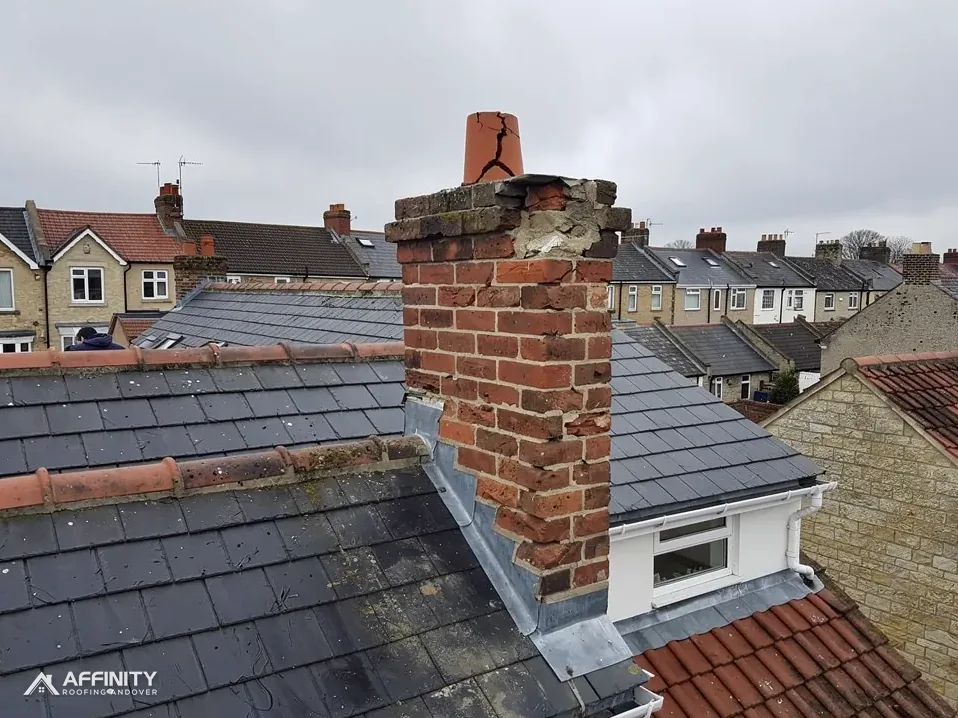
That is the key point. A stack leak can come from a failure in a detail: the lead at the base, the flaunching round the pot, a joint that has opened or a flue that has no cap. Water runs through those gaps whatever is on the brick face.
A treatment applied over a defect can hide it, which delays the repair and lets the damage spread. The surface looks dry for a while, the problem carries on inside, and the damp reappears later with the bonus of a coating that blocks inspection.
The right order is survey, repair and then, if still wanted, treatment. A stack that has been repointed and had its flashing renewed may not need anything more.
We look at the cause of the damp first. A water-repellent finish is occasionally the last step in a job and is not the first.
A leak that appears only in a downpour can point to one small failure rather than a decayed stack.
Breathability matters
Brick and mortar are not waterproof and are not meant to be. They take up moisture and release it as vapour. A chimney is exposed on all four faces and warmed from inside when the flue is in use, which helps it dry.
A film-forming coating, such as a paint or a thick sealer, can block that exit. Moisture that gets in behind it, through a crack or a joint, cannot escape, and freezes and thaws behind the film. The face of the brick can then flake or blow off, a failure called spalling.
A breathable water-repellent soaks into the surface rather than forming a skin, and lets vapour out while resisting liquid water. The choice of product matters, and the maker's data sheet will say whether it is breathable and what substrates it suits.
Old brick and lime mortar are the most sensitive. A treatment unsuited to them can do lasting damage, and the choice of product should be made with care, not left to the lowest-priced tin. Read the data sheet for how long the product needs to dry before rain, and avoid treating a stack that is still wet inside, because the water has nowhere to go.
Our answer on why chimney bricks spall shows what trapped moisture can do.
Flashing, flaunching and joints come first
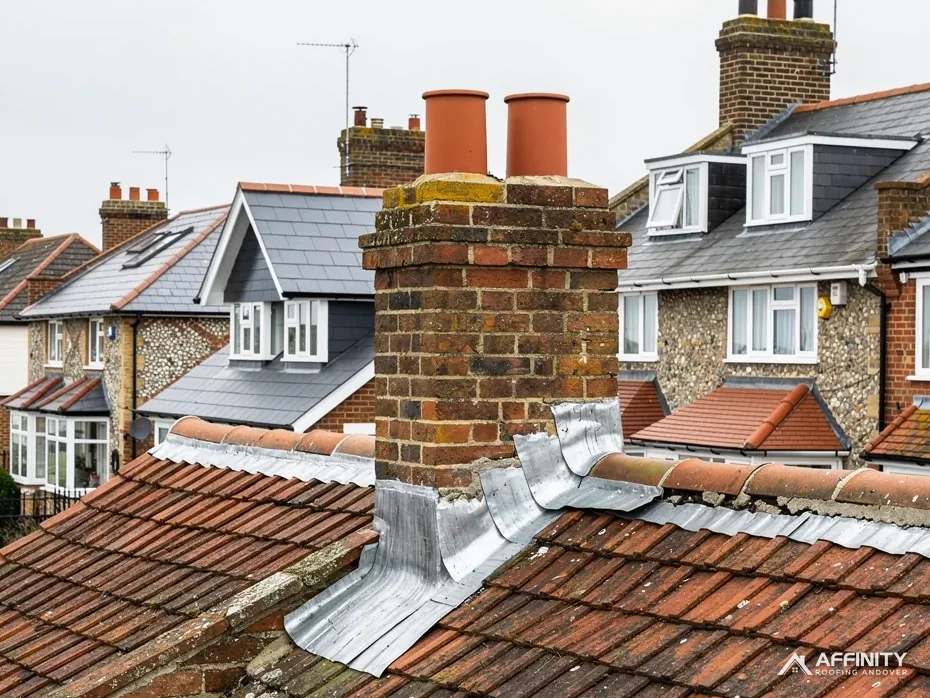
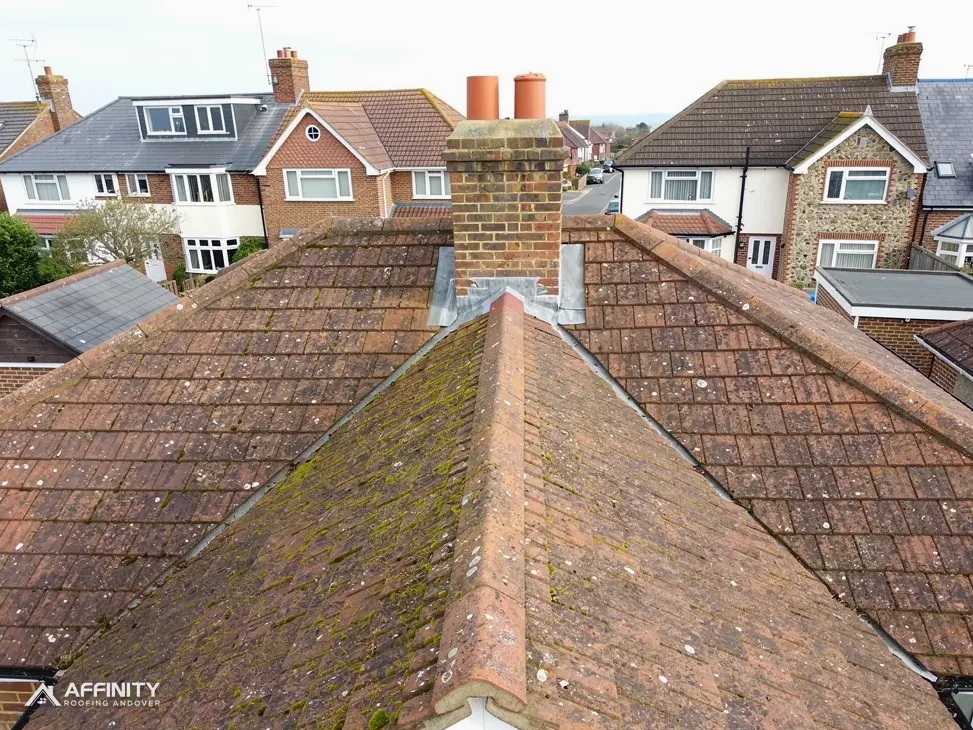
Before any treatment, put right the points where water enters. Lead flashing where the stack leaves the roof, the back gutter behind it, the flaunching at the top and the pointing in between are the first places to look.
Lead can last for over 80 years, according to MyJobQuote, so a leaking flashing is checked at its fixing and its detail before the lead is blamed. Re-dressing or replacing it, with the joints raked and pointed, deals with a leak that no coating can touch.
Check the pot and the top of the flue as well. A cracked pot, or no cowl, hands rain a direct route into the stack. Fitting a cap often does more for a damp breast than any spray on the outside.
Pointing is next, and it is worth doing properly, since a sound joint is the first barrier the weather meets. If joints are soft, eroded or cracked, repoint with a mortar suited to the brick. That restores the wall as a barrier and means a water-repellent, if used, has a sound surface to work on.
Our guides to chimney flaunching and damp on a chimney breast cover the repairs that come first.
A survey with photographs shows which of these applies to your stack.
When a treatment can make sense
A treatment is worth considering when the stack is sound but the brick is very porous and takes up water readily, so that it stays wet for long periods. It may help on a stack that is exposed and has been repaired, where staining or damp persists on the faces.
Ask three questions of any firm offering one. Is the product breathable? What will it do for the problem you actually have? And what is repaired first? A good answer names the cause and places the treatment last.
Be sceptical of promises of a fixed period of protection, or of a coating sold as a permanent cure. Weather, wind and movement all affect any surface treatment, and some need reapplying.
There is also a cost. Applying a treatment means access to the stack, so doing it in the same visit as a repair makes sense. A treatment on its own, at height, can cost nearly as much in access as the product is worth.
The written quote gives one total price after a survey. See the chimney repairs page for how we approach a stack that is damp.