The short answer
The usual causes are the flashing at the foot of the stack, the flaunching round the pot, a blocked or failed back gutter behind the stack, porous brick or mortar, or an uncapped flue. Heavy rain runs in at a weak point, so a leak that shows only in a downpour usually means a small failure rather than a gone-wrong stack.
Where the water gets in
A stack is a tall, narrow structure with a lot of joints. Rain can enter at the top, down the sides or at the base, and the stain inside the house does not always sit under the entry point. Water runs along timbers before it shows.
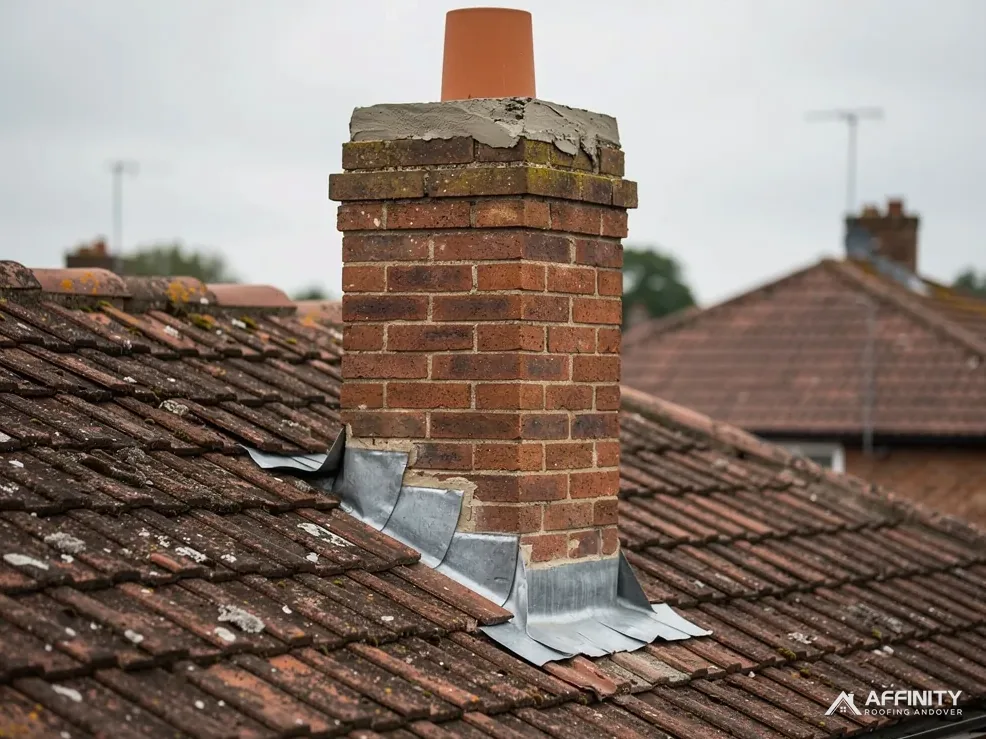
At the top, the pot sits in a mortar cap called flaunching, which slopes water away from the flue. When the flaunching cracks or breaks away, rain runs into the gap and down beside the pot. A missing cowl lets rain straight into the flue.
On the sides, the bricks and mortar take the weather. Joints that have eroded, bricks that flake or a coat of render that has cracked all let water in. A stack is wet from both sides, which makes it hard to keep dry.
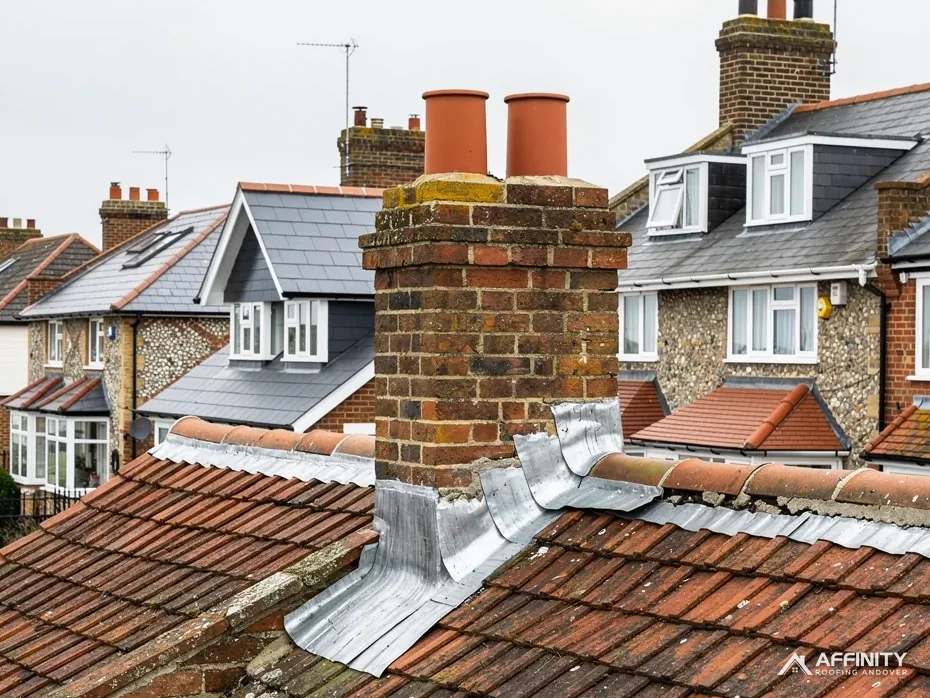
At the base, the lead flashing and the back gutter keep water out where the stack meets the roof. These are points that can fail, and a heavy downpour is when they show.
Inside, a stain on the chimney breast, a damp patch on the ceiling beside it or water dripping in the loft is the sign. Photograph the stain and the loft side, as it shows where to look.
Flashing, back gutter and flaunching
Flashing is the lead strip that joins the stack to the roof covering. It is stepped up the sides, tucked into the joints in the brickwork, and finished with an apron at the front. If it lifts, cracks or is pulled out of the mortar, water goes behind it. Sealant smeared over a failed flashing is a temporary cover, not a cure.
The back gutter is the part behind the stack on the uphill side. It is a small trough of lead that carries water round the chimney. Leaves and moss block it, and a blocked back gutter overflows into the roof. It needs a fall to drain and a clear run to the slope.
Lead is specified by code. Royston's cast lead table lists codes 4, 5 and 6 for flashings, and AD C points to BS 6915 for lead. Which code is right depends on the junction, so the survey and the specification matter more than a number from a brochure.
Flaunching is mortar, and it fails by cracking, shrinking from the pot or breaking up in frost. A sound flaunching slopes away from the pot with a drip edge. Our guide to chimney flaunching explains it.
Lead can last for over 80 years, according to MyJobQuote, so a failing flashing is usually a detail failing, not the metal itself. Our guide to chimney lead flashing goes further.
Brick, mortar and the flue
If the flashing and flaunching are sound, look at the masonry. Soft or crumbling mortar lets water through, and bricks that have lost their face absorb more. Repointing with a mortar matched to the brick, and replacing the worst bricks, closes these routes.
The flue can leak as well. A cracked liner or a missing one lets water and condensate through the walls of the stack. This is more likely in a stack that has been out of use, where damp is not driven off by a fire.
A capped, unventilated flue can build up moisture that appears as damp on the breast. Our answer on ventilating a capped chimney covers it.
Render and paint can hide a problem. A cracked render on a stack lets water in behind it, and a tight paint film holds it there. A tap with a knuckle that gives a hollow sound shows the render has come away.
We check the whole stack, top to base, because a leak can have more than one cause. Treating just the flashing while the pointing is shot leaves the job half done.
Finding it and fixing it
Start with a survey, in which photographs record the flashing, the back gutter, the flaunching, the pot and the brickwork. In the loft, we trace the stain back and check the timbers around the breast.
Water testing is possible where the cause is not clear: a hose played on one area at a time while someone watches inside. It takes time, so it is saved for stubborn cases.
The repair follows what is found. It may be a new lead flashing and back gutter, a re-formed flaunching, a repoint, a replacement pot or a cowl. Each is a specific job, and a single written price covers all of it.
Until the repair is done, a temporary measure can limit the damage. Place a bucket under the drip, move belongings and mop up. Water is stopped from spreading first, and the lasting fix follows the survey.
Access matters. A tower or scaffold gives a safe working area, and the cost is a big slice of a small repair. Our answer on scaffolding for chimney repairs covers it, and the chimney repairs page shows the other work we do on stacks.