
Roofers in Twyford
The Elms, the Monastery and the lanes of a South Downs village
Twyford lies inside the South Downs National Park, beside a Roman villa site and a conservation area. We survey each roof and show you what we find before advising.
Twyford roofs inside the National Park

The Elms and the Monastery
The Elms and The Manor House the Monastery, both Grade II and both first listed on 5 December 1955.

Water Farm House
Water Farm House, Grade II, one of 38 listed buildings within about 500 metres of the centre.

Streets in the conservation area
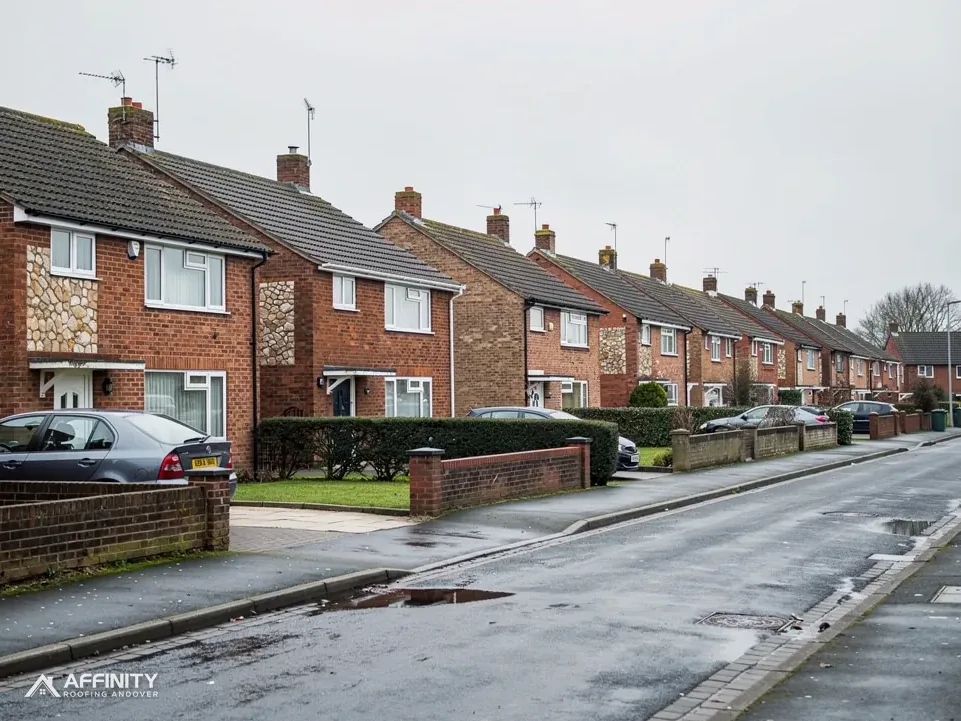
Houses within the Twyford conservation area, which lies within about 0.75 km of the village centre.
Twyford, between Compton and Colden Common
Compton lies to the north-west and Colden Common to the south. Otterbourne is south-west, Owslebury east and Allbrook south-west, with Winchester three miles north.
- Distance
- 20.2 road miles south-east of Andover
- Planning
- South Downs National Park Authority
- Council
- Winchester City Council and Hampshire County Council
The Twyford roof report
Local editionTwyford, HampshireA village inside the South Downs
Inside a National Park: whose permission a Twyford roof needs and why
Twyford lies 20.2 road miles from Andover, inside the South Downs National Park. This report explains who decides planning here, who handles building control, what the listings and the Roman villa site mean for a job, and how scaffold is licensed.
A Roman villa, a Monastery and 38 listed neighbours
Twyford parish had 1,689 usual residents at the 2021 Census. Historic England's list records 38 listed buildings within about 500 metres of the centre, and three entries show the range.
- The Elms: Grade II, list entry 1095712, first listed 5 December 1955
- The Manor House the Monastery: Grade II, list entry 1179272, first listed 5 December 1955
- Water Farm House: Grade II, list entry 1301967
Twyford also has Twyford Roman Villa, a scheduled monument (list entry 1001890) within about 500 metres of the centre. Scheduling puts a site under the Secretary of State's consent system, and the consent concerns the monument itself. Mending a roof nearby is a different thing, but disturbed ground is where trouble starts, so we study the site's extent on its list entry ahead of any base plate, skip or pallet of tiles near the line.
The Twyford conservation area lies within about 0.75 km of the centre. Add the National Park, and much of the village is what planners call article 2(3) land, where some permitted-development freedoms are withdrawn. The details sit in our guide to planning permission for roof work, which keeps them in one place.
Thirty-eight protected neighbours in 500 metres is a high density, and it affects the order of any job. A ladder against a listed wall, a gutter shared with the next house or a stack that serves two chimneys needs a neighbour's word before work starts. Should your own house be listed, listed building consent has to come before work that changes how it looks and is built.
A Twyford survey also looks at the roof's neighbours: an overhanging tree, a stack shared with the next house, a gutter that drains across a boundary. Each is photographed and noted, with a line on who is responsible.
Parish boundaries matter less than you might think. Compton is 1.2 miles north-west, with its village point outside the park, and Colden Common 1.4 miles south, at the park's edge, so neighbours often assume the same rules apply to each. They may not. The park line runs through the area, and the only way to learn which side a house stands on is to ask the planning authority about the address.
Surveying here is unhurried. We walk the roof from the ground, climb, photograph each slope, ridge, verge and flashing, and then go into the loft to inspect rafters, battens and underlay. Earlier patch repairs show up as tiles of a different age, and they often explain why a fault has appeared where it has.
Where new tiles are needed, matching comes before everything else, and reclaimed stock is preferred.
Who decides planning, and who checks the building
Because Twyford lies inside the South Downs National Park, the park authority owns the planning decision for the address, not the district council. Winchester's planning staff do most of the processing under a host arrangement, and cases the park calls in go to its own team at Midhurst. So you begin with Winchester's planners and should expect the answer to carry the park's name.
Building Regulations are a different channel. A park authority deals in planning only, so building control stays with Winchester City Council's own service, reachable through the council on 01962 840 222. Registered approvers are the private choice, and the survey note states which route suits your job.
Size and weight
Two numbers from the Planning Portal decide most re-roofs. The first concerns size. A job touching less than 25 per cent of the building envelope and less than 50 per cent of the roof usually stays out of building control's hands. The second is weight. If a new covering is 15 per cent heavier or beyond, approval applies at any size, once a structural professional has inspected the timbers.
Neither number has anything to do with the Park. What the Park adds is reason for care over appearance. Replacing like with like is the simplest case to make. A new colour, a different texture or a new shape belongs with the planners, and it is far better raised before the order than after the delivery.
For Article 4 directions, which remove freedoms from an area, the safe course is to put the question to the planners for your own address. We can send it and forward what comes back.
A building control question is simple to ask when the facts are ready. We give the Winchester team the address, a short description of the existing covering, the one proposed, the area and the pitch, with the survey photographs attached. Whatever the team answers is passed to you word for word, so the officer's own wording is what you rely on.
Consider a Twyford cottage with a plain-tile roof whose ridge has cracked. Rain tracks along the highest timbers, and a stain on an upstairs ceiling is the first hint. The survey separates a ridge repair from a failed slope, so that you are quoted for what is actually wrong and not for a new roof. Plain tiles are small and hung in many courses, so one slipped tile can let water track some way before it shows. The survey follows that track from the loft as well as from the ladder.
“Twyford sits inside the South Downs National Park, so the park authority has a say in planning.”
Scaffold on Hampshire roads near Twyford
Poles in the carriageway or on the pavement need a section 169 licence under the Highways Act 1980. In Twyford the grantor is Hampshire County Council; neither Winchester nor the park authority issues one. The county's terms can be listed briefly.
- Who applies: the scaffolding firm, for its customer
- Lead time: 10 clear working days; no extensions once granted
- Charge: Hampshire County Council asks £211.90 on application for the first 2 weeks, then £72 for each further 2-week period
- Build standard: BS EN 12810/12811 or NASC guidance TG20:13
- Private roads: outside the scheme
Village plots give choices. If a garden or drive has the room, the frame can stand entirely on your land and the licence leaves the programme. A cottage that opens on to the lane cannot do that. The survey note says which kind of plot you have.
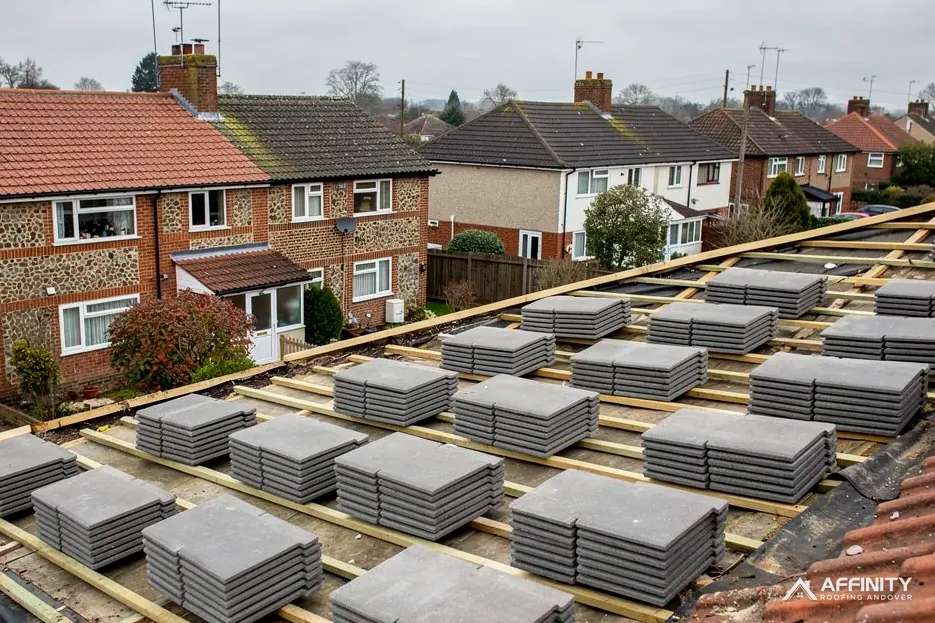
The lead time shapes the calendar. If a consent question is open, the booking waits, and the roof is not stripped until the answer is in. When the date is set, tiles and timber go first and the frame second, which means the fee covers working days rather than waiting ones.
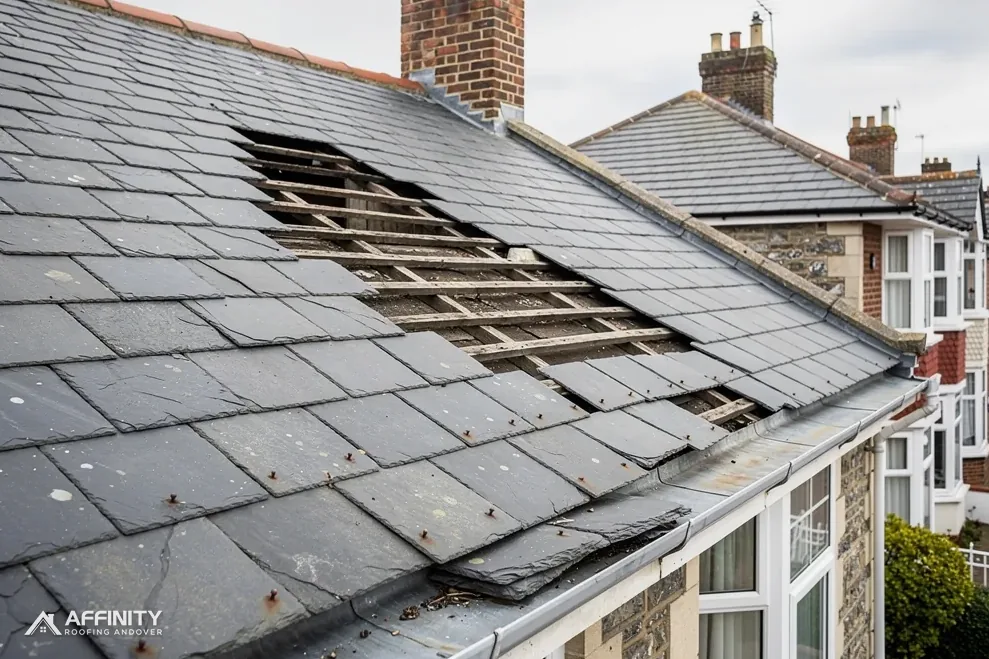
What owners ring about is practical. Roof repairs deal with loose tiles and lifted flashings. Slate roofing covers re-laying and re-fixing. Chimney repairs restore stacks whose mortar or flashing has failed.
On a village lane we introduce ourselves to the house on each side before the frame goes up, give them dates and a number to ring, and keep to the hours agreed with you.
Notice is the part of a Hampshire licence that surprises people. Ten clear working days is two weeks on the calendar, and a bank holiday in the middle stretches it further. We tell you at the survey when the earliest realistic start would be, so the work is booked against a date you can trust.
A frame in a lane is shared space while it stands. The first lift is fenced, boards are tight and debris is netted. Neighbours are warned beforehand, and the skip and deliveries have set places.
In a village lane there may be only one place a lorry can stand, and we fix it with you, and any neighbour affected, before the day. Tiles, battens and lead go up by hand or hoist and are never left across a drive or footway overnight.
Rain can stop the roof work while the licence keeps running, so the start date allows spare days and anything left open is covered overnight. When the frame comes down, the rubbish goes with it, and the photographs reach your inbox.



Twyford roofs: the park, the villa and the lane
Is a Twyford re-tile a matter for Winchester or the National Park?
Planning belongs to the South Downs National Park Authority, and Winchester's planners process most applications on its behalf. Building control stays with Winchester. Putting back the same tiles may need little more than a building control check, yet any new colour or material is one for the planners, so ask before ordering.
Does the Roman villa site restrict work on nearby roofs?
Consent for a scheduled monument concerns the monument itself, and mending a nearby house roof is not normally covered. We read the site's extent on its list entry before placing a base plate, skip or delivery near the line. If the position is unclear, we raise it with the authority first and tell you the reply.
How much notice does a Hampshire scaffold licence need in Twyford?
Hampshire County Council wants 10 clear working days between the form and the first day, with no extensions. Hampshire County Council's fee is £211.90 on application for the first 2 weeks and £72 for each further 2-week period, and the scaffolding firm files the form. A frame kept entirely on your own property is outside the licence.
Who deals with Building Regulations for a Twyford roof?
Winchester City Council's own Building Control service, reached through the council on 01962 840 222, or a registered building control approver if you want a private body. A national park authority handles planning only, never building control. Laying a covering 15 per cent heavier needs approval, as does going beyond that, and the question goes to the Winchester team first.
South Downs villages around Twyford
Have a Twyford roof surveyed
Give us your lane and a photograph. First comes the survey, then the consent checks, then one written price.
10-year workmanship guarantee, in writing.