
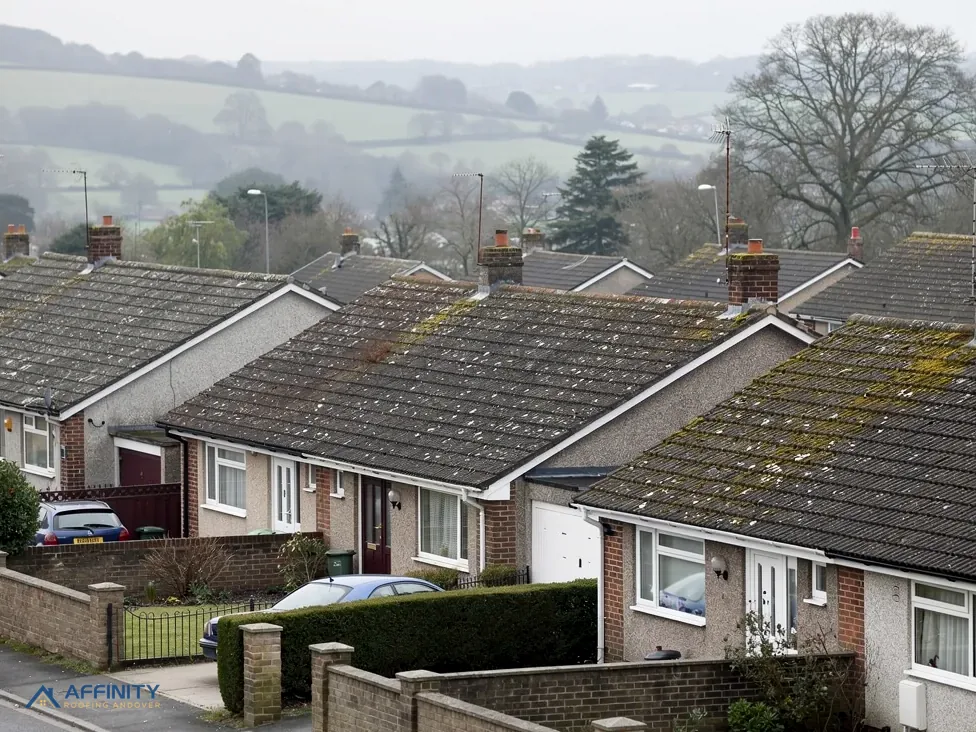
Roofers in Otterbourne
A church village with listed houses between Winchester and Eastleigh
Otterbourne has 14 listed buildings near its centre, including a Grade II* church. Each roof is checked from above, photographed and explained before a figure is set.
Otterbourne roofs, from the church to the White Horse

Church and churchyard houses
St Matthew's church, listed Grade II*, and the older houses around it, where the owner's consent route comes first.

Cottages from the 1908 survey
Cottages that the 1908 Victoria County History described as some thatched and half-timbered, others red brick and modern.

Listed houses and the pub
Otterbourne House, the Old Parsonage and the White Horse, each listed Grade II, where matching materials come first.
Otterbourne between Winchester and Eastleigh
Compton and Twyford lie to the north and north-east, Hursley to the north-west. Colden Common is east, Allbrook and Bishopstoke south, and Chandler's Ford south-west.
- Distance
- 21 road miles south of Andover
- Planning
- Winchester City Council
- Council
- Winchester City Council and Hampshire County Council
The Otterbourne roof report
Local editionOtterbourne, HampshireWinchester rules, a Grade II* church and cottages
One council from planning to building control: how an Otterbourne roof is cleared
Otterbourne is 21 road miles from Andover and answers to Winchester, not Test Valley. Below: who clears a roof job in the village, what a Grade II* church and 14 listed neighbours change, and how Hampshire treats hoarding on a scaffold licence.
Winchester City Council, from planning to building control
Otterbourne lies in Winchester district, so Winchester City Council makes the planning decisions across the parish, and Hampshire County Council maintains the road. That is a different pair from the one that serves Andover, and a house across the district line answers to a different council. The parish had 1,564 usual residents at the 2021 Census.
Winchester also runs its own Building Control service. The council's page sets out its remit: the building regulations themselves, fire safety, advice before an application is made, and work on dangerous structures and demolition. The council can be reached on 01962 840 222. That pre-application route is useful for anything more than a patch, because a short conversation before the job costs less than a correction during it.
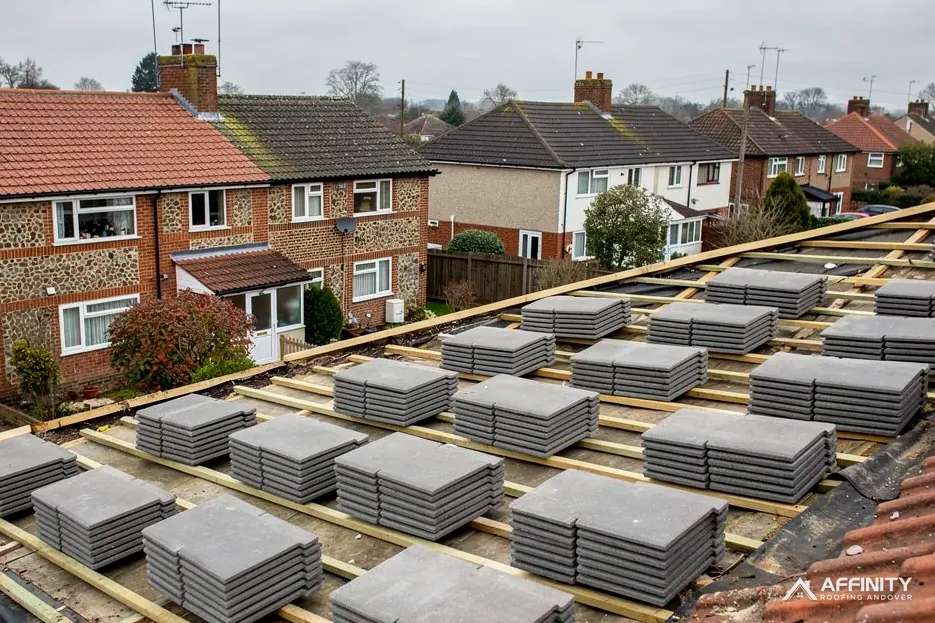
Two things tend to turn a routine re-roof into a regulated one. The first is weight: tiles that make a roof 15 per cent heavier than before bring Building Regulations approval, and the Planning Portal suggests checking the structure first. The second is fire performance, since a covering that behaves very differently in a fire from the old one is also caught. Slate swapped for a synthetic product deserves a call to the team first.
When a re-roof is on the cards, we write down which questions go to the Building Control service and which to the planning team. The first covers weight, structure and fire performance of a new covering. The second covers how the roof will look: material, colour, shape, and whether listed building consent or conservation rules come into it. Keeping the two apart stops a homeowner chasing the wrong desk.
You can instead use a registered building control approver, a private route regulated since 6 April 2024. If you do, tell us before the survey and we will route our notes to that approver, so the technical questions reach the body that will sign the work off.
Whether an Article 4 direction applies to your Otterbourne street is a question only Winchester City Council can answer. We put it to the council before pricing any job that changes a roof's appearance, and keep its answer with the survey photographs. It costs nothing to ask and it can save a redesign.
Small repairs are different. A few replaced tiles or a renewed flashing is maintenance, and it rarely needs more than a sensible look at the roof, so the survey tells you quickly which category your job falls in and whether anyone needs to be asked at all. If the answer is nobody, you will have it in writing, with the photographs that show why.
St Matthew's church, a pub and some thatched cottages
The National Heritage List records 14 listed buildings within about 500 metres of the centre of Otterbourne. The church, St Matthew's, is listed Grade II* (list entry 1095758, first listed on 5 December 1955). Otterbourne House is Grade II (1350540, the same date), and the Old Parsonage (1350539) and the White Horse public house (1095757) are Grade II too. For a village of this size, that is a dense cluster of protected buildings.
In 1908 the Victoria County History described Otterbourne's main group of cottages and houses as some thatched and half-timbered, others red brick and modern. That is an early twentieth-century description and no guide to today's roofs, though it shows that the village has long mixed its building types. Thatch belongs with a thatcher, whereas the tiled roof beside it, the chimney or the gutter is work we can take on.
St Matthew's is an Anglican parish church that is still in use, which means roof work on it goes through the faculty system instead of listed building consent. Anyone who looks after a church building should begin with the church's own process and then tell us what it allows, so that our survey notes match the permission. Catholic and Methodist churches have systems of their own; Quaker and Unitarian meeting places need consent.
For listed houses, consent is the route for anything that alters their special character, which means a new material, a changed pitch or an extra opening. Our guide to listed building roof repairs sets out the steps. We photograph tile size, fixings, ridge and verge detail so Winchester's planners can see exactly what is there.
On a listed roof the first visit produces a record before it produces a price. Each slope is photographed, the tile or slate sizes are measured, the fixings are noted and the condition of the battens and rafters is recorded wherever the loft allows. If old materials have to be replaced, sound reclaimed ones are sought before new, because a roof that has weathered for generations looks wrong with a block of bright new tiles in it.
Twyford is the nearest conservation area, within about 2.5 km, not one that touches the village centre. That settles nothing about your own address, and a conservation area could still apply on the village edge. Winchester City Council's map is the place to check, and we read it with you on site.
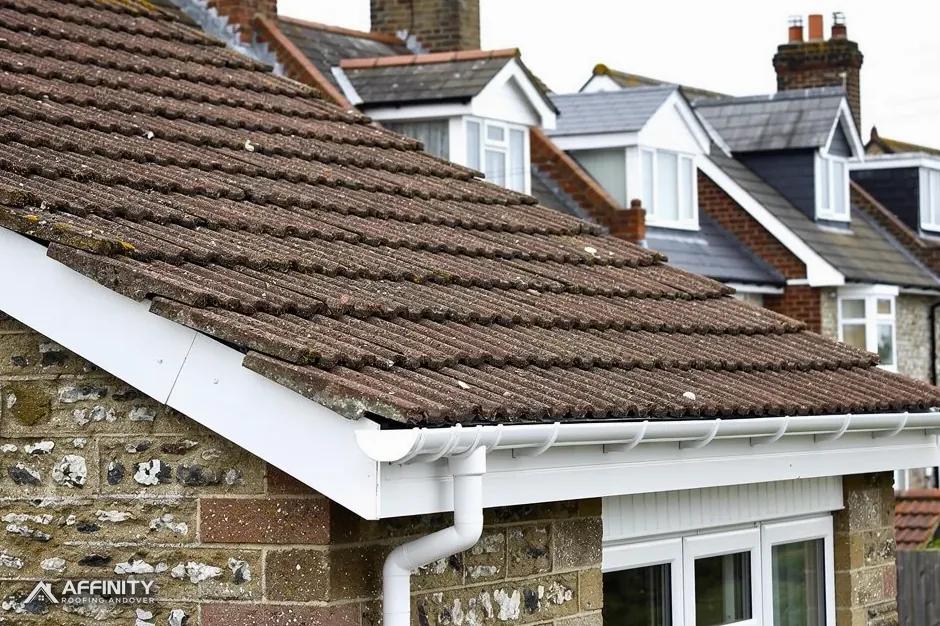
Roofs of different ages need different tools. A cottage that has lost a few clay tiles needs a careful match, while a later house may need only a ridge re-bedded and a valley re-lined.
“In Otterbourne, Winchester answers both the planning question and the building regulations one.”
Flood Zone 3 land, hoarding and the Hampshire licence
Environment Agency Flood Zone 3 takes in parts of the land within about 250 metres of the centre of Otterbourne. That says nothing about any one house, but it is a reminder that rainwater has to be sent somewhere sensible. Downpipes should end at a gully or soakaway that works, and a gutter joint that drips onto a wall is worth fixing before the winter, not after it.
Hampshire County Council licenses any scaffold that occupies the road or pavement, under section 169 of the Highways Act 1980. Hampshire County Council's fee is £211.90 on application for the first 2 weeks and £72 for each additional 2-week period, and a further fee applies where hoarding is needed alongside the scaffold. Hoarding is the solid screen that protects passers-by, and it matters on a narrow pavement.
In Hampshire County Council's scheme the scaffolding company makes the application, with a gap of 10 clear working days before the start. Tacit consent is excluded and extensions are not offered. Private roads and drives need no licence, and the survey records which situation your house is in.
Because Hampshire's licences are rigid, dates are confirmed with the scaffolder after the survey. A licence that expires before the tiles arrive has to be bought twice. We also check whether neighbours' properties are affected by the scaffold, and if a shared wall is involved we raise it with you early, since party wall questions go to a party wall surveyor and not to the roofer.
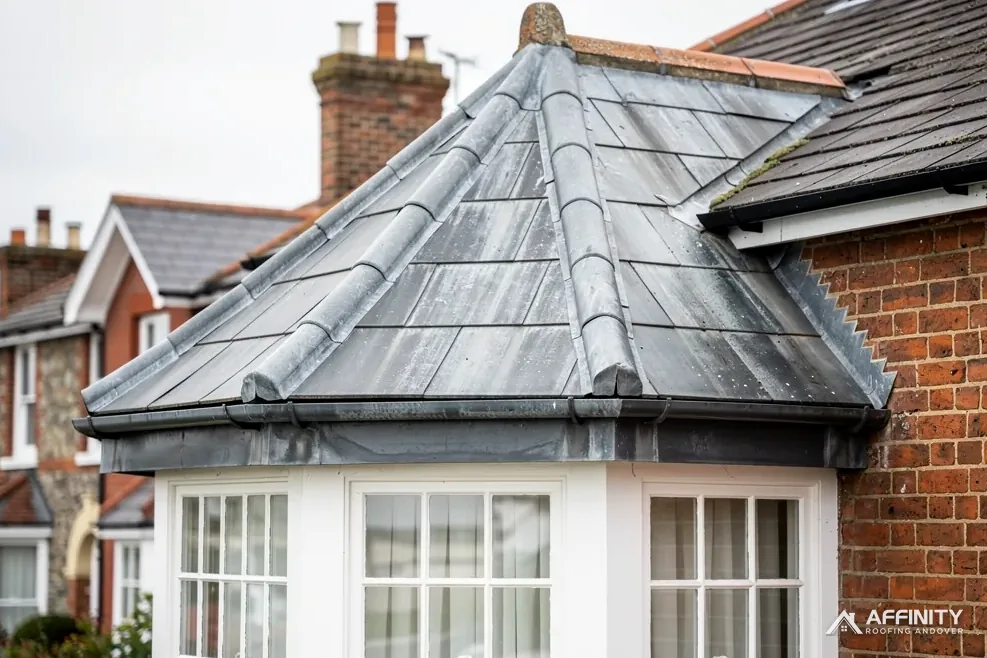
Everyday jobs make up the work. Roof repairs deal with slipped and cracked tiles, chimney repairs with failing flashings, flaunching and pointing, and guttering, soffits and fascias with the roofline where water collects. Each begins with photographs taken up on the roof, so the evidence is yours before you decide anything.
Quotes deserve a careful read. Check whether a price covers the scaffold and its licence, whether it includes VAT, and what happens if rotten battens or rafters turn up once the covering is off. A total that leaves those questions open is a smaller number only until the work begins.
Leaks are a separate case. If water is coming through a ceiling today, safety is the priority, even if that means a temporary cover for a few days, and the lasting repair is worked out from the pictures afterwards, with nobody rushed into a bigger job than the roof needs.
Jobs we price in Otterbourne



Otterbourne roofs: church, cottages and the county licence
Can an Otterbourne cottage keep its thatch and add a tiled porch?
A thatched roof stays with a specialist thatcher, who also advises on any change to it. A new tiled porch or extension roof is a separate roof, and we can survey and build it. Both come under Winchester City Council's planning rules, so ask its planning team early, particularly where the house is listed or close to the church.
Who checks building regulations for a re-roof in Otterbourne?
Winchester City Council's own Building Control service, which covers building regulations, fire safety and pre-application consultation, reached through the council's main number, 01962 840 222. A registered building control approver is the alternative. Ask before the job if the covering is heavier, differs in fire performance or the structure changes. We raise the question at the survey and pass the council's reply to you.
What does hoarding add to a scaffold licence on an Otterbourne road?
Hampshire County Council charges £211.90 on application for the first 2 weeks and £72 for each further 2-week period, and an additional fee applies when hoarding accompanies the scaffold. Whoever erects the scaffold applies to Hampshire County Council 10 clear working days ahead. A private drive or private road needs no licence, and a scaffold that never reaches the highway escapes the fee.
Is the Otterbourne church roof covered by listed building consent?
Not while the church is used for worship. St Matthew's, listed Grade II*, is an Anglican church that is still in use, so repairs go to the faculty system. Catholic and Methodist churches keep their own schemes, and closed or disused churches need listed building consent. Tell us which applies when you book the survey.
Otterbourne's neighbouring villages
Book an Otterbourne roof survey
Send an address and photo. Winchester checks are named first, and a total price follows in writing.
10-year workmanship guarantee, in writing.