
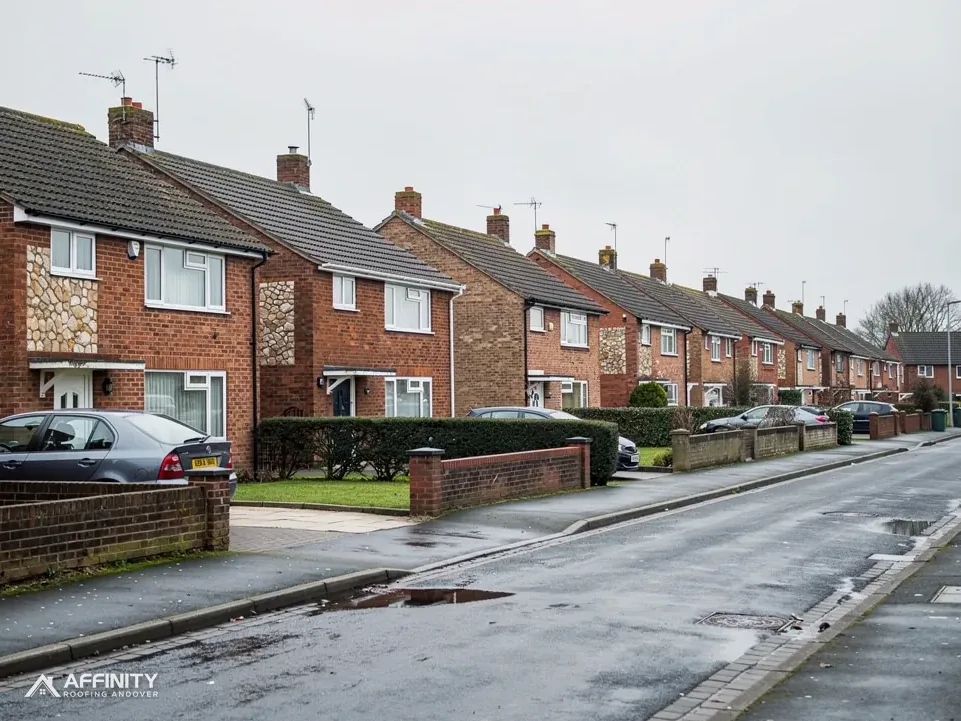
Roofers in Winchester
A city of 436 listed buildings, clay-tiled lanes and slate terraces
Winchester has 436 listed buildings within about 900 metres of its centre and conservation areas first designated in 1967. Each roof is looked over first, and priced only afterwards.
Winchester roofs, from the close to Christchurch Road
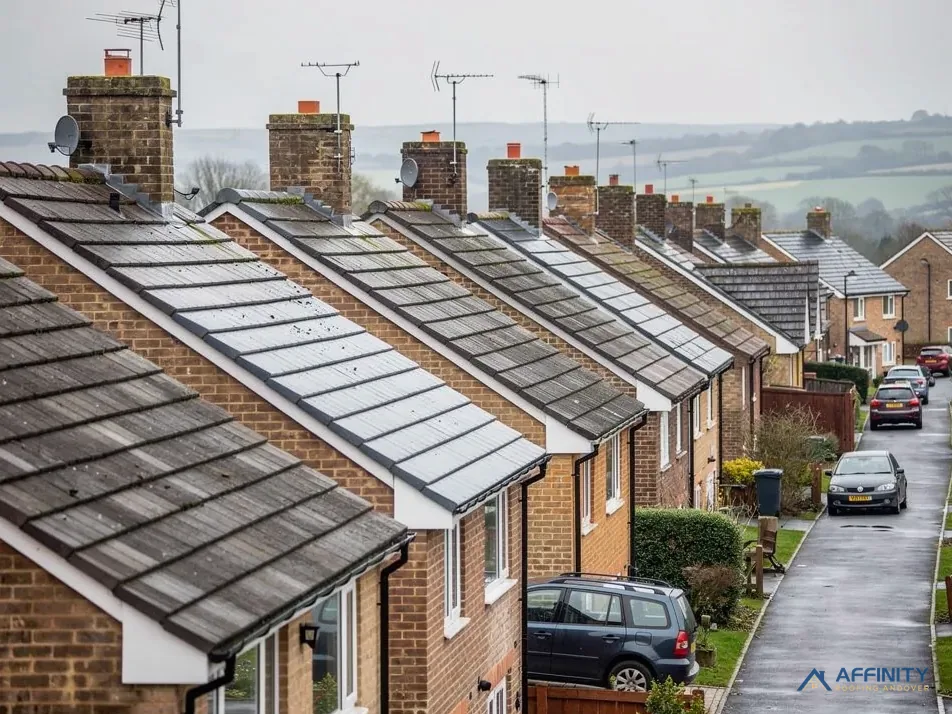
Canon Street and College Street
The appraisal describes Georgian and Victorian houses with undulating rooflines clad in plain clay tiles, street after street.
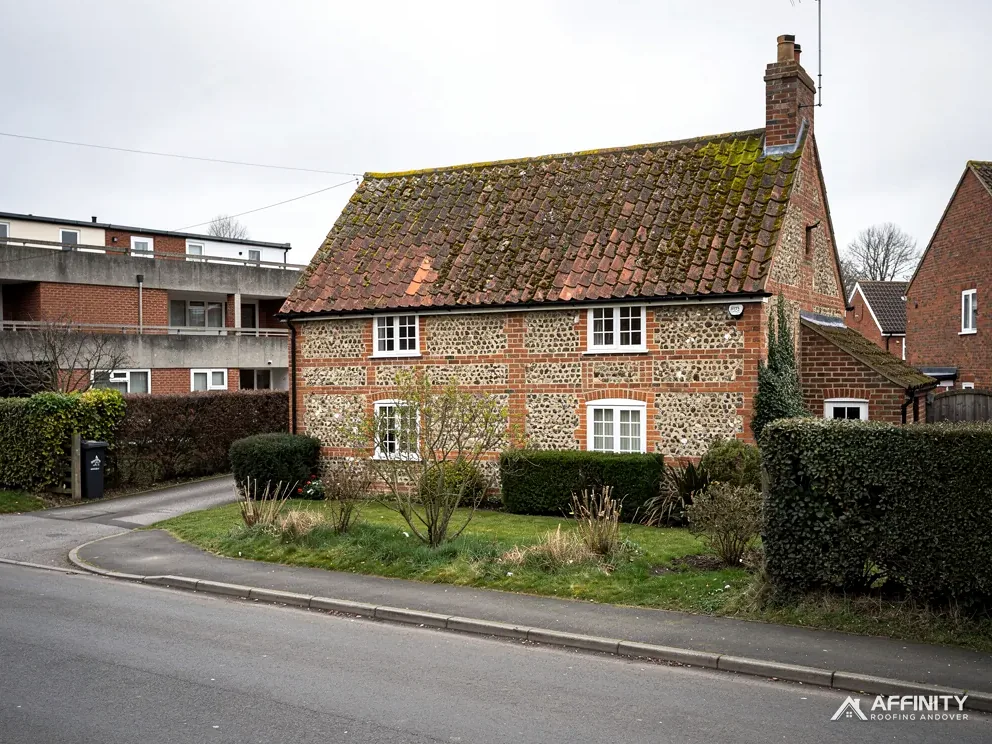
Christchurch Road
The appraisal records brick or stuccoed brick houses with slate roofs, some on chalk cob walls, in this character area.
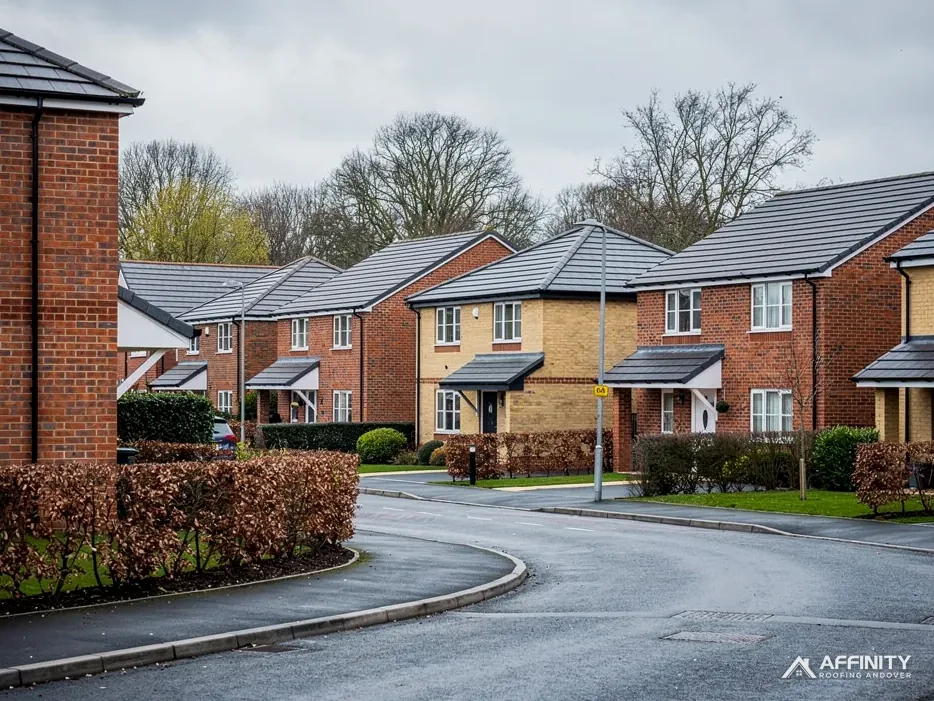
Grade I landmarks
St John's Rooms and Chapel, 10 The Close and College Hall are all Grade I, among 436 listed buildings nearby.
Winchester and the villages round it
Kings Worthy is the next village north of the city, with Littleton to the north-west and Sparsholt to the west. Hursley and Compton lie south-west, Twyford south and Owslebury south-east.
- Distance
- 16.5 road miles south-east of Andover
- Planning
- Winchester City Council
- Council
- Winchester City Council and Hampshire County Council
The Winchester roof report
Local editionWinchester, HampshireA city of listed rooflines
Winchester roofs: 436 listed neighbours, clay on one street and slate on the next
Winchester is a city 16.5 road miles south-east of Andover. Here is what the city's appraisals say about its roofs, how listed and conservation-area work gets approved, and what changes when scaffolding must stand on a city pavement.
Four hundred and thirty-six reasons to ask first
Winchester is a city 16.5 road miles south-east of Andover. Winchester City Council takes the planning decisions and keeps its own Building Control service, while Hampshire County Council looks after the roads. Historic England's list counts 436 listed buildings within about 900 metres of the centre, and in the middle of the city a roof change that looks modest from the pavement can alter a listed neighbour's setting.
Our working rule follows from that. The council hears about a change before the scaffold is ordered. Repairing in kind, with the same clay or the same slate, is where we start, and the survey logs the dimensions, shade and fixing method of what is there, so the officer reads an exact description and not an impression. A listed house needs its own consent for changes to its character, and the decision arrives before work begins.
On Building Regulations, the Planning Portal gives the national yardsticks: 25 per cent of the whole building envelope and 50 per cent of the roof. If the work stays under both, an application is not usually required, and the city's own pages add no figure of their own. A covering that adds 15 per cent or more to the load is a separate trigger, with an engineer's or surveyor's view taken first. The council's Building Control service is reached through Winchester City Council's main number, 01962 840 222, and a call goes in ahead of any re-roof date.
The South Downs National Park boundary reaches the edge of the area around the city centre, though the centre itself is outside it. A house inside the park falls to the park authority for planning, with the city council usually processing the application as host authority. Building control stays with the city either way, so we confirm which side of the line an address falls on before pricing anything.
The Winchester appraisals are the clearest guide to how a repair should read in the street, so we read them alongside the survey, and we also keep the council's reply, if one was needed, in the same folder as the photographs.
Behind many street frontages a city has flat or low-pitched roofs, on extensions, offices and flats, and those are judged by their falls and membranes, not by tiles. A new membrane on a flat roof is renovation under Approved Document L (2021 edition), with a target of 0.16 W/(m²·K) unless the upgrade is not technically feasible or would not repay within 15 years; the 2026 edition applies from 24 March 2027.
Clay on College Street, slate on Christchurch Road
The Town Centre and Hyde Abbey conservation areas were designated in 1967 and St Cross in 1969, among the first designated in the country, and all three were extended and united in 1981. The united boundary lies within about 0.75 km of the city centre. Inside it, a planned dormer or reshaped roof goes to the city council's planners first, and whether an Article 4 direction covers a particular address is for Winchester City Council to say.
The appraisal describes Canon Street and College Street as lined with Georgian and Victorian houses of brick, stone and painted stucco, with undulating rooflines clad in plain clay tiles. The appraisals do not stop at the front of a house: a rear wing or a lean-to behind a Georgian frontage has a roof too. A short walk away, in the Christchurch Road character area, it records houses of brick or stuccoed brick, generally with slate roofs, some on chalk cob walls. Two streets, two coverings, two different jobs.
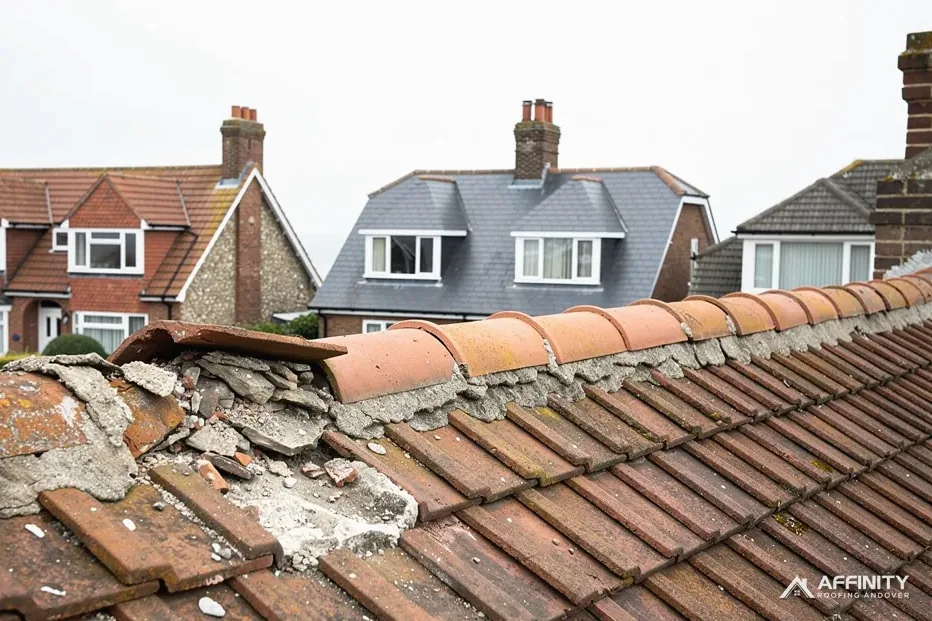
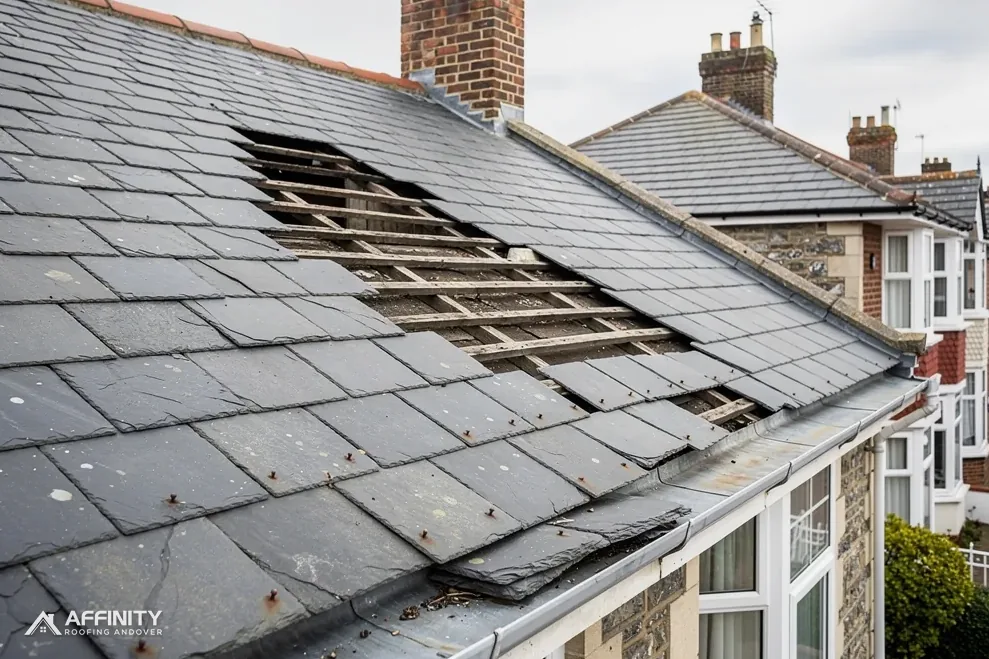
Clay and slate fail in different ways. A plain tile roof with a wavy line has moved over the decades, so the battens and fixings beneath are checked before a tile is lifted back into place. A slate roof depends on its nails and clips, and a slipped slate usually points to a corroded fixing. HomeBuilding (Sept 2025) gives Welsh slate 100+ years, Spanish natural slate 75-100 years and clay tile 60-80 years: typical ranges, never promises.
Matching matters on both. Reclaimed clay tiles blend into an old roofline and reclaimed slates into a slate one, since both arrive weathered. Sourcing takes a while, and the survey puts a time on it. Our slate roofing page describes the work.
St John the Baptist's church, listed Grade I (list entry 1296158, first listed on 14 January 1974), appears on OpenStreetMap as an active Anglican church, which sends its roof works down the faculty route. St John's Rooms and Chapel (1095441) is also Grade I; its route depends on how the chapel is used. Owners can ask us for a survey report to support an application.
Where walls are chalk cob, as the appraisal records in the Christchurch Road area, a roof is also a protective hat. Earth walls need to stay dry, so a failed verge or a leaking gutter matters more than it would against brick, and the survey looks at the roof edge and the rainwater goods as part of the same inspection. Where a roof meets a painted stucco wall, the flashing is chased into the render and sealed, and the owner chooses the paint.
“In Winchester a roof has two councils above it and a crowd of listed neighbours around it.”
Scaffolding on a city street
A scaffold on a Winchester pavement or road is on the highway, so section 169 of the Highways Act 1980 makes the highway authority the licensing body, which here is Hampshire County Council, not the city council. Under Hampshire County Council's licensing, the scaffolding contractor lodges the application no later than 10 clear working days ahead of work starting, and extensions are not on offer. Hampshire's fee is £211.90 on application for the first 2 weeks and £72 for each further 2-week period.
In a historic street the practical questions multiply: how much pavement stays clear, where the boards stand beside parked vehicles, whether a tower or a full frame is right, and how a listed neighbour's wall is protected. The survey plan answers each one, so the licence application then matches what will actually be built.
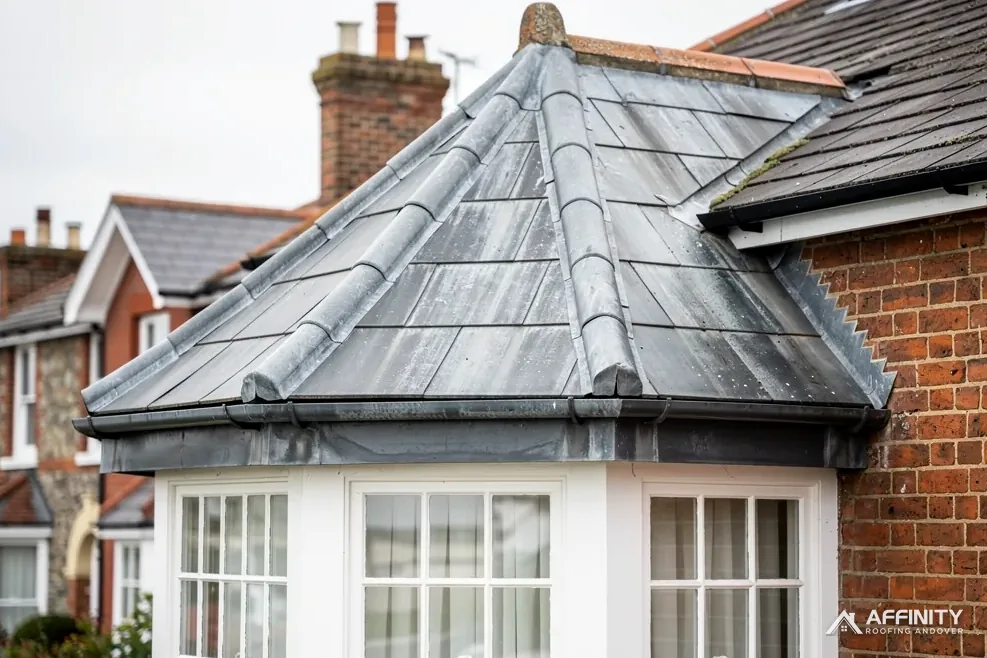
Roof work in a city is largely a matter of access. A parapet is the short wall along a roof's edge, and a valley is the fold between two slopes; both are hard to reach from the street alone, and lead work at either is a craft of its own. Lead roofing is surveyed seam by seam, and the report carries a close photograph of every failing joint or flashing.
On the Environment Agency's map, parts of the ground within about 250 metres of Winchester's centre lie in Flood Zone 3. The map deals with rivers rather than roofs, yet roof water must leave a building somehow, and in tightly built streets a downpipe may discharge to a shared drain. We trace each one and report what we find.
If a roof is admitting water, it is sheeted over as the first step, and the permanent repair is planned once it is dry. After that, roof repairs follow the consent route, and the site is cleared every day.
Terraced houses often share a chimney stack, so flashing and pointing work can touch the neighbour's side. Under the Party Wall etc. Act 1996 two months is the minimum notice for relevant work, and a party wall surveyor, not building control, settles any dispute.
National guides give typical UK ranges: Which? (Nov 2025, ex VAT) gives £75 to £400 for putting right a handful of tiles (one to six), and MyJobQuote (Oct 2026) gives around £215 for five tiles. MyJobQuote also gives an emergency call-out range of £150 to £300, with storm repairs starting at around £300 and extensive storm repairs at £1,200 or more. A range cannot see your roof, and Citizens Advice's advice is to collect written quotes from 3 or more traders.
From ridge to gutter in Winchester

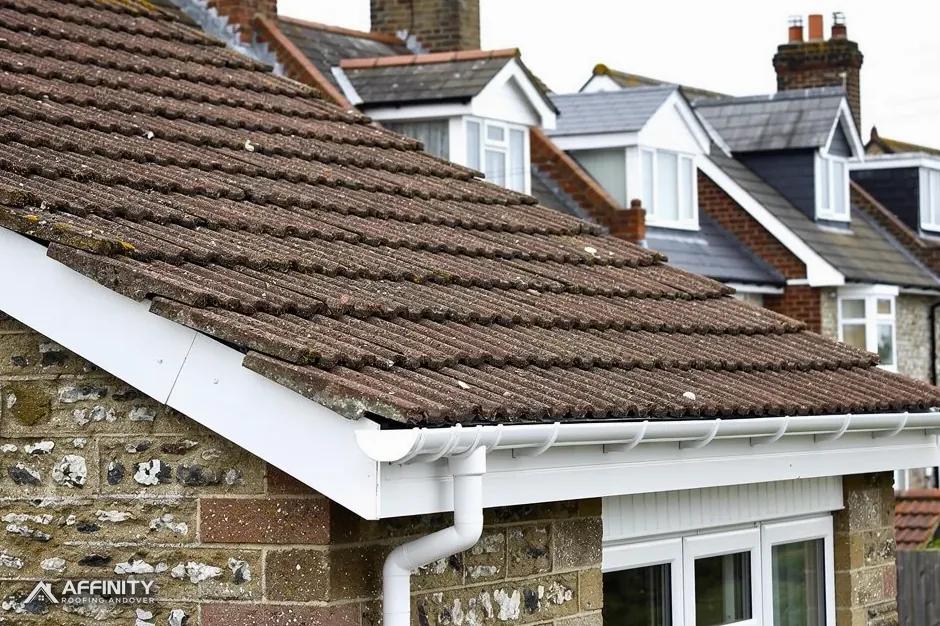
Winchester roofs: clay, slate and the city streets
Why do Winchester roofs differ so much between College Street and Christchurch Road?
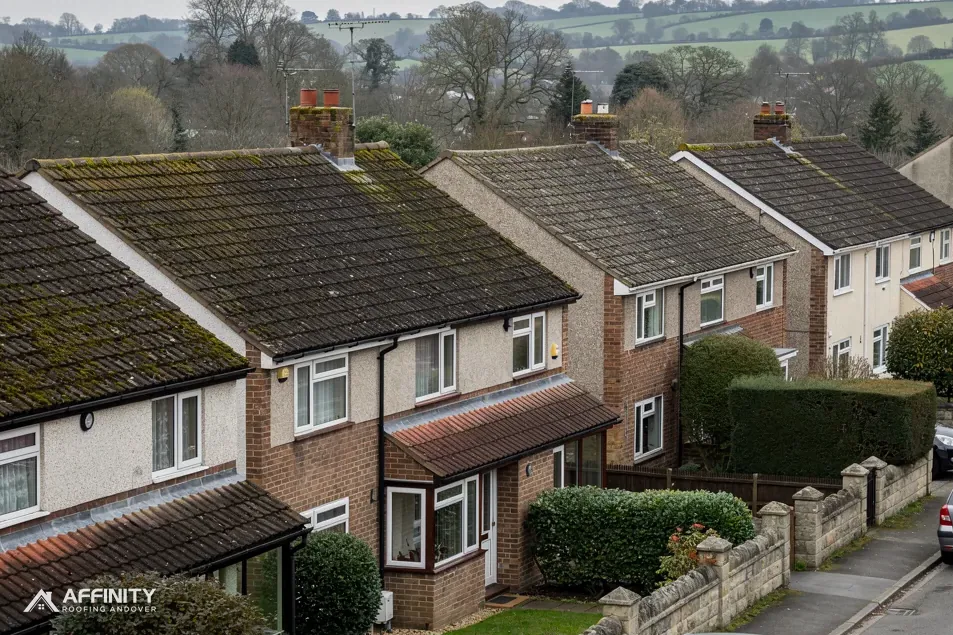
The conservation area appraisal describes plain clay tiles and undulating rooflines on Canon Street and College Street, and generally slate roofs on brick or stuccoed houses in the Christchurch Road area. Two coverings need two repair methods, so the survey identifies the material and fixing before a method or price is named, and the report says which is which.
Does a Winchester house in the South Downs National Park need a different council?
It can. Inside the park, planning rests with the South Downs National Park Authority, and Winchester City Council acts as host for the application. Building control stays with the city council. The park boundary touches only the edge of the area around the city centre, so we check each address before pricing and keep the answer on file.
How do you protect a listed neighbour when a scaffold goes up?
Our survey plan shows where the scaffold will run, where the boards sit and where the sheeting hangs, so that nothing rests on or fixes to a neighbour's wall without agreement. We discuss the plan with you before the licence application is lodged, and we keep the neighbour informed of the dates.
Is a Hampshire scaffold licence charged by the week in Winchester?
In two-week blocks. Hampshire County Council charges £211.90 on application for the first 2 weeks and £72 for each further 2-week period, with a lead time of 10 clear working days. Private roads are outside licensing. The programme is built so the frame comes down as soon as the work allows.
Winchester and its surrounding villages
Have a Winchester roof surveyed
Where is the roof? Send the address and a snap, and a survey, the council check and one price follow.
10-year workmanship guarantee, in writing.