
Roofers in Longstock
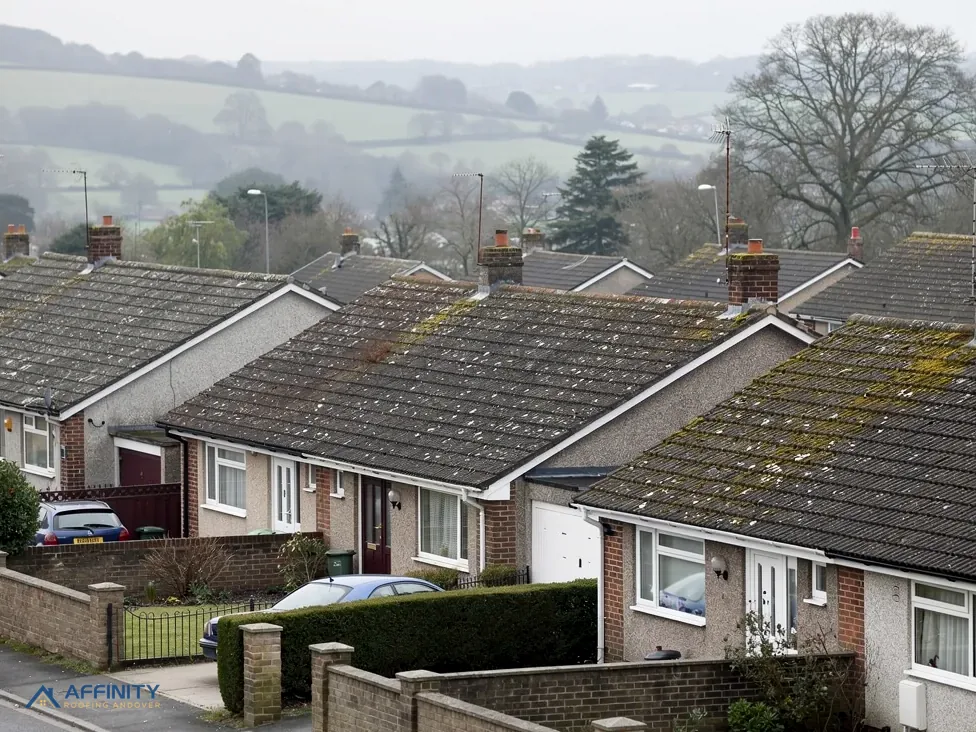
The Moat, the Grade II church and the older roofs of outbuildings
Longstock has a scheduled monument and 31 listed buildings near its centre. Older sheeting is checked for asbestos first, and every roof gets a survey with photographs.
Longstock roofs, church to farm building

Longstock's Grade II church
Listed on 27 November 1984 and still Anglican, so its roof is a faculty matter and not for the council.

The Old Vicarage
A Grade II house on the list since 29 May 1957, where repairs have to follow the covering already there.

Homes by the Moat
Properties within about 500 m of The Moat scheduled monument, where any ground works are raised with Historic England first.
Longstock south of Chilbolton
Chilbolton lies to the north-east, Wherwell further north-east, Goodworth Clatford to the north, and Stockbridge a short way south. Each of them is ours to survey.
- Distance
- 6.4 road miles south of Andover
- Planning
- Test Valley Borough Council
- Council
- Test Valley Borough Council and Hampshire County Council
The Longstock roof report
Local editionLongstock, HampshireA scheduled monument and old sheeting
Longstock roofs: a scheduled monument, a Grade II church and the asbestos question on old sheeting
Longstock has a scheduled monument within 500 m of its centre, a conservation area and 31 listed buildings. Here are the consents, the separate route for the church, and what to do about older cement sheeting.
A conservation area, a monument and two councils
Longstock lies 6.4 road miles south of East Street in Andover. A parish of 467 residents at the 2021 Census, it falls to Test Valley Borough Council for planning and to Hampshire County Council for the highway. Neither a national park nor a National Landscape reaches it.
A conservation area carrying the village name is recorded within about 0.75 km of the centre, and Test Valley Borough Council drew the line. Plans that alter how a roof reads from the lane are worth discussing with the council before they are priced. Ask Test Valley Borough Council, too, if an Article 4 direction covers your street, because such a direction can take away freedoms a house normally has.
Then there is The Moat, a scheduled monument within about 500 m of the centre (list entry 1001940). Consent for works to a scheduled monument comes from the Secretary of State, and doing them without it breaks the Ancient Monuments and Archaeological Areas Act 1979. Your roof is not the monument. Digging beside it, for a scaffold footing or a drain, is another story, and a word with the council before the spade goes in is cheap insurance against a stopped job.
Two numbers matter to a re-roof, and both come from the Planning Portal. Touch less than 25 per cent of the building envelope and less than 50 per cent of the roof and no building control application is normally called for. Add 15 per cent or more to the weight and Building Regulations approval is needed, and the Planning Portal advises an engineer or surveyor looks at the structure first. The enquiry goes to your building control body, which is local authority building control or a registered building control approver.
All of which needs facts, and the survey supplies them. We stand back on the lane first, then climb where the roof allows. A tile is raised, the laths and membrane beneath are photographed, and the loft is checked where there is a way in. The report separates the failed from the sound, so the choice between patch, partial re-cover and full replacement is yours to make with the evidence in hand, and with a clear idea of what each would need by way of approval.
Because the village has a conservation area, a monument and a church, the order of enquiries matters. Council first, then building control, then the scaffolder; a roofer who books the frame before the consent answer arrives may find the licence period running with nobody on the roof.
A Grade II church, the Old Vicarage and 31 listings
Historic England lists 31 buildings within about 500 m of the centre of Longstock. The church, Grade II (entry 1302797), went on the list on 27 November 1984. The Old Vicarage, also Grade II (1093154), has been there since 29 May 1957. Each of those entries can be checked by name before a Longstock roof is priced. A Grade II listing is still a listing: consent is required for work that touches character, and a covering put on badly stays on badly for decades, which is why the match is worth the extra week. Not sure if your house is among the 31, or whether a listed neighbour shares its wall? Historic England's online list, searched by address, gives the grade and date within minutes.
The church is Anglican and still used for worship. That puts its roof under the Church of England's faculty system, a faculty from the diocese's consistory court clearing Longstock's church, and takes it out of the council's listed building consent. Our place in that is the dossier: the survey, near pictures of the covering and the lead, and a short note of the defect and the cure. The timing of any work is agreed with the church around its services and local events. Any scaffold on or beside a church is an event in a village, so the church will want the dates, the working hours and who will be on the roof, and we supply a simple programme with the survey.
The Old Vicarage is a house, which sends it to the council. Test Valley Borough Council grants or refuses listed building consent for work that touches the building's character. A like-for-like patch is the easy case. Putting a different covering on, altering the ridge or taking chimneys down makes it hard. Ring the planners before agreeing a price, since a refusal costs more than the call.
Because the roof next door could be listed, its entry is checked before a frame or tower stands against a shared wall. The owner next door hears about it first, the position keeps clear of old masonry, and the date is set once everyone knows. Villages remember how a job was run.
Close photographs of these roofs log the size, thickness and colour of each tile, the way courses are laid, and the ridge, hips, verges and lead around each stack. Armed with that, a salvage yard can match stock from a distance, and a planning officer sees what exists without a site visit. For an unlisted cottage the same log is simply a good habit: a dated picture of the roof before work.
“In Longstock the roof next door may be listed, and the sheeting on the barn may be asbestos.”
Older sheeting, soffits and the asbestos rules
Outbuildings, garages and farm stores can carry roofs from an earlier era. The HSE's advice is to assume asbestos wherever a building dates from, or was refurbished before, 2000, and to treat asbestos cement roofs as always fragile, so nobody should stand on one. Insulating board, a different asbestos product, turns up in external soffits and looks much like board without asbestos. For that reason a survey of an older outbuilding begins with identification, with the ladder second.
The rules follow what is done to the material. Careful removal of asbestos cement, including weathered sheet that is not badly damaged, is non-licensed work in the HSE's terms. Break it up substantially and the work becomes notifiable non-licensed work. Insulating board work that will not be brief is licensable. Where the rules call for a specialist, removal is arranged as its own job, and our repair work waits for it.
Waste is where householders trip up. Asbestos waste is double-wrapped and labelled, and it moves on a consignment note. It does not go in an open skip or in general waste. The household exemption for hazardous waste leaves asbestos out, and carriers must be registered at the upper tier. Ask for the paperwork and keep it. Rainwater goods on older outbuildings may be cast iron, asbestos cement or plastic, and the HSE lists asbestos cement rainwater goods among the non-licensed products when carefully handled, so a gutter that looks like painted concrete deserves identification before it is lifted.
On a farm store or large outbuilding, the survey also looks at the purlins, the beams that carry the sheets, the laps between sheets, the fixings, any translucent panels and the fall of the gutters. Each is photographed, and the report says which have failed. Our commercial roofing page covers larger buildings of this kind.
For a frame on the lane, section 169 of the Highways Act 1980 requires a licence, issued by Hampshire County Council. It names the contractor who erects the frame as applicant, wants the paperwork lodged ten clear working days early and offers no extension. Hampshire County Council charges £211.90 for the first 2 weeks and £72 for each further 2-week period, and a frame on land you own is exempt. Everyday jobs, roof repairs and guttering, soffits and fascias, follow the same steps. Landlords and small commercial owners can use the report as a record of condition, because it is dated, illustrated and written plainly. A tidy site is part of the job, so debris is cleared daily and waste is carted off, and you are told beforehand what each day will involve.
The Longstock roof work we cover



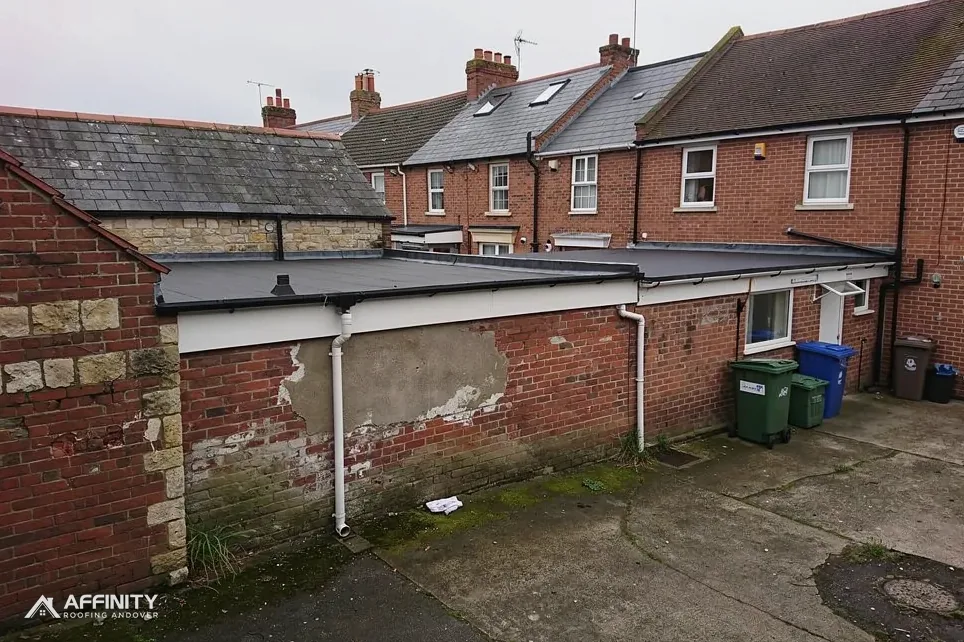


Longstock roofs: the Moat, the church and old sheeting
How do I know if the sheeting on my Longstock outbuilding is asbestos?
You cannot tell by eye. The HSE says to assume asbestos in a building built or refurbished before 2000, and that asbestos cement roofs are always fragile. Do not step onto the sheets or break them. Get the material identified before any work, and arrange removal as specialist work where the rules call for it.
Does a scheduled monument near my Longstock house stop roof repairs?
No. Scheduled monument consent applies to the monument itself, which The Moat is, within about 500 m of the centre. A roof is a different matter, though digging close by deserves a word with Test Valley Borough Council before a footing or trench goes in. We note the position on the survey sketch and mention it to the scaffolder.
Does Longstock church need a faculty for roof work?
Yes. Because it is an Anglican church in use, Church of England faculty rules govern it in place of listed building consent. The roofer supplies survey, near pictures and a written note of the defect and repair, for the faculty application ahead of any work, the faculty coming from the diocese's consistory court, Longstock's church advisers seeing the same photographs we do.
What notice does a Longstock scaffold licence need?
Hampshire County Council sets the notice at ten clear working days and grants no extension to a licence in force. Hampshire County Council's fee is £211.90 for the first 2 weeks plus £72 for each further 2-week period, and the applicant is the scaffolding firm. Land you own is exempt.
Villages round Longstock
Have Longstock's old roofs checked
Say which building it is and what is wrong with the roof. Survey first, then one written price.
10-year workmanship guarantee, in writing.