
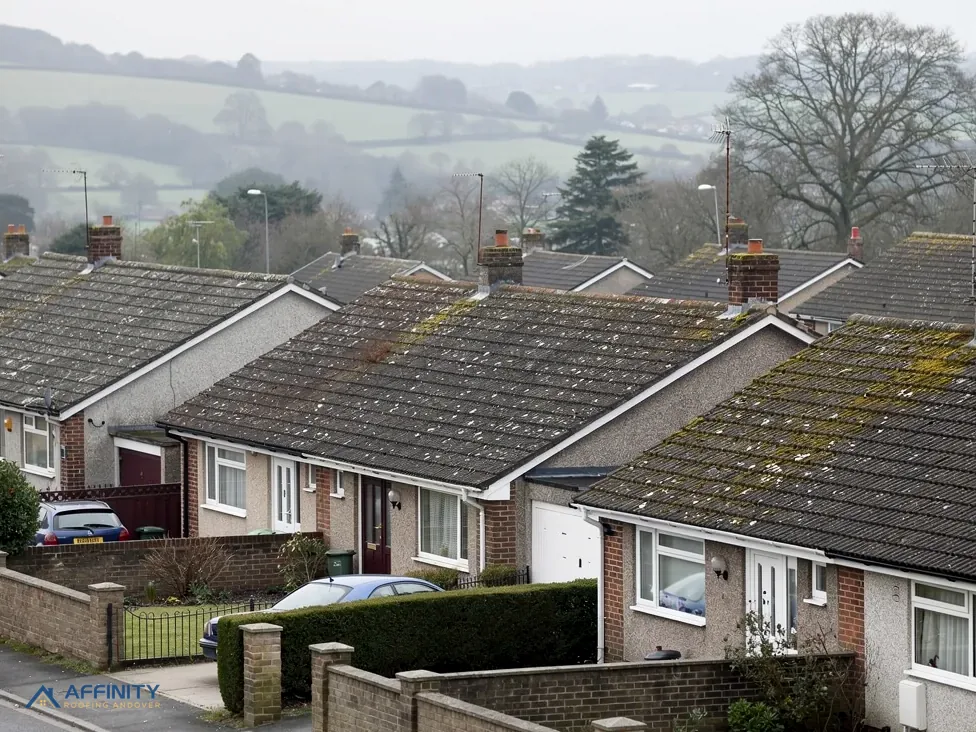
Roofers in Nether Wallop
Roof repairs among Nether Wallop's Grade I church and listed cottage rows
Nether Wallop has 44 listed buildings within about 500 metres of its centre and a Grade I church. Every roof here gets a close survey and photographs before a price.
Nether Wallop roofs, church to cottage row
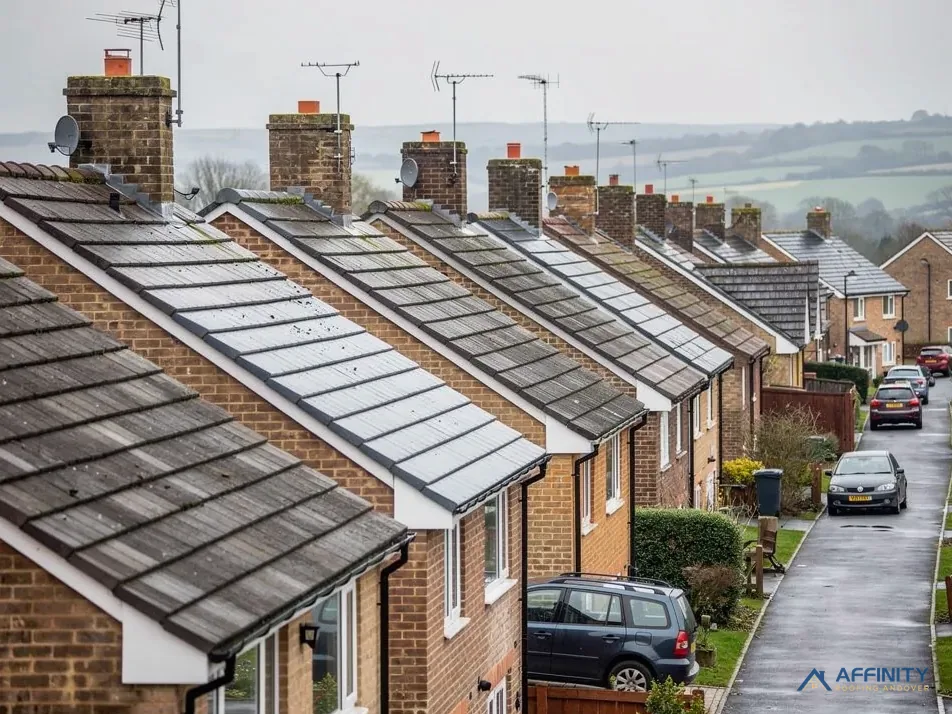
Church of St Andrew
A Grade I church, listed on 29 May 1957, with roof work routed through the faculty system.
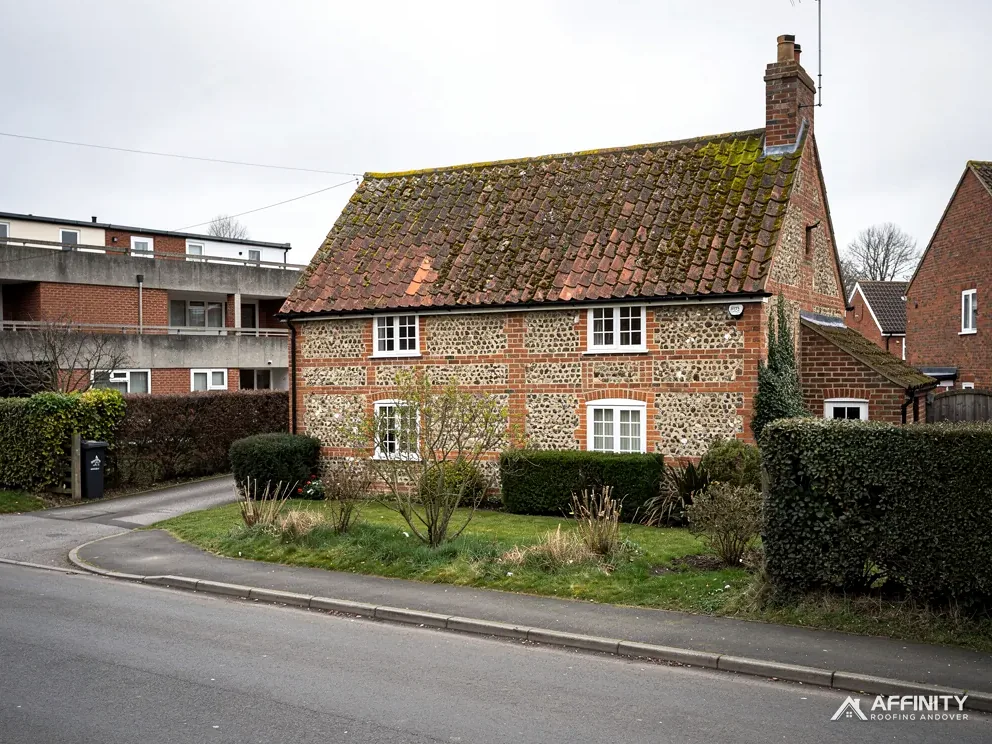
Listed cottages and houses
Beech Cottage, Thornley House and Elm Cottage, each listed Grade II, where any repair must suit the old covering.
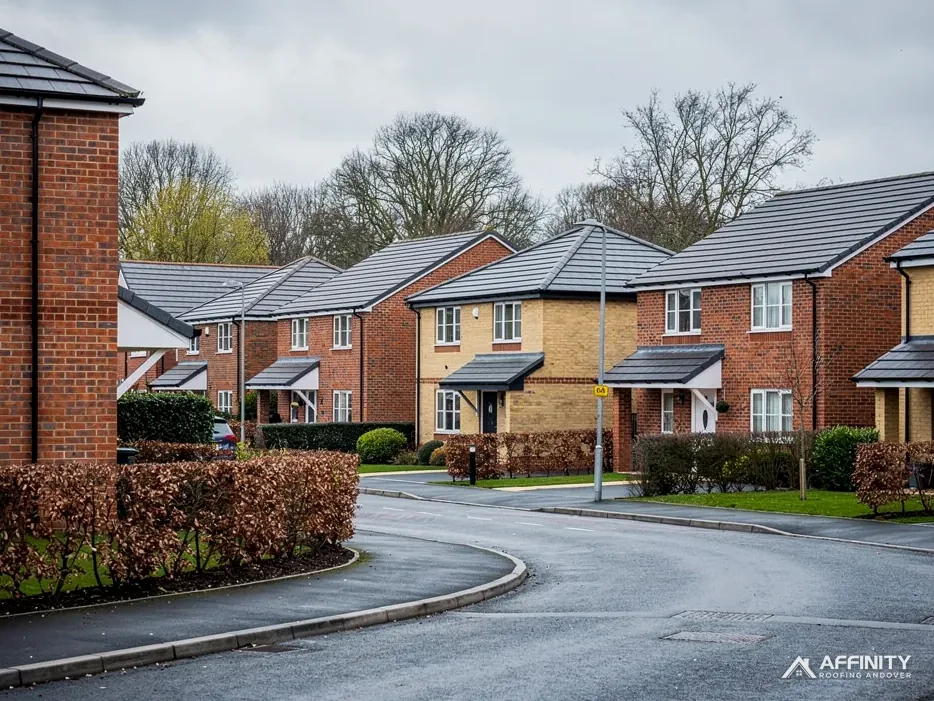
Unlisted homes nearby
Houses with no listing of their own but a listed neighbour beside them, so shared walls and gutters need care.
Nether Wallop between Over Wallop and Broughton
Over Wallop lies north-west of Nether Wallop and Broughton south. Stockbridge and Longstock are east, Grateley north and Winterslow south-west. We take on roof work in each.
- Distance
- 9.6 road miles south-west of Andover
- Planning
- Test Valley Borough Council
- Council
- Test Valley Borough Council and Hampshire County Council
The Nether Wallop roof report
Local editionNether Wallop, HampshireA Grade I church and 44 listed neighbours
Nether Wallop roofs: 44 listed buildings within a short walk, and what that asks of a repair
Nether Wallop has 802 residents, a Grade I church and 44 listed buildings within about 500 metres of its centre. This report covers how that affects a repair, which council decides, and how scaffold is licensed on the road.
Forty-four listings within a short walk
Historic England's list records 44 listed buildings within about 500 metres of the centre of Nether Wallop. In a parish with 802 usual residents at the 2021 Census, that means a typical walk along the village touches several listed fronts. A roofer here is rarely working on a building that has no listed neighbour, and we plan every survey on that footing, starting with a look at the neighbours.
St Andrew's church holds a Grade I listing (entry 1339423, dated 29 May 1957). Because it is an Anglican church still used for worship, it comes under the faculty system of the Church of England, which replaces listed building consent for the church itself. Roof works to St Andrew's therefore need a faculty, which the diocese's consistory court grants.
Beech Cottage (1093136), Thornley House (1093137) and Elm Cottage (1093138) are each listed Grade II. For an owner of a listed house, work that touches the building's character needs listed building consent from Test Valley Borough Council, on top of any planning or building control the job requires. We build the application from pictures and a brief written outline of the repair.
The conservation area named Nether, Over and Middle Wallop lies within about 0.75 km of the village centre, going by national planning data drawn from council boundaries. The same boundary covers neighbouring villages, so a house on either side of a parish line is treated alike. Anything that changes the look of a roof should be put to the council before it is priced.
Surveying near so many listed roofs gives a useful reference. The size, thickness and colour of tiles on the old cottages show what a sympathetic match looks like, and samples are compared against them in daylight.
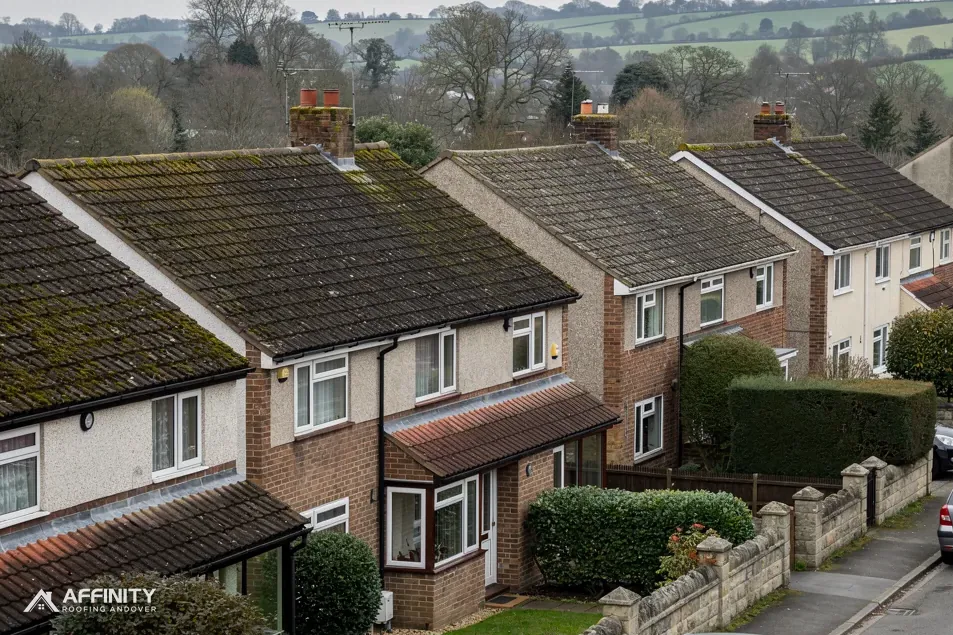
A listed neighbour also means shared details need care. Where an unlisted house abuts a listed one, the flashing at the party wall, the gutter that crosses the boundary and the chimney that serves both are all worth examining together. We photograph the junction and discuss the plan with both owners where needed.
Our planning permission for roof work guide covers the national rules. For Nether Wallop, the practical rule is to ask Test Valley Borough Council early and keep its answer on paper.
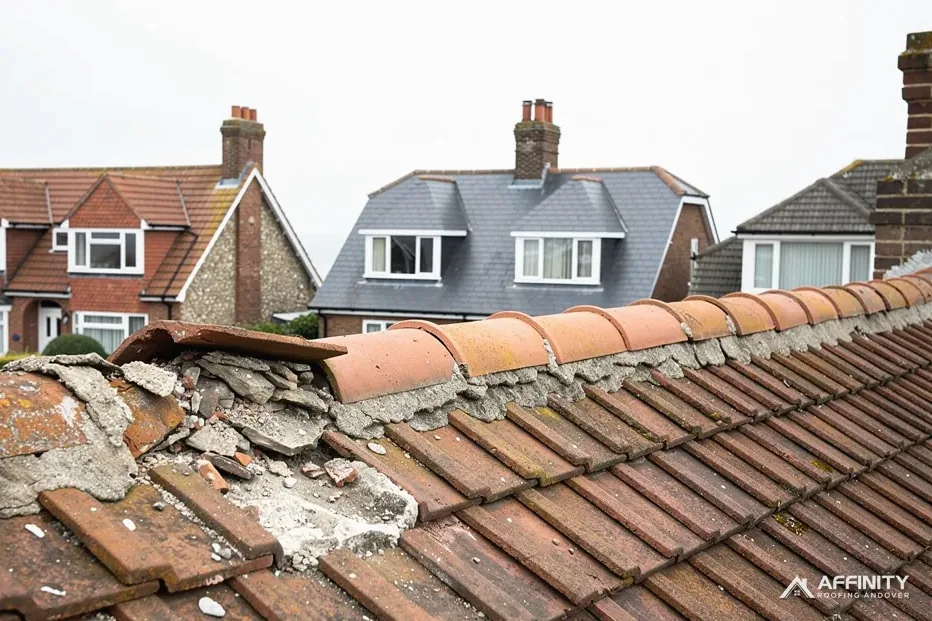
When we survey a listed Nether Wallop roof, the first job is to read the history in the covering. Patches, replaced battens and mismatched ridge pieces show where water has got in before and how earlier repairs were made. That record decides how much of the covering can stay and how much must be replaced.
Patch, slope or whole roof: which route?
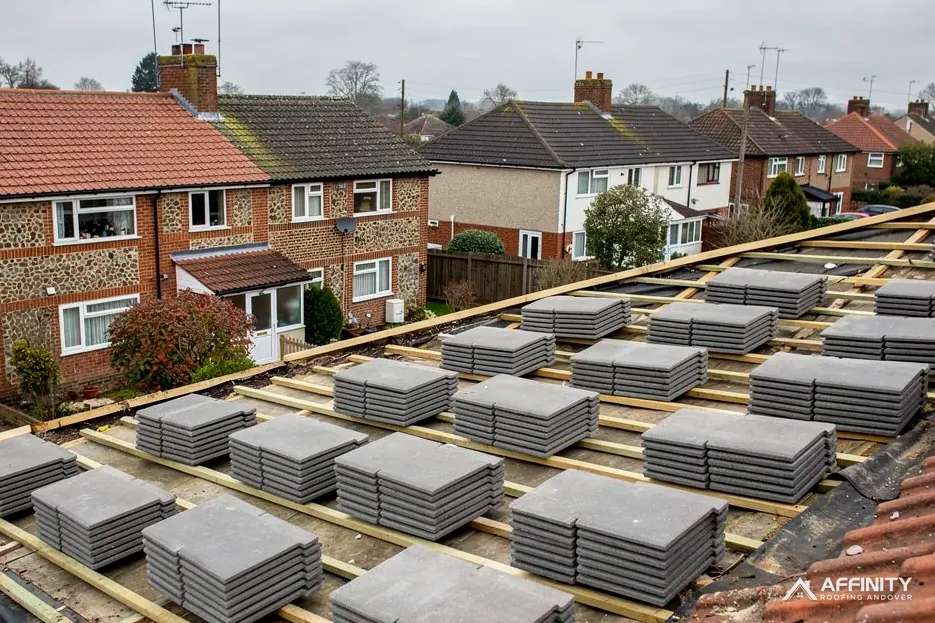
Most of what decides the paperwork is the size of the job. A patch is a few tiles or a single flashing. A slope job replaces the covering on one face of the roof. A whole-roof job strips everything above the rafters. Each has a different route through the council, and the survey photographs settle which one yours is before any price is given.
Planning here is Test Valley Borough Council's job, with Hampshire County Council working above it as the county council. Building control comes from your building control body: local authority building control, or else a registered building control approver, the private alternative regulated since 6 April 2024. We name the route that fits before the scaffold goes up.
The Planning Portal sets the national bar for a re-cover. The bar is work on less than 25 per cent of the building envelope and less than 50 per cent of the roof; below it, no application is usually required. A patch never comes close. A single slope on a small cottage might, and a whole roof certainly does, so we run the numbers for every job rather than assuming.
The second test is weight. A new covering 15% or more over the old brings Building Regulations approval, with a structural check on the frame. That matters on older cottages, where the timbers were sized for a light covering. A heavy concrete tile on a small rafter is exactly what the check is meant to catch.
Whether an Article 4 direction applies to your address is for Test Valley Borough Council to answer. The question goes in writing, and the answer is filed with the survey pictures for you. Our roof repairs page describes the small jobs, and our roof replacement page describes the whole-roof ones.
Between those extremes lies the slope job, which is where advice helps. If one face has failed and the other is sound, replacing only the failed one is a reasonable choice, provided the new and old coverings meet neatly at the ridge. We show you both faces in the photographs so the decision is yours, with the pictures side by side on paper.
Take a cottage with one long slope to the lane and a shorter one behind. The lane face takes the weather and is seen by everyone, so it draws the closer look. We examine the back too, because a hidden slope with a failing valley can do more damage than a visible one.
“Nether Wallop has 44 listed buildings within 500 metres, and every survey here reads the list first.”
Source: Historic England, NHLE records for Nether Wallop
Scaffold standards and Hampshire's notice rules
Hampshire County Council licenses scaffold on its highways under section 169 of the Highways Act 1980, and Test Valley, as a district council, does not. The county's page sets out what the scaffolding firm must meet: a design to BS EN 12810/12811 or NASC guidance TG20:13, public liability insurance of £10 million, plus a plan at 1:500 and proposals on signs and guarding.
Hampshire County Council gives no deemed consent, so the work waits for a licence in hand. Ten clear working days are needed between lodging and start, and no extensions are granted. Hampshire County Council's fee is £211.90 on application for the first 2 weeks, with £72 for each additional 2-week period.
Under Hampshire County Council's scheme the scaffolding firm lodges the application for its customer, so the form never reaches you. We coordinate dates so the licence starts when the roof is ready to be worked on and not before. Hoarding, if wanted as well, adds a fee under Hampshire's rules, and the survey visit settles whether the job needs it, well before the day.
Roads in the Wallops are often narrow, and scaffold on a verge or pavement leaves little room. Where a house is set well back from the road, we use private ground for the scaffold instead, and no highway licence is involved at all. Hampshire's page makes the point that private roads need no licence.
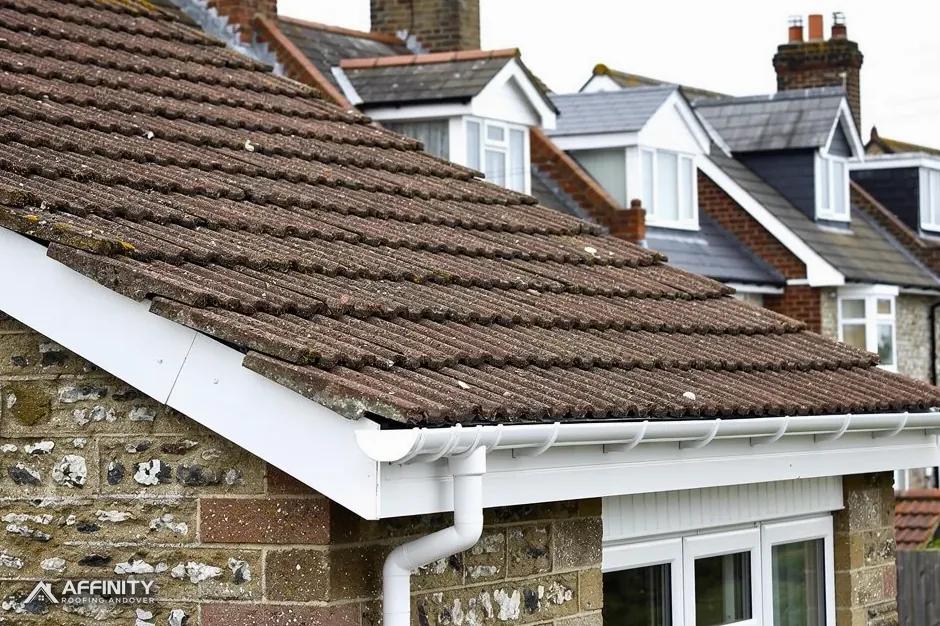
The jobs themselves are everyday ones. Pitched roofing deals with whole slopes. Chimney repairs cover stacks, flashings and the mortar cap on older cottages. Gutters and fascias along the eaves get equal care, since that is where water is carried clear of the walls.
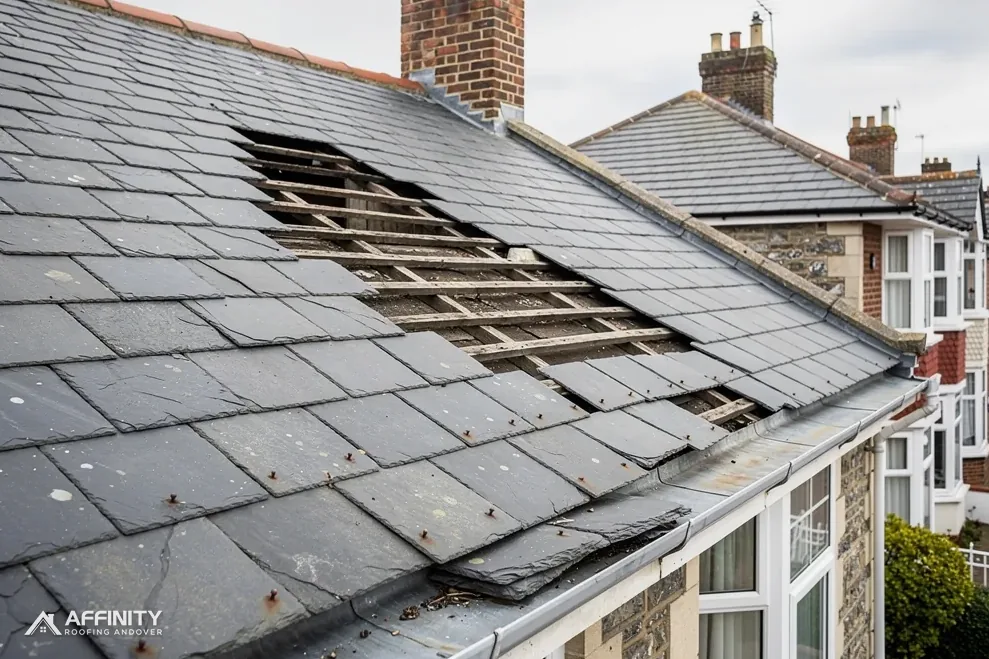
On slate or old plain tile roofs we check how each unit is held. A nail that has rusted through lets a slate slip, and replacing the single slate is cheaper than re-covering the slope. Pictures are taken of the slipped units and the sound ones, which makes the extent of the problem clear.
One written price follows the survey. Scaffold, licence, repair or re-cover and waste removal are all inside it, and the order of work comes with dates.
Neighbours deserve a word. Scaffold in a village lane is a visible event, so a note through each door before it goes up, with the dates and a contact number, avoids most friction. When it comes down, the verge and any damaged kerb are made good.
None of this delays an emergency. Rain coming in is stopped with a temporary cover first, and the permanent repair, with whatever approvals it needs, follows after the house has dried.
Nether Wallop roofing services

Nether Wallop roofs: St Andrew's, the listings and the licence
Does an unlisted house next to a listed Nether Wallop cottage need consent for a roof repair?
Not listed building consent, which applies only to the listed building itself. The ordinary planning and building control rules apply to the unlisted house. The party boundary still needs care, so party-wall flashings and boundary gutters are examined together and both owners hear the findings before any work begins.
Do roof repairs to the Church of St Andrew need a faculty?
Yes, through the faculty system of the Church of England. St Andrew's is listed Grade I and in use for worship, so the faculty route replaces listed building consent. Its faculty comes from the diocese's consistory court, Nether Wallop's church included. Owners of houses beside the churchyard follow the council's ordinary rules instead, and we confirm which apply.
What notice does Hampshire need for scaffold on a Nether Wallop road?
Hampshire County Council requires ten clear working days from lodging to start, applies no deemed consent and refuses extensions. Its fee, set by Hampshire County Council, is £211.90 for the first 2 weeks and £72 for each further 2 weeks. Scaffold that never touches the highway, standing on private ground, needs no licence, which suits many village houses.
Is a patch repair cheaper than re-covering a Nether Wallop slope?
Usually the patch costs less, but only when the surrounding covering is sound. If battens are rotten or fixings have rusted across the slope, a patch merely delays the cost. The survey photographs show both the good and the failing areas, so the choice between patch and slope is made on evidence and not on guesswork. You hold the pictures.
Get your Nether Wallop roof looked at
Text or email the address with a photograph. The survey that follows ends in one written price and the consent route.
10-year workmanship guarantee, in writing.